
In today’s digital landscape, platform security is evolving rapidly. As a result, IP reputation (often called IP purity) has become a vital factor for business stability, account safety, and reliable connection success rates.
Technically, IP reputation is no longer a simple network setting. It is a long-term scoring system used by platforms and automated risk engines to assess the trustworthiness of a digital identity.
That score determines whether business accounts face extra verification, end up on high-risk lists, or encounter access restrictions.
This guide examines how automated risk models evaluate IP reputation, explains what the score represents, and details how it affects everyday business activities.
- What is IP Reputation? (A Dynamic Risk Grading System)
IP reputation is a trust score assigned by platforms and risk management systems. These systems analyze an IP address’s history, network type, and current context to create a single metric. The score measures how closely an IP’s behavior matches the model of a genuine human user.
The Core of IP Purity: Dynamic Risk Tiers
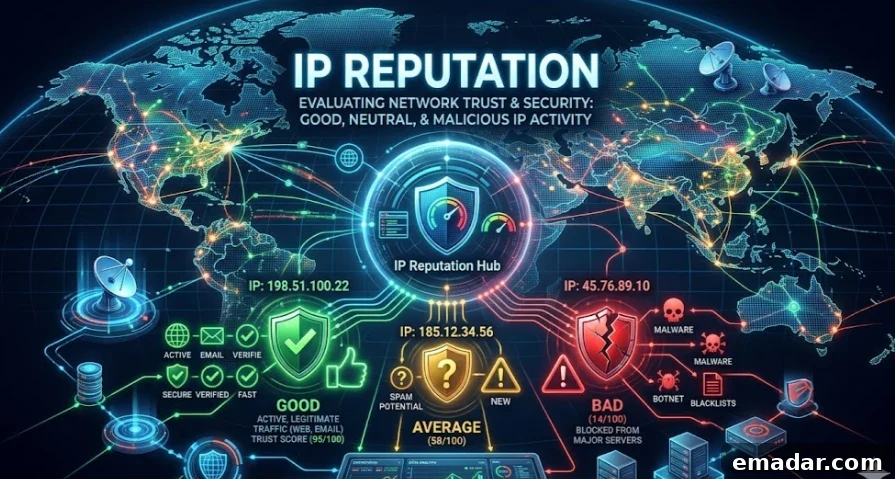
Modern security systems don’t simply label an IP as “clean” or “dirty.” Instead, they place it on a fluid, data-driven risk scale. Platforms typically classify connections into three tiers:
- Low Risk (High Trust): The network is verified and users receive immediate access.
- Medium Risk (Suspicious): Minor anomalies trigger additional verification such as CAPTCHAs or phone codes.
- High Risk (Threat Detected): The system flags the network and restricts access to protect the platform.
Because the grading is dynamic, the same IP can have different trust scores across platforms, times, or activities.
The Key Dimensions of IP Reputation
An IP trust score is derived from multiple factors rather than a single attribute. Systems evaluate:
- Network Ownership (ASN Type): Who controls the IP infrastructure?
- Historical Activity Logs: What actions originated from this IP in the past?
- Usage Frequency and Concurrency: How many simultaneous connections are active?
- Sharing and Recycling Patterns: Is the IP shared across unrelated users or frequently reassigned?
- Blacklist and Threat Database Status: Is the IP listed in public or private security databases?
- Behavioral Models: Does current traffic appear human-like or bot-like?
- Why Do Brand-New Proxies Often Fail on Day One?
Many organizations buy a new proxy IP only to be immediately faced with verification prompts or access limits. This usually isn’t an account issue but a problem with the IP’s existing risk profile.
IPs Are Never “Blank Slates”—They Have History
IP addresses are recycled resources. Before assignment to your team, an IP may have been used for aggressive automation, bulk registrations, dubious ad traffic, frequent API calls, or unregulated bot testing.
Security systems record those past actions and attach that history to the IP. That legacy behavior lowers the trust score for future users.
Shared Proxy Environments Speed Up Risk Growth
Low-quality shared proxies that let many users connect through the same IP create severe problems:
- They confuse behavioral models.
- They prevent a stable user identity from forming.
- They aggregate different risky behaviors onto one IP.
Even with compliant usage, other users’ poor practices can drag the shared IP into a high-risk category and impact everyone on that node.
- Comparing Network Architectures: ISP Residential vs. Data Center IPs
Different network types have distinct baseline trust levels because of how their infrastructures are built.
Dedicated ISP Residential Proxies—High-Trust Environments
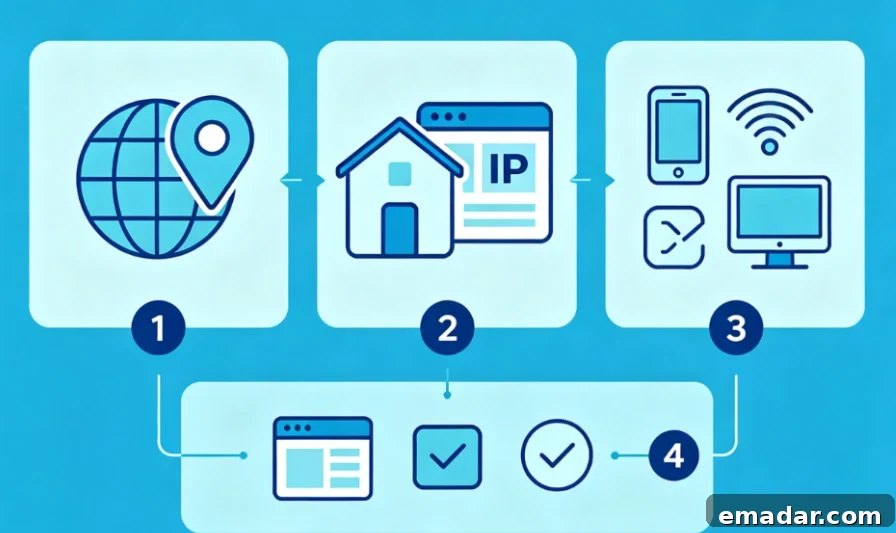
ISP residential IPs come from consumer ISPs and are tied to real home connections. Their traffic patterns look natural to platforms, they offer stable long-term connections, and they are inexpensive for platforms to verify.
- Patterns resemble genuine consumer usage.
- They provide strong long-term stability.
- Platforms can authenticate them with minimal friction.
As a result, dedicated ISP proxies commonly occupy the low-risk tier across platforms.
Standard Residential Proxies—Trust Depends on Control
Standard residential proxies use real residential ranges, but trust varies depending on management. If providers mix sessions, share infrastructure, or allow erratic traffic, their risk scores fall to the level of lower-quality networks.
Data Center IPs—High Performance, Structural Limitations
Data center IPs originate from cloud hosts and corporate servers. They deliver high bandwidth and speed for bulk processing, but they are easily identified as non-consumer traffic and start with lower baseline trust in identity-sensitive environments.
- Great for heavy data tasks and throughput.
- Easily labeled as corporate or hosting traffic.
- Low starting trust for identity-centric use cases.
Therefore, data center IPs suit backend tasks but are not ideal for long-term account management where trust continuity matters.
- How Global Platforms Identify Anomalous IP Variables
Modern platform security no longer evaluates an IP in isolation. Instead, systems cross-reference the IP with multiple identity signals.
An IP is Just the Front Door, Not the Whole Story
Security systems compare an IP to your broader digital footprint, examining:
- ASN and network category verification
- Consistency between current location and historical logins
- Hardware device fingerprint matches
- Continuity of session tokens and cookies
- Whether navigation patterns match organic human behavior
The Trigger: “Multi-Signal Stacking”
Platforms rarely block an IP for a single minor issue. Instead, they trigger restrictions when several negative signals occur simultaneously, for example:
- Rapid changes in IP location across regions
- Device fingerprints that differ from prior sessions
- Navigation that appears scripted or mechanical
- Frequent disconnects and broken session continuity
When these signals stack, systems mark the connection as unverified and impose access controls.
- The Mechanics of IP Contamination
IP contamination is a gradual decline in reputation caused by persistent irregular or heavy automated use that lowers the trust score over time.
Contamination is the Cumulative Stacking of Risk
Common causes of contamination include:
- High-frequency, unoptimized automation
- Multiple users sharing a single network node
- Network abuse or security incidents
- Prolonged listings on blacklists
Each event adds weight to the IP’s history in platform databases, driving the reputation downward.
Risk Trajectories Have a “Time-Weighted Delay”
Stopping problematic activity does not immediately restore trust. Reputation systems use time-weighted models, so negative history continues to influence scores for weeks or months. This delay means recovery often requires significant time and consistent clean usage.
- Why High-Purity Network Identities Are Increasingly Scarce
High-purity enterprise network identities are becoming scarce due to several industry trends:
- Limited ISP Assets: High-quality residential broadband lines are finite; physical infrastructure is fixed and regulated.
- Expanded Blacklist Coverage: Threat detection systems retain records longer and share data more widely, reducing the pool of unflagged IPs.
- Filtering of Low-Quality Assets: Heavily used, low-grade proxy pools are increasingly filtered out by platforms.
Consequently, clean, dedicated network infrastructure is a valuable corporate resource.
- Why Shared Proxies Inevitably Break Identity Isolation Models
Low-quality shared proxies quickly undermine identity isolation and increase account association risk.
Behavior Overlap Destroys Isolation
When different tasks and accounts share the same IP, platforms detect conflicting signals such as:
- Multiple unrelated accounts originating from the same IP
- Conflicting geographic and timing information
- Unstable and broken session mappings
A secure model expects a one-to-one mapping between a clean network identity and a single user profile. Shared proxies break this mapping and raise risk for all connected accounts.
- Rules for Evaluating High-Purity Network Infrastructure
To protect digital assets and maximize operational ROI, evaluate proxy infrastructure using these rules:
- Verify True ISP Origins: Confirm the IP is tied to a genuine residential broadband contract rather than a cloud server.
- Audit Historical Threat Logs: Check public and private blacklists to ensure the IP has no accumulated risk.
- Test Session Continuity: Ensure the network can maintain a stable, dedicated connection for extended periods without frequent rotation.
- Ensure Exclusive Resource Isolation: Make certain the IP is dedicated to your enterprise to prevent contamination from other users.
- Why IP Reputation is Becoming a Core Enterprise Competency
As risk platforms grow more sophisticated, proxy networks have evolved into a foundational element of digital network identity. This shift is clear in high-value business areas such as:
- Cross-border e-commerce account management
- Global social media marketing operations
- Localized ad verification
- Enterprise data collection and retrieval-augmented automation
The reliability and safety of these systems depend on the trust score of your network identity. Organizations are moving away from buying large quantities of cheap proxies and toward investing in long-term, stable network identity infrastructure.
IP reputation is a long-term, evolving credit system that shapes your business’s ability to operate on the global web. Choosing the right network infrastructure is now a strategic decision that impacts operational success.