
By 2026, global search engine advertising spend will exceed $300 billion, and 68% of marketers consider data-driven decision making the primary driver of improved ad ROI. Search engine marketing intelligence — the systematic collection, analysis and application of search engine data to optimize marketing strategies — has evolved from a nice-to-have into a core competitive necessity. It enables brands to uncover hidden keyword opportunities, monitor competitors’ ad activity, track changes in search engine results page (SERP) features, optimize bidding strategies, and spot emerging market trends before competitors do.
Industry research shows, however, that 62% of SEM teams face issues with inaccurate, incomplete, or delayed intelligence data. The root cause is not necessarily poor analytics tools but inadequate network infrastructure. Modern search engines and ad platforms deploy advanced anti-bot systems that block automated data collection from low-quality IPs, data center addresses, and shared networks. Even premium third-party SEM tools suffer from geographic data distortion, missing local ad variations, and frequent service interruptions due to IP bans. For brands competing in global markets, these data gaps translate directly into wasted ad spend, missed opportunities, and lost market share.
IPFLY’s enterprise-grade proxy ecosystem removes the barriers to obtaining reliable SEM intelligence. With a global pool of over 90 million high-quality residential IPs covering more than 190 countries and 3,000 cities, seven-layer IP filtering, and 99.9% uptime, IPFLY lets you extract accurate, real-time SEM data from any region without blocking or distortion. This article examines the core value of search engine marketing intelligence, common data collection challenges, and how IPFLY’s proxy infrastructure turns raw search data into actionable competitive insights.
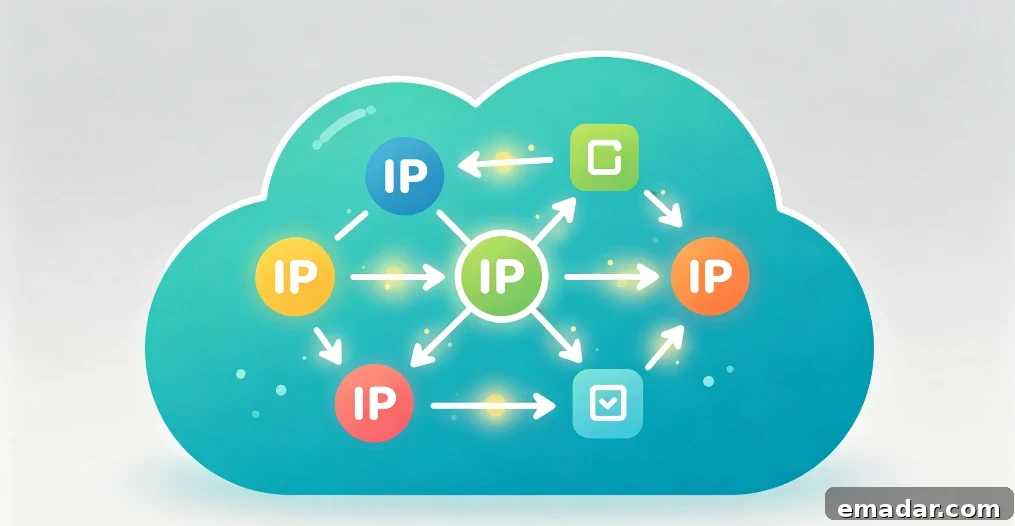
What is search engine marketing intelligence?
Core definition
Search engine marketing intelligence (SEM intelligence) refers to collecting and analyzing structured data from search engines (Google, Bing, Yahoo, Baidu) to inform paid search (PPC) and organic search (SEO) strategies. It pairs automated data extraction with advanced analysis to reveal patterns, identify opportunities, and benchmark performance against competitors. Unlike basic rank tracking or keyword research tools, comprehensive SEM intelligence delivers a 360-degree view of the search ecosystem, including ad copy variations, landing page changes, bidding behaviors, and the evolution of SERP features.
Key components of modern SEM intelligence
A robust SEM intelligence program covers five key data areas:
- Keyword analysis: Track millions of keywords across regions and languages, monitoring search volume, competition, CPC trends, and user intent. Identify long-tail queries, seasonal shifts, and emerging search terms before they become mainstream.
- Competitor ad analysis: Monitor competitors’ paid search campaigns in real time, including ad copy, extensions, landing pages, bidding strategies, and budget allocations. Track ad rotation, A/B tests, and new campaign launches to reveal gaps in your own tactics.
- SERP feature analysis: Track the appearance and evolution of SERP features that affect organic and paid visibility—featured snippets, local packs, shopping ads, knowledge panels—and identify opportunities to capture featured placements or optimize for local search.
- Auction and bidding analysis: Analyze auction dynamics, CPC fluctuations and impression share to optimize bidding strategies. Pinpoint times, dates and locations where ad spend yields the highest ROI.
- Market trend analysis: Monitor industry-wide search trends, shifts in consumer behavior and competitor moves to inform long-term marketing planning and uncover emerging markets, product categories and customer pain points.
Business impact and use cases
SEM intelligence delivers measurable ROI across the marketing funnel:
- Optimize ad spend: Reallocate budget from underperforming keywords and regions to high-converting opportunities, often improving ad ROI by 20%–40%.
- Gain a competitive edge: Discover blind spots in competitors’ ad coverage, exploit weaknesses, and respond quickly to changes in their campaigns.
- Localize global campaigns: Tailor ad copy, keywords and landing pages to local search behavior and competitor dynamics in target markets.
- Increase conversion rates: Learn from competitors’ top-performing ad copy and landing pages to improve your creatives and landing experience.
- Predict market trends: Anticipate seasonal demand shifts, new product category growth and evolving consumer intent to capture market share early.
Core challenges to reliable SEM intelligence
Even the most advanced analytics are only as good as the underlying data. SEM teams face five persistent challenges that undermine data accuracy and reliability:
- Geographic data distortion
Search engines return different ads, rankings and SERP features based on a user’s IP location. For example, searching “best running shoes” from a New York IP can yield different ads, prices and local listings than the same search from a London IP. Most third-party SEM tools rely on broad-area proxies or data-center IPs that cannot accurately mimic local user experiences, producing 30%–50% inaccuracies for local and regional campaigns.
- IP bans and anti-bot restrictions
Google, Bing and other engines strictly limit automated scraping to protect ad revenues. Advanced anti-bot systems detect and block requests from data-center IPs, shared proxies and suspicious traffic patterns. Even low-volume requests from a single IP can trigger rate limits, CAPTCHAs or permanent IP bans within hours, causing incomplete datasets and reporting delays.
- Data latency and incompleteness
Poor proxy infrastructure leads to high failure rates, slow responses and missing data. By the time SEM intelligence arrives, it may be outdated—critical in an industry where campaigns and bids change by the hour. Incomplete datasets produce flawed conclusions and poor strategic decisions.
- Limited customization
Off-the-shelf SEM tools often offer fixed reports with limited data customization. They cannot track niche keywords, monitor specific competitors’ landing pages, or extract bespoke data points unique to your business. Teams then build custom crawlers that face the same IP bans and anti-bot challenges.
- Rising costs
Enterprise SEM intelligence with multi-region access can cost tens of thousands of dollars per month, and costs scale exponentially with data volume. For brands operating in more than ten markets, these expenses quickly become prohibitive, forcing teams to restrict data collection to only the highest-priority regions.
Why proxy infrastructure is the foundation of SEM intelligence
All SEM analysis depends on the ability to extract accurate, real-time data from search engines. The quality of your proxy infrastructure directly determines SEM data accuracy, reliability and scalability. To obtain consistent, actionable insights, proxies should meet these criteria:
- Residential IPs assigned by legitimate ISPs within the target city
- Good reputation with no history of abuse or scraping
- Automatic rotation to avoid rate limits and IP bans
- Support for precise city- and neighborhood-level targeting
- High concurrency handling without performance degradation
- 99.9% uptime to ensure uninterrupted data collection
Shared proxy pools and data-center IPs fail to meet these standards and cause the problems described above. For production-grade SEM intelligence, enterprise residential proxies are essential.
IPFLY: precise, scalable SEM intelligence
IPFLY’s enterprise proxy ecosystem removes all barriers to reliable SEM data collection, enabling you to build custom SEM intelligence systems that deliver up to 99.8% accuracy from any region worldwide. Our proxies integrate with mainstream SEM tools and custom scraping frameworks so you control the entire data-collection process.
IPFLY proxy types optimized for SEM intelligence
Dynamic residential proxies: massive real-time collection
IPFLY’s dynamic residential proxies tap into a global pool of over 90 million real end-user IPs, support per-request IP rotation, deliver millisecond response times, and handle unlimited high concurrency.
Best for: Large-scale keyword tracking, competitor ad monitoring, SERP feature analysis and market trend intelligence. Per-request rotation avoids rate limits and IP bans, while precise city-level targeting ensures you see the same local ads and search results as real users. Unlimited concurrency scales to millions of daily requests without performance loss.
Static residential proxies: stable long-term monitoring
IPFLY static residential proxies provide ISP-assigned, persistent residential IPs dedicated to a single user. They include unlimited bandwidth and full HTTP/HTTPS/SOCKS5 support.
Best for: Long-term monitoring of specific competitors, tracking keyword trends over time, and using SEM tools that require authenticated sessions. Fixed residential IPs preserve session consistency and prevent anti-bot triggers caused by sudden location changes, supporting reliable trend analysis.
Data center proxies: low-cost internal testing
IPFLY’s data center proxies offer dedicated, high-purity static IPs with industry-leading speed and ultra-low latency. They support unlimited traffic and selectable global nodes.
Best for: Internal testing of SEM tools, non-geolocated data collection and small-scale research. Do not use data center proxies for production SEM intelligence—they are easily detected and return inaccurate results.
IPFLY’s core technical advantages for SEM intelligence
- Seven-layer IP filtering: All IPs undergo rigorous pre-screening to remove blacklisted or previously abused addresses, ensuring a 99.8% request success rate.
- Precise city-level targeting: IPs in over 3,000 cities worldwide let you collect accurate local SEM data from any location.
- Unlimited high concurrency: Self-managed servers support thousands of concurrent requests with no throttling, enabling limitless data collection scale.
- 99.9% availability: Redundant global infrastructure ensures continuous data collection even during peak usage.
- Advanced anti-detection: Residential IPs mimic browser TLS fingerprints and request patterns to bypass sophisticated anti-bot systems without relying on CAPTCHAs.
- Transparent usage-based billing: Pay only for actual usage with no hidden fees, reducing costs by 50%–70% versus off-the-shelf SEM tools at scale.
- 24/7 expert support: A dedicated technical team with SEM and data-collection experience provides configuration guidance and troubleshooting to optimize workflows.
Practical example: building a custom competitor ad monitoring tool with IPFLY
Below is a simplified Python example demonstrating how IPFLY dynamic residential proxies can be used to monitor competitors’ Google Ads in real time:
Python
import requests
from bs4 import BeautifulSoup

# IPFLY dynamic residential proxy configuration (per-request rotation)
proxies = {"http": "http://your-ipfly-username:[email protected]:10000","https": "http://your-ipfly-username:[email protected]:10000"}

def monitor_competitor_ads(keyword, location="us"):
    url = f"https://www.google.com/search?q={keyword}≷={location}#=10"
    headers = {"User-Agent": "Mozilla/5.0 (Windows NT 10.0; Win64; x64) AppleWebKit/537.36 (KHTML, like Gecko) Chrome/124.0.0.0 Safari/537.36"}
    # Each request automatically uses a new unique IP in the target location
    response = requests.get(url, proxies=proxies, headers=headers, timeout=10)
    soup = BeautifulSoup(response.text, "html.parser")
    # Extract top paid ads
    ads = []
    for ad in soup.find_all("div", class_="uEierd"):
        ad_data = {
            "headline": ad.find("div", class_="sVXRqc").text if ad.find("div", class_="sVXRqc") else "",
            "description": ad.find("div", class_="MUxGbd").text if ad.find("div", class_="MUxGbd") else "",
            "landing_page": ad.find("a")["href"] if ad.find("a") else "",
            "display_url": ad.find("div", class_="qzEoUe").text if ad.find("div", class_="qzEoUe") else ""
        }
        ads.append(ad_data)
    return ads

# Example: Monitor competitor ads for "project management software" in Austin, Texas
ads = monitor_competitor_ads("project management software", "us-tx-austin")
for i, ad in enumerate(ads, 1):
    print(f"Ad {i}: {ad['headline']}")
    print(f"URL: {ad['landing_page']}\n")
This basic script can be extended to track ad changes over time, compare ad performance across regions, and notify you when competitors launch new campaigns.
Best practices for production-grade SEM intelligence
Combine IPFLY’s proxy infrastructure with these best practices to build a reliable, scalable SEM intelligence system:
- Always use residential proxies: Never use data center proxies for production SEM collection—they return inaccurate results and are quickly banned.
- Match proxy location to monitored regions: Ensure proxy locations align precisely with the regions you monitor to capture accurate local ads and search results.
- Rotate User-Agent with IP rotation: Change User-Agent headers when rotating IPs to simulate different browsers and devices.
- Implement smart retries: Retry failed requests with exponential backoff and automatic IP rotation to handle transient failures and rate limits.
- Validate data regularly: Cross-check automated data against manual searches from local IPs to maintain ongoing accuracy.
- Respect request limits: Even with rotating proxies, avoid exceeding 10–15 requests per IP per minute to minimize detection risk.
- Comply with regulations: Collect only public data and ensure activities conform to search engine terms of service and local data protection laws.
Turning search data into competitive advantage
In 2026, search engine marketing intelligence remains one of the most powerful tools for optimizing ad performance and gaining a competitive edge. Its value, however, depends entirely on the accuracy and reliability of underlying data. Geographic bias, IP bans, anti-bot defenses and high costs prevent most teams from realizing SEM intelligence’s full potential.
IPFLY’s enterprise proxy ecosystem addresses these challenges by delivering clean, geographically precise residential IPs that enable SEM data accuracy of up to 99.8% from any region. Whether you use IPFLY to enhance existing SEM tools or to build a custom intelligence system from scratch, you’ll gain more reliable insights, greater scalability and significantly lower costs compared with off-the-shelf solutions.
For brands competing across global search markets, investing in advanced proxy infrastructure is not an expense but a strategic investment to build sustainable competitive advantage and maximize ad ROI.
Use IPFLY’s enterprise residential proxies to build a powerful, scalable SEM intelligence system. Sign up for an IPFLY account to run large-scale real-time collection with dynamic residential proxies, conduct long-term trend monitoring with static residential proxies, or perform internal testing with data center proxies — all backed by 99.9% uptime, global city-level targeting and 24/7 expert support.