
In the evolving landscapes of AI data collection, automated execution, and cross-border business, the dynamic residential proxy has transcended its role as a mere tool to become an indispensable infrastructure layer. Its unique capabilities are now foundational for operations that demand high authenticity and adaptability.
However, the industry has long grappled with a critical challenge:
How can businesses achieve a controllable balance between exceptional anonymity and unwavering stability?
Most traditional proxy solutions force a compromise, leaning heavily towards one extreme. Users often find themselves choosing between strong anonymity at the cost of unreliable connections, or stable connections that are easily detected and blocked. This persistent dilemma undermines the efficiency and success of critical online operations.
IPFLY’s dynamic residential proxy solution is engineered to address this core problem head-on. Our central objective is to transform the inherent dynamism of residential IPs into a powerful, stable capability through a sophisticated, systemized architectural design. By meticulously managing and optimizing the dynamic nature of these IPs, IPFLY provides a robust, high-performance solution that delivers both superior anonymity and consistent reliability, ensuring seamless and successful online interactions.

Understanding the Technical Essence of Dynamic Residential Proxies
Dynamic residential proxies represent a significant leap forward in proxy technology, offering unparalleled authenticity and versatility. To fully appreciate their value, it’s essential to understand their technical underpinnings and how they function within the broader internet ecosystem.
How Dynamic Residential Proxies Operate
A dynamic residential IP operates fundamentally differently from other proxy types. These IPs are sourced directly from real internet service providers (ISPs) and are assigned to actual residential homes or mobile devices. This authenticity is their most defining characteristic. Furthermore, they possess inherent schedulability, meaning their assignment can be managed and rotated strategically.
Key characteristics that define dynamic residential proxies include:
- Authentic IP Sources (ISP Assigned): Unlike datacenter IPs, which originate from commercial hosting providers, residential IPs are genuinely provided by ISPs to individual users. This makes them appear as legitimate traffic to target websites, significantly reducing the likelihood of detection.
- Dynamic Address Switching: These IPs are not static; they can be automatically or manually switched and rotated at specific intervals or based on predefined triggers. This dynamic nature is crucial for tasks requiring high anonymity and for avoiding IP bans.
- Support for Cross-Regional Access: Dynamic residential proxies allow users to acquire IPs from virtually any country or city worldwide, enabling access to geo-restricted content and localized data without geographical limitations.
The critical distinction between dynamic residential IPs and traditional datacenter IPs isn’t merely about their availability, but rather:
Whether they align with a target website’s sophisticated model for identifying genuine user traffic.
Modern websites employ advanced anti-bot systems that analyze various parameters beyond just the IP address. Datacenter IPs, due to their origin and common usage patterns, often fail these sophisticated authenticity checks, leading to blocks, CAPTCHAs, or throttled access. Residential IPs, by mimicking real users, seamlessly bypass these defenses.
The Rise of Dynamic Residential Proxies as a Mainstream Solution
In today’s complex online environment, high-value data sources and critical platforms are heavily protected by advanced risk control and anti-bot systems. These systems are designed to differentiate between legitimate human users and automated scripts or bots, making it increasingly challenging for traditional proxy solutions to operate effectively. Some of the sophisticated mechanisms employed include:
- Behavioral Recognition Models: These systems analyze user behavior patterns, such as mouse movements, keystrokes, browsing speed, and navigation paths, to detect anomalies indicative of automation. Residential IPs allow for the simulation of realistic human behavior.
- IP Reputation Scoring Systems: Every IP address carries a reputation score based on its history, usage patterns, and association with malicious activities. Datacenter IPs often accumulate negative scores due to shared usage by many automated systems, making them highly suspicious.
- Regional Access Consistency Detection: Websites can detect inconsistencies in an IP’s geographical location relative to other browsing data (e.g., language settings, timezone). Dynamic residential IPs enable precise geo-targeting, ensuring consistency.
In this challenging landscape, the limitations of older proxy types become stark:
- Significantly Increased Datacenter IP Interception Rates: Datacenter IPs are readily identified and frequently blacklisted by anti-bot systems, leading to high failure rates for data collection and automated tasks. Their commercial origin and lack of natural user behavior make them easy targets.
- Elevated Risk with Long-Term Static IP Usage: While static IPs offer consistency, their prolonged use from a single, identifiable source increases the risk of detection, profiling, and eventual blocking by sophisticated defense mechanisms.
Dynamic residential proxies, through their inherent “realness + change” paradigm, emerge as the most stable and reliable long-term solution. By combining authentic ISP-assigned IPs with intelligent, dynamic rotation, they effectively mimic the varied and unpredictable nature of real human internet usage, ensuring sustained access and high success rates for even the most demanding applications.

IPFLY Dynamic Residential IP System Architecture: A Deep Dive
IPFLY’s robust architecture is the cornerstone of its high-performance dynamic residential proxy solution, designed to offer unparalleled global reach, intelligent IP management, and resilient operation. Our system is built on a foundation of extensive infrastructure and smart algorithms to ensure optimal performance for every task.
Global IP Resource Scheduling Network
At the heart of IPFLY’s offering is its expansive, multi-tiered IP resource network. This vast infrastructure is meticulously constructed to provide diverse and reliable proxy access worldwide.
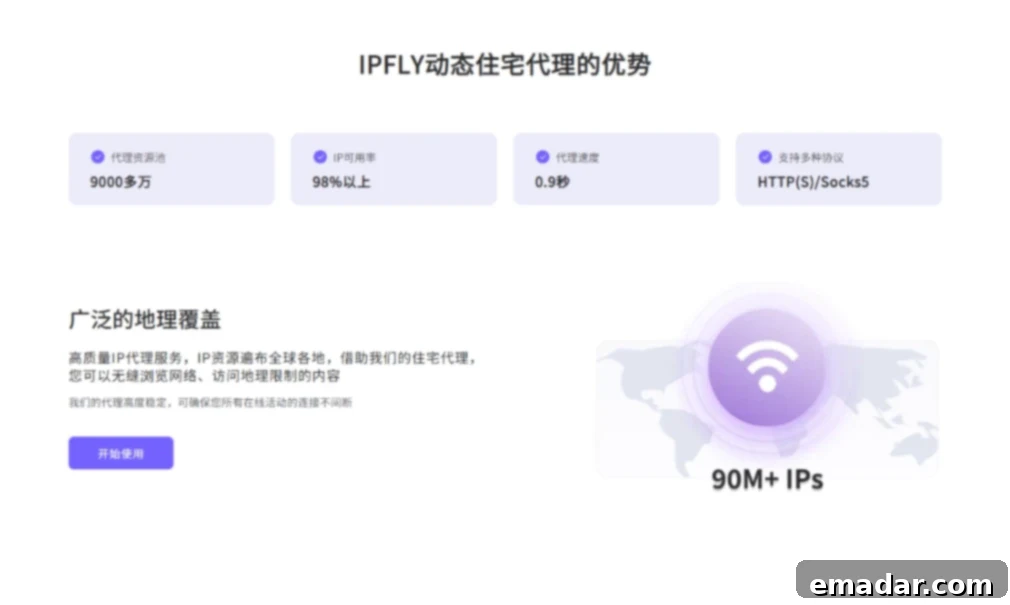
- Comprehensive Coverage Across 190+ Countries and Regions: Our network spans nearly every corner of the globe, providing users with the flexibility to target specific geographical locations for data collection, market research, or localized content access. This extensive reach is critical for global operations.
- An Immense Pool of Over 90 Million IPs: The sheer size of our IP pool is a significant advantage. A larger and more diverse pool means a lower chance of encountering blacklisted or compromised IPs, ensuring higher success rates and reducing the risk of detection. This scale supports high-volume, continuous operations without IP exhaustion.
- Distributed Multi-Regional Node Infrastructure: Our network consists of strategically placed nodes across various geographical regions. This distributed architecture minimizes latency by routing requests through the closest possible server, thereby improving connection speeds and overall efficiency for users worldwide.
This sophisticated global network is designed to support highly flexible and efficient IP management:
- Intelligent IP Scheduling by Region: Users can precisely specify the geographical location (country, city, or even ISP) from which their requests should originate. Our system intelligently allocates IPs that match these criteria, crucial for geo-specific tasks like market analysis or local SEO monitoring.
- Dynamic Resource Allocation Based on Task Requirements: The system dynamically assigns IP resources tailored to the specific needs and intensity of each task. Whether it’s a high-frequency scraping job or a delicate account management operation, IPFLY adapts to ensure optimal performance and stealth.
- Proactive Dynamic Load Balancing: To prevent any single IP or server from becoming overloaded or flagged, our network employs continuous load balancing. This ensures that traffic is evenly distributed across the entire IP pool and infrastructure, maintaining consistent performance and high anonymity even during peak usage.
The IP Scheduling System: IPFLY’s Core Mechanism for Optimal Performance
The IPFLY scheduling system is the intelligence hub of our solution. Its primary responsibility is to establish the most optimal match between incoming user requests and the vast pool of available IP resources. This sophisticated system employs a series of core logics to ensure efficient, anonymous, and stable proxy usage.
- Request Distribution Strategies
The system intelligently tailors IP allocation based on the nature of the task, understanding that different operations require different IP behaviors:
- Independent Requests → Single IP Call: For individual, one-off data points or simple queries, the system assigns a unique IP for each request, ensuring maximum anonymity and preventing patterns that could lead to detection.
- Continuous Tasks → Session-Bound IP: For multi-step processes that require maintaining a consistent identity (e.g., navigating through multiple pages, adding items to a cart), the system binds a specific IP to a session for a defined duration, mimicking a real user’s continuous browsing.
- Concurrent Tasks → Multiple IP Allocation: When handling high volumes of simultaneous requests, the system intelligently distributes these requests across multiple distinct IPs from its pool. This strategy prevents overloading a single IP, enhances overall throughput, and significantly reduces the risk of rate-limiting or blocking.
- Precision Geographical and Contextual Matching Mechanism
IPFLY’s system offers advanced capabilities for selecting IPs based on highly specific criteria, ensuring that access behavior aligns perfectly with the target website’s expectations:
- Country / City Specificity: Users can define the exact country or city from which an IP should originate, vital for accessing localized content or verifying geo-specific information.
- ISP Type Matching: Beyond geographical location, the system can select IPs from specific Internet Service Providers. This level of detail is crucial for highly sensitive targets that might profile users based on their ISP.
- Use Case Alignment (Scraping / Login / Browsing): The system understands that different use cases require different IP characteristics. For intensive scraping, it might prioritize fresh, highly available IPs. For logging into accounts, it will prioritize stable, sticky IPs that maintain sessions. This contextual awareness optimizes for success.
By ensuring that the access behavior, including location and perceived ISP, aligns perfectly with the target website’s expected user profile, IPFLY significantly enhances the likelihood of successful data retrieval and automation.
- Dynamic Load Balancing and Smart Resource Allocation
To maintain peak performance and prevent service interruptions, the IPFLY system operates a sophisticated real-time monitoring and adjustment process:
- Real-time IP Availability Assessment: The system constantly checks the live status of every IP in its vast pool, ensuring that only active and high-performing proxies are utilized.
- Continuous Request Success Rate Monitoring: By tracking the success rate of requests through various IPs and nodes, the system identifies potential issues early and reacts proactively.
- Node Load Situation Evaluation: The system monitors the load on its distributed network nodes to prevent bottlenecks and ensure smooth, uninterrupted service delivery.
Based on these real-time evaluations, the IPFLY system automatically adjusts resource allocation, diverting traffic from overloaded or underperforming IPs and nodes to available, optimal alternatives. This proactive approach prevents single points of failure, maintains high connection speeds, and ensures consistent success rates for all user tasks.
Unpacking the Dynamic Rotation Mechanism: IPFLY’s Core Capability for Anonymity
The ability to dynamically rotate IP addresses is a fundamental strength of residential proxies, crucial for maintaining anonymity and bypassing detection. IPFLY’s approach to IP rotation is intelligent and strategy-driven, moving beyond simple time-based changes to deliver optimal performance tailored to specific task requirements.
Intelligent IP Rotation Trigger Logic
IPFLY’s system does not rely on a fixed, rigid rotation frequency. Instead, it employs a policy-based trigger logic that adapts to the operational context, maximizing both anonymity and efficiency:
- Per-Request Rotation (Default): For tasks demanding the highest level of anonymity, such as rapid data scraping from highly sensitive targets, a new IP is assigned for every single HTTP request. This makes it extremely difficult for target sites to track or profile successive requests back to a single origin.
- Post-Session Rotation: In scenarios where a series of actions needs to be completed under one consistent identity (a “session”), the IP is maintained for the duration of that session and then rotated once the session concludes. This prevents IP changes in the middle of a critical operation.
- Request Failure Triggered Rotation: If a request fails—due to a block, CAPTCHA, or other detection mechanism—the system immediately rotates to a new IP and retries the request. This proactive fault tolerance significantly increases success rates and reduces manual intervention.
- Accelerated Rotation in High-Risk Scenarios: For tasks identified as high-risk or when interacting with websites known for aggressive anti-bot measures, the system can automatically accelerate the IP rotation frequency. This dynamic adjustment ensures that the user’s footprint remains constantly shifting, further enhancing stealth.
Optimizing Rotation Frequency Parameters: Best Practices
Determining the ideal rotation frequency is critical for balancing anonymity with stability and task efficiency. IPFLY provides flexible options and recommendations based on common application scenarios:
- High-Frequency Scraping: Rotate Per Request: For intensive web scraping operations where speed and anonymity are paramount, rotating the IP with every request is typically the most effective strategy to avoid rate limits and IP bans.
- Medium-Frequency Tasks: Rotate Every 3–10 Requests: For tasks that involve moderate interaction but still benefit from frequent IP changes, such as general market research or competitive analysis, rotating every few requests provides a good balance.
- Session-Based Operations: Maintain IP for 5–30 Minutes: For activities requiring a continuous session, like logging into accounts, filling forms, or navigating multi-page workflows, it’s advisable to maintain the same IP for a longer duration, typically between 5 to 30 minutes, mimicking natural human interaction patterns.
This intelligent, adaptive approach ensures that IPFLY’s dynamic rotation mechanism achieves the perfect equilibrium between robust anonymity and consistent stability, allowing users to execute diverse tasks with confidence and high success rates.
Sticky Session Mechanism: IPFLY’s Core for Unwavering Stability
While dynamic rotation is essential for anonymity, certain complex tasks demand IP consistency. This is where IPFLY’s Sticky Session mechanism comes into play, providing the stability necessary for multi-step operations that mimic real user interactions.
What is a Sticky Session?
A sticky session, also known as a persistent session, refers to the ability of a proxy system to maintain a single IP address for a specific user or task over a defined period. This ensures that all subsequent requests within that duration originate from the same IP, which is crucial for continuity in web interactions.
Technical Implementation Logic
IPFLY implements sticky sessions through a sophisticated session ID binding mechanism, which seamlessly integrates with its broader IP management architecture:
- Temporary Request-to-IP Binding: When a sticky session is initiated, a unique session ID is generated and associated with a specific dynamic residential IP from our pool. All requests carrying this session ID are then routed through the same bound IP.
- Comprehensive Session Lifecycle Management: The system actively manages the lifespan of each sticky session. Users can define the duration for which an IP should be held (e.g., 5 minutes, 30 minutes, or longer). IPFLY ensures the IP remains assigned for the specified period unless explicitly released or timed out.
- Automatic Release and Seamless Switching: Once a sticky session expires or is manually terminated, the bound IP is automatically released back into the general pool. The system can then seamlessly switch to a new IP for subsequent requests, or another sticky session can be initiated if needed, ensuring efficient resource utilization.
Key Applicable Scenarios for Sticky Sessions
Sticky sessions are indispensable for tasks that require maintaining context and consistency throughout a multi-step user journey. They are particularly effective in:
- Login Operations: When logging into user accounts on websites, a consistent IP is often required across the authentication process (e.g., entering credentials, handling multi-factor authentication). Changing IPs mid-login can trigger security alerts or failed attempts.
- Multi-Page Navigation and Pagination: For tasks that involve navigating through several pages of a website (e.g., browsing a product catalog, reading through forum threads, processing search results), a sticky session ensures smooth and uninterrupted progress, preventing the site from flagging inconsistent access patterns.
- User Path Simulation: When simulating complex user journeys, such as adding items to a shopping cart, filling out multi-part forms, or completing online registrations, sticky sessions allow for a realistic and continuous interaction, which is critical for successful automation and testing.
By leveraging the sticky session mechanism, IPFLY provides the stability required for intricate, stateful web interactions, ensuring high success rates for tasks that demand persistent IP identity.
IP Quality Control System: Ensuring Pristine Proxy Performance
The effectiveness of any proxy solution hinges on the quality of its IP pool. IPFLY maintains an exceptionally high standard of IP quality through a rigorous, multi-layered control system designed to continuously monitor, evaluate, and optimize its residential IP resources.
Robust Multi-Layered Filtering Mechanism
Our commitment to quality begins at the source and extends throughout the entire lifecycle of an IP within our network. IPFLY employs a comprehensive filtering process:
- Initial Source Screening: Before an IP is even added to our network, it undergoes an exhaustive initial screening process. This involves verifying its residential nature, ISP origin, geographical accuracy, and ensuring it hasn’t been previously associated with malicious activity or blacklisted.
- Real-time Availability Detection: Once integrated, every IP is subjected to continuous, real-time availability checks. Our system constantly pings and tests IPs to ensure they are online, responsive, and ready for use. Dormant or unresponsive IPs are immediately flagged and taken out of rotation.
- Historical Success Rate Evaluation: IPFLY maintains a detailed history for each IP, tracking its past performance across various tasks and target websites. IPs with consistently high success rates are prioritized, while those showing frequent failures or blocks are deprioritized or removed.
Dynamic Real-time Quality Scoring System
Beyond static filtering, IPFLY utilizes an active, dynamic quality scoring system that continually assesses the performance and health of each IP in the pool. This system employs multiple metrics to provide a granular understanding of IP quality:
- Response Speed: The latency and response time of each IP are continuously measured. Faster IPs are rated higher, ensuring that users experience optimal browsing and data retrieval speeds.
- Request Success Rate: This critical metric tracks the percentage of successful requests made through an IP. An IP consistently achieving a high success rate is deemed more reliable and of higher quality.
- Anti-Detection / Risk Control Trigger Frequency: The system monitors how frequently an IP triggers anti-bot mechanisms, CAPTCHAs, or blocks on various target websites. IPs that frequently trigger these defenses are assigned lower scores.
Based on this real-time assessment, IPs are dynamically scored. Low-quality IPs – those exhibiting slow response times, high failure rates, or frequent detection – are automatically demoted in priority or entirely removed from the active pool. This proactive management ensures that IPFLY’s users consistently access a clean, high-performing, and trusted network of residential proxies, minimizing disruptions and maximizing operational efficiency.
Ensuring Unmatched Success Rates and Stability with IPFLY
For any automated task, especially those involving sensitive data or high volumes, maintaining a high success rate and unwavering stability is paramount. IPFLY integrates advanced mechanisms specifically designed to guarantee reliable performance and resilience against common online challenges.
Robust Request Failure Handling Strategies
Even with the highest quality IPs, occasional request failures are inevitable in dynamic online environments. IPFLY’s system is built with a sophisticated auto-recovery and fault tolerance mechanism:
- Automatic Request Retry Mechanism: If an initial request fails (e.g., due to a temporary network glitch, server timeout, or soft block), the system automatically retries the request a predefined number of times, ensuring transient issues don’t lead to permanent failures.
- Instantaneous Backup IP Switching: In the event of persistent failure or an immediate block, the system does not simply retry with the same IP. Instead, it instantly switches to a fresh, verified backup IP from its vast pool, minimizing downtime and overcoming immediate detection.
- Dynamic Strategy Adjustment: The system learns from failures. If a particular IP or a specific rotation strategy consistently leads to blocks on a certain target, the system dynamically adjusts its future approach, opting for different IPs, changing rotation frequencies, or even recommending alternative geographical locations to improve success.
Superior Concurrency and Scalability Capabilities
Modern data operations often require processing massive volumes of requests simultaneously. IPFLY’s infrastructure is specifically engineered for high concurrency and seamless scalability, supporting demanding enterprise-level applications:
- Optimized Multi-Threading Task Execution: Our system is designed to efficiently handle multiple threads of tasks concurrently, allowing users to execute complex operations and data collection jobs in parallel without performance degradation.
- Distributed Scraping Architecture: IPFLY supports distributed scraping by effectively managing and coordinating requests across its global network of IPs and nodes. This allows for the simultaneous collection of vast amounts of data from numerous sources, drastically reducing completion times.
- High Concurrent Request Processing: The underlying infrastructure is robust enough to process an extremely high volume of concurrent requests without sacrificing speed, anonymity, or success rates. This ensures that even during peak demand or large-scale projects, IPFLY maintains its stable and high-performing service.
By combining intelligent failure handling with powerful concurrency and scalability, IPFLY ensures that users can confidently undertake even the most ambitious data collection and automation projects, knowing that success rates and operational stability are comprehensively guaranteed.
Dynamic Residential IP vs. Other Proxy Solutions: A Comparative Analysis
Understanding the distinct advantages of dynamic residential proxies requires a clear comparison with other prevalent proxy types. Each solution serves different purposes, and choosing the right one is critical for optimal project success.
Dynamic Residential IPs vs. Data Center IPs
- Data Center IPs: Speed and Initial Cost Efficiency, But Easily Identifiable: Data center proxies are hosted in commercial data centers. They are generally known for their high speed and are often more affordable for basic, low-risk tasks. However, their IP ranges are well-known and easily identified by sophisticated anti-bot systems. This leads to significantly higher block rates, CAPTCHAs, and limited access to protected websites, making them unsuitable for sensitive data collection or account management.
- Dynamic Residential IPs: Superior Authenticity, Higher Success Rate, and Stealth: Dynamic residential proxies, sourced from real ISPs, mimic genuine user traffic. This inherent authenticity makes them far less likely to be detected or blocked by advanced anti-bot systems. While they might sometimes be marginally slower than data center IPs due to their real-world routing, their vastly superior success rates, especially on high-value targets, and their ability to maintain anonymity make them the preferred choice for reliable, long-term, and stealthy operations.
Dynamic Residential IPs vs. Static Residential IPs
- Static Residential IPs: Ideal for Long-Term Fixed Scenarios Requiring Consistent Identity: Static residential IPs are also assigned by ISPs to homes but remain fixed for extended periods. They are excellent for tasks that require maintaining a single, consistent IP address for a long duration, such as managing a specific social media account, establishing a persistent online identity, or accessing services that might blacklist dynamic IPs due to frequent changes. They offer high authenticity and stability but lack the “change” factor.
- Dynamic Residential IPs: Optimized for Versatility, Frequent Changes, and Large-Scale Scraping: Dynamic residential IPs, with their ability to rotate frequently, are perfectly suited for scenarios where a constantly changing identity is beneficial. This includes large-scale web scraping, AI data collection, price monitoring, and any task that needs to bypass rate limits or rapidly changing IP blockades. They offer greater flexibility and resilience against detection mechanisms that target repetitive activity from a single IP. The choice between static and dynamic often depends on whether the task prioritizes consistent identity or continuous anonymity through change.
Application Scenarios and Best Practices with IPFLY
Dynamic residential proxies, particularly IPFLY’s advanced solution, unlock a vast array of possibilities across various industries. Here are some key application scenarios and best practices to maximize their effectiveness:
AI Data Collection and Training
The burgeoning field of Artificial Intelligence heavily relies on massive, diverse, and high-quality datasets. IPFLY’s dynamic residential proxies are indispensable for sourcing this data from the web for AI model training and validation.
Suggested Configuration:
- Dynamic IP Rotation: Implement per-request or frequent IP rotation to scrape vast amounts of data without triggering anti-bot mechanisms. This ensures a fresh IP for each interaction, maintaining anonymity and throughput.
- Multi-Node Execution: Leverage IPFLY’s distributed network by performing data collection tasks from multiple geographical nodes simultaneously. This accelerates the data acquisition process and adds a layer of geographical diversity to your datasets, which can be crucial for training robust AI models.
- Controlled Request Pace: While dynamic IPs offer resilience, it’s still crucial to mimic human browsing patterns. Control the speed and interval of requests to avoid overwhelming target servers or triggering behavioral detection algorithms.
E-commerce and Price Monitoring
In the highly competitive e-commerce landscape, real-time price monitoring, competitive analysis, and inventory tracking are vital for strategic decision-making. Dynamic residential proxies provide the access needed for this critical intelligence.
Suggested Practices:
- Geo-Allocated IPs: Utilize IPFLY’s geo-targeting capabilities to assign IPs from specific countries, states, or even cities. This allows for accurate localized price comparisons, checking regional promotions, and monitoring competitor offerings specific to different markets.
- Simulate Realistic Access Paths: Instead of directly hitting product pages, simulate a natural user journey. Start from the homepage, navigate through categories, perform searches, and then access product pages. Combine this with sticky sessions for a more convincing browsing pattern.
Social Media and Account Environment Management
Managing multiple social media accounts or performing large-scale social listening requires careful IP management to avoid detection and account bans. Dynamic residential proxies, especially with sticky sessions, are ideal for these sensitive operations.
Suggested Approach:
- Leverage Sticky Sessions: For each individual social media account, use a sticky session to ensure that all interactions for that account originate from the same IP address for a sustained period. This mimics a single user consistently accessing their account from a stable location, drastically reducing the risk of security flags.
- Control IP Switching Frequency: While sticky sessions are used, understand that for different accounts, you might need different IPs. When switching between accounts, ensure a clean IP rotation. For extremely sensitive platforms, consider longer sticky session durations and gradual, less frequent IP changes.
FAQ: Addressing Your Key Questions About Dynamic Residential Proxies
To provide further clarity, here are answers to some of the most frequently asked questions regarding dynamic residential proxies and IPFLY’s solution.
Q1: Is a dynamic residential IP always superior to a data center IP?
Not absolutely, but generally, yes, especially in modern online environments. While data center IPs offer high speed and can be more cost-effective for basic, low-risk tasks, they are increasingly ineffective against sophisticated anti-bot systems on high-value websites. For tasks requiring high anonymity, bypassing geo-restrictions, or sustained automation on heavily protected sites, dynamic residential IPs almost always yield a significantly higher success rate and are more suitable for long-term automated tasks due to their authenticity and dynamic nature.
Q2: Is faster IP rotation always better?
No, not necessarily. While rapid rotation (e.g., per-request) enhances anonymity for certain high-frequency scraping tasks, excessively fast rotation can sometimes increase the risk of detection on websites that monitor unusual IP changes within a short time frame or across a continuous session. The optimal rotation frequency heavily depends on the specific task type, the target website’s security measures, and whether session consistency is required. IPFLY’s intelligent rotation mechanism allows for adaptive strategies, ensuring the right balance.
Q3: What are the core strategies to significantly improve web scraping success rates?
Achieving high web scraping success rates boils down to three fundamental pillars:
- Utilize High-Quality Residential IPs: This is paramount. Low-quality or blacklisted IPs will inevitably lead to blocks. IPFLY’s rigorously filtered and real-time monitored residential IPs ensure authenticity and reliability.
- Implement Effective Request Frequency Control: Avoid aggressive, uniform request patterns that bots typically exhibit. Mimic human-like delays and randomness between requests to stay under the radar.
- Configure Intelligent Rotation Strategies: Don’t just rotate randomly. Use dynamic rotation (per-request for high anonymity, sticky sessions for multi-step interactions) tailored to the specific demands of your task and the target website’s behavior.
Q4: Which types of businesses and applications are ideal for IPFLY’s dynamic residential proxy solution?
IPFLY’s dynamic residential proxy solution is incredibly versatile and is particularly well-suited for businesses and individuals engaged in:
- AI Automation and Data Scraping: For feeding machine learning models with vast, diverse, and clean data from across the web.
- Comprehensive Data Collection and Analysis: Including market research, competitive intelligence, trend analysis, and real-time data aggregation.
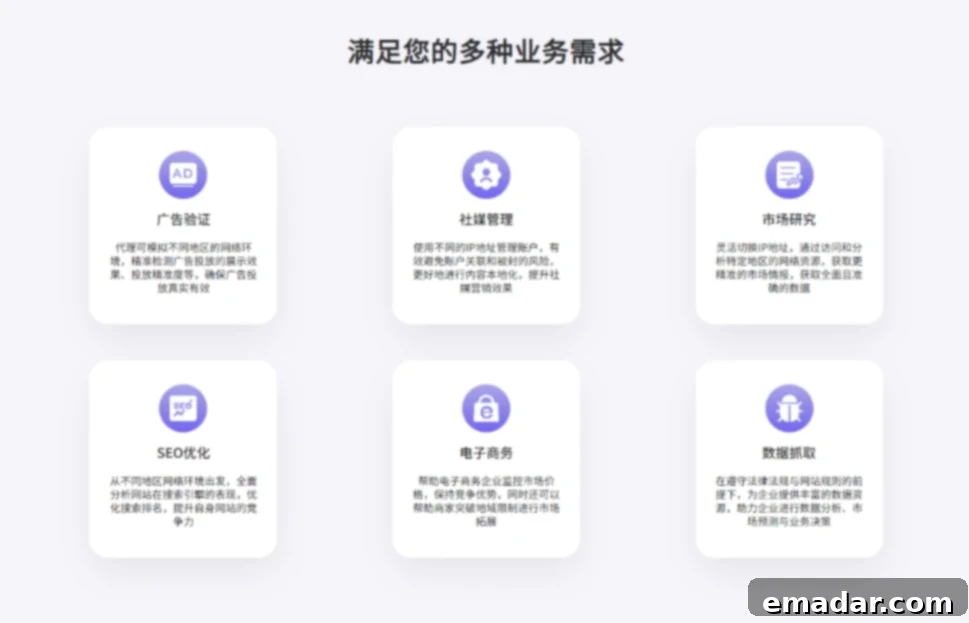
- Cross-Border E-commerce Operations: For localized price monitoring, product availability checks, international SEO, and geo-specific ad verification.
- Businesses Requiring Multi-Region Access: Any entity needing to access, test, or manage content and services from various geographical locations without restrictions.
Conclusion: Evolving from “IP Resources” to “Execution Infrastructure”
The true value of dynamic residential proxies, particularly as offered by IPFLY, extends far beyond the mere provision of an IP address. Its significance lies not in the “IP itself,” but profoundly in:
Its unparalleled capacity to support the long-term, stable, and scalable execution of critical online tasks.
IPFLY achieves this transformative capability through a meticulously engineered suite of components:
- A Highly Intelligent Scheduling System: Optimally matching requests with the right IPs, locations, and contexts.
- An Advanced Dynamic Rotation Mechanism: Ensuring anonymity and adaptability tailored to task specifics.
- A Rigorous Quality Control System: Guaranteeing a pristine and high-performing IP pool at all times.
Through this integrated approach, IPFLY effectively converts the inherent dynamism of residential IPs into a fully controllable and predictable capability. This strategic design elevates dynamic residential proxies from simple tools to an essential foundation:
The critical infrastructure layer for advanced AI and automation systems.
By providing a robust, reliable, and intelligent proxy infrastructure, IPFLY empowers businesses to scale their data operations, bypass sophisticated online defenses, and achieve consistent success in their automated initiatives, solidifying its role as a fundamental enabler of modern digital strategies.
Further Understanding and Engagement
If your organization is actively developing or operating AI-driven scraping or automation systems, a comprehensive evaluation of your current proxy solution is paramount. Key questions to consider include:
- Is your current success rate consistently stable across all your critical tasks? Inconsistent success can lead to incomplete data and wasted resources.
- Does your existing IP strategy truly align with the specific and evolving demands of your business scenarios? A one-size-fits-all approach is often inadequate for complex, high-value operations.
- Does your current proxy infrastructure possess the necessary scalability to support your projected growth and increasing data demands? Anticipating future needs is crucial for uninterrupted expansion.
Gaining a deeper understanding of IPFLY’s dynamic residential proxy solution can provide invaluable insights and serve as a crucial step toward constructing a more stable, resilient, and high-performing data execution system. We invite you to explore how IPFLY can empower your AI and automation endeavors with unparalleled reliability and efficiency.