
In an era defined by rapid advancements in AI automation, sophisticated data scraping techniques, and the seamless expansion of cross-border digital operations, the role of dynamic residential proxies has profoundly shifted. No longer merely supplementary tools, they have become an indispensable component—a foundational layer of core digital infrastructure for any enterprise navigating the complex online landscape.
However, amidst this technological evolution, a significant challenge persistently confronts businesses:
How can organizations achieve the delicate balance between paramount anonymity and unwavering connection stability at an operational scale that truly matters?
For too long, most conventional proxy solutions have presented users with an unavoidable trade-off. Companies were forced to choose between the ephemeral nature of high anonymity and the steadfastness of a stable connection. IPFLY’s innovative dynamic residential proxy architecture is meticulously engineered to transcend this compromise. It achieves this by taking the inherent variability of dynamic IP behavior and transforming it into a highly controlled, predictable, and remarkably stable execution layer—a crucial innovation for modern digital operations.

Understanding Dynamic Residential Proxies: The Foundation of Advanced Operations
Core Definition and Distinctive Features
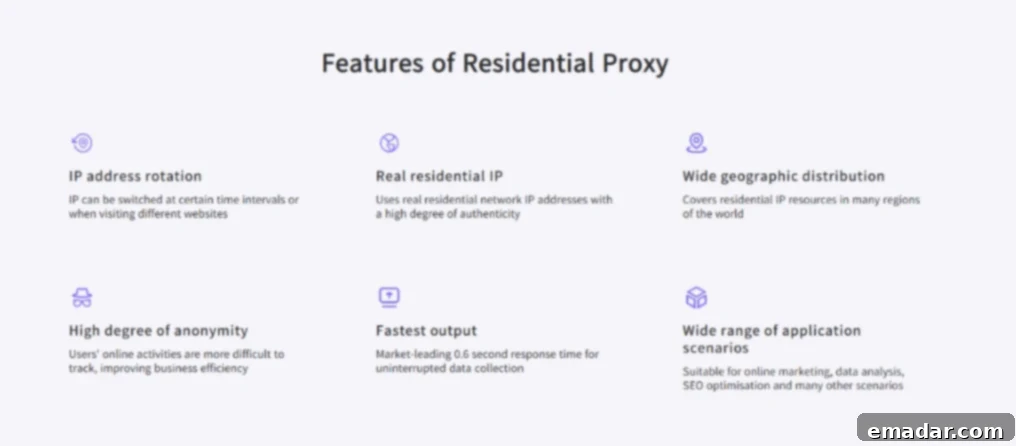
A dynamic residential proxy is a sophisticated networking tool that leverages IP addresses legitimately assigned by actual Internet Service Providers (ISPs) to genuine residential users. What truly distinguishes these proxies is their inherent ability to frequently rotate these IP addresses—either automatically over set intervals or on a per-request basis. This dynamic characteristic is vital for maintaining a low profile during extensive online activities.
The key characteristics that define dynamic residential proxies and elevate their utility include:
- Authentic Residential IP Origin: Each IP address originates from a real home user and is issued directly by an ISP, ensuring it appears as legitimate traffic to target websites.
- Advanced Dynamic Rotation Capability: The power to regularly change IP addresses prevents pattern detection and blocks, a critical feature for sustained operations.
- Precise Geo-Targeted Access: Users can specify IP locations down to the country or even city level, enabling highly localized data collection and market analysis.
Critically, unlike datacenter proxies, which are often flagged due to their commercial nature and shared server environments, residential proxies are perceived by sophisticated target platforms as originating from legitimate, individual user traffic. This fundamental difference is paramount to their success rate in bypassing detection systems.
Why Dynamic Residential Proxies Are Essential in the Current Digital Landscape
The digital ecosystem of today is more vigilant than ever. Modern online platforms, sophisticated e-commerce sites, and social media networks increasingly deploy advanced detection mechanisms to identify and block automated or suspicious activities. These mechanisms include:
- Behavioral Detection Models: Analyzing user interaction patterns to distinguish human from bot activity.
- IP Reputation Scoring: Assigning a trust score to IP addresses based on their historical behavior and association with suspicious activities.
- Geo-Consistency Validation: Scrutinizing the consistency of user location and IP origin to detect anomalies.
As a direct consequence of these evolving defenses:
- Datacenter IPs Face Exceedingly High Block Rates: Their identifiable nature makes them easy targets for blacklists.
- Static IPs Degrade Over Time: Even residential static IPs can lose their efficacy as their reputation erodes through repeated use from a single location.
- Automated Tasks Demand Adaptive IP Strategies: Relying on static or easily detectable IPs is a recipe for failure in high-volume or sensitive operations.
This is where dynamic residential proxies offer an unparalleled advantage. They provide a realistic and inherently adaptive approach to online access, making them indispensable for a wide array of critical digital tasks, including but not limited to:
- AI Data Collection and Model Training: Gathering vast datasets required to train machine learning algorithms without being blocked.
- Comprehensive Web Scraping: Extracting market intelligence, competitor data, and public information from websites with robust anti-bot measures.
- Precise Ad Verification: Ensuring ad campaigns are displayed correctly in target regions and are not subjected to fraud.
- Secure Multi-Account Operations: Managing numerous social media, e-commerce, or service accounts without triggering flags for account linking or suspicious activity.
- Brand Protection and Price Monitoring: Tracking intellectual property infringement, fake product listings, and competitive pricing across global markets.
IPFLY System Architecture: Engineered for Performance and Resilience
The Foundation: A Global, Robust IP Network
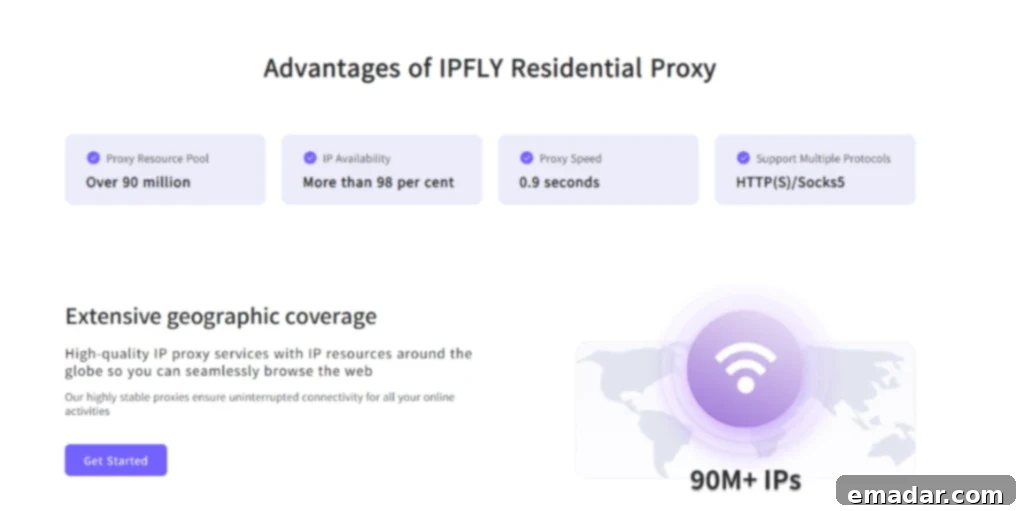
At the core of IPFLY’s superior performance lies its expansive and highly distributed proxy network. This infrastructure is built to deliver unparalleled reach and reliability:
- Massive 90M+ Residential IP Pool: Access to a colossal number of unique, legitimate IP addresses ensures an almost limitless supply for any scale of operation.
- Unmatched Coverage Across 190+ Countries: Providing granular access to virtually every major geographic region on the planet.
- Sophisticated Multi-Region Routing and Allocation: An intelligent system that directs traffic through optimal paths, minimizing latency and maximizing success rates.
This formidable infrastructure is the backbone that enables several critical functionalities:
- Granular Geo-Specific IP Selection: Users can precisely target IPs from specific countries, regions, or cities, tailoring their online presence to exact requirements.
- Intelligent Task-Based IP Allocation: The system dynamically assigns IPs optimized for the specific nature and demands of each task.
- Real-Time Load Balancing: Continuously distributing traffic across the network to prevent overload on any single IP or cluster, ensuring consistent performance.
The Brain: Intelligent IP Routing Engine (Core System)
The true intelligence behind IPFLY’s solution resides in its dynamic routing and allocation system. This advanced engine acts as the central nervous system, orchestrating IP assignment and traffic flow with precision and adaptability.
- Adaptive Request-Based Allocation:
IP assignment is not static but intelligently determined by the nature and requirements of each task:
- Single Requests: For quick, isolated data points, a fresh, unused IP is often assigned per request, maximizing anonymity and minimizing detection risk.
- Session-Based Workflows: For activities requiring sustained interaction, such as user logins or multi-step processes, a “sticky IP” binding maintains the same IP for the duration of the session, ensuring behavioral consistency.
- Parallel Tasks: When numerous operations run concurrently, the system ensures a distributed IP allocation, preventing any single IP from becoming overused or flagged.
- Advanced Geo-Targeting Logic:
Users are empowered to define incredibly specific parameters for IP selection, including:
- Country / City: Precise geographical targeting for localized data.
- ISP Type: The ability to select IPs from specific internet service providers, crucial for mimicking particular user demographics.
- Use-Case Scenarios: Optimizing IP selection based on the specific intent, e.g., an IP profile suitable for e-commerce login might differ from one for high-volume content scraping.
This meticulous control ensures that requests consistently align with expected user behavior patterns within the target region, drastically reducing the likelihood of detection and blocks.
- Proactive Load Balancing Mechanism:
The system is in constant analytical motion, continuously evaluating key performance indicators to optimize routing in real-time:
- IP Availability: Monitoring the real-time status of millions of IPs.
- Success Rates: Tracking the efficacy of IPs for specific target sites.
- Node Performance: Assessing the health and speed of various network nodes.
Based on this continuous assessment, the system dynamically adjusts routing paths to intelligently avoid common pitfalls such as:
- Overused IPs: Preventing saturation that could lead to IP blacklisting.
- Regional Bottlenecks: Rerouting traffic around congested or underperforming network segments.
- Performance Degradation: Maintaining optimal speed and responsiveness for all operations.
The Dynamic IP Rotation Mechanism: Adaptability in Action
Intelligent Rotation Triggers
IPFLY moves beyond simplistic, fixed-interval rotation. Instead, it employs highly adaptive rotation triggers that respond to the nuances of each task and target site:
- Per-Request Rotation (Default): For tasks demanding the highest level of anonymity and low-trace operations, a new IP is assigned for virtually every single request.
- Session-Based Rotation: IPs are maintained for a defined period or until a specific session concludes, ideal for multi-step interactions.
- Failure-Triggered Rotation: If an IP encounters a block, CAPTCHA, or excessive latency, the system automatically rotates to a fresh IP, ensuring operational continuity.
- Risk-Based Acceleration: For highly sensitive targets or those with aggressive anti-bot measures, rotation frequency can be intelligently accelerated to preemptively avoid detection.
Recommended Rotation Parameters for Optimal Performance
Determining the ideal rotation frequency is a strategic decision that significantly impacts success rates. Best practices are highly context-dependent, varying significantly by use case and target platform sensitivity:
- High-Frequency Scraping: For rapid data extraction from less sensitive sites, rotating per request often proves most effective for maximum anonymity and throughput.
- Medium Workloads: For balanced operations, rotating every 3–10 requests can strike a good balance between maintaining a session-like appearance and refreshing identity.
- Session-Based Workflows: When continuous interaction is paramount (e.g., logging in and navigating a user dashboard), maintaining a consistent IP for 5–30 minutes, or even longer, is often recommended.
This intelligent, customizable approach ensures a perfect equilibrium between:
- Enhanced Anonymity: Constantly changing identity to evade persistent tracking.
- Behavioral Consistency: Maintaining a stable presence when necessary to mimic legitimate user interaction.
- Maximized Execution Success Rate: Optimizing IP usage to achieve the highest possible data retrieval or task completion.
The Sticky Session System: The Cornerstone of Stability
Defining a Sticky Session for Persistent Operations
A sticky session, within the context of dynamic proxies, is a critical feature that allows a user to maintain the same IP address for a predefined duration. This capability is essential for workflows that require a persistent identity across multiple requests or interactions, providing a crucial layer of stability when anonymity needs to be balanced with consistent behavior.
IPFLY’s Advanced Implementation Logic
IPFLY’s sticky session system is engineered for robustness and ease of use:
- Unique Session ID Assignment: Upon initiation, a unique session ID is dynamically assigned and intrinsically linked to a specific IP address from the vast residential pool.
- Maintenance During Session Lifecycle: The system diligently maintains this IP-to-session ID mapping for the entire duration of the configured session, ensuring all requests originating from that session ID use the same IP.
- Automatic Release and Rotation: Once the session duration expires or the task concludes, the assigned IP is automatically released back into the available pool and rotated, preventing overuse and maintaining its fresh reputation.
Ideal Use Cases for Sticky Sessions
The stability offered by sticky sessions makes them perfectly suited for a range of critical, multi-step online operations:
- Account Login Sessions: Maintaining a consistent IP throughout the login process and subsequent account activity to prevent security flags.
- Multi-Page Browsing and Navigation: Simulating natural user journeys across several pages of a website, crucial for data collection where continuity matters.
- E-commerce Checkout Flows: Ensuring uninterrupted transactions, from adding items to a cart through payment processing, without triggering fraud detection systems.
- Behavioral Simulation: For sophisticated AI training or user experience testing, where consistent user behavior from a single “virtual user” is required over a period.
IP Quality Control Framework: Ensuring Peak Performance
Multi-Layer Filtering for Pristine IP Quality
To guarantee consistently high success rates and reliable data acquisition, IPFLY implements a rigorous, multi-layered filtering process for its entire IP pool:
- Robust Source Validation: Verifying the authenticity and residential nature of each IP address at its origin.
- Real-Time Availability Checks: Continuously monitoring the live status of IPs to ensure they are active and responsive before allocation.
- Historical Performance Filtering: Leveraging past performance data to filter out IPs that have shown poor success rates or frequent blocking on various target sites.
Dynamic Real-Time Scoring System
Beyond initial filtering, every IP within the IPFLY network is subject to continuous, real-time evaluation based on a comprehensive set of performance metrics:
- Response Latency: Measuring the speed at which an IP responds to requests.
- Request Success Rate: Tracking the percentage of successful requests an IP facilitates.
- Block/Flag Frequency: Monitoring how often an IP triggers security alerts or gets blocked by target sites.
IPs that consistently exhibit sub-optimal performance based on these metrics are immediately acted upon:
- Automatic Deprioritization: Lowering their ranking for allocation, ensuring higher-performing IPs are used first.
- Removal from Active Rotation Pools: Severely underperforming or blacklisted IPs are temporarily or permanently removed to maintain overall network integrity.
Unwavering Reliability and Optimized Success Rates
Advanced Failover and Intelligent Retry Logic
To virtually eliminate disruptions and ensure continuous operation, IPFLY integrates sophisticated failover and retry mechanisms:
- Automatic Retries for Failed Requests: If a request fails due to an IP issue, the system automatically attempts the request again with a fresh IP.
- Instant Backup IP Assignment: In case of persistent failure or an unresponsive IP, a highly-rated backup IP is instantly assigned to seamlessly continue the task.
- Real-Time Adaptive Routing Logic: The intelligent routing engine dynamically learns from failures, adapting its strategy to route around problematic IPs or network segments.
Scalability and High Concurrency Support
IPFLY’s architecture is built from the ground up to handle the most demanding operational needs:
- Support for High Concurrency Workloads: Enabling thousands, even millions, of simultaneous requests without performance degradation.
- Optimized for Distributed Scraping Architectures: Seamlessly integrates with distributed scraping frameworks, allowing for massive data collection efforts.
- Efficient Multi-Threaded Execution: Designed to maximize the efficiency of multi-threaded applications, accelerating data processing.
This robust foundation guarantees stable and consistent performance even under the most extensive and resource-intensive large-scale operations.
Dynamic Residential Proxies vs. Other Proxy Types: A Strategic Comparison
Dynamic Residential vs. Datacenter Proxies
- Datacenter Proxies: Offer raw speed and are typically more cost-effective. However, they are easily detectable by advanced anti-bot systems due to their identifiable server-based IP ranges, leading to high block rates for sensitive targets. They are best suited for non-sensitive, high-volume, low-risk tasks.
- Dynamic Residential Proxies: While potentially slightly slower than datacenter proxies (due to routing through real residential networks), they offer significantly higher reliability and a dramatically lower chance of detection. Their legitimacy as real user IPs makes them ideal for circumventing even the most sophisticated detection methods. They are the go-to choice for high-value data, sensitive targets, and sustained operations.
Dynamic Residential vs. Static Residential Proxies
- Static Residential Proxies (ISP Proxies): These provide a single, dedicated residential IP address that does not change. They are ideal for maintaining a consistent online identity over extended periods, making them perfect for tasks like managing long-term social media accounts, specific e-commerce store logins, or maintaining a persistent local presence. They offer stability but lack the inherent anonymity of rotation.
- Dynamic Residential Proxies: These are specifically optimized for tasks that require frequent IP changes to maintain anonymity and avoid pattern-based detection. They excel in large-scale web scraping, AI data collection, ad verification, and any automation task where rapidly changing IP addresses are an advantage for bypassing blocks and maintaining a fresh digital footprint. They prioritize anonymity and adaptability over single-identity persistence.
Practical Use Cases: Where IPFLY Excels
IPFLY’s dynamic residential proxy solution is purpose-built to empower a wide array of mission-critical applications across various industries.
AI Data Collection & Training
The insatiable demand for high-quality, diverse data to train AI models makes proxies indispensable. IPFLY ensures seamless data flow:
- Per-Request IP Rotation: Guarantees a fresh perspective for each data point, preventing pattern detection.
- Distributed Task Execution: Allows for parallel data collection across numerous sources without bottlenecks.
- Intelligent Rate Control Strategies: Mimics human browsing patterns to avoid triggering anti-bot measures.
E-commerce Monitoring and Competitive Intelligence
Stay ahead in the competitive e-commerce landscape by gaining real-time insights:
- Geo-Targeted Pricing Checks: Accurately gather pricing data from specific geographical markets to optimize your own pricing strategies.
- Comprehensive Competitor Tracking: Monitor competitor product launches, promotions, and marketing tactics discreetly.
- Real-time Inventory Monitoring: Track product availability, restocks, and stockouts across various platforms to inform your supply chain.
Social Media & Multi-Account Management
Safely manage and scale your presence across multiple social media accounts without fear of detection or bans:
- Sticky Sessions for Account Consistency: Assign a dedicated IP for each social media account session, mimicking legitimate individual users.
- Significantly Reduced Risk of Account Linkage: Prevents platforms from connecting multiple accounts to a single source IP, which could lead to mass bans.
- Geo-Specific Engagement: Enable targeted interactions from specific regions, enhancing authenticity.
FAQ (Featured Snippet Optimized)
Do I need residential proxies for AI scraping?
Not always. For targets with minimal security or publicly available APIs, datacenter IPs may suffice due to their speed and cost-effectiveness. However, for accessing high-value, protected sources such as major social media platforms, e-commerce marketplaces, or proprietary databases, residential proxies significantly improve success rates by appearing as legitimate user traffic and bypassing sophisticated detection systems.
Is faster IP rotation always better for anonymity?
No, faster IP rotation is not inherently better. While frequent rotation enhances anonymity by constantly changing your digital fingerprint, excessive or unpatterned rotation can paradoxically trigger detection mechanisms that flag unnatural browsing behavior. Optimal rotation depends entirely on the specific task type and the sensitivity of the target platform; sometimes, a slower, more consistent approach (sticky sessions) is more effective.
How can I improve my web scraping success rate and avoid blocks?
To drastically improve your web scraping success rate and minimize blocks, focus on three critical factors: 1. Utilize high-quality dynamic residential IPs to appear as legitimate users. 2. Implement controlled and randomized request frequencies to mimic human browsing patterns. 3. Employ an adaptive rotation strategy that adjusts IP changes based on target site sensitivity and task requirements, rather than fixed intervals.
What makes IPFLY different from other proxy providers?
IPFLY distinguishes itself by combining several cutting-edge features: a massive, globally distributed IP pool (90M+ IPs), an intelligent routing system that adapts to task needs and geo-targeting, and a robust real-time IP quality control framework. This integrated approach allows IPFLY to deliver an unparalleled blend of both high anonymity and exceptional operational stability, solving the persistent trade-off faced by many businesses.

From a Mere Proxy Tool to Indispensable Execution Infrastructure
The landscape of digital operations has fundamentally changed. Dynamic residential proxies are no longer merely auxiliary access tools; they have evolved into essential execution infrastructure, underpinning sophisticated AI systems and complex automation workflows. They provide the critical bridge between ambitious digital strategies and their successful, unhindered implementation.
IPFLY’s innovative solution seamlessly integrates a suite of powerful technologies:
- Intelligent, Adaptive Routing: Directing traffic with precision and efficiency.
- Dynamic, Context-Aware Rotation: Changing IPs based on necessity, not just intervals.
- Rigorous Quality Assurance Systems: Ensuring every IP performs optimally.
Together, these components transform the often unpredictable nature of dynamic IP usage into a predictable, highly scalable, and exceptionally stable layer—empowering businesses to operate with confidence and achieve their strategic objectives without digital barriers.
Get Started with IPFLY: Unlock Your Automation Potential
If your organization’s current scraping or automation systems are frequently encountering significant roadblocks, such as:
- High failure rates that impede data collection.
- Frequent IP blocks leading to lost time and resources.
- Inconsistent data collection that compromises the integrity of your insights.
then it is unequivocally time to assess and upgrade your underlying proxy infrastructure. The cost of continued inefficiency far outweighs the investment in a robust solution.
Explore IPFLY’s dynamic residential proxy solution today to build a more stable, scalable, and resilient execution environment for all your AI, scraping, and automation needs. Invest in the infrastructure that will power your future growth and success.