
In the competitive world of international digital marketing, it’s common to hear experienced marketers lament: “My creative was original, my landing page was compliant, yet my ad account was suspended within hours.” Or, “I precisely targeted a U.S. audience, but the clicks I received were all low-quality traffic.” These frustrations, while seemingly diverse, often stem from a single, overlooked foundational issue: IP Purity.
The integrity of your IP address, often dismissed as a minor technical detail, is in fact the bedrock of successful and sustainable online advertising campaigns. It’s the silent guardian or hidden saboteur that dictates the very viability of your digital presence and the authenticity of your interactions with sophisticated ad platforms.
Why Pure IP is the Essential “Entry Ticket” for the Advertising Industry
Any seasoned advertiser knows that the anti-fraud and risk control systems of major platforms like Google Ads, Meta (Facebook), or TikTok operate with the vigilance of a 24/7 “super police” force. These sophisticated systems don’t just scrutinize your operational behavior; they perform a deep scan of your network fingerprint. At the absolute base level, the purity of your IP address forms the very essence of this digital identity, influencing how these platforms perceive your legitimacy and trustworthiness.
1. The Threat of Associated Strikes: Paying for Others’ Misdeeds
Imagine you rent an IP address that has previously been “contaminated” by hundreds of illicit accounts engaging in fraudulent activities. Using this IP to log into your brand-new ad account is akin to moving into a property that’s already on the police’s most-wanted list. Even if your intentions are entirely legitimate and your subsequent actions impeccable, the platform’s algorithmic eyes will likely associate you with the previous offenders. This is the perilous phenomenon of associated strikes.
Advertising platforms constantly evaluate the risk level of your operating environment based on your IP purity. If an IP is found to have a history of severe blackhat activities, spamming, or other policy violations, your meticulously crafted ad creatives, compelling offers, and perfectly optimized campaigns may be instantly flagged and banned. A tainted IP can nullify all your strategic efforts, leading to immediate account suspension and a significant waste of time and resources. Therefore, ensuring your IP has a pristine history is not merely a recommendation; it’s a critical prerequisite for entry into the digital advertising arena.
2. Unpacking “True IP Purity”: A Multifaceted Definition
In the context of advertising, IP purity is far more nuanced than a simple “good” or “bad” designation. It encompasses a triad of critical dimensions, each playing a vital role in establishing your digital credibility:
- Impeccable History: A truly pure IP must have no prior blacklisting records with internationally recognized anti-spam databases like Spamhaus, Surbl, or DNSBL. These databases maintain comprehensive lists of IP addresses known for malicious activities, and an entry here is an immediate red flag for any reputable ad platform.
- Vertical Usage: This dimension refers to the specific and appropriate use of the IP. A pure IP should not have been simultaneously utilized by thousands of unrelated entities for activities like aggressive data scraping, brute-force attacks, or mass account registration. Such widespread, non-standard usage patterns immediately signal suspicious behavior to platform algorithms, often leading to it being categorized as a proxy or bot network.
- Authentic Identity: From the perspective of an ad platform’s risk engine, your IP should convincingly appear to belong to a genuine user browsing from a home broadband connection, rather than a suspicious entity operating out of a data center. This authenticity is crucial for building trust, especially for new accounts attempting to establish legitimacy and avoid the dreaded “new account review” phase with prolonged scrutiny.

In-Depth Analysis: The 4 Critical Metrics for Evaluating IP Purity
Assessing whether an IP’s purity meets the stringent standards required for modern advertising isn’t a matter of chance; it demands data-driven scrutiny. The following four indicators serve as our “golden rules” when meticulously evaluating and selecting IP resources for advertising campaigns, ensuring robust performance and minimizing risk.
1. IP Fraud Score: Gauging Your Proximity to Risk
In the professional realm of anti-fraud, we frequently rely on independent third-party detection tools such as Scamalytics or IP-Score. These services assign a fraud score to an IP address, where a higher score directly correlates with increased suspicion of fraudulent activity or proxy usage. This numerical value provides an immediate and quantifiable measure of an IP’s potential risk profile.
- Practical Experience: Our extensive experience shows that an IP with a fraud score exceeding 20 is almost certainly considered “unusable” for high-value advertising campaigns. If your IP’s fraud score hovers around 40 or even climbs to 60, it indicates an almost 100% probability that Google or Meta will flag it as a proxy, VPN, or bot-controlled address. Utilizing such an IP will severely cripple your ad performance, resulting in extremely low impression rates, immediate ad disapproval, or even outright account suspension before your campaigns can gain any traction.
2. Blacklist Status in Databases: Avoiding the Legacy of Violations
Many novice advertisers often express confusion: “I purchased a brand-new proxy, so why is it still failing?” The answer lies in the nature of IP address allocation. IP addresses are not infinite; they are cyclical assets that are frequently recycled and reassigned. Some less reputable providers will quickly “cool down” and resell IP addresses that have just been exploited for illicit activities and subsequently blacklisted by authoritative databases like Spamhaus or DNSBL. This practice is akin to buying a used car with a hidden history of numerous traffic violations – the moment you take it on the road, you’re likely to be pulled over.
Therefore, the very first and most crucial step in verifying IP purity is to meticulously check its status against these leading blacklist databases. A clean record ensures you’re not inheriting the digital baggage and negative reputation of previous users, allowing your advertising efforts to start on a truly fresh and trustworthy foundation.
3. IP Attributes and Usage Type (ASN & Usage Type): A Mark of Identity
This metric is often the distinguishing factor between a “professional advertiser” and an “amateur player.” It speaks to the fundamental nature and intended use of the IP address, providing critical clues to ad platforms about its authenticity.
- Datacenter IP: These IPs are typically inexpensive and easily identifiable. They are registered to data centers, hosting providers, or cloud services. From a platform’s perspective, it’s highly improbable for a genuine, everyday user to be tweeting or browsing Facebook from an IP address originating directly from a server farm. These IPs are often associated with bots, VPNs, and malicious automated activities, making them a high-risk choice for advertising.
- Residential IP: This category boasts the highest degree of purity. Residential IPs are legitimately assigned by Internet Service Providers (ISPs) to real home users. They represent genuine, individual internet connections, mimicking the natural online behavior of ordinary consumers.
- Why Major Platforms Prioritize Native Residential IPs: Risk control systems are designed to minimize false positives. They understand that blocking a datacenter IP primarily impacts automated scripts and bots. However, blocking a high-purity residential IP carries a significant risk of inadvertently penalizing a legitimate consumer. Consequently, using high-purity residential IPs for ad verification, account management, and campaign delivery inherently carries greater weight and trust within these systems, significantly reducing the likelihood of bans and increasing visibility.
4. Proxy Concurrency and Geographical Consistency
The laws of physics apply even in the digital realm: a single, authentic IP address cannot simultaneously exist in Los Angeles and New York. If an IP exhibits thousands of concurrent connections within a short timeframe, or if its WebRTC detection reveals a geographical location that dramatically conflicts with the IP’s registered ownership region, its perceived purity will instantly plummet. This kind of inconsistency is one of the most effective methods employed by sophisticated risk control systems to detect and counteract mass account farming operations, bot networks, and fraudulent activities. Maintaining a realistic number of concurrent connections and absolute geographical alignment between the IP address and other browser/device signals is paramount for preserving IP integrity.
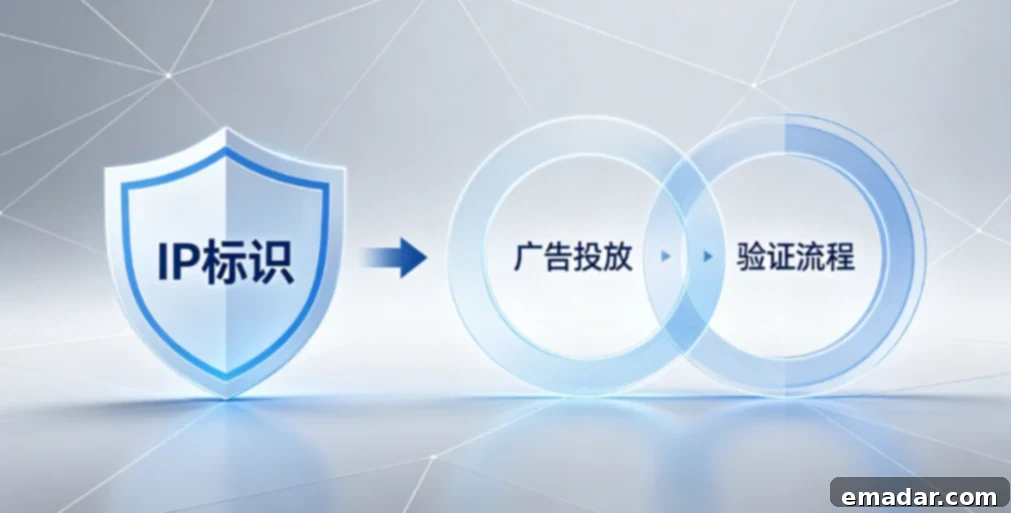
Real-World Business Scenarios: How IP Purity Dictates Ad Success or Failure
Many new advertisers mistakenly pour all their energy into perfecting ad creatives and optimizing bidding strategies, only to stumble over fundamental issues in their underlying network environment. If the IP address you use lacks sufficient purity, even the most ingenious advertising strategy is built upon a foundation of sand, destined to collapse. Understanding the practical implications of IP purity across various advertising stages is crucial for sustainable success.
1. Ad Delivery Stage: Significantly Reducing Account Suspension Rates
In the algorithmic eyes of Meta or Google, an impure IP address is akin to a stained and dubious identification document. It immediately raises suspicion and triggers heightened scrutiny, making your accounts far more vulnerable to bans and restrictions.
Multi-Account Association Protection: Avoiding “Collective Punishment”
Consider a real-world scenario: I witnessed a team attempting to cut costs by purchasing a batch of cheap, low-quality proxies. The moment they ran a single ad account through a fingerprint browser, the entire group of 50 associated accounts was immediately suspended. The reason was simple: the shared IP pool had been previously utilized by other blackhat projects, causing the system to flag it as “organized fraudulent activity.” Utilizing high-purity IPs with a strict 1:1 isolation model (one IP per account or user profile) is the fundamental safeguard against such devastating associated bans, ensuring that the fate of one account doesn’t jeopardize your entire operational capacity.
Simulating Authentic User Behavior
Ad platforms perform extensive “deep scans” of the visitor’s environment. An IP pure node typically has an Autonomous System Number (ASN) corresponding to a local broadband internet service provider. When this is combined with advanced fingerprint browser technologies, the system is convinced that it’s observing a regular user—perhaps an American homemaker or a British student—browsing the web. This high level of trust is indispensable for allowing new accounts to smoothly navigate and successfully pass through the critical “new user probation period” without undue suspicion or immediate restrictions.
2. Ad Verification Stage: Unmasking Fraudulent Traffic
As an advertiser, your responsibility extends beyond merely launching campaigns; you must also rigorously ensure that your budget is allocated effectively and genuinely, free from fraudulent traffic. IP purity is paramount in this verification process.
Authentic Landing Page Detection
Some unscrupulous traffic providers employ sophisticated “cloaking” techniques, presenting a compliant and legitimate landing page when they detect that the visitor is a datacenter IP (like an ad platform crawler or a proxy). However, when a real user accesses the ad, they are redirected to a fraudulent, misleading, or even malicious product page. Only by utilizing high-purity residential IPs can you truly mimic the experience of a “local, genuine user” and accurately observe the actual, uncloaked results of your advertising efforts, thereby exposing potential fraud.
Bypassing Cloaking Techniques for Competitor Analysis
When conducting vital competitor analysis, if your IP address is identified as a proxy or VPN, your rival’s cloaking system will likely block your access, preventing you from seeing their true ad creatives and landing page strategies. Possessing IP pure resources grants you the ability to operate like an “invisible observer,” allowing you to meticulously analyze your competitors’ genuine advertising materials, landing page logic, and conversion flows without being detected or misled by anti-bot measures, providing an invaluable strategic advantage.
Industry Insights: Why Many “Pure IPs” on the Market Aren’t Truly Pure
While numerous proxy providers boldly claim to offer “100% pure” IPs, the reality often hides deceptive practices and inherent limitations. Understanding these industry nuances is vital for making informed decisions.
1. The Trap of Recycled IPs: The “Dead Loop” of Second-Hand Transit
Due to the global exhaustion of IPv4 addresses, many proxy providers engage in a constant cycle of “recycle and reuse.” This often means that an IP address used yesterday for sending out spam emails might be “cleaned” and resold to you today for advertising purposes. Resources with such abysmal purity carry a detrimental legacy; their prior negative behavioral records are indelibly etched into the databases of major ad platforms. Consequently, when you acquire and use these IPs, you’ll inevitably discover that your ad accounts are unable to survive even 24 hours, leading to continuous bans and wasted investment.
2. The Crucial Difference Between Public and Dedicated Pools
Low-cost proxy services almost invariably operate using public IP pools. This can be likened to a public swimming pool: while the water might appear clear, you have no way of knowing who has been in it or what contaminants might be lurking beneath the surface. With public pools, you share IPs with countless other users, whose activities (good or bad) directly impact the purity of the IP you’re assigned. Only truly dedicated static residential IPs, which are exclusively assigned to a single user for an extended period, can provide a physical and logical guarantee of consistent IP purity, offering unparalleled stability and reduced risk of shared reputation damage.
3. User Misjudgment Due to Data Latency
A significant challenge in IP purity assessment is the inherent data lag in many detection tools. These tools often operate with a delay of 2-3 days, meaning an IP that appears “green” and clean in their system might, in reality, have been blacklisted or throttled by TikTok or Google just half an hour prior. This latency highlights the critical importance of choosing a provider that offers real-time or near real-time monitoring capabilities for IP purity, ensuring that the information you rely on is current and accurate.
Advanced Tutorial: How to Effectively Detect and Verify IP Purity
To excel in digital advertising, one must first master the tools of the trade. Here, we present practical and effective methods for meticulously detecting and verifying the purity of an IP address, empowering you to make informed decisions and safeguard your campaigns.
1. Essential Tool Checklist for IP Purity Assessment
We highly recommend incorporating the following tools into your IP verification workflow:
- Whoer.net: This widely used tool is excellent for checking your IP’s anonymity and overall disguise level, providing insights into potential leaks and discrepancies in your browser environment.
- IPIP.net: For precise geographical location verification and accurate IP ownership details, IPIP.net offers reliable data to confirm the true origin of your IP.
- IPFLY’s Internal Real-time Purity Scoring System: Leveraging a provider with an integrated, dynamic purity assessment system like IPFLY’s ensures you have access to the most up-to-date and granular insights into an IP’s trustworthiness, crucial for fast-paced advertising operations.
2. The Three-Step Verification Method: Unmasking Digital Disguises
To ensure a comprehensive purity check and leave no stone unturned, implement this rigorous three-step verification process:
- ① Physical Address and Timezone Alignment Detection: Scrupulously verify that the IP’s reported geographical location (city, state, country) perfectly aligns with your browser’s configured timezone settings. Any discrepancy here immediately signals the use of a proxy or VPN to sophisticated risk control systems, even if the IP itself appears superficially clean.
- ② WebRTC Leak Test: This often-overlooked vulnerability is the “Achilles’ heel” for many proxy users. WebRTC (Web Real-Time Communication) can inadvertently expose your true internal IP address, even when you are actively using a proxy. If your WebRTC leaks your real IP, the perceived IP purity becomes irrelevant, as the system can instantly discern your proxy usage and real origin, compromising your anonymity and trustworthiness.
- ③ Social Platform (e.g., TikTok) “First Screen Load Speed” Implicit Judgement: This is a powerful, albeit subtle, industry trick. If an IP address consistently exhibits abnormal lag when loading TikTok videos, or if the initial screen is predominantly filled with gray placeholder images, it often serves as an implicit indicator that the IP segment has been silently throttled or deprioritized by the platform. This behavior is a strong signal of extremely low purity, suggesting the IP has been flagged due to overuse, suspicious activity, or a history of violations, leading to a degraded user experience and poor ad performance.
Why IPFLY is the Preferred Solution for the Advertising Industry
At IPFLY, we unequivocally view IP purity as the lifeblood of our product and the cornerstone of our service. Our commitment to providing unparalleled IP quality is woven into every aspect of our operations, making us the ideal partner for discerning advertisers.
1. IPFLY’s Native Residential Resources: Unmatched Authenticity
We boast an expansive network of premium nodes spanning over 190 countries worldwide. The IPs within our network are genuinely “native” – they originate directly from Internet Service Providers and are indistinguishable from the connections of real home users. In the discerning eyes of major advertising platforms, these are the most trusted and authentic traffic sources available, providing an unmatched foundation of credibility for your ad campaigns and account management.
2. Dynamic Rotation and Dedicated Customization: Flexibility Meets Purity
Understanding the diverse needs of modern advertising teams, we offer flexible solutions tailored to various operational scales. Whether your team requires dynamic residential IPs for high-volume, rotating tasks that prioritize scale and anonymity, or you demand the ultimate stability and exclusivity of dedicated static IPs for long-term account management, IPFLY ensures that the purity of every IP delivered remains at the industry’s absolute pinnacle. Our infrastructure is designed to provide both adaptability and unwavering quality.
3. Extremely Low Fraud Rate Guarantee: Proactive Purity Management
Our commitment to purity is backed by a robust, proactive management system. Our sophisticated backend continuously monitors and cleanses our IP pool 24/7. The moment an IP’s purity score shows any sign of degradation or suspicious activity, it is immediately removed from our active inventory and put into a cooling period. This rigorous, real-time filtering process guarantees that every single IP address handed over to our users has undergone stringent vetting and meets the highest standards of purity, significantly mitigating your risk of fraud and account suspension.
Conclusion: IP Purity is Not Just a Technicality, It’s a Core Advertising Strategy
As we navigate the complexities of digital advertising in 2026 and beyond, the battle for campaign success has fundamentally shifted. It’s no longer solely about the “creative arms race” but has evolved into a strategic contest of underlying infrastructure and foundational integrity. Operating within a high-purity IP environment can save you countless detours, eliminate frustrating account bans, and significantly reduce the costly “tuition fees” often associated with trial-and-error advertising.
Instead of enduring the arduous and often fruitless process of appealing account suspensions, it is far more strategic and cost-effective to proactively choose a professional and transparent partner like IPFLY from the very outset. Protecting your invaluable digital assets begins with the fundamental assurance that every single IP you utilize possesses impeccable purity. Make IP purity the cornerstone of your digital marketing strategy, and pave the way for consistent, reliable, and highly effective advertising outcomes.