
In today’s hyper-competitive and data-driven market, the concept of a static price tag is rapidly becoming obsolete. By 2026, leading retailers are projected to adjust prices millions of times daily, a sophisticated response to a multitude of real-time market dynamics. This isn’t merely about opportunistic pricing; it represents a paradigm shift towards precision revenue optimization. This advanced approach benefits businesses by maximizing profitability and, when executed thoughtfully, can also benefit consumers through enhanced product availability and operational efficiency across various sectors.
The evolution of dynamic pricing, often referred to as “surge pricing,” has dramatically expanded beyond its origins in ride-hailing services like Uber. What began as a simple mechanism to balance supply and demand in a specific service industry has transformed into a complex, algorithm-driven strategy embraced by e-commerce giants, global airlines, hotel chains, and even local restaurants. These sophisticated pricing models, powered by artificial intelligence and machine learning, possess a capability that would have seemed almost magical to traditional merchants operating with fixed price lists. Understanding this rapid evolution is crucial, as it reveals both the competitive necessity driving its adoption and the intricate complexities involved in its successful implementation.
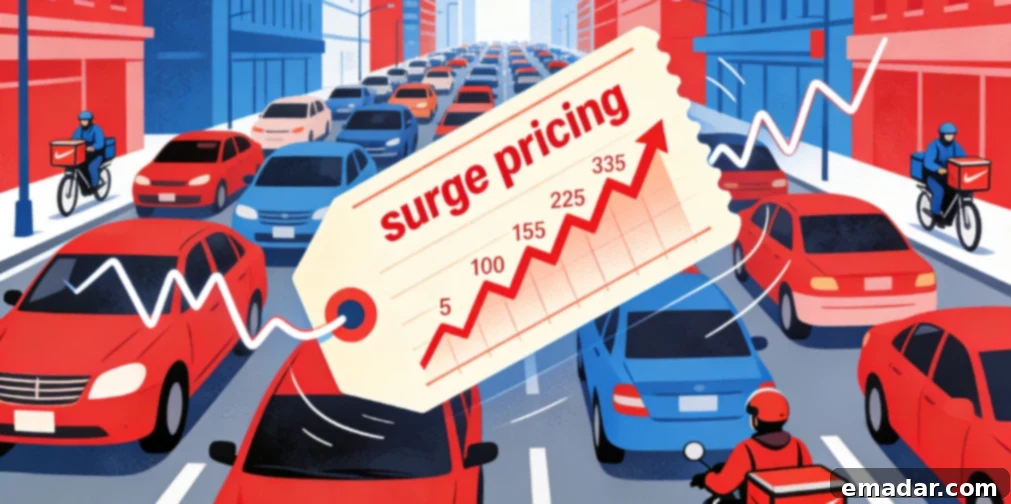
The Foundational Economics of Dynamic Pricing
At its core, dynamic pricing, or surge pricing, serves to solve one of the most fundamental challenges in business: managing fixed supply in the face of variable demand. Consider a scenario where 10,000 potential customers are eager to purchase a product, but only 1,000 units are available. How does a business fairly and efficiently allocate these scarce resources? Traditional methods often fall short. A first-come, first-served approach can lead to scalping by resellers and create an unfair advantage for those with faster internet connections or more time. Lotteries, while seemingly fair, are inefficient and time-consuming. Long queues frustrate customers and damage brand perception. Dynamic pricing offers a pragmatic solution by allowing the market’s willingness-to-pay to determine allocation. This mechanism not only optimizes resource distribution but also captures the value that would otherwise be siphoned off by secondary markets or scalpers, thereby ensuring that the primary seller realizes the full market potential of their product or service.
The mathematical bedrock of dynamic pricing lies in the concept of price elasticity—a measure of how sensitive customer demand is to changes in price. Industries like airlines perfected this decades ago, mastering the art of yield management. For a single flight, identical seats could be sold at radically different prices based on factors such as booking lead time, sophisticated demand forecasting models, and competitive positioning within the market. Modern e-commerce platforms have extrapolated these principles, applying them to a vast array of offerings, including physical goods, digital subscriptions, and experiential services. This intricate dance between supply, demand, and price sensitivity allows businesses to continuously adjust their strategies to market conditions, maximizing profitability while striving to meet consumer needs.
The Three Essential Pillars of Dynamic Pricing Implementation
Successfully implementing dynamic pricing strategies requires a robust framework built upon three critical pillars: accurate demand forecasting, comprehensive competitive intelligence, and sophisticated price optimization algorithms. Each pillar plays a distinct yet interconnected role in enabling businesses to react swiftly and strategically to market shifts.
Pillar 1: Precision Demand Forecasting
Accurate demand forecasting is the bedrock upon which effective dynamic pricing is built. It necessitates predicting future demand before it fully materializes, allowing businesses to proactively adjust prices rather than reactively chase trends. This predictive capability relies on synthesizing a diverse range of data inputs:
- Historical Patterns: Analyzing past sales data to identify seasonality (e.g., holiday spikes), day-of-week effects, and the impact of previous promotional calendars. This provides a baseline understanding of recurring trends.
- Real-time Signals: Monitoring immediate indicators of interest and intent, such as search volume for specific products, items added to online shopping carts, trending topics on social media platforms, and website traffic fluctuations. These signals offer a snapshot of current market sentiment.
- External Factors: Incorporating broader environmental and economic data, including local weather patterns, major public events (concerts, sports), economic indicators (inflation, consumer confidence), and competitor pricing strategies. These macro factors can significantly influence purchasing behavior.
The true sophistication in demand forecasting lies in “feature engineering”—the art and science of identifying which of these numerous signals are truly predictive of future demand. Advanced machine learning models, such as gradient boosting machines and Long Short-Term Memory (LSTM) networks, are employed to process hundreds, sometimes thousands, of these features. These models learn complex relationships within the data to generate highly granular demand curves, often down to specific Stock Keeping Unit (SKU), geographical location, and precise time combination. This granular insight allows retailers to anticipate demand peaks and troughs with unprecedented accuracy, enabling them to set prices that perfectly align with market readiness.
Pillar 2: Robust Competitive Intelligence
Dynamic pricing does not operate in a vacuum; it exists within a vibrant and often aggressive competitive landscape. Setting prices too high risks alienating customers who will readily defect to competitors offering better value. Conversely, pricing too low erodes profit margins and leaves potential revenue on the table. Therefore, continuous, real-time competitor monitoring is not merely advantageous—it is absolutely essential for maintaining market relevance and profitability. This intelligence allows businesses to understand market benchmarks, identify competitive threats, and adjust their own pricing strategies defensively or offensively.
Gathering this crucial competitive data, however, presents significant technical challenges. Major online retailers invest heavily in sophisticated anti-bot measures designed to prevent automated data scraping. These defenses include rate limiting (restricting the number of requests from a single IP address), IP blocking (blacklisting suspicious IP ranges), JavaScript challenges (requiring browser-like execution), and advanced behavioral fingerprinting (identifying non-human interaction patterns). Data center IP addresses, commonly used for commercial scraping, are easily identified and blocked by these systems. To bypass these intelligent defenses and gather truly accurate, persistent competitive intelligence, businesses require access to genuine residential internet connections.
This is precisely where IPFLY’s residential proxy network becomes an indispensable tool. With access to over 90 million authentic residential IP addresses spanning more than 190 countries, IPFLY empowers retailers to monitor competitor pricing and product availability as if they were genuine local customers. This capability allows businesses to seamlessly bypass even the most advanced detection systems that effectively block commercial scraping attempts. Furthermore, IPFLY offers both static residential proxies, which maintain a persistent identity, ideal for sustained tracking of specific competitor websites over extended periods, and dynamic rotation options, enabling high-frequency monitoring across vast product catalogs without triggering rate limits. The geographic precision offered by IPFLY is critically important. A product priced at €49 in Germany might command $59 in the United States and ¥6,900 in Japan. These variations reflect distinct market-specific demand curves, local competitive dynamics, and varying purchasing power. IPFLY’s extensive 190+ country coverage ensures businesses obtain authentic local pricing intelligence, rather than relying on generalized approximations derived from distant, less relevant vantage points. This granular, location-specific data is fundamental for truly optimized dynamic pricing strategies.
Pillar 3: Advanced Price Optimization Algorithms
Once demand forecasts are generated and competitive positions are understood, the final step involves intelligent algorithms determining the optimal price points. These algorithms are the decision-making engine of a dynamic pricing system, balancing multiple objectives and constraints:
Rule-Based Systems: These are the simplest forms of price optimization, operating on a predefined set of “if-then” rules. For example: “If inventory falls below 100 units AND demand velocity exceeds 50 units per day, then increase the price by 10%.” While interpretable and easy to implement initially, rule-based systems are limited in their ability to adapt to complex, unforeseen market conditions or optimize across multiple conflicting objectives.
Reinforcement Learning (RL): More advanced than rule-based systems, RL algorithms learn optimal pricing strategies through continuous trial-and-error. They operate by balancing “exploration” (testing new price points to gather data on their impact) with “exploitation” (charging prices that are known to be optimal based on past experiences). RL models can adapt to evolving market conditions and discover non-obvious pricing strategies, but they require substantial historical data, careful configuration, and robust guardrails to prevent undesirable pricing outcomes or customer backlash.
Constrained Optimization: This approach uses mathematical programming to maximize a specific objective (e.g., total revenue or profit) subject to a set of predefined constraints. These constraints might include a minimum acceptable profit margin, a maximum frequency or percentage of price changes (to avoid customer shock), or rules ensuring competitive parity. Constrained optimization offers a powerful way to systematically find the best possible price within a defined operational framework, ensuring that business objectives and ethical considerations are explicitly integrated into the pricing decision.
Implementation Architecture: Building the Dynamic Pricing Engine
A sophisticated dynamic pricing system is not a standalone application; it’s an intricate ecosystem of interconnected components. It requires robust data pipelines, real-time processing capabilities, and scalable infrastructure to operate effectively at the speed of modern commerce. The architecture typically involves distinct layers for data collection, processing, optimization, and execution.
Data Collection Layer
The foundation of any dynamic pricing system is its ability to collect vast amounts of relevant data, particularly competitive pricing intelligence. This often involves leveraging specialized tools and services to overcome the challenges posed by anti-bot measures, as exemplified by IPFLY’s residential proxy network.
# Competitive price monitoring with IPFLY residential proxiesimport requests
from ipfly import ResidentialProxyPool  # Conceptual integration for illustration purposesclassCompetitiveIntelligence:def__init__(self):
        self.proxy_pool = ResidentialProxyPool(
            locations=['US','DE','JP','GB'],# Specify key markets for competitive intelligence
            rotation='dynamic',# Rotate IP addresses per request to avoid detection
            pool_size=1000)defget_competitor_price(self, sku, competitor, market):
        """Fetches a single competitor's price for a given SKU in a specific market."""
        proxy = self.proxy_pool.get_proxy(market) # Get a geographically relevant residential proxy

        headers ={'User-Agent': self.proxy_pool.get_ua(),# Use an authentic browser User-Agent'Accept-Language': self.get_market_language(market),} # Set language header

        try:
            response = requests.get(f'https://{competitor}.{market}/product/{sku}',
                proxies={'https': proxy},
                headers=headers,
                timeout=30)
            response.raise_for_status() # Raise HTTPError for bad responses (4xx or 5xx)
            return self.extract_price(response.text)
        except requests.exceptions.RequestException as e:
            print(f"Error fetching price for {sku} from {competitor} in {market}: {e}")
            return None # Handle errors gracefullydefmonitor_catalog(self, skus, competitors, markets):
        """
        Enables parallel monitoring across a vast catalog of products, multiple competitors,
        and various global markets efficiently.
        """
        from concurrent.futures import ThreadPoolExecutor

        with ThreadPoolExecutor(max_workers=50)as executor: # Utilize concurrent execution for speed
            futures =[
                executor.submit(self.get_competitor_price, sku, comp, mkt)for sku in skus
                for comp in competitors
                for mkt in markets
            ]
            results =[f.result()for f in futures if f.result()is not None] # Collect results, filtering out failures

            return self.aggregate_pricing_matrix(results) # Process and structure the collected data
IPFLY’s architecture supports unlimited concurrency, making this kind of parallel monitoring at scale not only possible but highly efficient. Businesses can track thousands of SKUs across dozens of competitors simultaneously without triggering throttling or blocks. Millisecond response times are crucial, ensuring that collected price data is fresh and actionable, especially during dynamic events like flash sales or competitive promotional periods. With 99.9% uptime, IPFLY prevents critical data gaps during peak shopping events, when accurate competitive intelligence is most vital for revenue optimization.
Optimization Engine
The optimization engine is where raw data is transformed into actionable pricing decisions. It integrates demand forecasts, competitive intelligence, and business rules to calculate optimal prices that align with strategic goals.
# Simplified surge pricing optimization logicclassSurgePricingEngine:defcalculate_optimal_price(self, product_id, market):
        """
        Calculates the optimal price for a given product in a specific market
        by considering various inputs and applying optimization rules.
        """
        # 1. Gather all necessary inputs for the optimization model
        current_inventory = self.get_inventory(product_id) # Real-time stock levels
        demand_forecast = self.forecast_demand(product_id, horizon='24h') # Predicted demand for the next 24 hours
        competitor_prices = self.competitive_intelligence.get_prices(product_id, market) # Latest competitor pricing data
        price_elasticity = self.get_elasticity(product_id) # How demand reacts to price changes, derived from historical data
        current_price = self.get_current_price(product_id) # The price currently listed for the product
        cost = self.get_product_cost(product_id) # The unit cost of the product

        # 2. Define the optimization problem: Maximize revenue subject to practical constraints.
        # Objective: Maximize revenue = price × expected_demand(price)
        # Variables: 'price' within a sensible range (min_price, max_price)
        # Constraints:
        #    - Competitive Parity: Ensure price remains competitive (e.g., not more than 20% above market average)
        #    - Margin Protection: Guarantee a minimum profit margin (e.g., price >= cost * 1.15)
        #    - Customer Shock Control: Limit the magnitude of price changes to prevent negative customer reactions

        # This 'optimizer.solve' call represents an abstraction of a complex mathematical optimization process.
        optimal = self.optimizer.solve(
            objective='revenue_maximization',
            variables={'price':(min_price, max_price)}, # Define the range within which price can vary
            constraints={'competitive_parity': price <=1.2* competitor_prices.mean(), # Price within 20% of competitor average
                         'margin_protection': price >= cost *1.15, # At least 15% margin
                         'change_limit':abs(price - current_price)<= current_price *0.30}, # Max 30% price change
            parameters={'elasticity': price_elasticity,'inventory': current_inventory,'demand': demand_forecast}) # Key parameters for the model

        return optimal['price'] # The calculated optimal price
Industry-Specific Applications of Dynamic Pricing
The versatility of dynamic pricing allows for highly tailored applications across a wide spectrum of industries, each with its unique demand patterns, supply constraints, and competitive landscapes.
Airlines and Travel: The Pioneers of Yield Management
Airlines are widely recognized as the original pioneers of sophisticated dynamic pricing, often referred to as “yield management.” Their primary goal is to optimize revenue per available seat mile (RASM). This is achieved through a multi-faceted approach:
- Overbooking Algorithms: Statistical models are employed to predict the number of “no-shows” on a given flight, allowing airlines to sell more tickets than available seats while minimizing the risk of having to bump passengers.
- Fare Bucketing: A single flight will typically have 15 or more different price points (fare classes) for identical seats. These classes are released or restricted based on real-time demand and booking patterns.
- Dynamic Availability: As demand materializes and flights fill up, cheaper fare buckets are progressively closed off, pushing customers towards higher-priced tickets. This ensures the airline captures maximum value from high-demand routes.
E-commerce Marketplaces: The Daily Price Wars
E-commerce giants like Amazon are at the forefront of dynamic pricing, with prices changing an astonishing 2.5 million times daily across their vast inventory. Third-party sellers on these platforms leverage automated repricing tools that can adjust prices every 10 minutes based on a complex interplay of factors:
- Buy Box Eligibility Algorithms: On platforms like Amazon, winning the “Buy Box” (the primary purchase option) is critical. Repricing tools constantly adjust to maintain eligibility based on factors like price, shipping speed, and seller rating.
- FBA (Fulfillment by Amazon) Fee Structures: Sellers account for varying fulfillment costs and adjust prices to maintain profitability.
- Competitor Stock Availability: If a competitor runs low on stock, sellers may dynamically increase their prices to capture higher demand.
- Review Velocity and Rating Changes: A product with rapidly accumulating positive reviews or a higher rating might justify a premium price.
Food Delivery and Quick Commerce: Adapting to Immediate Needs
Services like Uber Eats, DoorDash, and Instacart frequently employ surge pricing to manage their logistics networks and balance driver supply with customer demand. This dynamic pricing model is activated during specific periods and conditions:
- Peak Meal Times: During lunch rush, dinner hours, or weekend brunches when demand for deliveries skyrockets, prices increase to incentivize more drivers to be online.
- Inclement Weather: Rain, snow, or extreme heat can reduce driver availability and increase demand, leading to surge pricing to ensure orders are fulfilled.
- Driver Supply Shortages: If there aren’t enough drivers in a particular area to meet current order volume, surge pricing helps attract more couriers.
- Sporting Events and Holidays: Major events often lead to concentrated demand, prompting temporary price increases.
The ethical dimensions of surge pricing in this sector are particularly prominent, especially when it applies to essential goods during emergencies, often facing regulatory scrutiny and significant consumer backlash.
Energy and Utilities: Shaping Consumption Behavior
In the energy sector, smart grid technology is enabling a form of dynamic pricing known as time-of-use pricing. This strategy aims to optimize grid stability and energy consumption patterns:
- Reduces Peak Demand: By charging higher rates during peak hours (e.g., late afternoon/early evening), utilities encourage consumers to shift their energy-intensive activities, preventing grid overload and potential blackouts.
- Shifts Consumption to Off-Peak Hours: Lower rates during periods of low demand (e.g., overnight) incentivize consumers to run dishwashers or charge electric vehicles when the grid has excess capacity.
- Integrates Renewable Energy Variability: Dynamic pricing can help manage the intermittent nature of renewable energy sources (like solar and wind) by incentivizing consumption when these sources are generating abundantly.
The Ethics and Regulatory Landscape of Dynamic Pricing
While economically sound for businesses, dynamic pricing operates in a frequently contested ethical and regulatory territory. Its implementation often sparks intense public debate and scrutiny, particularly concerning fairness and access. Critics frequently raise several valid concerns:
- Exploitation: The most common criticism revolves around “price gouging”—charging exorbitantly more for essential goods or services (like water, batteries, or transportation) during declared emergencies or crises, when consumers have limited alternatives.
- Opacity: Consumers often feel frustrated by the lack of transparency, not understanding why prices change suddenly or why their neighbor might be offered a different price for the same item. This opacity can erode trust.
- Discrimination: When pricing is based on a predicted willingness-to-pay, there is a risk that these predictions could inadvertently correlate with protected characteristics such as income level, geographic location, or other demographic data, leading to accusations of unfair discrimination.
- Instability and Anxiety: Constantly fluctuating prices can create consumer anxiety, making it difficult to plan purchases or feel confident about getting a fair deal. This can negatively impact customer loyalty and satisfaction over time.
In response to these concerns, regulatory bodies worldwide have begun to implement various measures:
- Price Gouging Laws: Many jurisdictions have enacted laws prohibiting excessive price increases during declared states of emergency, aiming to protect consumers from predatory practices during vulnerable times.
- Transparency Mandates: Some regulations may require companies to disclose how their pricing algorithms work, or at least explain the factors influencing price changes, to empower consumers with more information.
- Rate Regulation: In certain industries (like insurance, telecommunications, and utilities), price increases are often capped or subject to approval by regulatory bodies to ensure fairness and prevent monopolies from exploiting consumers.
- Antitrust Scrutiny: Regulators are increasingly scrutinizing dynamic pricing algorithms for potential algorithmic collusion, where seemingly independent algorithms might inadvertently coordinate pricing strategies among competitors, leading to anti-competitive outcomes.
Navigating this complex landscape requires businesses to not only optimize for revenue but also integrate robust ethical guidelines and legal compliance into their dynamic pricing strategies.
The Future: Hyper-Personalized Dynamic Pricing
The frontier of dynamic pricing is moving beyond general market segments to individual consumers. Hyper-personalized surge pricing aims to tailor prices to specific customers based on an ever-growing array of individual data points. This could include:
- Purchase History and Loyalty: Offering different prices or discounts based on a customer’s past spending habits, frequency of purchases, or loyalty program status.
- Device Type and Browsing Behavior: Detecting whether a customer is browsing on a high-end smartphone versus an older desktop, or analyzing their browsing patterns (e.g., how long they hesitate before buying, how many times they visited a product page).
- Location and Local Competitive Landscape: Dynamically adjusting prices based on a customer’s immediate geographic location and the competitive offerings available in their vicinity.
- Predicted Willingness-to-Pay: Employing sophisticated machine learning models to estimate how much a specific individual is willing to pay for a product or service at a given moment.
This level of individual pricing raises profound questions about fairness, consumer autonomy, and the very concept of a “market price.” When prices vary not just by time, location, or product, but by person, the traditional notion of a universal market value dissolves into a series of highly personalized, unique transactions. This future will demand careful consideration of privacy concerns, algorithmic bias, and the potential for a two-tiered market experience based on individual data profiles.
The Competitive Imperative in a Dynamic Market
In today’s fast-paced retail and service environment, dynamic pricing is no longer a luxury; it has become a competitive imperative. The ability to react swiftly and strategically to market fluctuations is now a defining factor for success. Businesses that possess superior intelligence—knowing competitor prices in real-time, understanding their promotional cycles, and anticipating their moves—will invariably capture greater market share and higher profit margins. This also extends to superior prediction, meaning the capacity for highly accurate demand forecasting, and superior execution, which involves the rapid and precise implementation of price adjustments across all sales channels.
The technical foundation underpinning these capabilities is paramount. This includes establishing reliable data pipelines that can ingest and process massive volumes of information, ensuring global market visibility to understand regional nuances, and building robust, scalable infrastructure that can operate at the demanding speed of modern commerce. Without these foundational elements, even the most sophisticated pricing algorithms will fail to deliver their full potential, leaving businesses vulnerable in an increasingly dynamic marketplace.

Implementing dynamic pricing at the necessary scale and sophistication demands comprehensive competitive intelligence that operates globally and without detection. When your strategy requires monitoring competitor prices across 50 markets, meticulously tracking promotional timing, or analyzing granular regional demand patterns, IPFLY’s cutting-edge residential proxy network provides the essential infrastructure foundation you need. With access to over 90 million authentic residential IP addresses spanning more than 190 countries, you can gather critical pricing data precisely as genuine local customers would, effectively bypassing even the most advanced anti-bot measures designed to block commercial scraping. Our static residential proxies ensure persistent identity for sustained, long-term competitor monitoring, while dynamic rotation enables high-frequency price tracking across vast and diverse product catalogs without triggering rate limits or detection. Featuring millisecond response times for real-time price freshness, 99.9% uptime to prevent data gaps during critical peak periods, unlimited concurrency for massive parallel monitoring operations, and dedicated 24/7 technical support for urgent pricing intelligence needs, IPFLY integrates seamlessly into your existing dynamic pricing stack. Don’t let incomplete or unreliable competitive data limit your revenue optimization potential—register with IPFLY today and build the global price intelligence backbone that powers modern surge pricing strategies.