
Price tags are no longer static fixtures. By 2026, leading retailers are projected to adjust prices millions of times daily, responding to an intricate dance of demand fluctuations, inventory levels, competitor movements, and even changes in weather patterns. This isn’t merely about inflating costs; it’s a sophisticated strategy for precise revenue optimization. When implemented effectively, it enhances product availability and operational efficiency, benefiting both businesses and, crucially, consumers.
Dynamic pricing – the strategy of increasing prices when demand outstrips supply – has evolved far beyond its initial application with ride-sharing platforms like Uber. Today, e-commerce giants, airlines, hotels, and even restaurants leverage complex algorithms that, to traditional merchants, might appear nothing short of magic. Understanding this evolution reveals both its necessity as a competitive tool and the inherent complexities involved in its successful implementation across diverse markets and product categories.
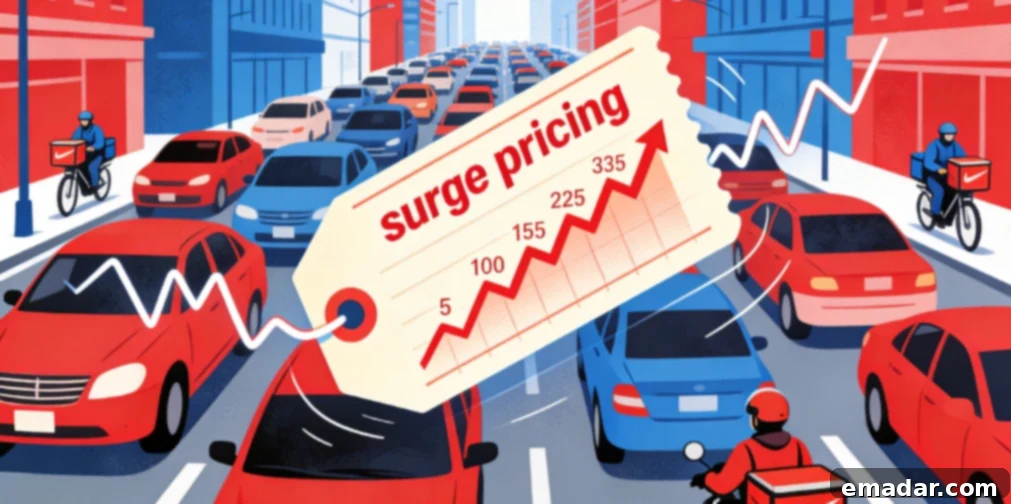
The Economic Imperative of Dynamic Pricing
At its core, dynamic pricing addresses a fundamental challenge in commerce: how to allocate a fixed supply of goods or services when faced with fluctuating demand. Consider a scenario where 10,000 customers desire a product, but only 1,000 units are available. A “first-come, first-served” approach can lead to hoarding, reselling at inflated prices, and perceived unfairness. Lotteries waste time, and physical queues cause widespread frustration. Dynamic pricing, by allowing willingness to pay to dictate allocation, not only ensures efficient distribution but also captures the value that might otherwise be siphoned off by resellers. This mechanism ensures that the value created by high demand is retained by the primary seller, rather than arbitrageurs.
The mathematical foundation lies in price elasticity: how sensitive demand is to changes in price. Airlines mastered this principle decades ago, offering vastly different fares for the same seat on the same flight, based on booking time, demand forecasts, and competitive positioning. Modern e-commerce platforms extend these principles to physical goods, digital services, and experiential products. By understanding their elasticity curves, businesses can set prices that maximize revenue or market share, depending on their strategic objectives. This granular control over pricing allows companies to adapt in real-time to market forces, a capability that is indispensable in today’s fast-paced digital economy.
Three Pillars of Dynamic Pricing Implementation
Implementing a robust dynamic pricing strategy is not a simple task; it relies on a sophisticated interplay of data, technology, and strategic insights. These three core pillars are interdependent, with weaknesses in one area undermining the effectiveness of the others. A holistic approach is essential for achieving optimal pricing outcomes and maintaining a competitive edge.
Pillar One: Accurate Demand Forecasting
For dynamic pricing to be truly precise, demand must be anticipated *before* it materializes. This requires a comprehensive data-driven approach, integrating multiple layers of information:
- Historical Patterns: Analyzing past sales data for seasonality (e.g., holiday rushes, summer trends), day-of-week effects, and the impact of previous promotional calendars. This provides a baseline understanding of typical demand cycles.
- Real-time Data: Monitoring current market signals such as search volumes for specific products, “add to cart” rates, conversion funnel analytics, and social media trends or mentions. These indicators offer immediate insights into burgeoning interest or shifts in consumer sentiment.
- External Factors: Incorporating macroeconomic indicators, local weather conditions (e.g., demand for umbrellas during rain, ice cream during heatwaves), major local or global events (e.g., sports championships, concerts, festivals), and competitor pricing actions. These contextual elements can significantly sway consumer behavior.
The art lies in ‘feature engineering’ – identifying which signals truly predict demand, filtering out noise, and understanding their complex interactions. Machine learning models, such as Gradient Boosting Machines or Long Short-Term Memory (LSTM) networks, are crucial here. They process hundreds of features, discerning subtle patterns and non-linear relationships, ultimately generating granular demand curves for every Stock Keeping Unit (SKU), location, and time combination. This predictive power enables proactive pricing adjustments, rather than reactive ones, leading to superior revenue outcomes and improved inventory management.
Pillar Two: Robust Competitive Intelligence
Dynamic pricing cannot operate in isolation. Price too high, and customers will flock to competitors; price too low, and profits erode. Continuous, accurate monitoring of competitors is not merely advantageous; it is existential. This involves knowing what competitors are selling, at what price, and in which market, in real-time.
However, this monitoring presents significant technical hurdles. Large retailers employ sophisticated anti-bot measures: rate limiting to prevent rapid data requests, IP blocking to ban suspicious addresses, JavaScript challenges to verify human interaction, and advanced behavioral fingerprinting to detect automated browsing patterns. Traditional data center IP addresses are easily identified and blocked, rendering them ineffective for sustained intelligence gathering. To consistently collect reliable competitor data, businesses must mimic genuine local user activity.
This is precisely where IPFLY’s residential proxy network becomes indispensable. With over 90 million authentic residential IP addresses spanning more than 190 countries, retailers can monitor competitor pricing as if they were actual local customers. This allows them to bypass the detection systems designed to thwart commercial crawlers. Static residential proxies are ideal for maintaining a consistent identity, enabling long-term tracking of specific competitor websites with unwavering reliability. Conversely, dynamic rotation capabilities support high-frequency monitoring of vast product catalogs without triggering rate limits or detection, ensuring comprehensive market coverage.
Geographical precision is paramount. A product priced at €49 in Germany might retail for $59 in the United States and ¥6,900 in Japan, reflecting unique market demands, competitive landscapes, and purchasing power. IPFLY’s extensive global coverage ensures access to genuine local pricing intelligence, eliminating reliance on crude estimates based on distant perspectives. This localized data empowers retailers to set hyper-relevant prices, optimizing their position in each specific market segment and reacting swiftly to regional price wars or promotional events.
Pillar Three: Advanced Price Optimization Algorithms
Once demand is forecasted and competitive landscapes are mapped, sophisticated algorithms determine the optimal price. These algorithms leverage the collected data to achieve specific business objectives, such as maximizing revenue, profit margins, or market share, while adhering to predefined constraints.
Common methodologies include:
- Rule-Based Systems: Simple and intuitive, these systems follow predefined ‘if-then’ logic (e.g., “If inventory < 50/day, increase price by 10%”). While easy to implement and understand, they are limited in their ability to adapt to complex, unforeseen market dynamics or discover truly optimal solutions beyond their programmed rules. They lack the intelligence to learn from their actions.
- Reinforcement Learning (RL): These algorithms learn optimal pricing strategies through trial and error. They operate by balancing ‘exploration’ (testing new price points to gather data) with ‘exploitation’ (charging the known optimal price). RL requires vast amounts of data and careful safeguards to prevent volatile pricing, but it can uncover highly nuanced strategies that adapt over time. It’s particularly powerful in dynamic environments where the relationship between price and demand is constantly shifting.
- Constrained Optimization: This mathematical programming approach aims to maximize an objective function (e.g., revenue) subject to various constraints. These constraints might include minimum profit margins, maximum frequency of price changes, competitive parity rules (e.g., price must be within 5% of the market leader), or inventory clearance targets. This method provides a structured way to find the best price while ensuring business rules and customer expectations are met. It’s highly adaptable and can incorporate a wide range of real-world business requirements.
Implementation Architecture: Building the Dynamic Pricing Engine
The successful deployment of a dynamic pricing system relies on a robust and scalable technical architecture that can handle massive data volumes, complex computations, and real-time execution. This architecture typically comprises several interconnected layers, each with specific functions, from data acquisition to price deployment.
Data Collection Layer
This foundational layer is responsible for gathering all necessary raw data, including internal sales figures, inventory levels, customer behavior, and crucially, external competitive intelligence. The quality and timeliness of this data directly impact the accuracy of forecasts and the effectiveness of optimization algorithms. Given the anti-bot measures prevalent on competitor websites, specialized tools are essential for reliable data acquisition.
# Competitive price monitoring with IPFLY residential proxies
import requests
from ipfly import ResidentialProxyPool  # Conceptual integration

class CompetitiveIntelligence:
    def __init__(self):
        self.proxy_pool = ResidentialProxyPool(
            locations=['US','DE','JP','GB'],  # Key markets for global monitoring
            rotation='dynamic',  # Rotate per request for enhanced stealth and scale
            pool_size=1000)  # A large pool for high concurrency

    def get_competitor_price(self, sku, competitor_domain, market):
        # Obtain a fresh, authentic residential proxy for the target market
        proxy = self.proxy_pool.get_proxy(market)

        headers = {
            'User-Agent': self.proxy_pool.get_ua(),  # Use realistic browser User-Agents
            'Accept-Language': self.get_market_language(market), # Match market language
            'Accept': 'text/html,application/xhtml+xml,application/xml;q=0.9,image/webp,*/*;q=0.8'
        }

        try:
            # Construct URL dynamically based on competitor and market
            response = requests.get(f'https://{competitor_domain}/product/{sku}',
                proxies={'https': proxy}, # Route request through the residential proxy
                headers=headers,
                timeout=30) # Set a reasonable timeout
            response.raise_for_status() # Raise an exception for bad status codes
            return self.extract_price(response.text) # Custom method to parse price from HTML
        except requests.exceptions.RequestException as e:
            print(f"Error fetching price for {sku} from {competitor_domain} in {market}: {e}")
            return None

    def monitor_catalog(self, skus, competitors, markets):
        """Parallel monitoring across products and markets to achieve speed and scale."""
        from concurrent.futures import ThreadPoolExecutor

        results = []
        with ThreadPoolExecutor(max_workers=50) as executor: # Utilize concurrency for efficiency
            futures = [
                executor.submit(self.get_competitor_price, sku, comp, mkt)
                for sku in skus
                for comp in competitors
                for mkt in markets
            ]
            for f in futures:
                price_data = f.result()
                if price_data:
                    results.append(price_data)
        return self.aggregate_pricing_matrix(results) # Process collected data

    def get_market_language(self, market_code):
        # Example mapping, expand as needed
        lang_map = {'US': 'en-US,en;q=0.9', 'DE': 'de-DE,de;q=0.9', 'JP': 'ja-JP,ja;q=0.9', 'GB': 'en-GB,en;q=0.9'}
        return lang_map.get(market_code, 'en-US,en;q=0.9')

    def extract_price(self, html_content):
        # Placeholder for actual HTML parsing logic (e.g., using BeautifulSoup)
        # In a real scenario, this would parse the HTML to find the price
        return {"price": "extracted_price", "currency": "USD"} # Example output
IPFLY facilitates unlimited concurrency, enabling massive parallel monitoring without throttling. This allows retailers to track thousands of SKUs across dozens of competitors simultaneously. Millisecond-level response times ensure that pricing information is updated in near real-time, which is critical for reacting to flash sales or immediate promotional events. Furthermore, 99.9% system uptime means no data gaps during peak shopping periods, precisely when data analysis is most crucial for strategic decision-making and revenue optimization. The combination of speed, scale, and reliability makes IPFLY an essential component of any advanced competitive intelligence strategy.
Optimization Engine
This is the brain of the dynamic pricing system, where all the collected data converges. It takes demand forecasts, competitive prices, inventory levels, and predefined business rules, then applies optimization algorithms to calculate the ideal price for each product at any given moment. This engine aims to maximize revenue or profit while respecting constraints like minimum margins and customer tolerance for price changes.
# Simplified surge pricing optimization logic
class SurgePricingEngine:
    def __init__(self, competitive_intelligence_service):
        self.competitive_intelligence = competitive_intelligence_service
        # Assume other services for inventory, demand forecast, elasticity are available

    def get_inventory(self, product_id):
        # Placeholder for actual inventory lookup
        return 150 # Example value

    def forecast_demand(self, product_id, horizon):
        # Placeholder for actual demand forecasting
        return {"expected_units_sold_at_price": lambda p: max(0, 200 - 2 * p)} # Example demand curve function

    def get_elasticity(self, product_id):
        # Placeholder for elasticity data based on historical sales
        return -1.5 # Example value (negative for normal goods)

    def calculate_optimal_price(self, product_id, market, current_price, cost):
        # Gather inputs from various services
        current_inventory = self.get_inventory(product_id)
        demand_forecast_func = self.forecast_demand(product_id, horizon='24h')
        competitor_prices_data = self.competitive_intelligence.get_prices(product_id, market) # Assuming method exists

        if competitor_prices_data and 'price' in competitor_prices_data:
            competitor_prices = [float(p['price']) for p in competitor_prices_data if p['price'] is not None]
            if competitor_prices:
                market_average_price = sum(competitor_prices) / len(competitor_prices)
            else:
                market_average_price = current_price # Fallback
        else:
            market_average_price = current_price # Fallback if no competitor data

        price_elasticity = self.get_elasticity(product_id) # From historical data

        # Define the optimization objective and constraints
        # Objective: Maximize revenue = price × expected_demand(price)
        # Constraints:
        #   1. price <= 1.2 × market_average (competitive constraint to not be too far off)
        #   2. price >= cost × 1.15 (minimum margin constraint, e.g., 15% above cost)
        #   3. |price_change| <= 0.30 (customer shock constraint, price shouldn't change more than 30%)
        #   4. price >= cost (absolute minimum)

        # Simplified optimization loop (in a real system, this would use an actual optimizer library)
        min_price_candidate = max(cost * 1.15, current_price * 0.70)
        max_price_candidate = min(market_average_price * 1.2, current_price * 1.30)

        best_price = current_price
        max_revenue = 0

        # Iterate through a range of possible prices
        # In a real scenario, this would be a more sophisticated solver
        for price_point in range(int(min_price_candidate * 100), int(max_price_candidate * 100)):
            p = price_point / 100.0

            # Apply constraints
            if p < min_price_candidate or p > max_price_candidate:
                continue
            if abs(p - current_price) > current_price * 0.30: # Ensure change limit
                continue
            if p < cost * 1.15: # Ensure margin protection
                continue
            if p > 1.2 * market_average_price: # Ensure competitive parity
                continue

            expected_demand = demand_forecast_func(p)
            current_revenue = p * expected_demand

            if current_revenue > max_revenue:
                max_revenue = current_revenue
                best_price = p

        return {"price": round(best_price, 2), "max_revenue": round(max_revenue, 2)}

    # Placeholder for a method to get competitor prices (would integrate with CompetitiveIntelligence service)
    def get_prices(self, product_id, market):
        # This would call the CompetitiveIntelligence service
        # For demonstration, return a dummy list
        return [{'price': 100.0}, {'price': 110.0}, {'price': 95.0}]
Industry-Specific Applications of Dynamic Pricing
The principles of dynamic pricing, while universal in their economic foundation, manifest in unique ways across various industries, tailored to their specific market structures, consumer behaviors, and operational constraints.
Airlines and Travel
Pioneers of dynamic pricing, the airline and travel industries have refined revenue management systems over decades. Their goal is to optimize Revenue Per Available Seat Mile (RASM) through:
- Overbooking Algorithms: Statistical models predict no-show rates, allowing airlines to sell more tickets than available seats, minimizing revenue loss from empty seats while managing the risk of denied boarding.
- Fare Classes and Buckets: The same physical seat can have 15 or more different price points, each associated with specific booking conditions (e.g., non-refundable, change fees, baggage allowance). These ‘fare buckets’ are dynamically opened or closed based on demand.
- Dynamic Supply Management: As demand materializes or booking windows close, lower-priced tickets are progressively removed from sale, directing customers towards higher fare classes. This maximizes the yield from each flight as departure time approaches.
E-commerce Platforms
E-commerce giants like Amazon adjust prices an astonishing 2.5 million times daily. Third-party sellers on these platforms leverage automated repricing tools that can adjust prices every 10 minutes, driven by a myriad of factors:
- ‘Buy Box’ Eligibility Algorithms: On platforms like Amazon, winning the coveted ‘Buy Box’ (the primary “Add to Cart” option) often requires being the lowest-priced seller who meets other criteria, leading to fierce algorithmic competition.
- Fulfillment by Amazon (FBA) Fees: Sellers account for FBA costs, storage fees, and shipping expenses, dynamically adjusting prices to maintain target profit margins.
- Competitor Inventory Levels: Knowledge of competitor stock levels allows sellers to strategically raise prices if rivals are low on inventory or lower them to move products before competitors restock.
- Review Counts and Rating Changes: Higher-rated products or those with more positive reviews might command a premium, while a drop in ratings could necessitate a price reduction to maintain sales velocity.
Food Delivery and Quick Commerce
Platforms like Uber Eats, DoorDash, and Instacart frequently implement surge pricing during periods of heightened demand or constrained supply. This dynamic pricing is triggered by:
- Peak Meal Times: Lunch and dinner rushes naturally see increased demand, leading to temporary price hikes to incentivize more drivers/delivery personnel.
- Adverse Weather Conditions: Rain, snow, or extreme heat can reduce the number of available drivers and increase demand from customers, prompting surge pricing.
- Driver Shortages: If there aren’t enough drivers online to meet order volume, surge pricing encourages more individuals to log in and fulfill deliveries.
- Special Events and Holidays: Major sporting events, holidays, or local festivals often create localized spikes in demand, necessitating dynamic adjustments.
The ethical dimension here is particularly pronounced, with surge pricing for essential items during emergencies facing both regulatory scrutiny and intense consumer backlash.
Energy and Utilities
The integration of smart grid technologies has enabled time-of-use (TOU) pricing in energy and utilities, characterized by:
- Reducing Peak Demand: Higher prices during peak hours (e.g., late afternoon/early evening) incentivize consumers to shift energy-intensive activities to off-peak times, preventing grid overload and potential blackouts.
- Shifting Consumption to Off-Peak Hours: Lower prices during low-demand periods encourage activities like charging electric vehicles or running dishwashers overnight, balancing grid load.
- Integrating Volatile Renewable Energy: Prices can dynamically adjust to reflect the availability of intermittent renewable sources (solar, wind), encouraging consumption when supply is high and cheap, and discouraging it when supply is low.
Ethics and the Regulatory Landscape
Dynamic pricing, despite its economic efficiencies, remains a contentious topic. Critics often voice significant concerns, particularly around issues of fairness and transparency.
Primary criticisms include:
- Price Gouging: Accusations arise when prices for essential goods or services surge during emergencies or crises, exploiting vulnerable populations. This is perhaps the most ethically charged application.
- Lack of Transparency: Consumers often feel confused or misled when prices for the same item change rapidly or differ between individuals without clear explanations, leading to a sense of unfairness and distrust.
- Discrimination: There’s a concern that pricing based on an individual’s predicted ‘willingness to pay’ could inadvertently or purposefully correlate with protected characteristics (e.g., income, location, demographics), leading to discriminatory outcomes.
- Price Volatility and Anxiety: Constantly fluctuating prices can create consumer anxiety, leading to uncertainty about when to purchase and potentially eroding brand loyalty if customers feel they are being taken advantage of.
In response, regulatory bodies are exploring various measures:
- Price Gouging Laws: Many jurisdictions have laws prohibiting excessive price increases on essential goods during declared states of emergency, aiming to protect consumers from exploitation.
- Transparency Requirements: There’s a growing call for companies to disclose the factors influencing their pricing algorithms, allowing consumers to understand why prices change and fostering greater trust.
- Price Controls and Caps: In certain regulated sectors (e.g., insurance, utilities), governments may impose limits on price increases or set maximum price ceilings to protect consumers from market volatility or monopolies.
- Antitrust Scrutiny: Regulators are increasingly watchful for signs of algorithmic collusion, where pricing algorithms of different competitors might inadvertently or intentionally coordinate prices, stifling competition.
The Future: Hyper-Personalized Dynamic Pricing
The cutting edge of dynamic pricing lies in hyper-personalization – tailoring prices to individual customers based on an ever-expanding array of data points. This moves beyond merely adjusting prices by time or location, to adjusting them by *person*.
Factors influencing personalized pricing include:
- Purchase History and Loyalty: Customers with a history of frequent purchases or high brand loyalty might receive special offers, while new customers could see introductory discounts.
- Device Type and Browsing Behavior: Prices might subtly differ based on whether a user is browsing on a mobile device, desktop, or through a specific app, or based on their past browsing patterns, viewed pages, and abandoned carts.
- Geographic Location and Local Competition: An individual’s real-time location can influence prices based on local store inventory, regional demand, or the presence of nearby physical competitors.
- Predicted Willingness to Pay (WTP): Advanced machine learning models analyze vast amounts of individual-level data to estimate how much a specific customer is likely to pay for a product, then offer a price point designed to maximize conversion or profit for that individual.
This raises profound ethical considerations concerning fairness, privacy, and consumer autonomy. When prices vary not just by time and place, but by person, the traditional concept of a universal ‘market price’ dissolves into a multitude of individual transactions, prompting new debates about equity and the nature of commerce.
The Inevitable Competitive Imperative
For any retailer striving to remain competitive, dynamic pricing is no longer an optional add-on; it is a fundamental requirement. The underlying infrastructure – encompassing data collection, sophisticated optimization algorithms, and efficient execution systems – dictates which businesses will capture value in today’s fluid markets. Those enterprises that possess superior intelligence (real-time understanding of competitor prices), superior prediction capabilities (accurate demand forecasting), and superior execution (the ability to implement price adjustments rapidly and at scale) are poised to gain market share and enhance their profit margins significantly.
The technological foundation is paramount: reliable data pipelines, robust global market insights, and a resilient infrastructure capable of operating at the speed of modern commerce are non-negotiable. Without these foundational elements, even the most brilliant pricing strategies remain theoretical.

Implementing dynamic pricing on a large scale demands a comprehensive competitive intelligence system capable of operating discreetly across global markets. Whether you’re monitoring competitor prices across 50 markets, tracking promotional timings, or analyzing regional demand patterns, IPFLY’s residential proxy network provides the essential infrastructure. With over 90 million authentic residential IPs in 190+ countries, you can collect price data as a genuine local customer, effectively bypassing anti-bot measures designed to block commercial scrapers. Our static residential proxies ensure consistent identity for continuous competitor monitoring, while dynamic rotation supports high-frequency price tracking across extensive product catalogs without triggering rate limits. With millisecond response times for real-time price updates, 99.9% uptime to prevent data gaps during critical peak periods, unlimited concurrency for massive parallel monitoring, and 24/7 technical support for urgent price intelligence needs, IPFLY integrates seamlessly into your dynamic pricing system. Don’t let incomplete competitive data limit your revenue optimization – sign up for IPFLY today and build the global price intelligence backbone that drives modern dynamic pricing.