
Residential Proxy Networks: A Comprehensive Guide
In today’s increasingly complex online environment, the need for reliable and authentic IP addresses is more critical than ever. Residential proxies offer a sophisticated solution for businesses and individuals seeking to navigate the web with enhanced anonymity and a greater degree of trust. Unlike traditional data center proxies, residential proxies utilize IP addresses that are legitimately assigned to residential locations by Internet Service Providers (ISPs). This fundamental difference provides a significant advantage when it comes to bypassing anti-bot measures and accessing geo-restricted content.
This comprehensive guide will delve into the core architecture of residential proxy networks, explore the different types available, examine their operational mechanisms, and highlight the various business applications that benefit from their use. We will also discuss the key quality metrics to consider when evaluating residential proxy providers and provide practical advice for implementing these proxies within an enterprise setting.
The Fundamental Architecture of Residential Proxy Networks
Residential proxies represent an advanced proxy solution that routes internet traffic through IP addresses legitimately assigned to actual residential locations by Internet Service Providers (ISPs). In stark contrast to data center proxies, which originate from server farms and cloud hosting environments, residential proxies leverage connections associated with physical homes and real user devices. This fundamental distinction provides an unparalleled layer of authenticity, which is invaluable for businesses operating in environments where detection and blocking mechanisms are becoming increasingly sophisticated.
The technical foundation of a residential proxy infrastructure lies in establishing partnerships with ISPs across multiple jurisdictions. When a request is made through a residential proxy, it carries the digital fingerprint of a genuine home internet connection – complete with geographic location information, ISP metadata, and usage patterns associated with residential broadband. This element of authenticity is particularly crucial when accessing platforms that employ advanced fingerprinting techniques to differentiate between legitimate users and automated systems.
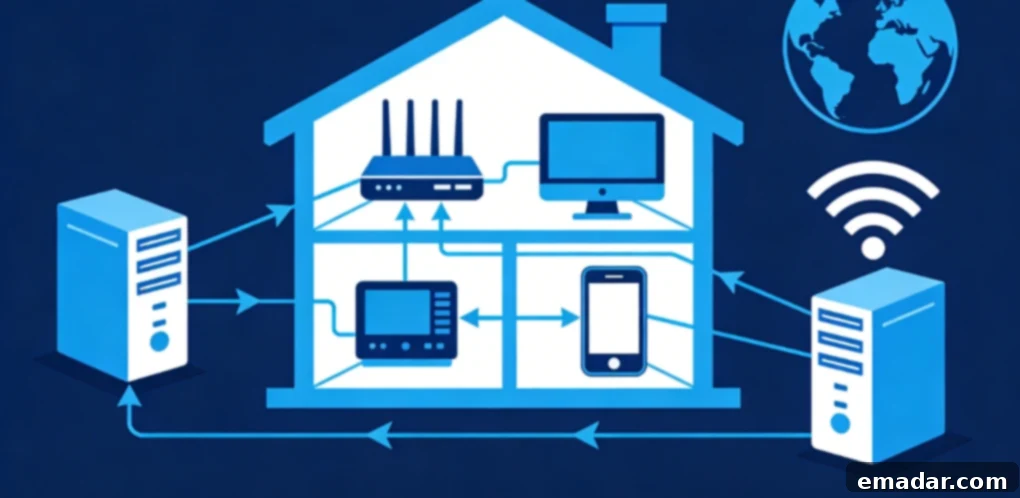
Static vs. Dynamic: Understanding the Types of Residential Proxies
Residential proxy solutions typically come in two primary configurations, each designed to cater to different operational needs. Static residential proxies maintain a fixed IP assignment, providing users with a long-term, unchanging IP address. This configuration is crucial for scenarios that require consistent identity, such as managing cross-border e-commerce storefronts, maintaining long-term social media accounts, or conducting ongoing market research projects where frequent IP changes could trigger security alerts.
In contrast, dynamic residential proxies employ a rotation mechanism, allowing the source IP address to change periodically or on demand. This approach leverages a large pool of available residential IP addresses, enabling users to distribute requests across different geographic locations and network segments. This rotation capability is particularly beneficial for large-scale data collection operations, where repeated queries from the same source may lead to rate limiting or restricted access. Dynamic proxies are ideal for tasks like web scraping, ad verification, and competitive analysis where a consistent IP address is not as critical.
Choosing between static and dynamic residential proxies depends on the specific requirements of the task at hand. For tasks that prioritize stability and consistency, static proxies are the preferred choice. For tasks that require high levels of anonymity and the ability to bypass rate limits, dynamic proxies are a better option.
Operational Mechanics: How Traffic Flows Through a Residential Infrastructure
When a user initiates a connection through a residential proxy network, the request follows a carefully designed path aimed at maximizing anonymity and reliability. The client device establishes an encrypted tunnel with the proxy infrastructure, which then selects an appropriate exit node based on specified parameters, potentially including target geographic location, ISP preferences, or connection stability metrics.
The selected exit node, representing an actual home internet connection, forwards the request to the target destination. From the perspective of the target server, this incoming traffic is indistinguishable from legitimate home browsing activity. The response data travels back along the same path, maintaining the same level of encryption and intermediate node protection throughout the transaction.
This architecture necessitates substantial infrastructure investment, including the deployment of high-performance servers, sophisticated load balancing systems, and ongoing quality assurance mechanisms to ensure optimal path selection and minimal latency. The key to a successful residential proxy network lies in its ability to seamlessly blend into the background, mimicking the behavior of ordinary internet users and avoiding detection by even the most sophisticated anti-bot systems.
Commercial Applications: How Residential Proxies Create Tangible Value
Residential proxies are used across a wide range of industries and applications, providing valuable benefits to businesses and individuals alike. Here are some of the most common commercial applications:
Data Scraping and Web Crawling Operations
Organizations engaged in competitive intelligence gathering, price monitoring, or content aggregation frequently encounter sophisticated anti-automation measures. Residential proxies bypass these obstacles by disguising requests as coming from real user connections rather than data center environments. Rotating through multiple IP addresses further reduces the likelihood of detection, enabling the continuous data collection operations that would otherwise be difficult to achieve. By using residential proxies, businesses can gather valuable data about their competitors, market trends, and customer behavior, which can inform their strategic decision-making.
Market Research and Advertisement Verification
Geographic accuracy is a critical requirement for advertisement verification and localized market research. Residential proxies provide a genuine regional perspective, enabling researchers to view content, advertisements, and pricing as they would appear to actual residents of the target market. This capability eliminates the biases introduced by VPN exit nodes or data center locations, which are often identified and treated differently by platforms. This allows for accurate assessment of ad campaigns, localized content performance, and consumer preferences in specific regions. Utilizing residential proxies ensures that market research findings are representative and reliable, leading to better-informed business strategies.
Cross-Border E-commerce and Digital Asset Management
Sellers operating on multiple regional e-commerce platforms require stable and location-consistent identities to maintain account health and avoid triggering platform security mechanisms. Static residential proxies provide the persistent IP association needed to establish and maintain credible seller profiles, while dynamic proxy schemes support market research and competitive analysis across different marketplaces. Whether it’s managing inventory, tracking sales, or analyzing competitor pricing, residential proxies ensure smooth operations and accurate data collection across international markets.
Social Media Management
Managing multiple social media accounts or automating social media tasks can be challenging due to platform restrictions. Residential proxies allow users to manage multiple accounts without triggering security flags, enabling them to engage in activities like posting content, following users, and participating in discussions without being blocked or banned. This is particularly useful for social media marketers, influencers, and businesses looking to expand their online presence.
SEO Monitoring
Tracking search engine rankings and analyzing competitor strategies requires access to unbiased and geographically relevant search results. Residential proxies allow SEO professionals to simulate searches from different locations, providing them with accurate and localized ranking data. This enables them to optimize their websites and content for specific regions, improve their search engine visibility, and gain a competitive advantage.
Quality Metrics: Evaluating a Residential Proxy Infrastructure
Differentiating between a high-quality residential proxy service provider and a subpar alternative requires examining several key infrastructure characteristics. The size of the available IP resource directly impacts operational flexibility – providers maintaining large IP pools across multiple countries and ISPs offer superior geographic coverage and redundancy. IP purity, determined through rigorous filtering and validation processes, ensures that addresses have not been previously flagged or abused, preserving their effectiveness in sensitive operations.
Connection stability metrics, including uptime percentages and latency stability, reflect the maturity and maintenance standards of the infrastructure. The implementation of encryption schemes and data handling protocols further distinguishes enterprise-grade providers from basic services, which is particularly important for organizations handling sensitive information or operating in regulated industries.
Implementation Considerations for Enterprise Deployment
Successfully integrating residential proxies requires careful attention to protocol compatibility, authentication mechanisms, and traffic routing logic. Modern proxy infrastructures commonly support multiple connection protocols – including HTTP, HTTPS, and SOCKS5 – enabling integration with a wide range of software environments and use cases. Authentication options range from traditional IP whitelisting to credential-based systems, accommodating diverse security requirements and operational constraints.
Traffic management features, including session persistence controls, geolocation precision, and rotation frequency configurations, determine the effectiveness of the proxy infrastructure in meeting specific business objectives. Enterprises should evaluate these parameters based on their specific needs, recognizing that different applications may require different proxy configurations.
Summary: The Strategic Value of a Quality Residential Infrastructure
Residential proxies are far more than simple anonymization tools – they represent an integral infrastructure for modern digital operations, providing genuine geographic location, sustainable data access, and reliable identity persistence. In environments where platform trust and detection avoidance determine operational success, the technical distinctions between residential and data center proxies translate into tangible business advantages.
When evaluating residential proxy solutions, enterprises should prioritize providers demonstrating substantial IP resource scale, rigorous quality assurance processes, and infrastructure investments aligned with enterprise-grade reliability requirements. The sophistication of modern platform security mechanisms demands a commensurate level of technical capability in proxy infrastructures – making the selection of a proven and high-capacity provider a critical strategic decision.

Are you ready to deploy a residential proxy infrastructure covering over 190 countries with real ISP-assigned IP addresses? Explore IPFLY’s comprehensive proxy solution, boasting over 90 million high-quality residential IP addresses (supporting both static and dynamic configurations), guaranteed 99.9% uptime, and 24/7 technical support. Sign up today, configure your proxy parameters, and begin operating with a genuine residential network identity.