
Residential Proxies: The Key to 99% Success Rate in Data Collection
The residential proxy market has become a dominant force in enterprise data acquisition, representing a fundamental shift in how organizations approach web scraping, market intelligence, and online automation. Unlike traditional datacenter proxies, which prioritize speed at the expense of detectability, residential proxies offer a “trust score” that modern anti-bot systems cannot easily challenge. This translates to a remarkable 95-99% success rate on protected websites, significantly outperforming datacenter alternatives which typically achieve only 40-60%.
This comprehensive guide delves into the technical architecture, operational economics, and strategic applications of residential proxy infrastructure. We explore why businesses are increasingly embracing residential IPs despite their 3-4x speed and 5-15x cost compared to datacenter proxies. We’ll also examine how detection systems attempt to identify residential proxy traffic and how leading providers deliver enterprise-grade residential infrastructure at a competitive scale.
What is a Residential Proxy? The Technical Architecture
Defining Residential Proxy Infrastructure
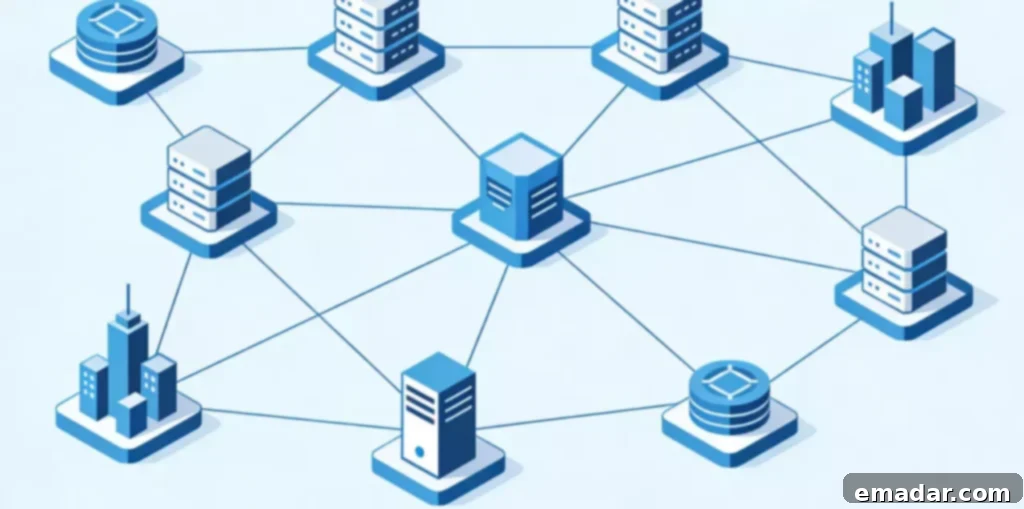
A residential proxy is an intermediary server that routes internet traffic through IP addresses assigned to real residential locations – homes, apartments, and consumer devices – by Internet Service Providers (ISPs). Unlike datacenter proxies, which originate from commercial server farms, residential proxies appear to be genuine consumer connections from ISPs. This key difference is what makes residential proxies so effective at bypassing anti-bot measures and accessing data from protected websites.
Core Technical Characteristics:
| Attribute | Residential Proxy | Datacenter Proxy |
|---|---|---|
| IP Source | ISP-assigned to residential modems/devices | Cloud provider/server farm assigned |
| Network Path | Consumer-grade ISP infrastructure | Enterprise backbone/datacenter network |
| Geolocation Accuracy | Precise (city/postal code level) | Limited (country/region level) |
| Trust Score | Very High (appears as a real user) | Low (easily identified as commercial) |
| Success Rate (Protected Websites) | 95-99% | 40-60% |
| Typical Latency | 200-2,000ms | 20-50ms |
| Speed | Moderate (consumer connection) | Very Fast (enterprise bandwidth) |
| Block Resistance | Very High | Low (IP ranges well known) |
How Residential Proxies Work
ISP Assignment Foundation: When ISPs connect homes to the internet, they assign IP addresses to residential modems, which then distribute local IPs to home devices. These IP addresses carry ISP registration data, enabling accurate geolocation and a high “trust score” for target websites.
Traffic Routing Mechanisms: Residential proxy services operate through several technical models:
- Peer-to-Peer (P2P) Networks: Users install applications that share their residential connections in exchange for free services or compensation, creating distributed proxy exit nodes. These networks leverage the real IP addresses of participating users.
- ISP Partnerships: Direct agreements with ISPs or mobile carriers to lease access to IP address pools. This provides more stable and reliable residential IPs.
- SDK Integration: Proxy functionality bundled into legitimate software applications with user consent. This model requires careful adherence to privacy regulations.
Rotation and Persistence: Residential proxies offer flexible session management:
- Rotating Residential: Changes the IP with each request or interval, maximizing anonymity and distributing load. Ideal for tasks where consistent identity is not required.
- Static Residential (ISP Proxies): Persistent IP allocation for long-term sessions and account management. These offer the stability of a dedicated IP with the trust of a residential IP address.
Residential Proxies vs. Datacenter Proxies: Strategic Trade-offs
The Speed vs. Trust Dilemma
The fundamental choice between residential and datacenter proxy infrastructure involves a clear trade-off that organizations must evaluate based on their specific requirements. Understanding these trade-offs is crucial for making informed decisions.
Datacenter Advantages:
- 3-4x Faster Speeds: Consistent low latency (20-50ms) ensures quick data transfer.
- Cost Efficiency: $1-$2.5 per IP per month, or $0.6-$1.5 per GB. Datacenter proxies offer a more budget-friendly option.
- Excellent Scalability: High concurrency and throughput for large-volume operations. Datacenters are designed to handle massive amounts of traffic.
- Predictable Performance: Enterprise-grade infrastructure provides consistent reliability.
Datacenter Disadvantages:
- Low Trust Score: Easily detected by anti-bot systems due to their commercial nature.
- High Block Rates: Significant portion of requests are blocked by protected websites (40-60% success rate).
- IP Range Blacklisting: Contiguous IP blocks allow for easy mass blocking.
- Limited Geolocation: Restricted to datacenter locations, lacking the precision of residential proxies.
Residential Advantages:
- Very High Trust Score: Appears as legitimate consumer traffic, making it difficult to detect.
- 95-99% Success Rate: Bypasses sophisticated anti-bot protection on complex websites.
- Precise Geolocation: City, postal code, and ISP-level targeting options.
- Minimal Blocking: IPs are mixed with normal user traffic patterns, reducing the likelihood of being blocked.
Residential Disadvantages:
- Slower Speeds: Latency of 200-2,000ms due to consumer network limitations.
- Higher Costs: $4-$15 per GB, reflecting the complexity of procurement and ethical sourcing.
- Variable Stability: Dependent on home network reliability and user behavior.
- Ethical Complexities: Requires careful consent and compensation frameworks to ensure ethical sourcing of IP addresses.
When to Choose Residential Proxies
Residential proxy infrastructure is crucial when:
- Target websites employ sophisticated anti-bot protection: Essential for accessing data from e-commerce platforms, social media sites, and travel aggregators.
- Account management requires persistent, trusted identities: Necessary for managing social media accounts and e-commerce seller profiles.
- Ad verification needs precise geo-authenticity: Enables city-level targeting for local advertising campaigns.
- Scraping success rate is prioritized over raw speed: Data quality takes precedence over collection speed.
- Long-term session stability is required: Maintaining login states, shopping carts, and user sessions.
When Datacenter Proxies Are Sufficient
Datacenter proxies remain suitable for:
- High-volume scraping of low-security targets: Accessing public records and simple HTTP sites.
- Speed-critical applications where milliseconds matter: Suitable for applications that require near-instantaneous data transfer.
- Budget-constrained businesses: Requiring predictable, flat-rate costs.
- Load testing and QA: Where detection is irrelevant.
- Initial data gathering: Before targeted residential proxy refinement.
Residential Proxy Pricing and Market Economics
Cost Structure Analysis
Driven by procurement complexities and ethical requirements, the economics of the residential proxy market operate fundamentally differently from datacenter alternatives. The pricing structure reflects the inherent challenges and value proposition of residential proxies.
| Pricing Model | Datacenter | Residential | ISP/Static Residential |
|---|---|---|---|
| Structure | Per IP or fixed-rate bandwidth | Per GB of traffic | Per IP (static) |
| Price Range | $1-$2.5/IP/month; $0.6-$1.5/GB | $4-$15/GB | Premium (4x traditional residential) |
| Cost Drivers | Server infrastructure, bandwidth | Real device procurement, user compensation, ethical standards, operational complexity | ISP relationships, static allocation premium |
| Predictability | High (flat-rate) | Lower (usage-based) | High (per-IP pricing) |
| Best For | Volume, speed, budget | Success rate, stealth, geo-accuracy | Long sessions, account management |
Why Residential Proxies Command Premium Pricing
Real Device Procurement: Acquiring IP addresses from actual residential connections involves complex peer-to-peer networks, ISP partnerships, or SDK integrations – far more expensive than bulk datacenter IP allocation.
Ethical Standards and Compliance: Legitimate residential proxy providers must obtain explicit user consent, provide fair compensation, maintain transparency in network usage, and comply with data protection regulations across multiple jurisdictions. Ethical considerations are paramount.
Operational Complexity: Managing millions of distributed residential devices requires sophisticated software for rotation, health monitoring, quality filtering, and geographic distribution – operational overhead absent in centralized datacenter management.
Demand Premium: Higher success rates and lower block rates create strong demand, allowing providers to command prices that reflect the value delivered through reduced retries, improved data quality, and operational reliability.
Residential Proxy Detection and the Arms Race
How Detection Systems Identify Residential Proxies
While residential proxy traffic is more difficult to detect than datacenter alternatives, sophisticated anti-fraud systems employ multi-signal analysis to identify proxy usage. These systems go beyond simple IP classification to analyze various factors that can indicate proxy use.
Beyond Simple IP Classification: Since residential proxies use the same IP ranges as legitimate users, detection cannot solely rely on IP categorization. Advanced systems analyze:
- Behavioral Patterns: Request timing, navigation sequences, and interaction patterns that deviate from typical human behavior.
- Device Fingerprinting: Browser characteristics, operating system metrics, screen resolution, and font sets that create a unique device signature.
- Network Telemetry: Latency patterns, routing anomalies, and connection stability signatures.
- Speed and Volume: Request rates, session durations, and data exfiltration patterns inconsistent with normal usage.
- Geographic Consistency: Location verification against other signals (billing address, device GPS, account history).
Residential Proxy Fraud and Abuse
The same characteristics that make residential proxies valuable for legitimate businesses also attract malicious actors. Understanding these risks is essential for implementing effective security measures.
Account Takeover (ATO): Attackers use residential proxies in the victim’s geographic area while testing stolen credentials to avoid location-based security alerts.
Sneaker Bots and Scalping: E-commerce platforms actively block datacenter IPs, making residential proxies essential for automating limited-release product purchases.
Click and Affiliate Fraud: Residential proxies generate fake clicks that appear as legitimate users distributed geographically, evading basic fraud detection.
Review Manipulation: Fake review operations use residential proxies to make each review appear to come from a different, real user.
Credential Stuffing: Distributed attacks across thousands of residential IPs bypass rate limiting and IP-based blocking.
Platform Detection Best Practices
For organizations defending against residential proxy abuse, experts recommend:
- Real-time detection: Rather than static block lists, as residential proxy pools are constantly refreshed.
- Multi-signal analysis: Combining IP reputation, behavioral patterns, device fingerprinting, and velocity metrics.
- Appropriate thresholds: Considering the legitimate user base with privacy awareness (typically <5% proxy/VPN usage) versus fraud origins (40%+ proxy concentration).
- Source-level analysis: Identifying patterns across traffic sources, rather than individual clicks.
- Gradual friction: Requiring additional verification for suspicious proxy traffic, rather than complete blocking.
Residential Proxy Use Cases and Implementation
E-commerce and Price Intelligence
Challenge: Monitoring competitor pricing, product availability, and promotion strategies across global markets without triggering anti-bot measures or receiving distorted “personalized” pricing.
Residential Proxy Solution: Rotating residential proxies with city-level targeting enable accurate price monitoring with a genuine local presence. Static residential options maintain persistent identities for long-term competitor tracking.
Implementation: Configure rotating residential proxies with 5-10 minute session durations, match the geographic targeting of competitor markets, and mimic human browsing patterns with request pacing.
Social Media Management and Account Operations
Challenge: Managing multiple brand accounts, influencer relationships, and customer service operations across platforms that actively detect and block datacenter IPs.
Residential Proxy Solution: Static residential proxies provide permanent, high-reputation IP addresses that maintain consistent account identities, reducing verification challenges and platform security scrutiny.
Implementation: Assign dedicated static residential IPs to each primary account and geo-align them with the account’s claimed location. Utilize dynamic residential for research and monitoring activities.
Ad Verification and Campaign Monitoring
Challenge: Verifying that digital advertisements are displaying correctly across geographic markets, devices, and user demographics without contaminating campaign data or triggering fraud filters.
Residential Proxy Solution: Precise geolocation (country, city, ISP) enables authentic verification of ad serving, creative rendering, and competitive landscape from genuine consumer perspectives.
Implementation: Deploy residential proxies targeting specific DMAs (Designated Market Areas), rotate IPs to simulate diverse user demographics, and maintain session stability to complete user journey validations.
Market Research and Consumer Intelligence
Challenge: Gathering accurate consumer sentiment, product reviews, and market trends from platforms that block automated collection and serve different content based on user location.
Residential Proxy Solution: Residential authenticity spanning 190+ countries enables comprehensive global research without detection, ensuring data quality and geographic representation.
Implementation: Utilize dynamic residential rotation for large-scale collection, match geographic distribution with target market demographics, and implement throttling to respect platform rate limits.
Residential Proxy Implementation Best Practices
Technical Configuration
Rotation Strategy: Match rotation frequency to the use case – static for account persistence, timed rotation (10-30 minutes) for research sessions, and per-request for maximum anonymity.
Geolocation Precision: Leverage city-level targeting when local accuracy is important; country-level when broader representation is sufficient. ISP-level targeting adds authenticity for sensitive platforms.
Request Pacing: Implement human-like delays between requests (randomized 1-10 seconds) to avoid velocity-based detection, even with high-trust residential IPs.
Session Management: Maintain cookie persistence and session continuity for operations that require login states, shopping carts, or multi-step workflows.
Compliance and Ethics
Terms of Service Compliance: Ensure that residential proxy usage complies with the target platform’s terms of service and robots.txt directives. Residential proxies provide technical capability; legal and ethical boundaries determine appropriate use.
Data Protection Compliance: Implement GDPR/CCPA requirements when collecting data involving EU or California residents, including consent validation, data minimization, and retention limitations.
Transparent Operations: Maintain clear documentation of proxy usage purposes, data flows, and compliance measures for auditing and accountability.
Frequently Asked Questions About Residential Proxies
Why are residential proxies more expensive than datacenter proxies?
Residential proxy pricing reflects the real cost of device procurement, ethical compliance requirements (user consent and compensation), operational complexities of managing distributed networks, and the demand premium for superior success rates. While datacenter proxies may cost $1-2.50/IP per month, residential proxies range from $4-$15/GB due to these structural cost drivers.
Can websites detect residential proxies?
While more difficult to detect than datacenter proxies, sophisticated platforms employ multi-signal analysis examining behavioral patterns, device fingerprints, and network telemetry to identify residential proxy usage. However, detection rates remain far lower than datacenter alternatives, with legitimate residential proxy usage achieving 95-99% success rates from quality providers.
What is the difference between rotating and static residential proxies?
Rotating residential proxies change the IP address per request or interval, maximizing anonymity and distributing the load across millions of IPs – ideal for scraping and research. Static residential proxies (also called ISP proxies) maintain a persistent IP allocation for long-term sessions, critical for account management and operations that require consistent identity.
Are residential proxies legal?
Residential proxy technology is entirely legal. Legality depends on the usage: legitimate business applications (market research, ad verification, price monitoring) are legal and widely adopted. Illegal applications include account takeover, click fraud, review manipulation, and circumventing platform terms of service. Reputable providers ensure their infrastructure is used for legal and compliant use cases only.
How do I choose between residential, datacenter, and mobile proxies?
Datacenter when speed and cost are paramount, residential when trust and success rates are priorities, and mobile when maximum undetectability is required on strict platforms (Instagram, TikTok). Many enterprises deploy hybrid strategies – datacenter for initial broad collection, residential for targeted high-value websites, and mobile for social media operations.

Residential Proxies: An Imperative for Modern Business
The residential proxy market has evolved from a niche privacy tool into essential infrastructure for modern digital business. As anti-bot systems become increasingly sophisticated and datacenter IP ranges face wholesale blacklisting, residential proxies provide the “trust score” that enables legitimate data acquisition, market intelligence, and large-scale automation.
The trade-offs are clear: residential proxies offer 95-99% success rates on protected sites – nearly double that of datacenter performance – but at 3-4x slower speeds and 5-15x higher costs. For organizations where data quality, operational reliability, and access continuity are more important than raw speed, this trade-off is not only acceptable, but strategically imperative.
About IPFLY: IPFLY provides enterprise proxy solutions with static residential, dynamic residential, and datacenter proxy options. With over 90 million residential IPs across 190+ countries, IPFLY supports HTTP/HTTPS/SOCKS5 protocols with 99.9% uptime, unlimited concurrency, and 24/7 technical support. The infrastructure is designed for web scraping, market research, ad verification, social media management, and enterprise data operations requiring the highest success rates and residential IP authenticity.