
Dynamic IP Addresses: A Comprehensive Guide to Understanding and Utilizing Them
Dynamic IP addresses are a fundamental component of modern network communication, widely used in various scenarios, including personal internet access, enterprise network deployments, and data transmission. While most users understand that a dynamic IP address simply “changes automatically,” a deeper understanding of its allocation mechanism, network adaptability, and real-world value is crucial. Without this understanding, users may not fully leverage the advantages of dynamic IPs, potentially leading to network stability issues.
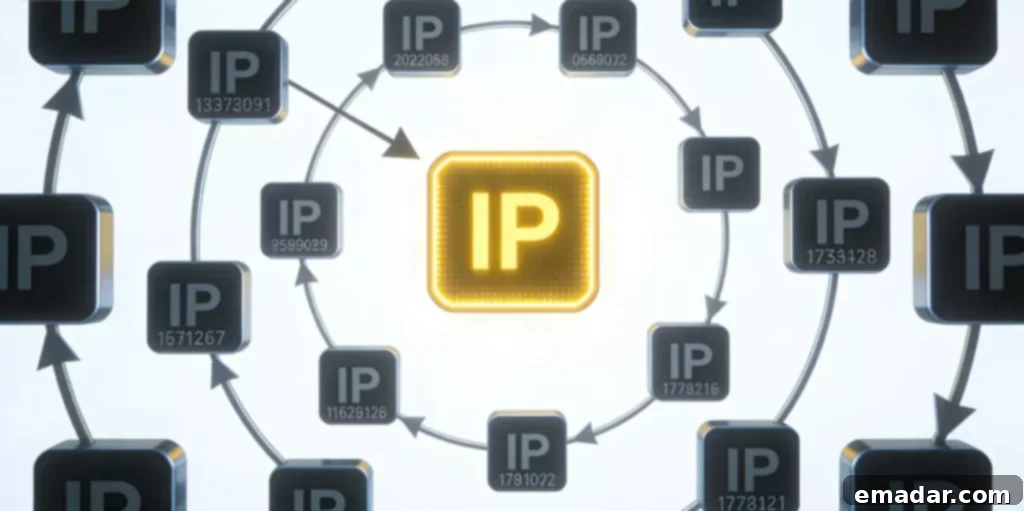
The Core Definition and Allocation Mechanism of Dynamic IP Addresses
Core Definition
A dynamic IP address refers to an Internet Protocol address automatically assigned to a device by an Internet Service Provider (ISP) through the Dynamic Host Configuration Protocol (DHCP). The key characteristic is that the IP address is not fixed. Instead, a new IP address is assigned by the DHCP server each time the device connects to the network, redials, or when the lease expires. Compared to the fixed allocation model of static IPs, dynamic IPs enable more efficient reuse of IP resources, reducing network deployment and maintenance costs.
Core Allocation Mechanism
The allocation process of dynamic IPs follows a standardized mechanism, primarily consisting of four steps:
- When a device connects to the network, it sends an IP address request to the DHCP server.
- Upon receiving the request, the DHCP server selects an available address from its predefined IP address pool and assigns it to the device.
- The server also specifies the lease duration for the IP address, defining how long the device can use the address.
- Near the end of the lease, the device automatically sends a renewal request to the server. If the renewal is not granted, the address is reclaimed, and the device must obtain a new IP address. This mechanism allows for the cyclical utilization of IP resources, preventing address wastage.
Dynamic IP vs. Static IP: A Detailed Comparison
Key Feature Differences
The core differences between dynamic and static IPs lie in three main dimensions:
- Address Stability: Dynamic IPs change automatically with network connection status, resulting in lower stability. Static IPs, once assigned, remain constant, providing extreme stability.
- Resource Utilization: Dynamic IPs enable efficient resource utilization through address reuse, making them suitable for large-scale device access scenarios. Static IPs require a dedicated address, leading to higher resource consumption.
- Configuration Complexity: Dynamic IPs do not require manual configuration, as the server automatically assigns them, simplifying operations. Static IPs require manual setting of the address, subnet mask, gateway, and other parameters, resulting in higher configuration costs.
Scenario Adaptability Differences
The differences in scenario adaptability determine the application boundaries of dynamic and static IPs:
- Dynamic IPs are suitable for scenarios with lower address stability requirements, such as personal internet access, home networks, and general office environments. They can meet everyday needs like browsing websites, streaming videos, and transferring files.
- Static IPs are ideal for scenarios requiring extremely high address stability, such as server deployments, remote work environments, and dedicated enterprise lines. They ensure external devices can consistently and accurately access the target device. Choosing the appropriate IP type based on the specific scenario is essential in practical applications.
Key Characteristics and Application Value of Dynamic IP Addresses
Core Characteristic Analysis
The core characteristics of dynamic IPs can be summarized in three aspects:
- Automatic Change: IP addresses are rotated without manual intervention, reducing the likelihood of a fixed IP being marked or tracked.
- Resource Reuse: The DHCP server improves the utilization rate of the IP address pool by reclaiming and reassigning addresses, reducing network operating costs.
- Plug and Play: Devices automatically obtain an IP address upon connecting to the network, eliminating the need for manual configuration and simplifying the network access process. These characteristics provide significant advantages in mass-market network scenarios.
Core Application Value
The application value of dynamic IPs spans personal and enterprise scenarios:
- For personal users, the automatic change feature enhances the flexibility of internet usage and reduces the risk of a single IP being restricted.
- For enterprise users, the resource reuse feature lowers the network costs of large-scale device access. Moreover, IP rotation increases the flexibility of network access.
- In proxy network scenarios, dynamic IPs enable the automatic updating of IP pools, enhancing the adaptability and stability of proxy networks, providing support for data transmission and network access services.
Dynamic IP and Proxy Network Synergy
In proxy network applications, dynamic IPs are a core element in enhancing network flexibility and stability. High-quality proxy networks can optimize performance through dynamic IP optimization. Some providers offer proxy network services that integrate dynamic IP functionality, automatically rotating IP addresses periodically, ensuring each network request uses a different IP, and enhancing network access adaptability.
Key Points to Understand About Dynamic IP Addresses
The core value of dynamic IPs lies in “efficient resource reuse + flexible scenario adaptation.” It is necessary to go beyond the simple understanding of “temporary address” and deeply understand its allocation mechanism and characteristic differences.
Mastering the adaptation boundaries of dynamic and static IPs allows for precise matching of different business scenario needs. By leveraging high-quality proxy network resources, you can maximize the flexibility advantages of dynamic IPs, achieving stable and efficient network access.
Whether for personal daily use or enterprise network deployment, dynamic IPs have become an indispensable core element of networking due to their unique characteristics.
Key Features of a Robust IP Proxy Service:
- Stable nodes in 190+ countries and regions worldwide.
- Instant connection speed.
- Simulates real home broadband.
- Dedicated IP addresses for enhanced security.
- 24/7 technical support to address any concerns.
Securing Your Online Presence with Dynamic IPs
In an era where online security is paramount, dynamic IP addresses play a crucial role in safeguarding your digital footprint. By frequently changing your IP address, you make it significantly more difficult for malicious actors to track your online activities and compromise your personal information. This is especially important when using public Wi-Fi networks, which are often targeted by hackers.
Furthermore, dynamic IPs can help you bypass geo-restrictions and access content that may be blocked in your region. By connecting through a proxy server with a dynamic IP address, you can effectively mask your location and appear to be browsing from a different country, unlocking a world of possibilities for streaming, gaming, and accessing information.
The Future of Dynamic IPs in Networking
As the internet continues to evolve, dynamic IP addresses will remain a cornerstone of modern networking. With the increasing number of devices connecting to the internet, the demand for IP addresses will only continue to grow. Dynamic IPs offer a scalable and efficient solution to address this challenge, ensuring that everyone has access to the internet without depleting the available IP address pool.
Moreover, advancements in network technology will likely lead to even more sophisticated dynamic IP allocation mechanisms, further enhancing network performance, security, and flexibility. As we move towards a more connected future, dynamic IP addresses will undoubtedly play a vital role in shaping the way we interact with the digital world.