
Unlock Account Security: The Power of US Residential IPs
If you’ve ever worked with cross-border e-commerce, managed multiple social media accounts, or maintained several overseas platform accounts for extended periods, you’ve likely encountered a frustrating problem: Accounts, despite having different registration information, are still flagged as associated, leading to traffic limitations or even outright bans.
Many people’s first reaction is to check fingerprint parameters, browser environments, or even repeatedly reinstall operating systems. However, they often overlook a more fundamental and easily identifiable variable by platforms – IP type. In a platform’s risk control logic, an IP is not simply about “being able to connect to the internet.” It’s a crucial piece of evidence for determining whether an account originates from a “genuine user environment.”
Based on practical testing and project experience, even when fingerprint parameters are isolated, using regular proxies or data center IPs still carries the risk of accounts being clustered and identified. However, when switching to US residential IPs, there are noticeable differences in account registration success rates, lifespan, and frequency of triggering unusual activities. This is not mystical; it stems from the inherent trust platforms place in “residential network behavior models” when identifying network sources.
In the following content, I will explain the logic clearly from several angles: How platforms determine account association through IP addresses, what specific identification problems US residential IPs solve, and how to use them correctly in multi-account environments.
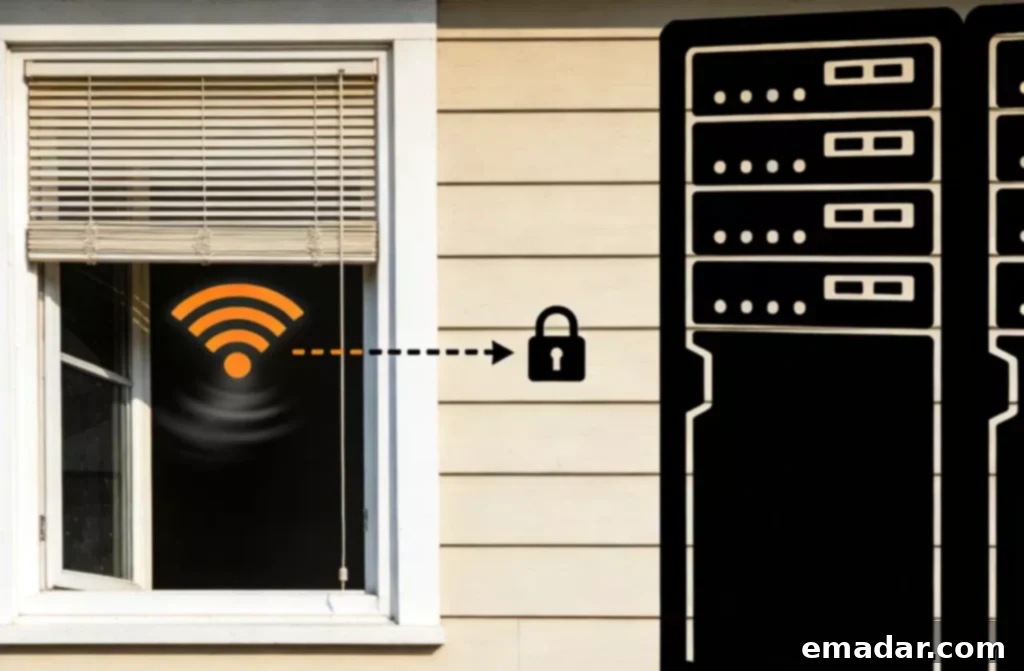
Understanding US Residential IPs: What Makes Them “Residential”?
In simple terms: A US residential IP is an IP address originating from a real US household broadband connection.
The biggest differences between them and data center IPs or cloud server IPs are:
- They originate from genuine ISP assignments.
- Their behavior patterns more closely resemble those of “ordinary US users.”
- They are not concentrated, clustered, or conspicuous.
This is why, in the eyes of platform risk control, US residential IPs have a much lower “risk factor.”
Many platforms don’t immediately ban accounts. Instead, they first perform risk stratification identification, and IP type is the initial screening criterion.
How US Residential IPs Solve the “Account Association” Problem
Account association is essentially a platform performing an environment consistency assessment.
Common association signals include:
- Multiple accounts sharing the same IP range.
- Frequent IP switching with illogical geographic patterns.
- IP source being flagged as a proxy, data center, or high-risk range.
Stable and genuine US residential IPs precisely address these issues.
For example, consider a matrix of accounts:
- Each account is bound to an independent US residential IP.
- The IP is consistent with the registration country and login behavior.
- Long-term use without frequent drifting.
From the platform’s perspective, this looks like:
“A batch of genuine users scattered across different regions in the United States,” rather than “a machine frantically switching accounts.”
This is one of the reasons why many established teams use IPFLY – its residential IPs are from genuine sources, geographically dispersed, and suitable for isolating accounts at the account level.
The Real Role of US Residential IPs in “Environment Isolation”
Many people only isolate browser fingerprints but neglect the IP address.
In reality: Fingerprints are like an ID card, and IP is like a residence permit.
If multiple environments share the same US residential IP,
The isolation effect will be significantly weakened.
In practice, a sensible approach is:
- One browser environment.
- Bound to a long-term, stable US residential IP.
- No cross-purpose or mixed-scene usage.
This makes the account profile “cleaner” and more likely to pass the platform’s long-term risk control measures.
Scenarios Where US Residential IPs Are Essential
Not all businesses require residential IPs, but in the following cases, not using US residential IPs is basically offering yourself to risk control:
1️⃣ Cross-Border E-Commerce Multi-Store Operation: Using US residential IPs during registration, login, and account nurturing aligns with platform expectations.
2️⃣ Social Media Account Matrix: Avoid having a batch of accounts identified as “studio behavior.”
3️⃣ Overseas Platform Testing and Access: Prevent pages, prices, and content from being “treated differently.”
4️⃣ Long-Term Data Collection: The sustainability of residential IPs is significantly higher than regular proxies.
In these scenarios, the core value of US residential IPs is not “speed” but “stability.”
How to Determine If a US Residential IP Is Reliable
Don’t rely on advertising; look at three key aspects:
- Whether the IP comes from a genuine residential network.
- Whether it supports long-term, fixed usage.
- Whether there are screening and risk control mechanisms.
IPFLY’s advantage in these scenarios is that its US residential IPs come from genuine ISP resources and reduce the anomaly rate through multi-layer screening. This makes them better suited for long-term account environment binding rather than one-time tasks.
Conclusion
Many account issues that appear to be operational problems are essentially due to selecting the wrong type or using US residential IPs incorrectly.
As platforms increasingly “think like humans,” what we can do is make our environment more like a real person.
And this is precisely the significance of US residential IPs.
Clean IPs, Happy Accounts! 👉 Get a discount and access high-quality IPs, with 90 million real residential IPs to choose from!