
Understanding and Preventing DNS Leaks: Common Misconceptions Debunked
Many people harbor misconceptions about DNS leaks and how to prevent them. These include beliefs such as “Using a proxy network guarantees no DNS leaks,” “A DNS leak is the same as an IP leak,” and “Manually changing DNS settings ensures complete security.”
These misunderstandings can not only render your protective measures ineffective but also lull you into a false sense of security, increasing the risk of privacy breaches. A deep understanding of DNS resolution principles, network configuration logic, and core security concepts is essential to avoid these pitfalls.
A primary source of confusion is conflating DNS leaks with IP leaks or the use of proxy networks. Clearing up the fundamental distinction that “DNS resolution is an independent path from IP transmission” is key to avoiding the most common misunderstandings.
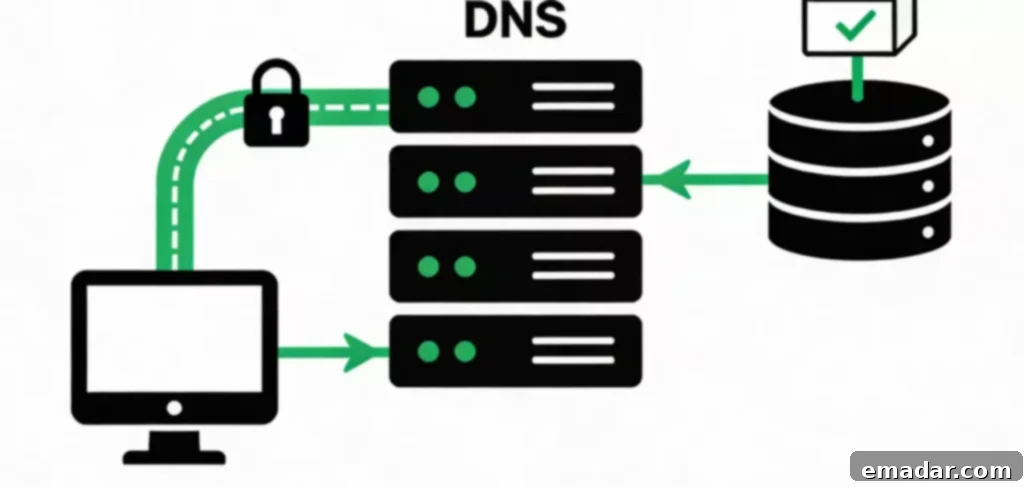
Myth 1: DNS Leak is the Same as IP Leak
Correct Understanding: DNS leaks and IP leaks are entirely distinct concepts with no direct correlation. A DNS leak involves the exposure of information related to your domain name resolution path, revealing your browsing activity, such as the domains you visit and the times you access them. An IP leak, on the other hand, involves the exposure of your device’s network identifier (IP address), which can be used to determine your device’s network location. The pathways, content, and potential harms of these leaks differ significantly.
Explanation: For example, you might use a proxy network to mask your real IP address, preventing IP leakage. However, if the DNS resolution request bypasses the proxy and is sent directly to your local ISP’s DNS server, a DNS leak occurs. In this scenario, your ISP can see all the domains you visit but cannot determine your real IP address. Conversely, you might not have a DNS leak, but due to misconfigured proxy settings, your real IP address could be exposed, resulting in an IP leak. These scenarios can occur simultaneously or independently, requiring distinct protective measures.
Myth 2: DNS Leaks Only Occur When Using Proxy Networks
Correct Understanding: DNS leaks are not exclusive to proxy networks; they can occur even during regular internet usage. By default, devices use the local ISP’s DNS servers for resolution, giving the ISP access to all your DNS resolution records, which constitutes a “controlled DNS leak.” If third-party software alters your DNS configuration and sends resolution requests to malicious DNS servers not associated with your ISP, this is considered an “uncontrolled DNS leak” with higher risks.
Explanation: DNS leaks in proxy networks receive attention because users intend to hide their online activity. In contrast, many people accept that ISPs can track their browsing habits during regular internet use, so they overlook the leakage issue. From a privacy perspective, it’s crucial to address DNS leaks in regular internet usage, particularly when accessing sensitive websites like banking or government platforms, where leaked resolution records can pose security risks.
Myth 3: DNS Leaks Cause Noticeable Internet Problems
Correct Understanding: DNS leaks are a form of “silent leakage” that rarely causes noticeable internet problems. DNS leaks only affect the information ownership of the resolution path without disrupting domain resolution or data transmission. You can still access your target websites normally, and videos and web pages will load without issues, but your browsing behavior is exposed to third parties.
Explanation: This is why DNS leaks are often overlooked. Internet disruptions might only occur in specific scenarios, such as cross-border access where a DNS leak reveals your regional identity, leading the target platform to restrict access. In everyday situations, it’s difficult to detect DNS leaks without proactively conducting DNS leak tests. Therefore, proactive testing and prevention are more important than post-incident detection.
Myth 4: Using a Proxy Network Prevents All DNS Leaks
Correct Understanding: A proxy network does not automatically prevent DNS leaks. The key factor is whether the proxy service includes a “DNS resolution synchronization” feature. If the proxy service only proxies data transmission channels without synchronizing the DNS resolution channel, the device might still use the default local DNS for resolution. This leads to a “data through proxy, DNS through local” leak. Only proxy network services with DNS synchronization can prevent leaks.
Explanation: High-quality proxy network services automatically switch the device’s DNS to a dedicated DNS when establishing a proxy connection, ensuring that the resolution path matches the transmission path. However, poorly configured proxy services are prone to DNS leaks. When choosing a proxy network service, consider not only IP quality but also DNS synchronization protection. For example, some reputable services prioritize DNS configuration as a core security feature, ensuring no DNS leaks during proxy use.
Myth 5: Manually Changing DNS Settings Eliminates DNS Leaks
Correct Understanding: Manually changing DNS settings can reduce the risk of leaks but does not guarantee complete prevention. Third-party software installed on the device, such as security or network management software, may have a “forced DNS” feature that automatically overwrites your manual DNS settings. Additionally, when switching network environments, the DNS configuration may be automatically reset to default, leading to DNS leaks. Manually changing DNS is a basic security measure that requires additional measures to ensure effectiveness.
Explanation: After manually changing the DNS, regularly check if the DNS configuration has been altered, and disable the forced DNS interference feature of third-party software. For scenarios requiring higher security, combine proxy network services with DNS synchronization to create “dual protection” and ensure a controllable resolution path.
Myth 6: Using Public DNS is Absolutely Secure
Correct Understanding: Public DNS is more secure than the default DNS provided by local ISPs but is not “absolutely secure.” Public DNS service providers may still log users’ resolution records. If the security measures of public DNS service providers are inadequate, resolution records can be stolen by attackers. Furthermore, if a device has DNS hijacking issues, resolution requests may still be hijacked to malicious DNS servers, even with public DNS settings, leading to leaks.
Explanation: Public DNS is a basic security choice suitable for most people. It effectively avoids the risk of local ISPs accessing resolution records but does not eliminate all leak risks. For users with high privacy requirements, combining proxy networks with DNS synchronization, encrypted transmission, and other measures is necessary to enhance security.
Key Takeaway: Ensure Controllable Resolution Paths
After avoiding these misconceptions, the core logic for proper DNS leak prevention is to “make the DNS resolution path completely controllable.” Follow these principles:
1. Identify DNS Resolution Path Ownership
Understand where your DNS resolution requests are being sent, whether to your local ISP, public DNS, or a dedicated proxy DNS, to avoid “unknown ownership” resolution paths.
2. Match Resolution to Your Needs
For regular internet usage, the resolution path should point to reliable public DNS. For cross-border access, the resolution path should point to a dedicated proxy DNS. For corporate use, the resolution path should point to a private corporate DNS.
3. Regularly Verify Security Measures
Use professional DNS leak testing tools to regularly check if the resolution path is as expected. If anomalies are detected, troubleshoot configuration issues, such as DNS tampering or proxy configuration failures.
4. Choose Network Services with Integrated Protection
When using proxy networks or other services, prioritize products that provide DNS synchronization to reduce the complexity and risks of manual configuration. Some services automatically synchronize resolution paths with transmission paths, simplifying security measures.
Correct Understanding is the Foundation of DNS Leak Prevention
Many misconceptions about DNS leaks stem from overlooking the fundamental principle that “DNS resolution is an independent path.” DNS leak prevention is not a “one-tool-fixes-all” solution. It requires building a correct understanding, selecting appropriate security measures based on specific scenarios, and regularly verifying the effectiveness of those measures.
For the average user, avoiding misconceptions like “proxies are always secure” and “changing DNS is a complete solution,” and implementing “manual configuration of public DNS + the use of DNS-synchronized proxy services when necessary” can meet most security needs. For businesses and users with high privacy requirements, it’s essential to adopt a comprehensive approach that includes resolution path management, configuration permission management, and log auditing.