
Understanding Cross-Border Payment Platforms: A Comprehensive Guide
The rise of cross-border trade and e-commerce has placed cross-border payments at the heart of global financial transactions. For businesses and individuals venturing into the international market, questions like “Which cross-border payment platforms are available?”, “What are the differences between them?”, and “How can I understand the various payment tools?” are paramount.
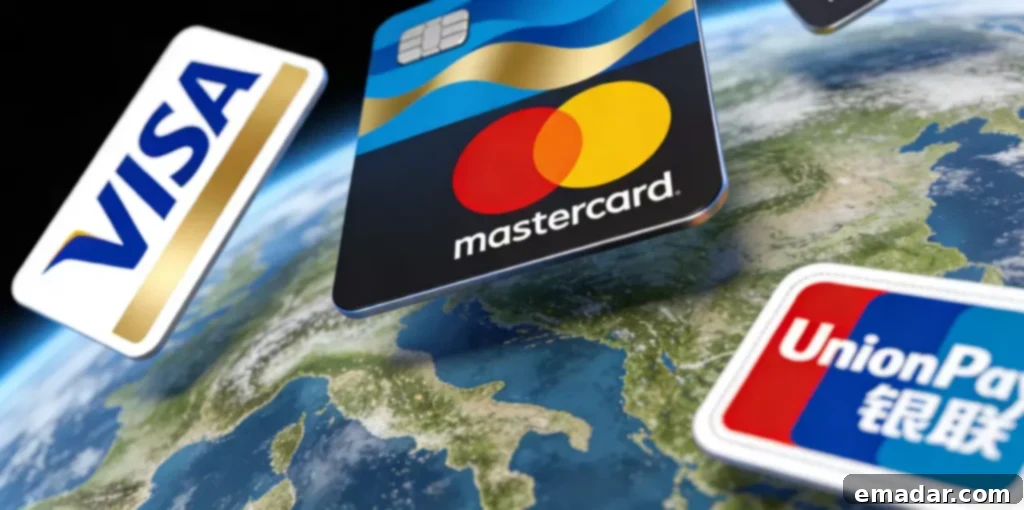
Many people have a limited understanding of cross-border payment platforms, either knowing only a few common tools or confusing the types and functions of different platforms.
The reality is that numerous cross-border payment platforms exist, and different types of platforms vary significantly in terms of fund transfer methods, applicable scenarios, and core advantages. A clear understanding of the attributes of each platform is essential for making informed choices.
This comprehensive guide explores the main categories of cross-border payment platforms and their unique characteristics.
Four Main Types of Cross-Border Payment Platforms
Based on core dimensions such as fund transfer mechanisms, target audiences, and business scope, the main cross-border payment platforms can be divided into four categories: Third-Party Cross-Border Payment Platforms, Bank Cross-Border Payment Services, Card Organization Payment Systems, and Local Payment Platforms. Each type has its unique operational logic and applicable scenarios, catering to different cross-border payment needs.
1. Third-Party Cross-Border Payment Platforms: Convenient and Efficient Mainstream Choice
Third-party cross-border payment platforms are the most commonly used payment tools for cross-border e-commerce and small to medium-sized enterprises. Their core advantages lie in ease of use, streamlined processes, and strong compatibility. These platforms partner with domestic and international banks and card organizations to establish cross-regional fund transfer channels. Users do not need complex bank integration processes; they can quickly start cross-border payment operations by completing platform registration and qualification authentication.
Key characteristics of third-party cross-border payment platforms include:
- Diverse Payment Methods: They support a variety of payment methods, adapting to payment habits in different countries and regions (such as credit cards, e-wallets, and bank transfers).
- Fast Fund Arrival: Funds typically arrive within T+1 to T+3 business days. Some platforms offer instant arrival services for qualified users.
- User-Friendly Interface: Platforms usually provide multilingual operational interfaces and dedicated customer support, lowering the barrier to entry for users.
When using these platforms, merchants often need to access the platform’s overseas merchant backend and review payment policy interpretations for overseas markets. This requires a stable cross-border network environment. Unstable networks can lead to slow page loading and delayed information synchronization, affecting the smooth progress of payment operations. In these situations, a reliable proxy network service can be invaluable. For example, IPFLY’s proxy service can provide a stable cross-border network link, helping merchants smoothly access overseas services and resources and ensuring the successful execution of cross-border payment-related operations.
2. Bank Cross-Border Payment Services: Secure and Stable Traditional Choice
Bank cross-border payment services are the most traditional method of cross-border payment. They rely on the bank’s own global clearing network to provide users with cross-border transfers, remittances, and other payment services. Their core advantage is high security and strong fund protection capabilities, making them suitable for the cross-border transfer of large amounts of funds. Bank cross-border payment services remain the preferred choice for large enterprises and bulk commodity trading scenarios where fund security is paramount.
The characteristics of these payment services include:
- Clear Fund Transfer Path: The entire process is regulated by the bank, effectively reducing fund risks.
- Extensive Currency Support: They support a wide range of currencies, covering almost all major currencies in circulation globally, meeting payment needs in different regions.
- Integrated Financial Services: Banks can provide users with complementary financial services (such as foreign exchange, trade financing), integrating payment and financial services.
However, bank cross-border payment processes are relatively complex, requiring the submission of more qualification certificates and transaction materials. The arrival time is also relatively long (usually 3-7 business days), and the handling fees are generally higher than those of third-party payment platforms.
3. Card Organization Payment Systems: Globally Universal Payment Infrastructure
Card organization payment systems (such as common international card organizations) are an important infrastructure for global cross-border payments. By connecting global issuing banks and acquiring institutions, they provide users with card-based payment services such as credit cards and debit cards. Their core advantage is strong global universality and wide coverage, making them usable in almost all countries and regions worldwide. They are suitable for cross-border retail scenarios targeting individual consumers.
The characteristics of these payment systems include:
- High Payment Convenience: Users can complete payments by simply presenting their card or entering their card number information, without complex operational procedures.
- Fast Transaction Confirmation: They can complete payment verification in real-time, improving the user’s consumer experience.
- Robust Transaction Security: Card organizations provide a comprehensive transaction security mechanism to reduce risks such as fraudulent charges and fraud.
For cross-border e-commerce platforms and overseas retail merchants, integrating card organization payment systems can significantly improve user payment convenience and expand customer group coverage. However, the access threshold is relatively high, requiring compliance with the relevant qualification requirements of the card organization, and requiring the payment of certain access fees and transaction fees.
4. Local Payment Platforms: Precise Choice for Adapting to Regional Markets
Local payment platforms refer to payment tools that dominate in specific countries or regions. These platforms are deeply adapted to local payment habits and regulatory policies, making them an important payment choice for cultivating regional markets. For example, local e-wallets in some Southeast Asian countries and local transfer tools in Europe and the United States belong to this category.
Their core advantages lie in strong regional adaptability, precisely matching the payment habits of local users (for example, users in some regions prefer to use local e-wallet payments). At the same time, these platforms can usually better align with local regulatory requirements, reducing the compliance risks of payment operations. For cross-border merchants focused on a specific regional market, integrating the mainstream local payment platform can effectively improve user payment intentions and increase conversion efficiency. However, the coverage of these platforms is limited, usually only applicable to specific countries or regions, and cannot meet global multi-regional payment needs.
Key Differences Between the Four Types of Payment Platforms
To help you better distinguish between various cross-border payment platforms, we compare them from the following five key dimensions to help you quickly grasp the core differences:
1. Security
Bank Cross-Border Payment Services > Card Organization Payment Systems > Third-Party Cross-Border Payment Platforms > Local Payment Platforms
Bank cross-border payment services rely on the bank’s risk control system, providing the highest level of security. Card organization payment systems have a comprehensive transaction security mechanism. While third-party cross-border payment platforms have risk control measures, their overall security is slightly lower than that of banks and card organizations. The security of local payment platforms varies depending on the region and platform.
2. Convenience
Third-Party Cross-Border Payment Platforms > Local Payment Platforms > Card Organization Payment Systems > Bank Cross-Border Payment Services
Third-party cross-border payment platforms have the simplest operational processes and a low barrier to entry. Local payment platforms are adapted to local user habits, making their operation relatively convenient. Card organization payment systems are easy to operate for users, but the access threshold for merchants is high. Bank cross-border payment services have complex processes and the lowest level of convenience.
3. Arrival Time
Third-Party Cross-Border Payment Platforms > Card Organization Payment Systems > Local Payment Platforms > Bank Cross-Border Payment Services
Third-party cross-border payment platforms have the fastest arrival speed, with most achieving T+1 to T+3 arrival. Card organization payment systems also have relatively fast fund arrival after transaction confirmation. The arrival time of local payment platforms varies by region. Bank cross-border payment services have the longest arrival time, usually requiring 3-7 business days.
4. Applicable Amount
Bank Cross-Border Payment Services > Third-Party Cross-Border Payment Platforms > Card Organization Payment Systems > Local Payment Platforms
Bank cross-border payment services are suitable for large fund transfers. Third-party cross-border payment platforms accommodate both large and small payments. Card organization payment systems and local payment platforms are more suitable for small retail payment scenarios.
5. Coverage
Card Organization Payment Systems > Third-Party Cross-Border Payment Platforms > Bank Cross-Border Payment Services > Local Payment Platforms
Card organization payment systems have the widest global coverage. Third-party cross-border payment platforms can also cover major global markets. The coverage of bank cross-border payment services is limited by the bank’s own clearing network. Local payment platforms only cover specific countries or regions.
Common Misconceptions About Cross-Border Payment Platforms
1. “The More Well-Known the Cross-Border Payment Platform, the Better”
Many people believe that only well-known cross-border payment platforms are reliable, but this is not necessarily the case. Different platforms are suitable for different scenarios, and well-known platforms may not be suitable for their own business needs. For example, for large enterprises engaging in large-scale cross-border trade, choosing bank cross-border payment services may be more appropriate than third-party payment platforms. For small e-commerce businesses engaging in small retail businesses, the convenience of third-party payment platforms is more advantageous. The core of the choice is “matching needs” rather than simply pursuing popularity.
2. “Third-Party Payment Platforms Lack Security”
Some people question the security of third-party cross-border payment platforms. In reality, legitimate third-party payment platforms have robust risk control systems and will use data encryption, transaction verification, real-time monitoring, and other methods to ensure fund security. As long as you choose a compliant, registered, and fully qualified third-party payment platform, you can effectively reduce fund risks.
3. “Local Payment Platforms Do Not Need Attention”
Many cross-border merchants only focus on globally universal payment platforms and ignore the value of local payment platforms. For merchants deeply cultivating specific regional markets, local payment platforms are key to improving the user payment experience. For example, in some Southeast Asian markets, the usage rate of local e-wallets is much higher than that of international payment tools, and integrating local payment platforms can significantly improve user payment intentions.
Establish Systematic Cognition and Accurately Match Needs
In summary, cross-border payment platforms are mainly divided into four categories: third-party cross-border payment platforms, bank cross-border payment services, card organization payment systems, and local payment platforms. Each type of platform has its unique core characteristics and applicable scenarios.
When learning about cross-border payment platforms, beginners should first establish a systematic classification cognition, clarify the key differences between various platforms, and avoid common cognitive misconceptions.
In actual operation, whether it is understanding the overseas policy requirements of various platforms or connecting to overseas payment services, a stable cross-border network environment is crucial.
Using IPFLY’s proxy service can ensure smooth access to overseas-related resources and provide strong support for the development of cross-border payment business. When choosing a cross-border payment platform, you only need to combine your own business type, transaction amount, target market, security needs, and other core factors to accurately match the most suitable payment tool from various platforms.
IPFLY – A professional proxy service provider focusing on the cross-border industry:
- ✔ Global coverage of 190+ countries;
- ✔ Supports static/dynamic residential proxy + native IP + data center proxy;
- ✔ Provides exclusive pure IP, dedicated for special numbers;
- ✔ No logs, high anonymity, supports fingerprint browser integration;
- ✔ Supports API docking, making batch configuration easier.
👉 Get a discount and get high-quality IP here