
Unlocking the Power of Proxy IPs: More Than Just Geolocation
While the most commonly associated use of proxy IPs is accessing content restricted by geographical location, their value extends far beyond this single application. In the modern internet landscape, proxy IPs play a crucial role in enhancing online security, improving website performance, and enabling businesses to operate smoothly. Understanding the multifaceted benefits of proxy IPs is essential for both individual users and organizations seeking to optimize their online experience and overcome various network-related challenges.
At its core, a proxy IP acts as an intermediary or a “mask” within the digital world. When a device connects to the internet through a proxy IP, data does not travel directly from the user’s device to the target server. Instead, the request is routed through a proxy server, which then forwards the information to the destination. The target server then identifies the IP address of the proxy server, not the user’s actual IP address. This fundamental principle forms the basis for a wide range of practical applications, benefiting both personal and enterprise use cases.
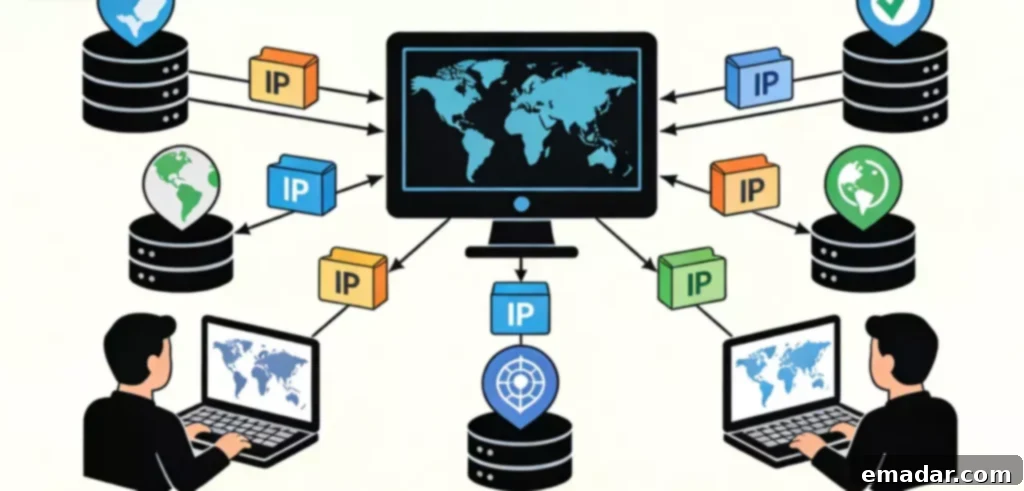
Bypassing Geolocation Restrictions for Seamless Access to Global Content
The ability to circumvent geographical restrictions is arguably the most well-known and sought-after feature of proxy IPs. Many online resources, including academic databases, e-commerce platforms, and industry-specific websites, employ geolocation technology to determine the user’s location based on their IP address. These resources often restrict access to users with IP addresses outside specific regions. Without a proxy IP, users whose real IP addresses do not match the permitted location are unable to access the desired content.
Proxy IPs overcome these restrictions by assigning users an IP address corresponding to the required location. This effectively “spoofs” the device’s online identity, making it appear as though the user is browsing from within the allowed region. For example, a researcher needing access to a US-based academic database can utilize a US proxy IP to bypass the location check and gain unrestricted access to research materials. A reliable proxy service ensures the stability and purity of the IP address, preventing disruptions during access. Services like IPFLY provide a wide range of proxy IPs across multiple regions globally, tailored to meet diverse geolocation needs while ensuring reliable data transmission for a smooth browsing experience.
Shielding Your Real IP: Enhancing Online Security and Privacy
In the interconnected digital world, a real IP address is essentially your device’s online identifier. Exposing this IP address can lead to a number of security risks, including targeted attacks, intrusive advertising, and the potential theft of personal information. The risk is particularly heightened when browsing unfamiliar websites or using public Wi-Fi networks.
Proxy IPs provide a powerful solution to mitigate these risks. By using a proxy server, the target server only sees the proxy IP, not the user’s actual IP address. This simple act of masking the real IP significantly reduces the chances of being targeted by malicious actors, minimizes the risk of personal information leaks, and strengthens overall online security. Whether browsing the web, conducting research, or accessing corporate networks remotely, proxy IPs add an extra layer of protection. For environments requiring even higher security, proxy services like IPFLY offer encrypted connections to further secure data transmission, preventing interception and manipulation.
Navigating IP Restrictions: Gaining Uninterrupted Access
IP restrictions are a common obstacle in both personal and professional online activities. Websites often implement IP-based limitations to prevent abusive behaviors such as excessive data scraping, vote manipulation, and spamming. These restrictions often involve limiting the frequency or total number of requests from a single IP address, leading to temporary or permanent bans. Additionally, some platforms impose IP-based limits on user actions, such as preventing multiple account registrations from the same IP address or limiting participation in online events.
Proxy IPs serve as a practical solution to overcome these IP limitations. By simply switching to a new proxy IP address when the original is blocked, users can regain access to restricted resources. For activities requiring multiple accounts or frequent requests, rotating through a pool of different proxy IPs allows users to bypass platform restrictions and maintain continuous operation. It’s crucial to remember that the use of proxy IPs should always adhere to platform guidelines and applicable laws, and should not be employed for any illegal or unethical purposes.
Boosting Online Speed: Optimizing Your Browsing Experience
Beyond security and access, proxy IPs can also improve internet speed. Proxy servers are strategically located in various network nodes, and some proxy services optimize network pathways by selecting shorter and more efficient routes for data transmission. When the direct route between a user’s network and the target server is congested or experiencing high latency, connecting through a proxy server located on a faster, more optimized network can significantly reduce transmission delays and improve loading speeds.
For example, when accessing servers located overseas, the long distance and potential network bottlenecks can lead to slow page loading and video buffering. By using a proxy IP located closer to the target server, data transmission is streamlined, resulting in a noticeably faster browsing experience. Some proxy services also implement caching mechanisms, storing frequently accessed resources on the proxy server. When a user requests these resources again, they can be delivered directly from the cache, further reducing loading times.
Empowering Businesses: Ensuring Stability and Reliability
Proxy IPs are particularly valuable for businesses, providing the foundation for a wide range of critical operations. In cross-border e-commerce, businesses need to access international e-commerce platforms frequently to manage multiple store accounts. Proxy IPs bypass geographical restrictions and prevent IP-based account association, protecting store accounts from being flagged. Market research teams can gather data from various regions using proxy IPs to obtain local market insights, competitive intelligence, and accurate information for decision-making. Similarly, advertising teams can test ad performance in different regions using corresponding proxy IPs to simulate the experience of local users and ensure the accuracy of test results.
A dependable proxy service provides businesses with a steady supply of IP resources, preventing disruptions caused by unstable or banned IP addresses. Services like IPFLY provide high-stability, high-purity proxy IPs specifically tailored for the high-volume, long-term requirements of businesses. Comprehensive technical support ensures smooth operation and optimal performance.
Distributing Network Traffic: Reducing Local Network Strain
In large organizations or institutions where numerous devices simultaneously access the internet, local network congestion and bandwidth limitations can significantly impact overall network performance. Proxy IPs offer a solution by distributing network traffic and alleviating pressure on the local network. By deploying multiple proxy servers, organizations can route traffic from different departments or business units through separate servers, achieving a more balanced distribution.
This traffic segmentation prevents individual devices or departments from consuming excessive bandwidth, ensuring smooth operation across the entire network and improving efficiency for all users. For example, a marketing department requiring frequent access to international websites and a technical department accessing domestic tech forums can have their traffic routed through separate proxy servers to prevent mutual interference and maintain optimal work performance.
Essential Considerations When Using Proxy IPs
- Choose a Reputable Proxy Service: Select a legitimate proxy service with the necessary certifications to ensure the legality and stability of IP addresses and avoid potential legal issues.
- Match IP Type to Your Needs: Select the appropriate proxy IP type based on specific needs. For example, use dedicated overseas proxy IPs for geolocation-specific access or high-stability dedicated proxy IPs for high-frequency tasks.
- Adhere to Platform Rules and Laws: Strictly comply with the rules of each online platform and relevant national laws when using proxy IPs. Avoid using them for unethical or illegal activities such as data scraping, vote manipulation, or cyberattacks.
The Versatile Value of Proxy IPs
In conclusion, proxy IPs offer far more than just a means to bypass geographical restrictions. They play a vital role in improving online security, overcoming IP restrictions, accelerating browsing speeds, empowering businesses, and optimizing network traffic flow. Proxy IPs are a valuable tool that can be adapted to suit a wide range of needs and use cases.
IPFLY – Your Dedicated Proxy Service Provider for Cross-Border Operations:
- ✔ Global coverage across 190+ countries.
- ✔ Supports static/dynamic residential proxies + native IPs + datacenter proxies.
- ✔ Offers exclusive, clean IPs dedicated to single users.
- ✔ Provides no-logs, high anonymity, and supports fingerprint browser integration.
- ✔ Supports API integration for easier batch configuration.
👉 Claim Your Exclusive Offer and Access Premium IPs Today