
Understanding ISP Types: Native, Single, and Dual ISPs Explained
If you’re delving into the world of ISPs (Internet Service Providers), chances are you’re beyond the beginner stage. A novice typically doesn’t concern themselves with the underlying operator structures behind IP addresses. The moment you start pondering, “Which is better: a Native ISP, a Single ISP, or a Dual ISP?” it often signifies that you’ve encountered issues such as account anomalies, unstable environments, or problems with platform recognition.
This article avoids technical jargon and instead provides a clear explanation of the differences and advantages of these three ISP types from both a platform perspective and real-world user experiences.
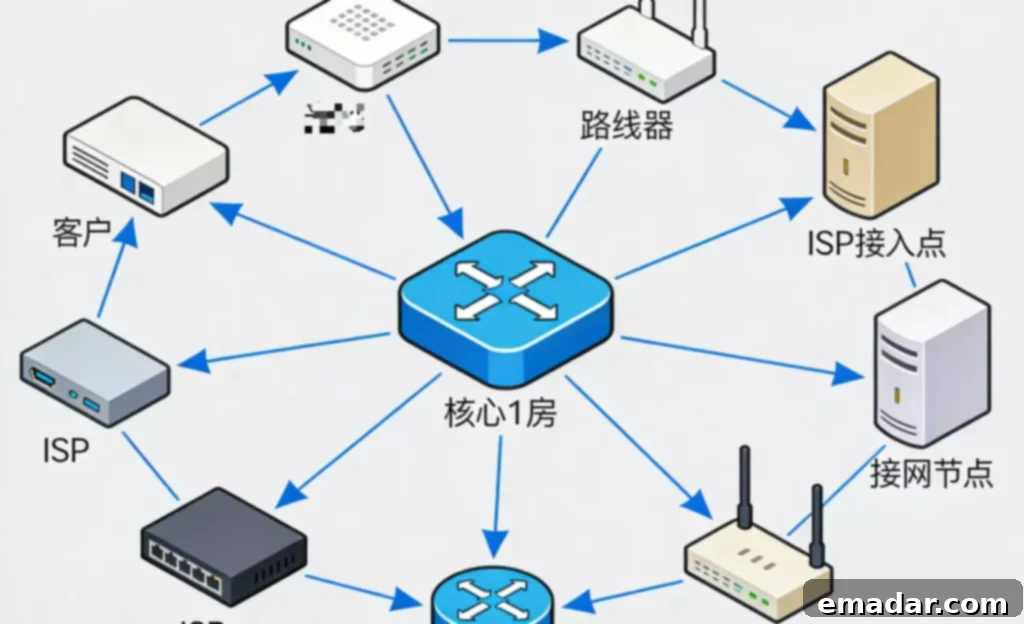
What Does ISP Really Mean to Platforms?
ISP is essentially the “birth certificate” of an IP address. When determining the trustworthiness of a visit, platforms typically consider several factors:
- Whether the IP originates from a genuine operator.
- Whether the network path is logical.
- Whether the behavior matches the IP’s background.
Therefore, an ISP isn’t just a “label”; it’s a crucial piece of evidence that platforms use to determine whether you’re a legitimate user.
What is a Native ISP? Why is it Highly Regarded?
A Native ISP refers to an IP address that’s directly assigned to an end-user by a local, genuine Internet Service Provider, without being relayed, rewritten, or layered through multiple proxies.
From a platform’s viewpoint, Native ISPs typically exhibit the following characteristics:
- Clean network paths.
- Clear operator information.
- Behavior that closely resembles that of typical home or office users.
This is why Native ISPs are often considered the network environment that most closely resembles that of a genuine user. The initial trust level is high from the start.
However, it’s essential to remember that a Native ISP is not a panacea, nor is it always secure. Its advantages primarily lie in its “initial trustworthiness” and “naturalness.” If your usage is not legitimate, a Native ISP won’t automatically protect you.
Understanding Single ISPs: Advantages and Limitations
What is a Single ISP?
A Single ISP means that the IP address belongs to a single, well-defined operator system, resulting in a simple and clear network path.
Advantages of a Single ISP
- Stable operator information.
- Consistent network attributes.
- Simpler platform identification logic.
For scenarios that require long-term stability and strong environmental consistency, a Single ISP is often a very hassle-free choice. Platforms see you consistently coming from the same location, which builds trust.
Limitations of a Single ISP
However, a Single ISP also has a natural characteristic: all behavior occurs under the same operator logic.
If your actions are considered suspicious, the platform can easily connect these behaviors and make a determination. A Single ISP is not a guarantee of safety; you must use it responsibly.
Therefore, the keywords for a Single ISP are: stability, not dispersion.
Dual ISPs: Solving the “Pathing” Problem
What is a Dual ISP?
A Dual ISP doesn’t mean “two IP addresses.” Instead, it refers to a network path that involves two different operator systems.
From a technical standpoint, this structure allows for a more “flexible” access path.
In some scenarios, it can reduce the centralized risk associated with a single path. It distributes your internet usage over multiple providers to make it appear more organic.
Advantages of a Dual ISP
- More dispersed network routing.
- Relief from path congestion or single-point failures.
- Better support for high-concurrency or cross-regional access.
This is why Dual ISPs are used in some complex business operations or multi-regional activities. It’s a tool to overcome geographical limitations or heavy traffic.
Potential Risks of Dual ISPs
However, Dual ISPs aren’t suitable for everyone.
If configured improperly, the following may occur:
- Inconsistent network characteristics.
- Mismatch between behavior and path.
- Platforms determining that you “don’t resemble a typical user.”
Therefore, a Dual ISP is more of a structural optimization rather than a beginner’s solution. It is intended for those who already understand networking concepts.
Key Differences Between Native, Single, and Dual ISPs
To summarize the focus of these three types:
- Native ISP: Emphasizes “authenticity and naturalness.”
- Single ISP: Emphasizes “clear structure and long-term stability.”
- Dual ISP: Emphasizes “flexible paths and risk dispersion.”
They aren’t replacements for each other; rather, they are tools for addressing different problems at different stages. It’s important to select the right tool for the job.
Why Do Many People Experience Problems with ISPs Over Time?
The common reason isn’t the ISP itself, but rather the mismatch between the use case and the ISP’s characteristics.
Here are some common examples:
- Requiring long-term stability but frequently changing paths.
- Highly continuous behavior but using an overly dispersed structure.
- Desiring a natural user appearance but configuring a complex network.
In these cases, both Native and Dual ISPs can be wrongly blamed. A stable connection is worth more than fancy setups.
Experienced users pay close attention to the ISP structure’s clarity and controllability when selecting proxy resources. For example, IPFLY, when providing related proxy solutions, distinguishes between different ISP types to enable users to select structures based on scenarios rather than blindly choosing parameters.
How to Choose the Right ISP: A Simple Guide
Ask yourself these three questions:
1️⃣ Do I need “long-term stability” or “path dispersion” more?
2️⃣ Is my online behavior highly continuous?
3️⃣ Does the platform prefer ordinary users or can it accept complex structures?
- Prioritize stability → Single ISP / Native ISP
- Prioritize dispersion → Dual ISP
- Prioritize a real user appearance → Native ISP
Many mature strategies involve switching ISP strategies at different stages rather than pursuing the “most complex” setup from the beginning. Begin simple, and only add complexity as needed.
Conclusion
An ISP isn’t better the more advanced it is; rather, it is safer the more suitable it is.
What truly sets you apart isn’t whether you use a Native or Dual ISP, but whether you understand how platforms “recognize you” through the ISP.
When you start thinking from this perspective, the IP truly becomes a tool rather than a source of risk. Selecting the right IP is a key part of your toolbox.
IPFLY Proxy:
- Stable across all nodes, supporting 190+ countries and regions globally.
- Second-level connection, uninterrupted operation, simulating real home broadband scenarios.