
Crawlee: The Ultimate Guide to Building Industrial-Grade Web Scrapers
In the Node.js web scraping world, if you’re still struggling with CAPTCHAs, managing proxy pools, or preventing browser fingerprinting, it’s time to talk about Crawlee.
As the successor to the Apify SDK, Crawlee is more than just a library; it’s a comprehensive “web scraping engineering” solution. This article goes beyond basic API documentation and dives into practical experience, discussing how to use Crawlee to solve real anti-scraping challenges and configure the underlying network infrastructure for large-scale data extraction.
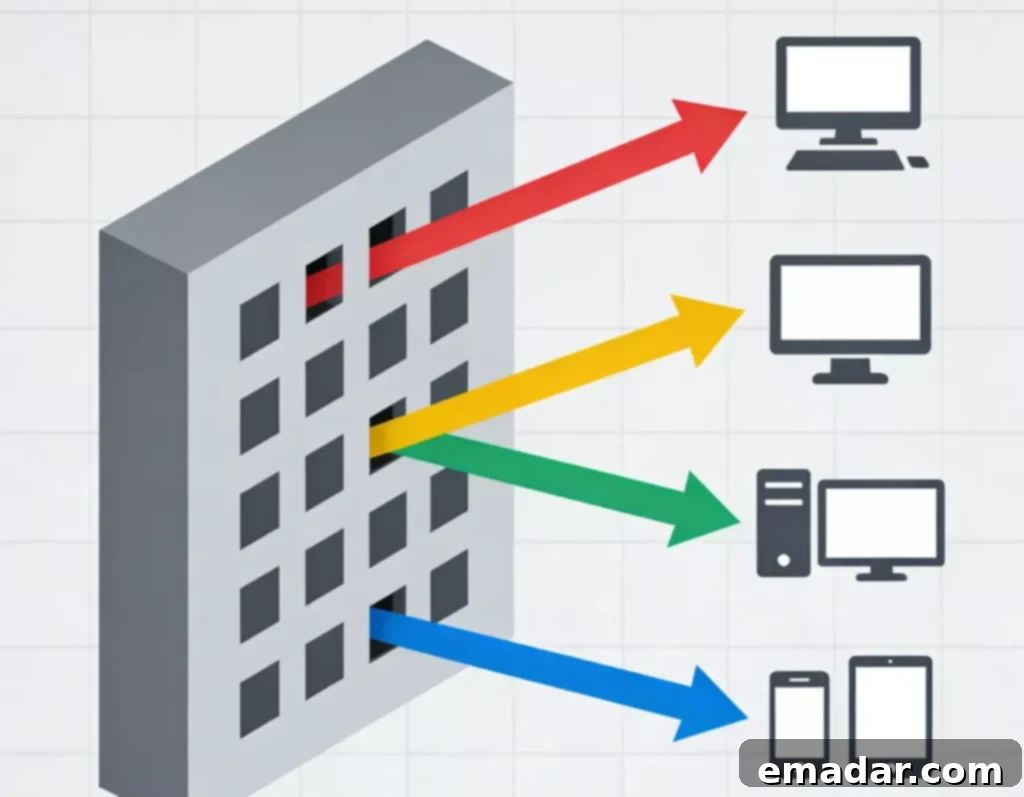
Why Switch from Puppeteer/Playwright to Crawlee?
Many developers ask: “I already know how to use Playwright, why should I learn Crawlee?”
Based on experience, native drivers (like Puppeteer) provide the “hands,” while Crawlee provides the “brain.” Crawlee offers a higher level of abstraction and handles many of the complexities associated with building robust and scalable web scrapers.
- Automatic Retry and Queue Management: Website crashes? Network timeouts? Crawlee automatically manages task queues and retry mechanisms, saving you from writing countless
try-catchblocks. - Fingerprint Bypassing: Modern anti-scraping systems can easily identify automated scripts. Crawlee includes a sophisticated fingerprint generator that simulates real hardware and system information, making your scraper appear more human-like.
- Multi-Mode Switching: Seamlessly switch between
CheerioCrawler(fast, parses HTML) andPlaywrightCrawler(renders JS, simulates real users) without rewriting your core scraping logic. This adaptability allows you to optimize for speed and robustness based on the specific requirements of the target website. - Scalability and Concurrency: Crawlee is designed for scalability. It allows you to easily manage concurrent requests and distribute your scraping workload across multiple machines or processes, significantly reducing the overall scraping time.
- Built-in Storage: Crawlee provides built-in storage options for managing scraped data, request queues, and other persistent data. This simplifies data management and allows you to easily resume scraping sessions.
Core Scenarios: Using Crawlee to Counter Anti-Scraping Measures
When deciding how to use Crawlee, the primary consideration is often “how to avoid being detected by the target website.” Crawlee provides several features to mitigate the risks associated with web scraping, allowing you to collect data more reliably and ethically.
Simulating Real User Fingerprints and Session Persistence
When scraping e-commerce platforms or social media that require login, maintaining environmental consistency is crucial. Anti-scraping systems often analyze various browser characteristics to identify bots.
- Problem: Even if the IP address changes, the platform can still identify a “robot matrix” if the Canvas or WebGL fingerprint remains constant. Consistent browser profiles can be a telltale sign of automated scraping.
- Solution: Crawlee’s
browserPoolOptionsallow you to configure the startup parameters of each browser with fine-grained control. A more advanced technique involves environment isolation – assigning independent storage space to each scraping session. This includes separate cookies, local storage, and browser cache, further mimicking real user behavior. Crawlee’s ability to rotate user agents and simulate realistic browsing patterns further enhances its ability to evade detection. By randomizing these factors, Crawlee makes it more difficult for websites to identify and block your scraper.
Breaking IP Rate Limits
This is where 90% of web scraping engineers fail. When you quickly scrape 10,000 pages, the target server will quickly blacklist your IP address. Rate limiting is a common anti-scraping technique used to prevent abuse.
Practical Experience Sharing:
When configuring Crawlee’s ProxyConfiguration, developers often face choices. While Crawlee supports dynamic switching, if the underlying IP quality is too poor (e.g., cheap data center IPs), the retry rate will be frighteningly high. Therefore, careful selection of proxy providers and intelligent proxy management are essential for successful web scraping with Crawlee.
Furthermore, consider using proxy rotation strategies that prioritize proxies with a history of successful requests. Implementing a feedback mechanism to track proxy performance and automatically remove poorly performing proxies from the rotation pool can significantly improve the reliability of your scraper.
Crawlee Web Scraping Configuration: Three Secrets
Secret 1: Choose the Right Crawling Strategy (Cheerio vs. Playwright)
Don’t start a browser right away. Selecting the correct crawler type is crucial for optimizing performance and resource usage. Crawlee offers two main crawler types: CheerioCrawler and PlaywrightCrawler.
- If the target page is static HTML, use
CheerioCrawler. Its memory footprint is low, and it’s more than 10 times faster than a browser. CheerioCrawler is ideal for websites that primarily serve static content and don’t rely heavily on JavaScript for rendering. - If complex JS rendering or CAPTCHAs are involved, switch to
PlaywrightCrawler. PlaywrightCrawler uses a real browser to render the page, allowing it to handle dynamic content and interact with elements that require JavaScript execution.
Secret 2: Fine-Grained Proxy Management
How to use Crawlee to maximize proxy effectiveness? The key is useSessionPool.
By binding a session to a specific IP address, you can simulate a real user’s continuous operation path on the website. Frequent IP changes can trigger security alerts on some platforms. Session management allows you to maintain a consistent browsing identity and reduce the likelihood of being flagged as a bot. Careful monitoring of session health and intelligent session rotation are also important considerations.
Consider using a combination of different proxy types, such as residential proxies and mobile proxies, to further diversify your IP addresses and mimic real user behavior more closely. Implementing custom proxy rotation strategies based on the target website’s anti-scraping measures can also improve the effectiveness of your proxy management.
Secret 3: Environment Isolation for Account Security
If you are performing matrix scraping that requires login, account security is the top priority.
- Specific Solution: Each Crawlee web scraping instance should be paired with a dedicated, high-purity static residential IP. This level of isolation prevents cross-contamination between accounts and reduces the risk of account bans.
- Logic: This approach ensures that your “Account A” always appears in “Location A” and “Account B” appears in “Location B.” IPFLY’s static resources are particularly effective in this scenario. Their fixed IPs, selected through big data algorithms, provide a stable identity label for web scrapers, effectively preventing account association and bans due to IP drift. By associating each account with a unique and consistent IP address, you can create a virtual sandbox that minimizes the risk of detection.
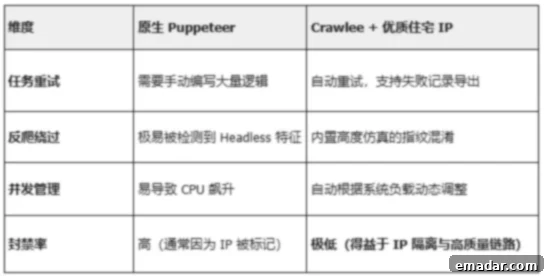
Performance and Stability Comparison
Conclusion and Recommendations
Mastering how to use Crawlee is just the first step. The real challenge is surviving in the complex network game of cat and mouse. Understanding the nuances of anti-scraping techniques and adapting your scraping strategy accordingly is essential for long-term success.
Crawlee solves the technical details of “how to scrape,” while the underlying proxy solves the access problem of “can I scrape?” For industrial-grade scraping projects, we recommend not only leveraging Crawlee’s queue management and fingerprint simulation but also focusing on building the network environment. Invest time in researching and selecting reliable proxy providers. Consider using a combination of different proxy types to diversify your IP addresses and mimic real user behavior more closely.
By leveraging resources like IPFLY, which has global coverage and self-built servers, combined with Crawlee’s session management, you can build a comprehensive protection system from underlying IP isolation to upper-layer browser behavior simulation. This is not just for scraping speed but also for ensuring the long-term stability and success of your business in an increasingly strict anti-scraping environment. Regularly monitor your scraper’s performance and adapt your strategies to stay ahead of evolving anti-scraping techniques.
IPFLY has 90 million+ high-quality IP resources worldwide, supporting:
- ✅ Highly stable static residential IPs (customizable country/city)
- ✅ Massive dynamic residential IPs with automatic rotation support
- ✅ High purity and strong anti-risk control capabilities
- ✅ Dedicated customer service for IP environment configuration guidance
Register with IPFLY to ‘hide’ your account overseas and truly achieve secure operation!