
Crawlee: A Comprehensive Guide to Modern Web Scraping
Traditional web scraping tools often struggle with high maintenance costs, complex anti-scraping adaptations, and poor scalability, especially in data acquisition, search monitoring, and content aggregation scenarios. Crawlee, Apify’s next-generation web scraping framework, is rapidly becoming the preferred choice for developers seeking a more robust and efficient solution.
This article provides a detailed guide on using Crawlee to build stable and scalable web scraping systems, covering everything from fundamental concepts to practical implementation workflows.
What is Crawlee? Understanding Its Applications
Before diving into the practical aspects of using Crawlee, let’s define its purpose and capabilities.
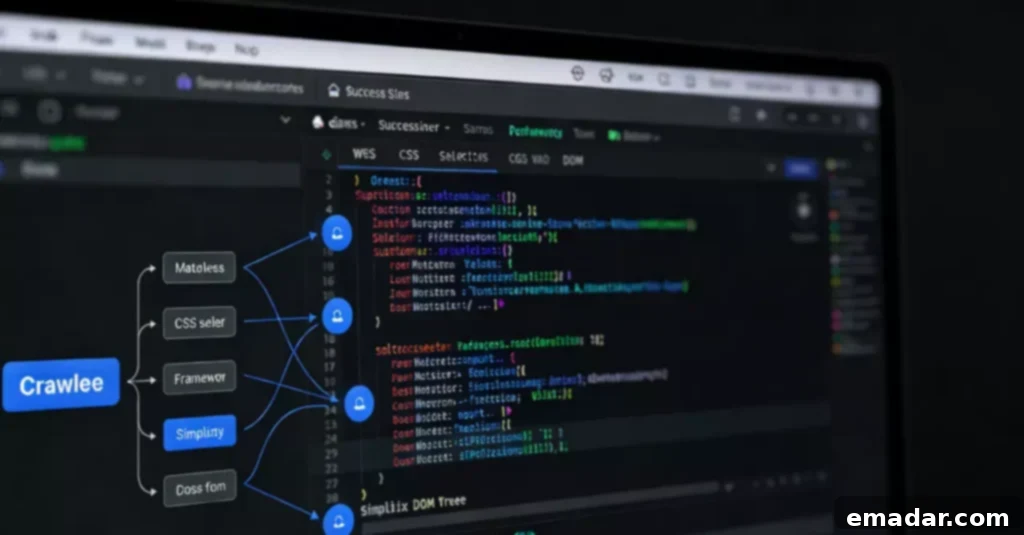
Crawlee is a Node.js-based web scraping and automation framework that excels in:
- Static web page scraping (HTTP requests)
- Dynamic web page scraping (Playwright/Puppeteer)
- Automated queue management
- Concurrency and failure retries
- Data storage and export
Common Use Cases for Crawlee
- Search engine results page (SERP) scraping
- E-commerce product information collection
- Content aggregation and monitoring
- Data validation and automated testing
- SEO/market research data acquisition
Setting Up Your Crawlee Environment
Before you start building your web scraper, you need to set up your development environment. Here’s how:
1. Install Node.js
It is recommended to use Node.js version 18 or higher to ensure compatibility and access to the latest features.
2. Create a Crawlee Project
Open your terminal and run the following commands:
npx crawlee create my-crawler
cd my-crawler
npm install
After the creation process is complete, the project structure typically includes:
src/main.js: Contains the main logic of your web scraper.src/routes.js: Defines the request handling logic.storage/: A directory for local data storage.
Scraping Static Web Pages with Crawlee
For websites that do not rely on JavaScript rendering, you can use CheerioCrawler.
CheerioCrawler is designed for speed and efficiency when dealing with static HTML content.
Example:
import { CheerioCrawler } from 'crawlee';

const crawler = new CheerioCrawler({
    async requestHandler({ request, $, log }) {
        const title = $('title').text();
        log.info(`Title of ${request.url}: ${title}`);
    },
});

await crawler.run(['https://example.com']);
Key Features of CheerioCrawler
- High speed
- Low resource consumption
- Suitable for news sites, blogs, and listing pages
Scraping Dynamic Web Pages with Crawlee
When dealing with pages that rely heavily on JavaScript rendering, PlaywrightCrawler is the tool you need.
PlaywrightCrawler leverages a full-fledged browser environment to accurately capture dynamic content.
Example:
import { PlaywrightCrawler } from 'crawlee';

const crawler = new PlaywrightCrawler({
    async requestHandler({ page, request }) {
        const title = await page.title();
        console.log(`Title of ${request.url}: ${title}`);
    },
});

await crawler.run(['https://example.com']);
Suitable Scenarios for PlaywrightCrawler
- E-commerce product detail pages
- Pages that require login
- Single-page applications (SPAs)
Managing URL Queues with Crawlee
Crawlee has a built-in RequestQueue, eliminating the need for manual URL list maintenance.
The RequestQueue simplifies the process of managing and prioritizing URLs to be crawled.
Example:
await crawler.addRequests([
    { url: 'https://site.com/page1' },
    { url: 'https://site.com/page2' },
]);
Features supported:
- Automatic deduplication
- Failure retries
- Depth crawling
Handling Anti-Scraping and Stability Issues with Crawlee
In real-world business scenarios, the network environment and IP quality are often critical factors in determining the stable operation of Crawlee.
Common issues include:
- Request frequency limitations
- Regional access restrictions
- Dynamic page loading anomalies
Practical Recommendations for Improving Stability
- Use residential proxies or static proxies
- Keep the IP region consistent with the target site
- Control concurrency and access frequency
In scenarios requiring multi-regional data validation or long-term stable collection, consider using IPFLY’s static residential proxies or datacenter proxies. These provide a more stable network egress for Crawlee, reducing error rates and increasing success rates.
Using proxies is crucial for avoiding IP blocks and ensuring continuous data collection.
Storing and Exporting Data with Crawlee
Crawlee natively supports Dataset storage, making it easy to organize and persist extracted data.
Example:
import { Dataset } from 'crawlee';

await Dataset.pushData({
    url: request.url,
    title,
});
Supported export formats:
- JSON
- CSV
- Excel (via conversion)
These formats are ideal for subsequent data analysis and reporting.
Common Questions About Using Crawlee
Q1: Is Crawlee suitable for large-scale scraping?
Yes. Its queue and concurrency management mechanisms naturally support large-scale data collection.
Q2: What is the difference between Crawlee and Scrapy?
- Crawlee: Node.js ecosystem, dynamic page-friendly
- Scrapy: Python ecosystem, biased towards static collection
Q3: How to improve Crawlee’s success rate?
The core lies in:
- Stable proxy IPs
- Reasonable concurrency control
- Access behavior that matches the target website
Conclusion: Building a Sustainable Web Scraping System with Crawlee
If you want to build a web scraping system that is low in maintenance costs, supports dynamic pages, and is scalable and automatable, then Crawlee is a very worthwhile option.
Combining it with a reasonable network proxy strategy (such as the multi-regional proxy resources provided by IPFLY) allows Crawlee to remain stable in complex environments, making it more suitable for real-world business scenarios.
IPFLY Proxy Advantages:
- Second-level connection, stable and uninterrupted
- Supports HTTP/HTTPS/SOCKS5 full protocol
- High-purity IPs, supporting long-term account nurturing for cross-border accounts
- Global 190+ country nodes, massive static/dynamic residential IPs to choose from
- Full platform compatibility, supports fingerprint browsers, system settings, automation tools, etc.
👉 Get a discount and get high-quality IPs now