
The Digital Compass: How to Check Your Router IP Address and Master Your Network
In the intricate and often invisible web of signals that power our modern lives, the router stands as the primary gateway for every home and office. Often overlooked, this small device silently orchestrates the flow of data between your devices and the vast expanse of the internet. It is the unsung hero of our digital age, faithfully working behind the scenes to keep us connected.
However, for many users, the router remains a mysterious “black box.” When faced with connectivity problems or the need to configure smart devices, we often encounter a frustrating roadblock. The key to unlocking the full potential of this essential device lies in a simple series of numbers known as the Router IP Address, frequently referred to as the Default Gateway. Understanding how to check your router IP address is not merely a technical skill; it’s the crucial first step toward gaining control over your digital environment and optimizing your network performance.

The Gateway to the World of Connectivity
Visualize your home network as a private island, where your smartphones, laptops, and smart TVs are the inhabitants. In this analogy, the router functions as the port authority – the single point of entry and exit. Consequently, the Router IP Address represents the specific address of that port authority, allowing devices to navigate and interact effectively.
Without this crucial address, your devices would be lost, unable to direct data to the internet. When you search online for “how to check router IP address,” you are essentially asking, “Where is the exit to the broader internet?” Knowing this address empowers you to access the router’s administrative interface, where you can perform essential tasks such as changing passwords, managing connected devices, and fine-tuning network performance. In essence, it’s the central dashboard for managing your digital life.
The Logic Behind Locating Your Router’s IP Address
Finding your router’s IP address doesn’t necessitate a computer science degree, but it does require familiarity with where to look within your device’s settings. The process is generally straightforward and accessible across various operating systems.
On most desktop and mobile operating systems, the router’s IP isn’t explicitly labeled “Router IP.” Instead, it’s commonly found under the designation “Default Gateway” or simply “Router.” This terminology is technically accurate, as the router acts as the gateway through which all local network traffic must pass to reach the internet. You’ll typically find this information nestled within the “Network Status” or “Wi-Fi Details” sections of your device’s settings. The IP address is usually represented as a numerical sequence, often resembling 192.168.x.x, which serves as the internal anchor for your local network.
Public vs. Private: Understanding the Dual IP Identity
The world of networking reveals fascinating complexities when we delve into IP addresses. Your router actually possesses two distinct identities, or IP addresses, and grasping the difference between them is critical for effective network management.
- Private (Local) IP: This is the “Default Gateway” discussed earlier. It’s used exclusively for communication within your home or office network, facilitating data exchange between your devices.
- Public IP: This is the IP address that represents your network to the outside world. It’s assigned by your Internet Service Provider (ISP) and is the address that websites see when you visit them. This IP address is your network’s outward-facing identity.
While knowing your local router IP is essential for troubleshooting Wi-Fi issues and managing your home network, managing your public IP becomes paramount when focusing on online privacy, security, and accessing geo-restricted content or global business services.
When One IP Address Isn’t Enough: Exploring the Role of Advanced Solutions
Relying solely on the single public IP address assigned by your ISP can present limitations, particularly for businesses expanding internationally, social media managers handling multiple accounts, or developers testing location-specific applications. Using a single, fixed public IP for high-volume tasks can lead to traffic restrictions, account bans, or increased security risks.
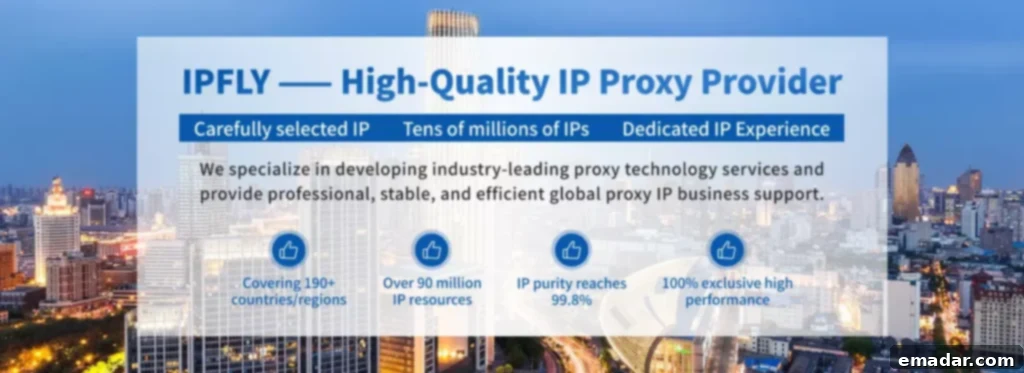
This is where advanced network solutions like IPFLY come into play. Unlike a standard home router providing a single static public identity, IPFLY offers a vast and dynamic pool of over 90 million proxy IPs. This extensive resource enables users to overcome the limitations of a single IP and achieve enhanced flexibility and security.
Breaking Down Geographical Boundaries
If your standard router IP is restricted from accessing specific global content, IPFLY enables you to route your connection through high-quality IPs in over 190 countries. This capability opens up a world of possibilities, allowing you to bypass geographical restrictions and access content from anywhere in the world.
Enhanced Security through Anonymity
Just as you check your router IP to safeguard your local network, utilizing IPFLY’s residential proxies introduces a layer of anonymity to your online activities. These IPs originate from real end-user devices, ensuring high purity and making your traffic indistinguishable from that of regular users. This enhanced anonymity significantly reduces the risk of detection and blocking.
Ensuring Business Continuity
For enterprise-level operations, the standard “Default Gateway” simply isn’t sufficient. IPFLY provides static residential proxies that accurately replicate real network environments, guaranteeing 99.9% uptime and preventing business disruptions commonly caused by unreliable public connections. This robust infrastructure ensures seamless and consistent connectivity for critical business applications.
Whether you’re searching for dependable proxy services or seeking to master the latest proxy operation strategies, IPFLY has you covered! Visit IPFLY.net and join the IPFLY Telegram community to gain access to firsthand information and expert support. Let proxies empower your business, transforming potential problems into valuable opportunities!
The Importance of Network Awareness
Learning how to check router IP address details goes beyond simply troubleshooting a slow streaming connection. It signifies a broader understanding of your network’s topology and the flow of data within your digital environment.
In an era characterized by evolving cyber threats, knowing your router’s IP address empowers you to verify the integrity of your DNS settings and ensure your firmware is up to date. You can also implement network segmentation (e.g., creating a guest network for visitors) and manage bandwidth allocation for high-priority devices. This proactive approach enhances your network’s security and performance.
Understanding the Invisible Infrastructure
The internet may seem like magic, but it’s meticulously constructed on rigid protocols. The Router IP serves as the cornerstone of your local connection, just as robust proxy services are essential for professional, globally accessible connectivity. Understanding these fundamental elements empowers you to navigate the digital landscape with greater confidence and control.
Whether you’re a casual user seeking to change your Wi-Fi password or a business professional needing to bypass regional restrictions using a service like IPFLY, the journey begins with understanding those four sets of numbers separated by dots. This numerical sequence represents the coordinate system of our virtual reality, enabling us to navigate and interact with the vast world of the internet.