
Every time you browse the internet, stream a video, or log into your online store, you leave behind a digital footprint: your IP address. At first glance, it might appear to be just a mundane string of numbers. However, this seemingly insignificant code acts as your digital home address, revealing critical information about your location, the devices you use, and even your online habits.
For cross-border e-commerce sellers, technology enthusiasts, and privacy-conscious individuals, understanding how an IP address can track users is no longer optional; it’s an essential skill for safeguarding one’s digital presence and personal information.
What Exactly Is an IP Address?
An IP address, short for Internet Protocol address, is a unique numerical label assigned to every device connected to a computer network that uses the Internet Protocol for communication. Think of it as your device’s unique mailing address on the vast global network. Just like a postal address ensures that a letter reaches its intended recipient, an IP address ensures that data packets, comprising everything from web pages to video streams, are routed correctly to and from your device.
Your Internet Service Provider (ISP) is responsible for assigning your device an IP address when you connect to the internet. This process is typically dynamic, meaning your IP address can change periodically, especially for home users. However, businesses often utilize static IP addresses for servers and hosted services to maintain a consistent online presence.
There are a few principal types of IP addresses you should be aware of:
- Static IP: This type of IP address remains constant each time you connect to the internet. Static IPs are typically employed by businesses for dedicated servers, email hosting, or other services that require a consistent network identity. They offer stability but can sometimes be a privacy concern due to their permanence.
- Dynamic IP: In contrast, dynamic IP addresses change regularly, either after a certain period, when your router restarts, or at the discretion of your ISP. This is the most common type of IP address assigned to residential users and offers a slight privacy advantage over static IPs, as it makes long-term tracking slightly more challenging, though far from impossible.
- IPv4 vs. IPv6: The internet has evolved, and so has the format of IP addresses. IPv4 (Internet Protocol version 4) addresses are the familiar numerical addresses, like 192.168.1.1, which consist of four sets of numbers ranging from 0 to 255, separated by dots. With the explosive growth of internet-connected devices, the supply of unique IPv4 addresses began to deplete. Consequently, IPv6 (Internet Protocol version 6) was developed. IPv6 addresses are much longer and more complex (e.g., 2001:0db8:85a3:0000:0000:8a2e:0370:7334), offering an astronomically larger pool of unique addresses to accommodate billions of new devices. The internet is gradually transitioning from IPv4 to IPv6.
Understanding why IP addresses are important goes beyond mere technical curiosity. Just as a postal address can implicitly reveal details about your neighborhood or city, an IP address can expose a surprising amount of information about you and your online activities. While a standalone IP address might not immediately seem threatening, when combined with other digital clues and tracking technologies, it transforms into a potent tool for monitoring online behavior.
How IP Addresses Are Used to Track You
Despite appearing as a random sequence of numbers, an IP address can be surprisingly revealing. Websites, online platforms, and advertisers leverage IP addresses in various sophisticated ways to track users, build comprehensive profiles, and deliver targeted content. Here are some of the most common methods:
1. Precise Geographic Location Targeting
Every IP address is inherently linked to a specific geographic region. Internet Service Providers (ISPs) are allocated large blocks of IP addresses for particular cities, regions, or even countries. This means that when you visit a website, that website can infer your city, and sometimes even your general neighborhood, based solely on your IP address. This process, known as geo-IP targeting, relies on constantly updated databases that map IP address ranges to physical locations.
- In everyday browsing, this explains why you automatically see local weather updates, advertisements for nearby businesses, or content specifically tailored to your region without explicitly providing your location.
- For e-commerce sellers, geo-IP tracking is critical. If multiple distinct accounts log in or operate from the same detected IP location, platforms may flag these accounts as potentially linked, leading to account suspension or limitations. This is a common challenge for businesses operating multiple storefronts or managing diverse marketing campaigns.
2. Comprehensive Online Behavior Tracking
Websites don’t just record that you visited; they link your browsing activities to your IP address. Over time, this data accumulation allows them to construct a detailed pattern of your online behavior, preferences, and interests. Data aggregators and advertising networks often combine IP data with other identifiers to create even richer user profiles.
- For instance, if you repeatedly browse specific product categories on an e-commerce platform, that platform can associate this behavior with your IP address and subsequently push highly personalized product recommendations and offers directly to you. This is how online retailers anticipate your needs and try to influence your purchasing decisions.
- If you manage multiple accounts (e.g., social media profiles, gaming accounts, or e-commerce seller accounts) from the same IP address, platform algorithms are sophisticated enough to recognize these patterns. They can link these seemingly disparate accounts, potentially leading to association issues, especially in environments where strict multi-account policies are enforced.
3. Associating Multiple Devices
Consider your home network: your smartphone, laptop, smart TV, and gaming console often share the same public IP address provided by your router. This shared IP address makes it significantly easier for online platforms to recognize that all these devices belong to the same household or individual, even if you log into different services on each device.
- For marketers, this capability is invaluable. It facilitates cross-device advertising, allowing them to show you an ad for a product you viewed on your laptop later on your smartphone, enhancing the perceived omnipresence of their campaigns.
- However, for privacy-conscious users, this means that using the same IP to access different services, even on different devices, can compromise their anonymity and make it easier for companies to build a holistic profile of their digital life.
4. Retargeting and Personalized Advertising
Have you ever noticed how that pair of shoes you merely browsed on an online store seems to follow you across different websites and social media platforms? This phenomenon is known as retargeting. While cookies and tracking pixels are primary technological drivers in this process, the IP address still plays a pivotal role. It acts as a foundational element, helping to ensure that even if you switch browsers, clear some cookies, or use a different device within the same network, the ad networks can still connect the dots and continue serving you relevant, personalized advertisements.
5. Cybersecurity Investigations and Threat Mitigation
IP addresses are not only used for marketing and user profiling; they are also crucial tools for law enforcement, online platforms, and unfortunately, malicious actors.
- Law Enforcement: Authorities frequently use IP address tracking to pinpoint the source of illegal online activities, ranging from cybercrime to harassment, helping them to identify and locate perpetrators.
- Platform Security: E-commerce giants like Amazon or eBay, as well as social media platforms, extensively utilize IP analysis to identify and flag suspicious login attempts, fraudulent transactions, or policy violations. A sudden login from a geographically distant IP address, for example, can trigger immediate security alerts.
- Cyber Attackers: If cybercriminals manage to obtain your IP address, they can initiate targeted attacks. This might include scanning your network for vulnerabilities, attempting Denial-of-Service (DoS) attacks, or even social engineering tactics based on your revealed location.
In essence, an IP address is far more than a technical identifier; it’s a digital breadcrumb that can reveal where you are, what you’ve done, and even who you might be. When combined with other identifiers such as browser fingerprinting, cookies, and behavioral analytics, the IP address becomes a highly accurate and pervasive tracking mechanism, painting a comprehensive picture of your online persona.
The Growing Importance of IP Tracking in Today’s Digital World
Initially, an IP address might seem like harmless data, a mere prerequisite for online connectivity. However, its implications vary significantly depending on the user’s role and online activities. In today’s interconnected digital landscape, particularly within the fast-paced realm of cross-border e-commerce, IP tracking can be a decisive factor in the success or failure of multi-account management strategies and overall digital privacy.
For Cross-Border Sellers
If you operate multiple shops or accounts on major platforms like Amazon, Shopify, Etsy, eBay, or TikTok Shop, your IP address is a critical point of vulnerability. These platforms employ sophisticated algorithms that rigorously monitor IP addresses to detect abnormal login patterns, suspicious activity, and potential policy violations. The stakes are high, as an IP-related detection can lead to severe consequences:
- Account Association Risk: Logging into two or more distinct seller accounts from the same IP address is a major red flag for most platforms. They can easily link these accounts, potentially deeming them “associated.” This often results in account suspension, restrictions on listings, or even permanent bans, as platforms strive to prevent users from circumventing policies or manipulating markets with multiple identities.
- Fraud Alerts for IP Changes: A sudden and drastic change in your IP’s geographic location (e.g., logging in from Asia one day and Europe the next) can trigger immediate fraud detection alerts. Platforms are programmed to look for consistent patterns, and such anomalies signal potential account compromise or illicit activity, even if legitimate.
Understanding these risks is why many professional sellers rely on advanced IP management tools and specialized multi-account browsers. These solutions ensure that each store or account operates within a unique and isolated digital environment, mimicking distinct users and preventing accidental associations that could jeopardize their business operations.
For Technology Enthusiasts
For tech enthusiasts, IP addresses often serve as a fascinating entry point into understanding the fundamental mechanics of the internet. They delve deeper, exploring questions such as: “How does the internet truly identify us?” or “Why is IP tracking almost always combined with cookies and browser fingerprinting?” For this group, comprehending IP addresses is not just about privacy protection; it’s about mastering the intricate secrets of how the internet functions and how data flows.
- Underlying Internet Mechanics: IP analysis underpins many core internet functionalities, including the operation of recommendation systems, the enforcement of geo-restrictions for streaming services and online content, and access control for gaming servers.
- Multi-Layered Tracking Unveiled: Understanding IP tracking reveals the multi-layered nature of online surveillance. IP tracking is often just the beginning, followed by sophisticated techniques like device fingerprinting, persistent cookies, and advanced behavioral analysis, all working in concert to create a comprehensive user profile.
For Privacy-Sensitive Users
If maintaining online anonymity and protecting your digital footprint are paramount concerns, then your IP address is undoubtedly one of the most crucial pieces of data you’ll want to safeguard. Even without revealing your name, an IP address can expose highly sensitive information:
- Actual Geographic Location: Your IP address can often pinpoint your physical location, typically to the city level, and sometimes even more precisely within a metropolitan area.
- Device and Account Linkage: It can reveal that multiple devices or various online accounts are all linked to the same individual or household, eroding the sense of privacy gained from using different platforms.
- Behavioral Profile Construction: Over time, your IP address contributes significantly to building a detailed behavioral profile, including your shopping preferences, browsing history, online activity schedule, and political leanings.
For individuals in these categories, IP tracking can feel akin to constant surveillance. The growing awareness that “someone is watching who I am and what I’m doing online” has made protecting IP data a top priority for users who value their digital freedom and autonomy. This concern fuels the demand for tools and strategies that empower users to reclaim control over their online identities.
Practical Strategies to Avoid IP Address Tracking
Knowing the extensive amount of information an IP address can reveal about you naturally leads to the crucial question: How can you protect yourself? While it’s impossible to avoid having an IP address when connected to the internet, you absolutely can control the extent to which your IP address is exposed and utilized for tracking. Fortunately, several practical steps and tools can significantly reduce tracking and help you safeguard your online identity.
Utilize Proxy Servers
A proxy server acts as an intermediary between your device and the websites or online services you access. Instead of directly connecting to a website, your request goes through the proxy server first. The proxy then forwards your request to the destination website using its own IP address, rather than your real one. This effectively masks your true IP, making it significantly more challenging for platforms to track your activities directly back to you.
For e-commerce operations, proxy servers are invaluable. They allow sellers to manage multiple accounts without triggering platform detection mechanisms, as each account can be routed through a different proxy IP. This makes it appear as if each account is operated by a distinct user from a unique location, preventing accidental association and protecting your business operations.
Implement IP Rotation for E-commerce Accounts
For users managing multiple online stores or accounts, using the same IP address across all of them is a major warning sign for most platforms. Platforms are designed to identify and flag such patterns to prevent policy circumvention and fraudulent activities. By regularly rotating your IP addresses or assigning a unique, independent IP to each account, you can effectively isolate your digital identities.
This strategy ensures that each account appears to originate from a different user in a different location, drastically reducing the risk of association. Many professional e-commerce sellers achieve this sophisticated IP management through specialized tools or dedicated multi-account browsers that automate IP rotation, making the management of numerous digital storefronts seamless and secure.
Employ Fingerprint Browsers for Enhanced Privacy
While IP addresses are a fundamental layer of tracking, modern platforms utilize a much broader array of data points. They analyze cookies, device fingerprints (unique configurations of your browser and hardware), and the overall browsing environment to build a comprehensive user profile. This is precisely why fingerprint browsers have gained widespread adoption, especially among those prioritizing privacy and multi-account management.
Fingerprint browsers operate by creating and simulating unique digital browser fingerprints for each browsing environment they host. Critically, they also support configuring independent proxy IPs for each of these virtual browser profiles. This means that every account you manage or every online activity you engage in appears to originate from a distinct, isolated digital identity, making it exceptionally difficult for platforms to link them or track you across sessions.
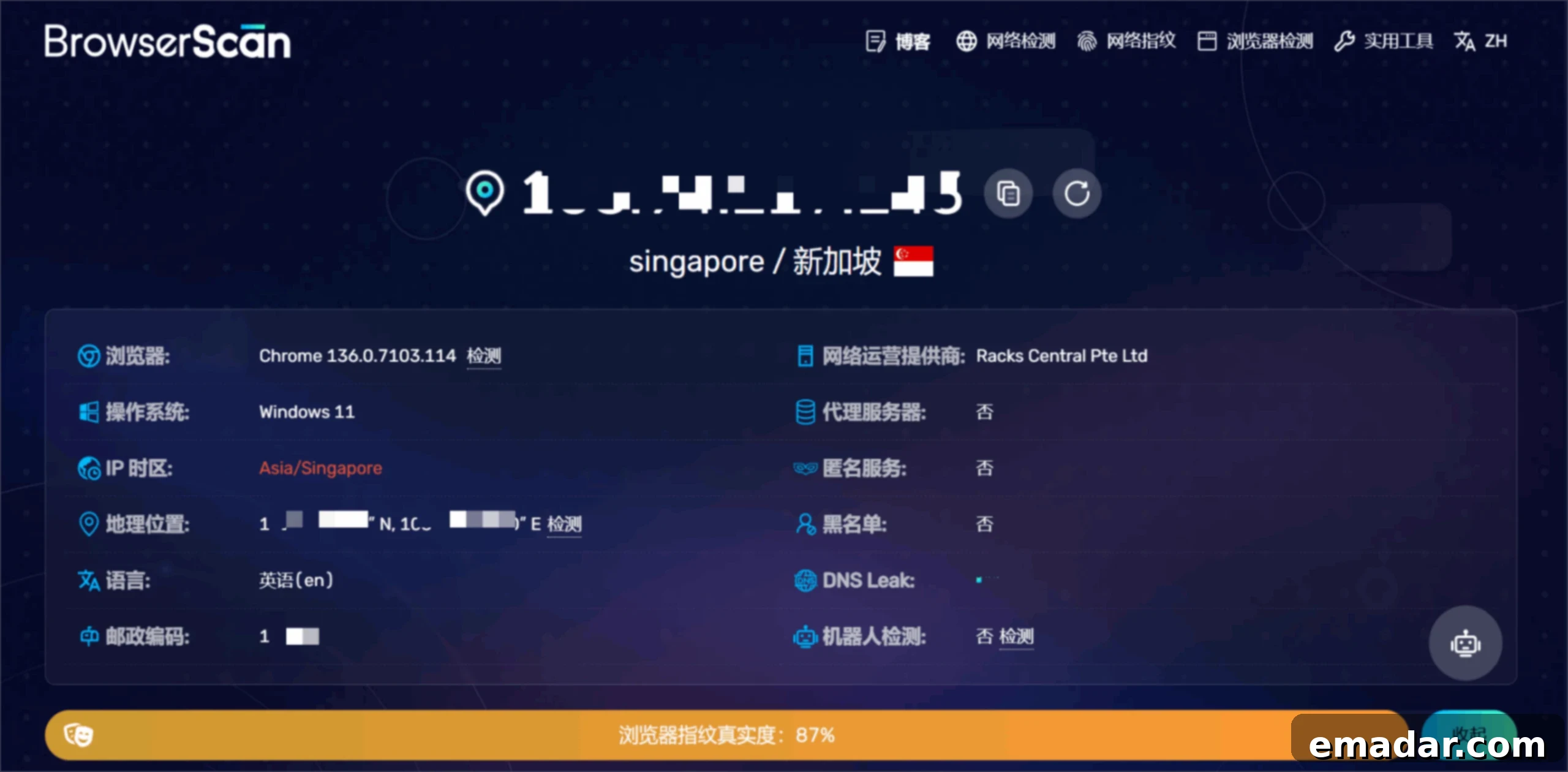
When using fingerprint browsers, it’s crucial to verify that these virtual environments are indeed truly independent and secure. This is where tools like BrowserScan become indispensable. BrowserScan helps users:
- Detect Information Leaks: It allows you to quickly assess what information your browser environment might be leaking to websites, enabling you to identify and mitigate privacy risks.
- Validate Proxy Configurations: BrowserScan confirms whether your proxy IPs are correctly configured and, crucially, if the IP address for each browser environment is truly independent and distinct from others. This verification is vital to ensure your anonymity.
- Compare Fingerprint Differences: By comparing the browser fingerprints across different environments, BrowserScan helps you verify if there is sufficient differentiation to prevent linking and tracking by sophisticated algorithms.
Through these robust functionalities, BrowserScan serves as a vital verification tool for assessing the effectiveness of privacy and security measures implemented with fingerprint browsers, ensuring that your efforts to avoid tracking are genuinely successful.
Conclusion
The humble IP address, though seemingly simple, reveals an astonishing amount of information, from your precise location and online habits to broader aspects of your digital identity. For individuals immersed in cross-border e-commerce, technological exploration, and digital privacy advocacy, understanding and managing one’s IP footprint is not just important—it’s paramount. The good news is that we are not without recourse. Tools like proxy servers, IP rotation strategies, and advanced fingerprint browsers empower users to take proactive control of their digital presence.
Furthermore, verification platforms such as BrowserScan offer essential insights, allowing users to scrutinize their digital trail and confirm the efficacy of their privacy measures. By understanding the mechanisms of IP tracking and leveraging these powerful tools, individuals can proactively manage their data exposure, safeguard their online identities, and navigate the complex digital world with greater confidence and security. Taking control of your digital footprint today is the best defense against tomorrow’s unforeseen tracking challenges.