
In today’s intricate digital landscape, navigating the internet effectively often requires more than just a standard connection. As online activities become increasingly sophisticated, the need for advanced tools like residential proxies has grown exponentially. Whether your goals involve conducting extensive market research, managing multiple e-commerce accounts across borders, accessing geo-restricted content, or simply enhancing your online privacy and security, understanding and utilizing residential proxies can profoundly transform your digital experience.
Understanding Residential Proxies: The Foundation of Online Anonymity
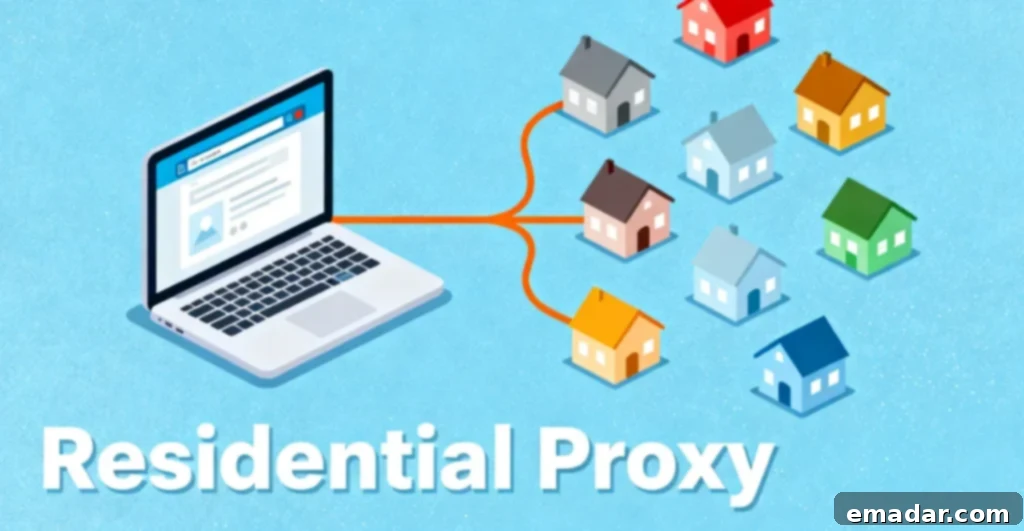
A residential proxy server acts as a crucial intermediary, routing your internet traffic through an IP address that is genuinely assigned to a real home or apartment by an Internet Service Provider (ISP). Unlike other proxy types, which might originate from data centers, residential proxies leverage authentic IP addresses tied to physical, residential locations. This fundamental difference makes you appear to websites as a regular, everyday home internet user, rather than a commercial entity or an automated system.
When you connect to the internet via a residential proxy, the websites you visit perceive the proxy’s residential IP address as your own, effectively masking your actual IP address. This establishes a vital layer of anonymity and security between you and the online world. More importantly, it ensures that your connection appears to originate from a legitimate, human user within a residential network, significantly reducing the likelihood of detection or suspicion often associated with data center or other non-residential IP sources.
The core distinction lies in the source and nature of the IP address itself. Residential IP addresses are issued by major ISPs like Comcast, Verizon, or local telecommunications companies that provide internet services to individual homes. These IPs are meticulously registered in global databases as belonging to residential areas. Consequently, websites employ different, often less stringent, scrutiny protocols for traffic originating from these addresses compared to commercial or data center IPs, recognizing them as authentic user traffic.
Residential Proxies: A Distinct Advantage Over Other Proxy Types
To fully appreciate the unique value of residential proxies, it’s essential to understand the broader proxy landscape and how they compare to their counterparts.
Data Center Proxies: These proxies are sourced from cloud hosting providers and server farms. While they offer high speed and are generally more affordable, their origin makes them easily identifiable by sophisticated website security systems. Websites frequently flag or outright block data center IPs, especially on platforms with strict anti-bot measures, as they are commonly associated with automated scripts, bulk data extraction, and other non-human activities.
Mobile Proxies: Operating through cellular networks, mobile proxies route traffic using IP addresses assigned by mobile carriers. Because they originate from real mobile devices, they possess a high degree of legitimacy, making them excellent for tasks requiring a very human-like footprint. However, they are typically more expensive and can be slower due to the inherent limitations of cellular networks and fluctuating signal strength.
VPNs (Virtual Private Networks): VPNs encrypt your entire internet connection and route all your device’s traffic through a remote server. While VPNs are excellent for general privacy and security, most consumer-grade VPN services utilize data center IP addresses, which can still be detected and blocked by websites. Furthermore, a VPN typically affects all applications on your device, whereas proxies offer the flexibility to be configured on an application-by-application basis, providing more granular control.
Residential proxies strike a powerful balance, offering the unparalleled legitimacy of real user IPs combined with the flexibility of proxy configurations. This synergy makes them significantly harder for websites to detect as proxies, leading to a much higher success rate when accessing protected content, managing sensitive accounts, or performing extensive data collection. They offer the closest experience to a genuine user browsing from their home, without revealing your true identity or location.
Why Websites Prioritize Residential IP Addresses
Websites implement diverse security and content delivery strategies based significantly on the origin of an IP address. When traffic originates from a residential IP address, security systems are more likely to interpret it as legitimate user activity. The browsing patterns associated with residential IPs typically exhibit varied, human-like behaviors spread across different websites and timeframes, reflecting organic human interaction.
Conversely, data center IP addresses often display patterns indicative of automated bots, web crawlers, and other non-human traffic. These might include generating thousands of requests in a short period, accessing an unusual sequence of pages, or exhibiting highly repetitive actions. Such behavior triggers advanced security systems designed to combat data scraping, account fraud, denial-of-service (DDoS) attacks, and other malicious activities, often leading to immediate blocking or stringent rate limiting.
Prominent online platforms, including social media networks, e-commerce giants, and streaming services, actively maintain extensive databases of known data center IP ranges. Traffic identified from these ranges faces rigorous scrutiny, strict rate limits, or outright blocking. Residential IP addresses, by virtue of their authenticity, are rarely found on these blacklists, facilitating smoother and uninterrupted access to online resources. This distinction is paramount for activities requiring persistent access and a low profile.
The element of trust is particularly crucial for activities involving account access or financial transactions. Attempting to create accounts, log in from new locations, or make purchases using data center IPs frequently triggers additional verification steps, challenges like CAPTCHAs, or even immediate account suspension. Residential IPs, conversely, generate significantly fewer security alerts, fostering a more seamless and trustworthy online experience for users.
Versatile Applications: Common Use Cases for Residential Proxies
Residential proxies are indispensable tools across a wide spectrum of online activities, offering solutions to challenges posed by geo-restrictions, anti-bot measures, and IP-based monitoring.
Cross-border E-commerce Operations: For online sellers managing multiple accounts on various e-commerce platforms or accessing region-specific marketplaces, residential proxies offer a significant competitive advantage. Platforms like Amazon, eBay, and regional storefronts impose strict limitations on multiple accounts operating from the same IP address. By using residential proxies from different geographic locations, sellers can legitimately manage multiple accounts, presenting each as an independent user. For instance, an e-commerce business targeting both the US and European markets can use local residential proxies to access each market as a native user, bypassing account linking issues or verification hurdles.
Market Research and Price Monitoring: Businesses engaged in competitive intelligence, such as monitoring competitor pricing or conducting extensive market research, often encounter challenges when websites detect automated data collection. E-commerce sites frequently display different prices based on a visitor’s geographical location or browsing history. Residential proxies enable precise price monitoring by simulating access from ordinary consumers, revealing true market prices rather than adjusted or filtered data. This ensures accurate insights into market trends, localized pricing strategies, and competitor movements.
Social Media Management: Managing multiple social media accounts for clients or brands requires meticulous IP management. Platforms like Instagram, Facebook, and Twitter vigilantly monitor activity from the same IP address across numerous accounts, which can lead to flags, shadow-banning, or even account suspension. Social media managers leverage residential proxies to isolate client accounts, significantly reducing the risk of being flagged or blocked by platform algorithms, thus maintaining account integrity and operational efficiency.
Content Access and Verification: Streaming services, news outlets, and content platforms frequently restrict access based on geographical location due to licensing agreements or regional content strategies. Residential proxies from specific regions allow users to view geo-restricted content or verify how content appears in different countries. This is invaluable for content creators, marketers, and media professionals who need to ensure their content is accessible and displayed correctly for diverse global audiences.
Sneaker and Limited Edition Item Purchases: The competition for limited-edition products, especially sneakers, is intense and demands rapid, reliable internet connectivity while evading bot detection. Retailers implement sophisticated anti-bot measures that specifically target and block data center IP addresses. Residential proxies provide the crucial legitimacy required for successful purchases of these highly sought-after items, allowing users to bypass security systems that would otherwise prevent transactions.
Ad Verification and Compliance: Advertisers use residential proxies to verify that their ads are appearing correctly, on the right websites, and to the intended audience in various geographical locations. This helps prevent ad fraud, ensures brand safety, and confirms compliance with regional advertising regulations.
SEO Monitoring: Search engine optimization (SEO) professionals use residential proxies to monitor search engine results pages (SERPs) from different locations and devices without being flagged. This provides an unbiased view of rankings, local search results, and competitor visibility, which is crucial for effective SEO strategy.
Pricing Models and Strategic Cost Considerations
Residential proxy pricing typically follows several models, each suited to different usage patterns and budget requirements. Understanding these models is key to maximizing cost-effectiveness.
Pay-per-IP Model: This model charges based on the number of unique IP addresses used or concurrent connections maintained. It’s often suitable for users who need a fixed number of IPs for specific, long-term tasks without high bandwidth consumption.
Pay-per-GB Model (Bandwidth-based): This is the most common model, where costs are calculated based on the amount of data (gigabytes) consumed. It’s ideal for users with fluctuating traffic demands or those undertaking large-scale data collection projects where bandwidth is the primary resource. This model offers scalability, allowing users to pay only for what they use.
Subscription Plans: These plans provide access to a fixed pool of residential proxies for a monthly fee, often including unlimited bandwidth or very high usage limits. Subscription models are best for consistent, high-volume users or businesses requiring stable, predictable access to a large network of IPs without worrying about individual IP costs or bandwidth overages.
Entry-level residential proxies can start from as low as $1-$3 for basic dynamic options, while data center proxies range from $4-$7, and static residential (ISP) connections typically start from $5-$7 per IP or higher. While generally more expensive than data center alternatives, the significantly higher success rates, reduced blocking, and enhanced legitimacy often justify the investment for critical applications. Providers like IPFLY offer competitive pricing, with dynamic residential proxies from $1, static residential from $5, and data center proxies from $4, making high-quality IP resources accessible across various budgets.
The ultimate cost-effectiveness hinges on your specific operational needs. High-volume data harvesting projects might benefit most from bandwidth-based pricing, while account management requiring a consistent digital identity would find a fixed IP address subscription or static residential IP more suitable. Thoroughly evaluating your projected usage patterns and the level of anonymity required will help in determining the most economical and effective solution.
Seamless Setup and Effective Utilization of Residential Proxies
Configuring residential proxies varies depending on the specific application, operating system, and the chosen service provider. Most providers offer multiple connection methods, including standard HTTP/HTTPS proxies, SOCKS5 protocols for more versatile traffic types, or dedicated API access for large-scale integration. The basic setup involves inputting the proxy server address, port number, and authentication credentials (username and password) into your desired application or browser settings.
For browser-based activities, dedicated proxy extensions available for Chrome, Firefox, and other browsers simplify the process, allowing for quick toggling and management of proxy settings. Alternatively, manual configuration within your browser’s network settings is also effective. For advanced applications such as web scrapers, automation tools, or custom software, built-in proxy configuration options are typically available, allowing direct integration. Mobile applications may require system-level proxy settings or the use of specialized third-party apps to route traffic through a proxy.
Post-configuration, thoroughly testing your setup is crucial to ensure everything functions as intended. Simple tests include visiting “What is my IP address?” websites to verify your visible IP address, confirming that its geolocation matches your chosen proxy’s location, and ensuring that the target website or application operates normally without encountering blocks or errors. This diagnostic step helps identify and resolve any configuration issues early on.
Proxy rotation strategies are critical for maintaining anonymity and avoiding detection. For data collection activities, frequent rotation—changing the IP address with every request or every few minutes—is highly effective. This approach distributes requests across numerous IP addresses, significantly lowering the risk of any single IP being flagged for excessive activity. Conversely, for account-based operations where a consistent identity is paramount, longer session durations or sticky IP addresses (which maintain the same IP for an extended period) or even static residential IPs are more appropriate, providing stability and trustworthiness to the target website.
Selecting the Optimal Residential Proxy Service Provider
Choosing the right residential proxy service provider is a pivotal decision that directly impacts the success and efficiency of your online operations. Several critical criteria should guide your evaluation process.
Reputation and User Reviews: Start by researching the provider’s reputation. Authentic user reviews and independent testimonials offer invaluable insights into their reliability, customer satisfaction levels, and overall service quality. A provider with a strong track record and positive feedback is generally a safer bet.
Transparent Pricing: Ensure the pricing structure is clear, straightforward, and devoid of hidden fees. Understand the different models offered (per GB, per IP, subscription) and how they align with your anticipated usage. Transparency in pricing avoids unexpected costs and allows for accurate budget forecasting.
Responsive Customer Support: High-quality, responsive customer support is non-negotiable. Whether you encounter configuration issues, technical glitches, or general inquiries, quick and knowledgeable assistance can save significant time and frustration. Look for providers offering multiple support channels and demonstrable expertise.
IP Pool Quality and Diversity: The quality and diversity of the IP address pool are far more critical than mere quantity. A provider with millions of well-maintained, ethically sourced residential IP addresses, distributed across a vast array of geographical locations and various ISPs, will offer superior performance and reliability compared to those with smaller or poorly managed pools. Services like IPFLY, boasting over 90 million residential IP addresses across 190+ countries, exemplify the scale and diversity required for demanding applications, ensuring a fresh and untainted supply of IPs.
Global Coverage and Geo-targeting: For operations requiring access to specific regions, robust global coverage with precise geo-targeting capabilities (down to city or state level) is essential. This allows you to accurately simulate user presence from desired locations.
Speed and Uptime: While residential proxies are not always as fast as data center proxies, consistent speed and high uptime are crucial. Look for providers that guarantee good network performance and minimal downtime.
Dashboard Usability and API: An intuitive user dashboard makes managing your proxies straightforward. For developers and large-scale users, a robust API is vital for automating proxy integration and management.
Troubleshooting Common Residential Proxy Issues
Even with the most reliable providers, users may occasionally encounter issues. Knowing how to troubleshoot effectively can minimize downtime and frustration.
Connection Failures: These often stem from incorrect proxy configurations, expired authentication credentials, or temporary service interruptions. Double-check your proxy settings for typos, verify your account status with the provider, and try testing with a different application or browser. Issues like local firewall settings or network restrictions might also be blocking the connection.
Slow Speeds: A noticeable drop in speed can indicate network congestion, a long routing path between your location and the target server, or limited infrastructure on the provider’s end. To mitigate this, try selecting a proxy server geographically closer to your target website. Switching to a different IP within your proxy pool can also help determine if the issue is isolated to a specific IP address’s performance. Sometimes, the target website itself might be slow or rate-limiting your requests.
IP Address Blocking: Even residential IPs can get blocked if they are overused or exhibit suspicious activity patterns. This might indicate that the specific IP has been flagged by the target website due to previous user actions or your current request frequency. Implementing a more aggressive IP rotation strategy, increasing the interval between requests, or altering your access patterns to mimic more natural human behavior can often resolve the issue. Using a diverse set of user agents and browser fingerprints can also help.
Rate Limiting: Websites often impose limits on how many requests an IP can make within a certain timeframe. If you encounter frequent CAPTCHAs or temporary blocks, it’s a clear sign of rate limiting. Adjust your request frequency, use a rotating proxy, or consider integrating CAPTCHA-solving services into your workflow.
Conclusion: The Indispensable Role of Residential Proxies
In the complex and often restrictive environment of the modern internet, residential proxies have emerged as an indispensable tool for a vast array of online activities. Understanding their fundamental difference from other proxy types, grasping their myriad applications, and meticulously selecting a high-quality service provider are crucial steps toward successfully meeting your specific digital objectives. Whether you are navigating the intricacies of cross-border e-commerce, conducting vital market research, managing a portfolio of social media accounts, or accessing geo-restricted content, residential proxies provide the unparalleled reliability, authenticity, and stealth required for sustained success.
Investing in a high-quality residential proxy service yields significant returns through higher success rates, significantly fewer blocks, and more efficient operations compared to alternative solutions. As online platforms continue to enhance their security measures and anti-bot systems, the demand for legitimate and geographically diverse network access will only grow. For legitimate users and businesses requiring robust, reliable, and stealthy online presence, residential proxies remain a critical asset, ensuring uninterrupted access and competitive advantage in an ever-evolving digital world.