
In today’s interconnected digital landscape, businesses increasingly rely on stable and secure network environments to conduct their operations efficiently. However, the frequent switching of dynamic IP addresses often leads to significant challenges, including security flags, account suspensions, and service interruptions. For organizations that depend on consistent online presence and data integrity, the implementation of long-term proxy IP solutions has become not merely beneficial but an absolute necessity. These stable proxies provide a critical safeguard against the unpredictable nature of fluctuating IP addresses, enabling businesses to maintain seamless operations and mitigate potential risks.
IPFLY stands at the forefront of this crucial solution, offering advanced long-term proxy IPs. Their service is built upon a foundation of pristine residential IP resources combined with a highly standardized service framework. This unique combination allows IPFLY to meet the diverse and demanding stability requirements of various business scenarios, all while significantly reducing configuration complexities and ongoing maintenance costs. The core value proposition of IPFLY’s long-term proxy IPs lies in a dual assurance: exceptional “demand adaptability” and robust “risk controllability.” This ensures that businesses not only find a solution that perfectly aligns with their operational needs but also gain peace of mind from a highly secure and reliable network infrastructure.
The effective utilization of long-term proxy IPs extends far beyond a simple procurement process. It encompasses a comprehensive and integrated cycle that begins with precise demand identification, progresses through informed and strategic selection, moves into meticulous configuration, and concludes with diligent and continuous maintenance. Any oversight or misstep in even one of these critical stages can severely compromise the efficacy and performance of the proxy solution, potentially leading to suboptimal results or even heightened operational risks. Therefore, a holistic and systematic approach is paramount for maximizing the benefits of long-term proxy IPs.
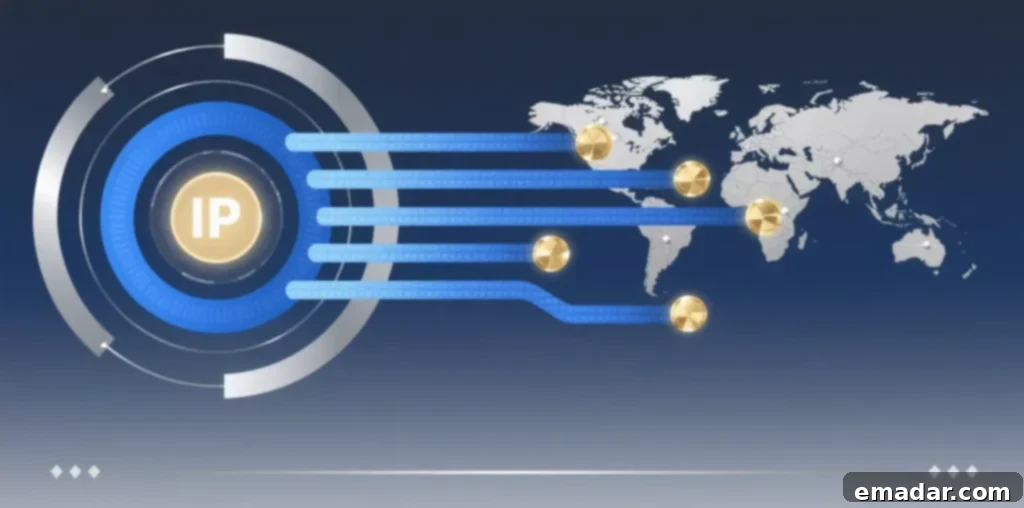
Defining Your Core Needs: Anchoring Demand for Long-Term Proxy IPs
Before investing in any long-term proxy IP solution, it is imperative to precisely identify your core requirements. This proactive step helps to avoid “stability for stability’s sake” – a common pitfall of aimless procurement. A structured approach involves dissecting your needs across three crucial dimensions: business type, risk level, and operational cycle.
Business Type Dictates IP Functionality Emphasis: Different business models have distinct needs. For instance, businesses involved in cross-border operations, such as international e-commerce or global market research, must prioritize IP geographical matching and ISP authenticity. This ensures that their online identity aligns seamlessly with the target market, enhancing trust and preventing geo-restrictions. An IP from the correct region and a legitimate Internet Service Provider (ISP) helps in localizing content, accessing region-specific services, and avoiding detection as a foreign entity. Without this precision, operations can be flagged, leading to reduced reach or even outright blocks.
Conversely, data collection businesses, which frequently engage in web scraping or competitive intelligence, need to focus on the IP’s concurrent carrying capacity and its stealth in bypassing anti-bot systems. High-frequency requests from a single, easily identifiable IP can quickly trigger rate limits or CAPTCHAs, hindering data acquisition. Therefore, such operations require IPs that can handle simultaneous connections without flagging suspicion and possess characteristics that make them indistinguishable from regular user traffic. The ability to rotate IPs seamlessly or maintain a persistent, undetectable IP is crucial for uninterrupted data flow.
For account management operations, particularly those involving social media accounts, online gaming, or multi-platform presence, the emphasis shifts to IP stability and the precise matching of device fingerprints. Consistency is key here; frequent IP changes for a single account can signal suspicious activity, leading to account suspensions or permanent bans. Furthermore, the IP should consistently align with the unique digital footprint of the associated device (browser type, operating system, plugins, timezone) to maintain a cohesive and credible online identity. Deviations in these parameters can alert platforms to potential fraud or account hijacking attempts. Understanding these nuances in business types prevents a “one-size-fits-all” approach to IP procurement, which is often inefficient and ineffective.
Risk Level Determines IP Quality Standards: The inherent risk associated with your online activities directly influences the required quality and type of proxy IP. For high-risk scenarios, such as managing multiple e-commerce platform accounts, high-value financial information collection, or engaging in sensitive market analysis, the preferred choice is native residential IPs. These IPs are genuinely assigned by ISPs to individual homeowners, making them virtually indistinguishable from real user traffic. Their concealment is paramount, as platforms are less likely to flag activities originating from such authentic sources. The integrity of native residential IPs offers the highest level of trust and anonymity, significantly reducing the likelihood of detection and subsequent blocking.
In contrast, medium to low-risk scenarios, such as general cross-border browsing, accessing geo-restricted content for personal use, or assisting in content creation, can often be adequately served by regular residential IPs. These still offer a good balance between cost-effectiveness and security, providing a reliable shield without the premium cost of native residential IPs. While they might not offer the absolute highest level of stealth, they are still far superior to other IP types for maintaining a degree of anonymity and stability. It is crucial to remember that data center IPs, due to their distinct characteristics (easily identifiable IP ranges, lack of association with residential ISPs), should never be considered for long-term proxy solutions, regardless of the risk level. Their detectability rate on most sophisticated platforms approaches 100%, making them a liability rather than an asset for any activity requiring a genuine user footprint.
Strategic Selection: Navigating Core Contradictions in Long-Term Proxy IP Choices
The process of selecting the right long-term proxy IP often presents businesses with a set of inherent contradictions, particularly concerning “price versus quality,” “flexibility versus stability,” and “geographic coverage versus precise matching.” To make truly informed decisions, it’s essential to establish quantifiable decision criteria rather than relying on subjective judgment or guesswork. A data-driven approach ensures optimal long-term value and operational efficiency.
Resolving the “Price vs. Quality” Contradiction through Value Assessment: The key to overcoming the perceived conflict between price and quality is to conduct a thorough “value-for-money assessment” rather than simply pursuing the lowest price point. Cheap long-term IPs often come with significant hidden costs and risks. These might include compromised IP purity (a mixture of data center IPs or shared IPs masquerading as residential), a history of past violations or blacklisting, and a lack of robust maintenance support from the provider. Such issues inevitably lead to IP blockages, account suspensions, and business interruptions, with the resulting operational losses far outweighing any initial savings. To conduct an effective assessment, prioritize checking for 100% residential IP purity, ensuring a clean history free of previous bans, and evaluating the provider’s maintenance response speed (ideally under 30 minutes for critical issues). A slightly higher initial investment in a quality IP often translates to substantial savings in avoided downtime and remediation efforts.
Balancing “Flexibility vs. Stability” through Provider’s Technical Prowess: Achieving a harmonious balance between flexible lease terms and unwavering stability is a challenge that relies heavily on the technical capabilities of the service provider. Flexibility, such as adjustable rental periods, should never come at the expense of stability. A truly high-quality long-term IP solution must simultaneously offer adaptable lease options and guarantee robust node stability. This translates to an impressive online rate (ideally ≥99%) and minimal response times (typically ≤1 second). Providers who can achieve this balance often invest heavily in their infrastructure, network redundancy, and real-time monitoring systems. For businesses, this means the freedom to scale up or down as needed without fearing service disruptions, ensuring continuous uptime for critical operations like e-commerce, market research, or social media management.
Optimizing “Geographic Coverage vs. Precise Matching” with Business-Centric Alignment: The core of resolving the “geographic coverage versus precise matching” contradiction lies in ensuring a precise, one-to-one correspondence between your business’s target region and the IP’s geographical location. For any cross-border operation, it is absolutely essential to utilize local residential IPs from the specific target market. For example, if your business targets the Japanese market, using a residential IP located in Tokyo is crucial. Similarly, for the Australian market, an IP from Sydney would be required. Using a mismatched, cross-regional IP can significantly erode trust, trigger geo-restrictions, and lead to your activities being flagged as suspicious or non-compliant by local platforms. IPFLY excels in this area, offering comprehensive long-term IP coverage across more than 40 countries and regions globally. This vast network of local residential resources ensures that businesses can achieve exact geographical matching, eliminating the need to pay for unnecessary “broad coverage” when precise targeting is the actual requirement. This strategic alignment enhances authenticity, improves data accuracy, and significantly reduces the risk of detection.
Flawless Implementation: Key Essentials for Long-Term Proxy IP Environment Setup
The optimal performance of a long-term proxy IP solution is intrinsically linked to the synergistic configuration of the “IP-device-account” ecosystem. Any oversight in this three-pronged approach can expose operations to significant risks and compromise the entire system. Therefore, meticulous attention to three critical matching aspects is paramount for a robust and secure setup.
IP and Device Feature Matching as the Foundation: The foundational step in setting up a long-term proxy IP environment is ensuring a seamless match between the IP address and the device’s characteristics. When utilizing a long-term proxy, it is essential to employ a specialized fingerprint browser or similar tool to meticulously modify key device parameters. This includes aligning the device’s timezone, language settings, browser version, User-Agent string, WebRTC settings, DNS servers, and Canvas fingerprint with the geographical location of the assigned IP. For instance, if your IP is located in the United States, but your device’s timezone is set to Beijing, this glaring inconsistency will immediately flag your activity as suspicious. Such discrepancies create a “digital footprint mismatch” that sophisticated anti-bot systems can easily detect. Furthermore, to prevent accidental leakage of your true geographical location, it is vital to disable all device location services, automatic synchronization features, and any other settings that could transmit real-world coordinates.
IP and Account Binding as the Critical Link: The binding of an IP to a specific account is a critical security measure. Strictly adhering to the “one IP – one device – one account” principle is paramount. This rule explicitly prohibits sharing a single long-term proxy IP across multiple accounts or devices, as this is a primary trigger for platform association detection. Many online platforms actively monitor IP usage patterns and will quickly identify and flag accounts that share common IP addresses, leading to widespread suspensions. Crucially, both the initial account registration and all subsequent logins must be performed within the meticulously configured long-term IP environment. This ensures that the entire lifecycle of the account, from its inception, is consistently associated with a specific, stable, and clean IP environment. Any mid-operation IP change or environmental disruption can break this consistency, alerting the platform to unusual activity and jeopardizing the account’s integrity.
IP and Operation Behavior Matching as the Guarantee: Beyond technical configurations, the behavior exhibited within the long-term IP environment must genuinely mimic that of a real human user. This means meticulously controlling the frequency of access, the intervals between interactions, and the pace of content production. Avoid high-frequency, robotic, or overly automated operations, as these are tell-tale signs of bot activity. For data collection tasks, for example, it is advisable to maintain request intervals of at least three seconds to appear more natural. For account interactions on social media platforms, refrain from executing a large volume of likes or comments within a short timeframe. The goal is to ensure that all operational behaviors align seamlessly with the “user persona” associated with the specific IP, making your activities indistinguishable from legitimate human engagement and significantly reducing the risk of detection and blocking.
Proactive Management: Daily Risk Control for Long-Term Proxy IPs
The deployment of a long-term proxy IP solution is not a set-it-and-forget-it endeavor. It demands the establishment of a robust daily maintenance mechanism to promptly identify and address potential risks. Effective risk control for long-term IPs fundamentally revolves around three interconnected processes: health detection, risk warning, and emergency handling.
Regular Health Detection: Regular health checks are indispensable and should meticulously focus on three key dimensions. First, proactively monitor the IP’s blacklist status using specialized tools and services to verify if it has been flagged or blocked by target platforms. Tools like IPQualityScore or reputable proxy checkers can provide insights into an IP’s reputation. Second, continuously track and analyze the access success rate of your operations. If the success rate consistently drops below 90%, it signals an underlying issue that requires immediate investigation, such as platform rule changes or IP deterioration. Third, monitor the distribution of HTTP response codes. An abnormal percentage of error response codes (e.g., 403 Forbidden, 429 Too Many Requests) exceeding 5% should trigger a red flag, indicating potential blocking or rate limiting. It is highly recommended to conduct these health checks at a fixed time daily, maintaining a detailed log to facilitate problem tracing and root cause analysis.
Real-time Risk Warning Systems: Proactive risk warning capabilities are essential and depend heavily on real-time monitoring. Opt for long-term IP services that incorporate “real-time risk scanning” features. These systems should be capable of detecting and issuing alerts for anomalous access behaviors, such as a sudden surge in requests within a short period or cross-regional operations from an otherwise stable IP. Early intervention based on these warnings can prevent minor issues from escalating into major disruptions. Furthermore, staying abreast of rule changes implemented by target platforms is crucial. Platforms frequently update their anti-bot measures, and a failure to adapt your operational strategies in response can quickly render your IPs ineffective, leading to unexpected blocks.
Comprehensive Emergency Handling Procedures: Despite best efforts, unforeseen circumstances like IP blacklisting or node failures can occur. Therefore, it is critical to develop a comprehensive emergency response plan. This plan should include reserving 1-2 backup long-term IPs in advance, establishing a clear “main-to-backup switchover procedure,” and defining precise trigger conditions, step-by-step operational instructions, and assigned responsibilities. The primary goal is to minimize business interruption time, ideally keeping it under 10 minutes. IPFLY enhances this capability by offering a “backup node priority matching” service. This ensures that backup IPs are seamlessly matched to the primary IP’s geographical region and type, significantly reducing the adaptation costs and complexities associated with an emergency switchover, thus maintaining operational continuity with minimal friction.
Dispelling Misconceptions: Common Pitfalls in Understanding Long-Term Proxy IPs
Misunderstandings surrounding long-term proxy IPs frequently lead to unmet expectations and, more critically, introduce significant business risks. It is crucial to address and correct four prevalent misconceptions to ensure effective and safe utilization.
Misconception One: “Long-term IP = Permanent IP.” This is a common and dangerous oversimplification. A long-term IP is accurately defined as a “stable IP for a fixed lease term,” not an IP that remains permanently unchanged. Upon the expiration of its lease term, the IP must either be renewed or replaced. Businesses must proactively plan their IP strategy in alignment with their operational cycles, anticipating renewal dates to prevent service interruptions caused by an expired lease. Failing to do so can halt critical operations and result in unforeseen downtime.
Misconception Two: “High-priced IP = Absolute Security.” The perceived security of an IP is not solely determined by its price point. Instead, IP security is a complex interplay of “IP type + environmental configuration + operational practices.” Even a premium native residential IP, if configured improperly (e.g., mismatched device fingerprints) or used for illicit activities, can still be detected and blacklisted. Businesses must avoid a “price-only” approach and instead prioritize adherence to best practices across the entire operational workflow, from selection to configuration and daily usage. Security is a holistic endeavor, not a commodity that can be bought outright.
Misconception Three: “Long-term IP requires no maintenance.” This belief is fundamentally flawed. The stability and effectiveness of a long-term IP necessitate continuous, active maintenance. An IP that is left unmonitored and unadjusted for extended periods can eventually become compromised. This can happen due to the IP being flagged by target platforms, the gradual drift of device characteristics (e.g., browser updates, software changes), or evolving platform anti-bot mechanisms. Establishing a routine, institutionalized maintenance mechanism is vital to ensure the IP remains clean, effective, and capable of supporting ongoing operations without disruption.
Misconception Four: “Using long-term IP can circumvent compliance risks.” It is critical to understand that long-term IPs are a technical solution designed to provide a stable and consistent network environment. They offer enhanced anonymity and reduce the risk of technical detection. However, they absolutely do not provide a shield against compliance risks stemming from illegal or unethical operations. Businesses must strictly adhere to the rules and terms of service of all target platforms, as well as all applicable laws and regulations. Using long-term IPs for prohibited activities such as malicious web scraping, spam marketing, or other illegal actions will not only lead to IP blacklisting and account bans but can also result in severe legal consequences. Compliance and ethical conduct remain paramount, regardless of the technological tools employed.
The true value of a long-term proxy IP solution is fully realized through a comprehensive and integrated closed-loop management system encompassing “demand identification, strategic selection, meticulous configuration, and diligent maintenance.”
For users, it is essential to move beyond the simplistic mindset of “buying an IP solves all problems.” Instead, cultivating a systemic and nuanced understanding of long-term proxy IP utilization is crucial. Only by embracing this holistic perspective can long-term proxy IPs genuinely become a powerful enabler for stable business operations, rather than a potential source of unforeseen risks and complications.
Ready to enhance your online operations? Discover more by registering on the IPFLY official website. Explore our comprehensive product details and bid farewell to slow, blocked, and restricted network experiences, ensuring your business enjoys unparalleled digital freedom and stability.