
In today’s interconnected digital world, the demand for robust online privacy, impenetrable security, and uninterrupted access to information has never been more critical. For professionals across various sectors – from diligent developers and insightful marketers to enterprising e-commerce sellers – leveraging the appropriate proxy solution can dramatically enhance operational efficiency and safeguard vital data. Among the plethora of options available, the IPv4 proxy stands out as a foundational and exceptionally reliable choice, forming the backbone of secure and anonymous online interactions.
Understanding the IPv4 Proxy: Your Gateway to Secure Online Operations
At its core, an IPv4 proxy functions as an indispensable intermediary server that utilizes an IPv4 address – the long-established and most common internet protocol format, typically represented by a series of four numbers separated by dots, such as 192.168.1.1. This proxy acts as a crucial bridge between your local device and the vast expanse of the internet. When your internet traffic is routed through an IPv4 proxy, it’s the proxy’s IP address that websites perceive as the origin of your requests, effectively concealing your actual IP address and, by extension, your real geographical location.
This deceptively simple yet powerful mechanism offers a multitude of benefits. It grants users unparalleled anonymity, allowing them to browse, interact, and conduct business online without revealing their true identity. Furthermore, IPv4 proxies are instrumental in bypassing geographical restrictions and overcoming IP-based access limitations, opening up a world of content and services. They also empower users to manage numerous online identities or operate from various virtual regions seamlessly, all while maintaining a low profile and avoiding detection. For example, an international e-commerce vendor can employ a sophisticated IPv4 proxy network to securely access and manage multiple store accounts across different regions, preventing IP conflicts and avoiding the risk of account suspensions. Esteemed proxy service providers like IPFLY offer access to millions of meticulously maintained IPv4 addresses spanning over 190 countries, guaranteeing consistently smooth, secure, and high-performance connections for diverse business needs.
How IPv4 Proxies Function: A Step-by-Step Breakdown
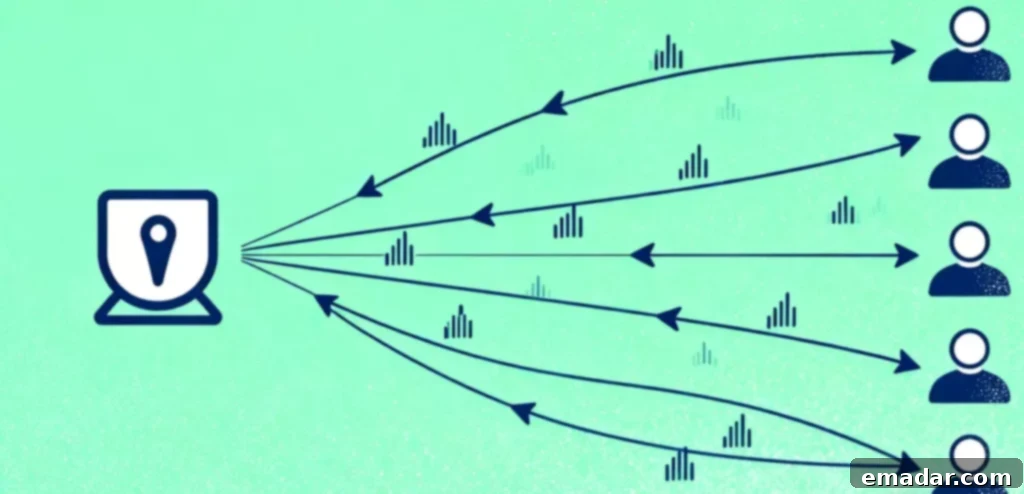
The operational mechanics of an IPv4 proxy are straightforward yet highly effective in providing the desired levels of anonymity and access. When you initiate an online activity, such as navigating to a website or submitting a data request, your device first sends this request to the designated proxy server. The proxy server then takes on the responsibility of forwarding your request to the intended target website. Once the website processes the request and generates a response, it returns the data not to your device directly, but to the proxy. The proxy subsequently receives this data and relays it back to you, completing the communication cycle.
Here’s a detailed look at the fundamental steps involved:
- Initiating a Request: You, the user, make an online request. This could be anything from loading a webpage, posting on social media, or initiating a data download.
- IP Masking by the Proxy: Before forwarding your request, the IPv4 proxy server intelligently intercepts it and replaces your genuine IP address with one from its extensive pool of available IPv4 addresses. This step is crucial for anonymization.
- Website Response to Proxy: The target website receives the request originating from the proxy’s IP address. It processes the request and sends its response back to the proxy server, completely unaware of your original IP.
- Proxy Relays Response to User: Finally, the proxy server receives the website’s response and securely transmits it back to your device. From your perspective, the process is seamless and often imperceptible, offering a direct browsing experience.
This ingenious setup does more than just conceal your actual geographical location; it is also pivotal in gaining access to websites and online services that are typically restricted within your region or blocked by sophisticated IP-based filtering systems. By utilizing a premium provider such as IPFLY, users gain access to advanced features like intelligent IP rotation, which automatically assigns new IP addresses at regular intervals, and high-speed connections. These features are critical for mitigating the risk of IP blocks, captchas, and flags, ensuring uninterrupted workflow for demanding tasks like web scraping, ad verification, and market research.
Unlocking the Full Potential: Key Advantages of Employing IPv4 Proxies
The strategic deployment of IPv4 proxies offers a suite of compelling benefits, making them an indispensable tool in today’s digital landscape for both individuals and businesses aiming for efficiency, security, and expansive reach.
1. Enhanced Privacy and Robust Security
In an era where data breaches and online surveillance are pervasive, IPv4 proxies serve as a powerful first line of defense. By effectively masking your real IP address, they significantly reduce the exposure of your personal data and browsing habits to tracking mechanisms, malicious actors, and unwanted surveillance. This layer of anonymity is paramount for individuals and organizations dealing with sensitive information, managing confidential projects, or handling multiple digital identities, providing a shield against potential data leaks, identity theft, and targeted cyberattacks.
2. Seamless Access to Geo-Restricted Content and Services
Many online platforms, streaming services, research databases, and e-commerce sites implement geographical restrictions, limiting access based on the user’s physical location. An IPv4 proxy allows you to virtually relocate your presence, making it appear as if you are browsing from a completely different region or country. This capability is invaluable for market researchers needing to analyze local market trends, marketers verifying ad placements in specific territories, or simply for users wishing to access their favorite content that might be unavailable in their actual location. It opens up global internet access without borders.
3. Optimized Account Management and Prevention of Bans
For professionals such as social media managers, SEO specialists, and cross-border e-commerce sellers who routinely manage a multitude of online accounts, the risk of IP-based linking, flagging, or outright bans is a constant concern. IPv4 proxies provide a clean, distinct IP address for each account or set of accounts, effectively compartmentalizing login environments. This intelligent separation prevents platforms from detecting that multiple accounts are being operated from the same physical location, thereby drastically reducing the likelihood of account suspensions and ensuring smooth, uninterrupted management of diverse digital assets.
4. Superior Speed, Unwavering Stability, and Universal Compatibility
While newer internet protocols exist, IPv4 proxies generally offer a more stable and consistently faster connection across the vast majority of global online platforms compared to their IPv6 counterparts. This superior stability stems from the mature and universally adopted infrastructure supporting IPv4. For business-critical operations, such as high-volume data collection, continuous ad management, or real-time market research, the reliability and speed provided by IPv4 proxies are indispensable, ensuring tasks are completed efficiently and without unexpected interruptions. IPFLY’s static residential IPv4 proxies, for instance, are particularly renowned for their exceptional stability and reliability, making them the preferred choice for long-term, high-stakes business operations requiring unwavering performance.
5. Competitive Intelligence and Market Research Advantages
IPv4 proxies enable businesses to conduct thorough competitive analysis by accessing competitor websites and services from various geographic locations without revealing their identity. This allows for accurate price monitoring, understanding regional product offerings, and tracking marketing strategies, providing a significant edge in formulating competitive business plans. Researchers can gather unbiased data, assess public sentiment, and conduct localized surveys, ensuring comprehensive market insights.
IPv4 vs. IPv6 Proxies: A Comparative Analysis
While both IPv4 and IPv6 proxies are designed to provide intermediary services, they operate on different internet protocol foundations and possess distinct characteristics that influence their performance, compatibility, and availability.
| Feature | IPv4 Proxy | IPv6 Proxy |
| Address Format | 32-bit numerical addresses (e.g., 192.168.1.1). This limited address space is a key characteristic. |
128-bit hexadecimal addresses (e.g., 2001:0db8:85a3::8a2e:0370:7334). Offers an astronomically larger address pool. |
| Compatibility | Universally supported by nearly all websites, networks, and legacy systems due to its widespread adoption over decades. | Compatibility can be limited on older platforms, some websites, and specific network configurations that have not fully transitioned to IPv6. |
| Availability & Cost | Finite number of IPs available globally, leading to higher costs and increasing scarcity. Premium quality IPs are highly valued. | Virtually unlimited pool of addresses, making them generally more abundant and potentially less expensive. |
| Speed and Reliability | Highly stable and consistent performance across the majority of the internet, benefiting from a mature infrastructure. | Performance can vary. While theoretically faster, real-world speeds and reliability depend heavily on the target website’s and network’s full IPv6 support. |
| Primary Use Cases | Ideal for tasks requiring universal compatibility, high stability, and access to legacy systems, such as web scraping, ad verification, and managing multiple accounts. | More suitable for tasks that specifically target IPv6-enabled services or require a massive number of unique IPs where compatibility isn’t an issue, such as large-scale data center operations or niche applications. |
In essence, despite the ongoing transition to IPv6, IPv4 proxies continue to hold a dominant position in the proxy market. Their unparalleled universal compatibility and robust stability make them the preferred choice for the vast majority of business-critical operations, automation tasks, and general online activities that demand reliable and consistent performance.
Diverse Applications: Common Use Cases for IPv4 Proxies
The versatility of IPv4 proxies makes them an invaluable asset across a wide spectrum of digital operations. Their ability to mask IP addresses, bypass geo-restrictions, and manage multiple online identities facilitates efficiency and security in numerous professional contexts.
- Cross-Border E-Commerce Operations: E-commerce sellers frequently leverage IPv4 proxies to simulate customer access from various countries. This allows them to verify product listings, monitor competitor pricing, conduct regional market research, and most importantly, safely manage multiple storefronts or buyer accounts without triggering suspicious activity flags or IP bans.
- Advanced Web Scraping and Large-Scale Data Collection: For developers, data scientists, and researchers, IPv4 proxies are indispensable. They enable the efficient collection of vast amounts of public data from websites without encountering IP bans, CAPTCHAs, or rate limits. By rotating through a pool of distinct residential IPs, tools can mimic organic user behavior, ensuring uninterrupted data acquisition for market analysis, lead generation, and academic research.
- Precise Ad Verification and Campaign Monitoring: Marketers and advertisers use IPv4 proxies to rigorously verify the correct placement, display, and targeting of their advertisements across different geographical regions. This ensures that ad campaigns are reaching the intended audience and appearing as designed, while also helping to detect potential ad fraud or discrepancies in regional ad variations.
- Strategic SEO Monitoring and Competitive Analysis: SEO analysts rely on IPv4 proxies to accurately check keyword rankings, analyze search engine results pages (SERPs), and monitor competitor strategies from various geographical locations. This local perspective is crucial for optimizing SEO efforts for specific markets and gaining an unbiased view of search performance, free from personalized search results.
- Streamlined Social Media Management and Reputation Control: Agencies and social media managers tasked with handling numerous client profiles or managing large-scale campaigns utilize IPv4 proxies to segment their online presence. Each social media account can be assigned a unique IP, preventing platforms from linking accounts and enforcing strict restrictions, thus ensuring smooth content scheduling, engagement, and reputation management.
- Cybersecurity and Brand Protection: Businesses employ IPv4 proxies for cybersecurity measures, including testing network vulnerabilities from external perspectives, and for brand protection, by monitoring for unauthorized use of their intellectual property or fraudulent activities across various online channels and regions.
IPFLY’s dynamic residential IPv4 proxies are particularly effective for these demanding scenarios. Their ability to rotate through real residential IPs minimizes detection risks, making them ideal for tasks that require high anonymity and a natural online footprint.
Selecting the Right IPv4 Proxy Provider: Critical Factors for Success
The efficacy of your online operations largely depends on the quality and reliability of your chosen IPv4 proxy provider. When evaluating potential providers, a careful consideration of several key factors is paramount to ensure optimal performance and security for your specific needs.
- Uncompromised IP Quality: Prioritize providers that offer clean, non-recycled, and genuinely residential or dedicated data center IPs. High-quality IPs are less likely to be blacklisted or flagged by websites, ensuring higher success rates for your tasks and minimizing interruptions.
- Extensive Global Coverage: A provider with a wide geographic range of IP addresses, spanning numerous countries and cities, offers unparalleled flexibility. This is crucial for conducting geo-targeted operations, accessing region-specific content, and performing localized market research effectively.
- Exceptional Speed and Uptime: Consistent, high-speed connections and guaranteed uptime are non-negotiable for business-critical applications. Slow proxies or frequent downtimes can severely impede productivity, increase operational costs, and lead to missed opportunities. Look for providers that offer robust infrastructure and clear SLAs.
- Flexible Rotation Options: The ability to choose between static (sticky) and dynamic (rotating) IP modes is essential. Static IPs are ideal for tasks requiring consistent identity, like account management, while dynamic IPs are perfect for high-volume data scraping or ad verification, where frequent IP changes prevent detection.
- Responsive Customer Support: Access to knowledgeable and responsive customer support is vital, especially when technical issues arise or you need assistance with configuration and optimization. A provider that offers 24/7 support through multiple channels can save significant time and prevent costly operational delays.
- Advanced Security Features: Ensure the provider offers robust security measures, including secure authentication methods (e.g., user/pass, IP whitelisting), and potentially support for encrypted connections. This protects your data as it travels through the proxy.
- Transparent Pricing and Scalability: Look for clear pricing models that align with your usage patterns. Providers offering flexible plans, pay-as-you-go options, and easy scalability allow you to adapt your proxy resources to changing demands without overcommitting or under-resourcing.
Providers like IPFLY exemplify the combination of these critical advantages. With an impressive network boasting over 90 million IPs from more than 190 countries, coupled with high uptime guarantees, secure infrastructure, and flexible pricing plans – including dynamic residential proxies starting as low as $1 – IPFLY presents a comprehensive solution for diverse online activities.
Conclusion: The Enduring Power of IPv4 Proxies in the Digital Age
IPv4 proxies remain an indispensable cornerstone of modern online privacy, security, and data-driven operations. Their proven track record and universal compatibility make them the go-to solution for individuals and businesses aiming to conceal their real IP addresses, access geo-restricted content effortlessly, and maintain stable, uninterrupted connections for everything from rigorous business intelligence to automated testing.
To truly maximize the efficiency, reliability, and security of your online endeavors, pairing your proxy setup with a reputable and trusted provider is paramount. IPFLY distinguishes itself through its self-built server infrastructure, intelligent IP screening protocols, and extensive global coverage. This potent combination ensures the delivery of exceptionally high-quality IPv4 proxies perfectly suited for a vast array of applications – ranging from complex cross-border e-commerce strategies and real-time social media live streaming (like TikTok) to in-depth SEO research and competitive analysis.
If your goal is to enhance your online activities with a secure, high-speed, and cost-effective solution, an IPv4 proxy from IPFLY represents an excellent starting point. It’s an investment in uninterrupted access, fortified privacy, and superior operational performance in an increasingly demanding digital landscape.