
In the vast and often complex world of online operations, where data security, anonymity, and seamless access are paramount, understanding the right tools is crucial. Whether your activities involve intricate data scraping, meticulous ad verification, or the sophisticated management of multiple online accounts, you’ve undoubtedly encountered a variety of proxy types. From dynamic datacenter proxies to rotating residential IPs, the sheer volume of options can be overwhelming, making it difficult to discern which solution best fits your needs. Amidst this array, one particular proxy type is rapidly gaining prominence for its unique blend of stability and authenticity: the static residential proxy.
This comprehensive guide aims to demystify static residential proxies, exploring their fundamental definition, how they function, and the distinct advantages they offer over other proxy alternatives. We’ll delve into specific use cases that highlight their unparalleled utility, compare them directly with dynamic residential proxies, and explain why a static residential IP might be the optimal choice for your enterprise or personal online endeavors. Prepare to gain a clear understanding of this powerful tool and how it can elevate your digital strategies.
What Exactly Is a Static Residential Proxy?
At its core, a static residential proxy represents an IP address that is genuinely assigned by an Internet Service Provider (ISP), mirroring a standard home internet connection. Crucially, this IP address remains constant and tied to a fixed, real physical location for an extended period, or for as long as the user requires it. Unlike dynamic proxies, which automatically rotate through different IP addresses at regular intervals, static residential proxies offer a unique combination: the high trust and authentic appearance of a real residential IP, coupled with unwavering stability and session persistence.
This distinctive blend is what makes static residential proxies particularly valuable. They provide users with the benefit of high trust scores from websites, enabling precise geo-targeting capabilities, and ensuring a stable, uninterrupted connection—all simultaneously. Essentially, you get the best of both worlds: the credibility associated with a genuine residential IP and the reliability of a non-changing address, making them ideal for tasks that demand a consistent online identity.
How Static Residential Proxies Function
To grasp the operational mechanics of a static residential proxy, it’s helpful to visualize the process. Imagine your internet request taking a detour before reaching its final destination. Here’s how it works:
- ISP-Assigned Authenticity: The IP address you utilize is sourced directly from a legitimate Internet Service Provider, identical to the IP address a typical homeowner receives for their personal internet connection. This is fundamentally different from datacenter IPs, which are easily identifiable as belonging to commercial hosting environments.
- Unwavering Stability: In stark contrast to dynamic proxies, where the IP address frequently changes (sometimes every few minutes or hours), a static residential IP remains fixed. It will not rotate or change unless you manually choose to do so or select a different proxy from your provider. This consistency is paramount for tasks requiring long-term session persistence.
- Masking Your True Identity: When you route your online traffic through a static residential proxy, your original IP address is effectively masked. The target website or online service will only see the proxy’s IP address, which appears to originate from a genuine residential source in a specific geographical location.
The practical outcome of this mechanism is highly advantageous: your online presence is perceived as that of a real user, browsing from a legitimate residential location, rather than an automated bot, a scraper, or someone attempting to circumvent restrictions. This happens without the inherent complexities and potential disruptions caused by constantly rotating IP addresses. Consequently, static residential proxies are the preferred choice for applications where both paramount credibility and uninterrupted session persistence are absolutely essential for success.
Static vs. Dynamic Residential Proxies: A Comprehensive Comparison
While both static and dynamic residential proxies offer the authenticity of an ISP-assigned IP, their operational models cater to vastly different needs. Understanding their core distinctions is key to selecting the appropriate tool for your specific online tasks.
| Feature | Static Residential Proxy | Dynamic Residential Proxy | Datacenter Proxy |
| IP Rotation | No (fixed IP) | Yes (rotates periodically/per request) | No (fixed IP) |
| Session Persistence | Very High (ideal for long sessions) | Limited (IP changes frequently) | High (but easily detected) |
| Authenticity/Trust Score | Extremely High (real ISP) | High (real ISP, but rotating) | Low (commercial server) |
| Risk of Detection | Very Low (appears as regular user) | Low (appears as regular user, but rotation can be a flag) | High (easily blocked by websites) |
| Best For | Long-term logins, account management, consistent geo-targeting, streaming, e-commerce monitoring. | Large-scale web scraping, rapid data collection, achieving high anonymity through frequent IP changes. | High-speed, low-cost operations where detection is less a concern, such as some general scraping. |
| Control Over IPs | Full control (you choose and maintain a specific IP) | Less control (system determines IP rotation) | Full control (fixed selection) |
As the table illustrates, each proxy type has its distinct strengths. Static residential proxies excel when a stable online identity and a consistent geographical location are non-negotiable requirements. They are particularly effective for maintaining persistent sessions, preventing account lockouts, and ensuring seamless access to geo-restricted content over extended periods. In contrast, dynamic residential proxies are typically favored for tasks demanding vast numbers of unique IP addresses over a short duration, such as large-scale, anonymous data collection where individual session persistence is less critical. Datacenter proxies, while fast and cost-effective, lack the authenticity of residential IPs and are often the first to be detected and blocked by sophisticated anti-bot systems, making them less suitable for sensitive online operations.
Key Use Cases for Static Residential Proxies
The unique combination of authenticity, stability, and geo-targeting capabilities makes static residential proxies invaluable across a diverse range of applications. Here are some of their most prominent use cases:
1. Ad Verification and Brand Protection
Digital marketers and advertisers leverage static residential proxies to meticulously verify the placement and display of geo-targeted ads. By appearing to browse from specific, real locations, they can confirm that their advertisements are correctly displayed to the intended audience in various regions. This also allows them to monitor competitor ad campaigns, identify potential ad fraud, and ensure that their brand reputation is not being misrepresented or compromised by malicious actors or non-compliant publishers. The consistent IP prevents detection, ensuring accurate, long-term monitoring.
2. E-commerce Monitoring and Price Intelligence
In the highly competitive e-commerce landscape, businesses need real-time data on pricing, inventory, and competitor strategies. Static residential IPs are crucial for tasks like price tracking, monitoring stock levels, and conducting in-depth market research without being flagged or blocked by target websites. Their consistent nature allows for continuous monitoring of specific product pages or seller profiles, providing reliable data for competitive analysis and strategic decision-making, while appearing as a genuine shopper.
3. Social Media Management and Account Growth
Managing multiple accounts across popular social media platforms like Instagram, Facebook, Twitter, or TikTok presents a significant challenge due to stringent anti-bot and anti-spam policies. Each account typically requires a consistent, unique IP address to mimic legitimate human behavior and avoid immediate bans or suspicious activity flags. Static residential proxies are perfectly suited for this, allowing users to assign a dedicated, unchanging residential IP to each social media account, thereby maintaining a single, credible identity per session and enabling safe, scalable account management and engagement strategies.
4. Advanced Web Scraping and Data Collection
For web scraping tasks that involve accessing websites with sophisticated anti-bot countermeasures, or platforms that frequently block datacenter IPs and detect rapid IP switches, a static residential proxy is a game-changer. It enables uninterrupted access for extended scraping sessions, preventing captchas, temporary bans, and IP blacklisting. When collecting high-value data where session continuity and maintaining a persistent identity are crucial, static residential proxies ensure higher success rates and greater data accuracy, allowing for deep and consistent data dives.
5. Secure Streaming and Geo-Restricted Content Access
Many streaming platforms and online services implement geo-restrictions, limiting content access based on the user’s geographical location. These platforms are also adept at detecting and blocking datacenter proxies or frequently rotating IPs, often associating them with suspicious activity. Static residential proxies provide a stable, consistent, and authentic IP address from a desired location, enabling users to maintain uninterrupted access to geo-restricted content, region-specific libraries, or even bypass local censorship, ensuring a seamless and reliable streaming experience for personal or business use.
6. Cybersecurity Testing and Penetration Testing
Security professionals and ethical hackers can utilize static residential proxies to conduct penetration tests, vulnerability assessments, or simulate real-world attacks from diverse geographical locations. By appearing as a regular user, they can test the effectiveness of firewalls, intrusion detection systems, and geo-blocking measures without being immediately flagged as a malicious actor, providing more accurate insights into system resilience.
Why Opt for a Static Residential Proxy?
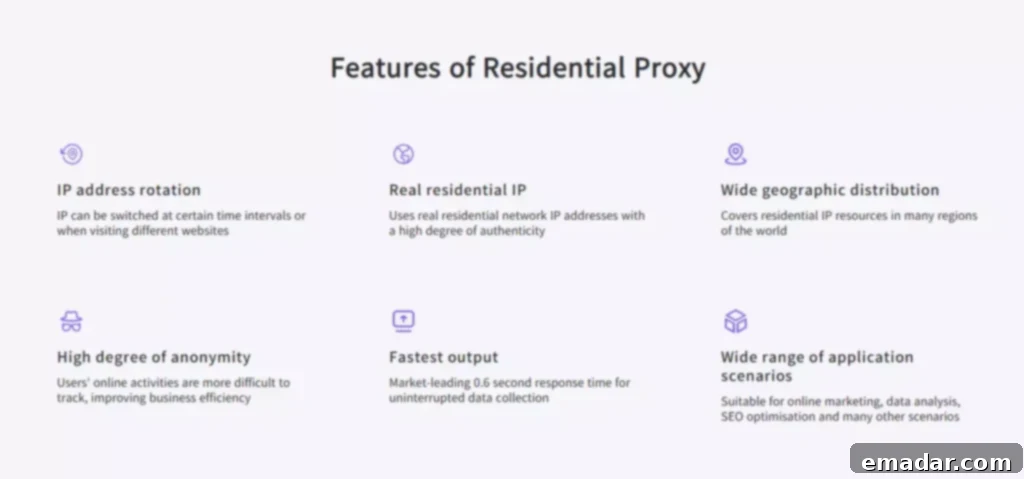
Given the diverse array of proxy solutions available, why would an individual or organization specifically choose static residential proxies over other types? The answer lies in their distinctive blend of advantages, which are critical for various online operations:
- Unmatched Stability: The core benefit is the ability to maintain a single, unchanging IP address for as long as your task requires. This stability is invaluable for operations that demand consistent session continuity, such as maintaining long-term logins, filling out complex forms, or engaging in multi-step online processes without interruption.
- Genuine Authenticity: Because these IPs are directly assigned by real ISPs, they appear to websites as legitimate, everyday internet users. This inherent authenticity significantly reduces the likelihood of detection, blocking, or being flagged as suspicious, offering a stealthier and more trusted online presence compared to datacenter proxies.
- Superior Ban Avoidance: Websites employ sophisticated anti-bot mechanisms that can easily identify and blacklist datacenter IPs or patterns of rapidly rotating dynamic IPs. Static residential proxies, with their consistent residential nature, are far less likely to trigger these detection systems, drastically minimizing the risk of IP bans or blacklisting.
- Precise Geo-Targeting Capabilities: Static residential proxies allow you to select IP addresses from very specific geographical locations—ranging from countries and cities down to particular regions or even specific carriers. This precision is vital for conducting localized market research, verifying geo-targeted ads, or accessing region-specific content with pinpoint accuracy.
- Enhanced Session Control: For tasks where maintaining a persistent session is crucial, static residential proxies offer unparalleled control. Whether it’s managing multiple social media accounts, ensuring consistent access to a protected resource, or conducting sequential actions on a website, the ability to maintain a fixed identity throughout the session is a significant advantage.
- Higher Success Rates: Due to their authenticity and stability, static residential proxies generally boast higher success rates in bypassing website restrictions and accessing desired content without hindrance, saving time and resources that would otherwise be spent dealing with blocked IPs.
- Reduced CAPTCHA Challenges: Websites often present CAPTCHAs to users perceived as suspicious. By appearing as a genuine residential user, static proxies reduce the frequency of encountering these frustrating verification challenges, streamlining workflows.
How IPFLY Delivers Superior Static Residential Proxies
At IPFLY, we understand that successful online operations hinge on stable, authentic, and high-performing connections. Our commitment is to provide a premium static residential proxy solution designed to meet the most demanding requirements of both small businesses and large enterprises. Our offerings are meticulously crafted to ensure reliability and effectiveness:
- Authentic ISP-Assigned IP Addresses: We pride ourselves on offering IP addresses that are genuinely sourced from real Internet Service Providers, not from easily detectable cloud providers or commercial data centers. This ensures the highest level of trust and authenticity for all your online activities.
- Extensive Global Coverage: With an expansive network spanning across 190+ countries, IPFLY provides unparalleled geographical flexibility. This vast coverage is ideal for localized operations, enabling precise geo-targeting for market research, ad verification, and accessing region-specific content anywhere in the world.
- Exceptional Performance and Speed: Leveraging our self-built, robust server network, IPFLY guarantees high success rates and blazing-fast speeds. This optimized infrastructure minimizes latency and ensures that your data collection, browsing, or management tasks are executed efficiently and without delay.
- Flexible and Scalable Pricing Plans: We offer a range of flexible pricing plans designed to accommodate diverse needs and budgets. Whether you’re an individual managing a few accounts or a large enterprise requiring extensive IP resources, IPFLY provides scalable solutions that offer excellent value without compromising on quality or performance.
Whether your objectives involve managing hundreds of social media profiles, conducting precise international ad placements, or performing large-scale e-commerce monitoring, IPFLY’s static residential proxies equip you with the secure, reliable, and effective tools necessary to achieve your digital goals with confidence and control.
Setting Up a Static Residential Proxy: A Simple Guide
Getting started with a static residential proxy is a straightforward process, designed to be user-friendly even for those new to proxy usage. Follow these steps to establish your secure and stable connection:
- Choose a Reputable Provider: The first and most critical step is to select a trustworthy and reliable proxy provider. Look for services like IPFLY that offer transparent policies, verified ISP-assigned IPs, and dedicated customer support for static residential IPs. Avoid free or unverified proxy services, as they often come with significant security risks and unreliable performance.
- Select Your Desired Location: Once you’ve chosen your provider, navigate to their dashboard or client area to select your preferred proxy location. IPFLY, for example, offers detailed targeting options, allowing you to specify a country, city, or even a particular carrier, enabling precise geo-targeting for your specific needs.
- Configure Your Device or Application: Your proxy provider will supply you with the necessary credentials: an IP address (or hostname), a port number, and often a username and password. These details need to be entered into the settings of your browser, operating system, or the specific application you intend to use with the proxy. Many browsers have extensions for easy proxy management, and most software that utilizes proxies will have a dedicated section in their network settings.
- Verify Your Connection: After configuration, it’s essential to test your connection to ensure the proxy is active and functioning correctly. Use online tools such as IPInfo.io, WhatIsMyIP.com, or similar services to confirm that your visible IP address matches your chosen static residential proxy’s location and that the IP type is indeed residential.
- Begin Secure Browsing or Automation: With your connection verified, you can now confidently proceed with your online activities. Whether you’re browsing, performing automated tasks, or managing accounts, your traffic will be routed through the chosen static residential proxy, providing the desired level of anonymity, stability, and geo-location.
Most advanced proxy dashboards also offer intuitive controls, allowing you to manage your static IPs, view usage statistics, and even initiate IP rotations or refresh your selection when necessary, providing maximum flexibility to adapt to evolving tasks or platform requirements.
Are Static Residential Proxies Truly Safe?
The safety of using static residential proxies is generally very high, provided you engage with a reputable and transparent provider. Unlike free, public proxies or shared datacenter IPs that are often overloaded, prone to security breaches, and easily detected, static residential IPs are issued by legitimate ISPs and offer a much more secure and stable environment.
However, some key considerations and tips for ensuring maximum safety include:
- Choose a Provider with Transparent Policies: Always select a provider (like IPFLY) that clearly outlines its sourcing methods for IP addresses, privacy policies, and terms of service. Providers with self-managed infrastructure often offer higher security and reliability compared to resellers who might not have direct control over their IP pools.
- Avoid Unverified Resellers: Be cautious of providers that cannot verify the legitimate sources of their IP addresses. Using proxies from dubious sources can expose you to security risks, including compromised IPs or those involved in illicit activities, which could negatively impact your online operations.
- Protect Your Proxy Credentials: Treat your proxy username and password with the same care as any other sensitive login information. Never share your proxy credentials with unauthorized individuals, as this could lead to misuse of your bandwidth, compromise your anonymity, and potentially expose your real identity or activity.
- Understand Legal Compliance: While proxies themselves are legal, it’s crucial to ensure that your use of them complies with all applicable laws, regulations, and the terms of service of the websites you are accessing. Responsible and ethical use of proxies is paramount.
When these guidelines are followed, static residential proxies offer one of the safest and most reliable methods for maintaining an anonymous, stable, and trusted online presence.
Final Thoughts on Static Residential Proxies
In an increasingly digitized and interconnected world, the ability to control your online identity, maintain consistent access, and operate with stealth is more valuable than ever. Static residential proxies emerge as a powerful, indispensable solution for individuals and businesses alike who demand long-term identity stability combined with the unparalleled authenticity of a genuine residential IP address. They represent the ideal blend of high speed, robust security, and discreet stealth, all without the disruptive interruptions associated with constantly rotating IP addresses.
If your objectives include streamlining complex data scraping tasks, efficiently scaling your account management operations, ensuring secure and uninterrupted access to geo-blocked content, or performing meticulous market research, static residential proxies might be the precise tool you need to elevate your digital strategy. Their reliability and trusted nature provide a significant advantage in navigating the complexities of the online landscape.
We encourage you to explore IPFLY’s Static Residential Proxy offerings today. Experience the perfect balance of speed, stability, and security for all your critical digital operations. With IPFLY, you gain complete control: choose your preferred IP, set your desired location, and browse or automate with the confidence of appearing as a real user, ensuring your online presence is both powerful and secure.