
In today’s interconnected digital landscape, businesses and individuals often need to navigate the web with enhanced privacy, security, and the ability to access geo-restricted content. This is where residential proxies come into play, serving as your ultimate digital disguise. Unlike other proxy types, residential proxies utilize real IP addresses from everyday internet users, making your online activities appear entirely normal, human-like, and undetectable to target websites.
Imagine browsing the web as if you were using a friend’s Wi-Fi network in a different city or even another country. To any website you visit, you appear as a genuine, local user – not a bot, a corporate entity trying to snoop, or someone accessing content from an unusual location. For instance, if you’re a pricing analyst in New York, you could employ a residential proxy located in London to view product prices exactly as a Londoner would see them. This crucial capability ensures you won’t be blocked, flagged, or presented with region-specific pricing that doesn’t reflect the local market, providing an accurate competitive edge.
The Ultimate Guide to Residential Proxies: What They Are and How They Work

Consider a scenario where you’re attempting to access a competitor’s website from a different country to gather market intelligence. Your actual IP address, assigned by your Internet Service Provider (ISP), immediately reveals your geographical location. This often leads to frustrating blocks, incorrect localized content, or even being served entirely different information, hindering your research efforts.
Residential proxies are specifically designed to overcome these challenges. They function by routing your web traffic through an intermediary device – typically a genuine desktop computer or a mobile phone owned by a real user in the region you wish to access. This ingenious mechanism provides a crucial layer of authenticity and anonymity.
This simple yet powerful rerouting process effectively conceals your original IP address, replacing it with the IP address of the residential device. To the target website, your request appears to originate from an ordinary person in that specific city or country, making it highly credible and incredibly difficult to detect or block. This fundamental principle is what gives residential proxies their unparalleled edge in tasks requiring high levels of trust and stealth.
Before we delve deeper into the intricate workings and profound benefits of these powerful tools, let’s briefly compare residential proxy servers with their more common counterparts: data center proxy servers. Understanding this distinction is key to appreciating why residential proxies are often the superior choice for demanding online operations.
Here’s a quick overview contrasting residential proxies with data center proxies:
| Feature | Residential Proxies | Data Center Proxies |
|---|---|---|
| IP Source | Real Internet Service Providers (e.g., AT&T, Comcast) | Cloud computing / Hosting companies |
| Authenticity | High (appears as a genuine user) | Low (easily identified as a proxy) |
| Block Rate | Very Low | High (frequently blacklisted) |
| Cost | Higher | Lower |
| Best For | Accessing highly protected sites, ad verification, market research, geo-targeting | High-speed tasks on less-restricted platforms, general browsing |
Fundamentally, residential proxies are your go-to solution when blending in seamlessly is your absolute top priority. This is critical for tasks where websites employ sophisticated anti-bot and anti-scraping measures. For example, when conducting sentiment analysis by scraping social media platforms, utilizing residential proxies is essential to avoid instant blocking and gather comprehensive, unbiased data. Conversely, for simpler tasks like rapidly accessing a basic blog without stringent bot protection, faster and more affordable data center proxies might suffice. The choice hinges on the level of detection sophistication you anticipate and the criticality of maintaining an authentic online persona.
The Power of Authenticity: Why Residential IPs Stand Out
The true power and unique appeal of residential proxies lie profoundly in the origin of their IP addresses. Unlike other proxy types that rely on commercial data center IPs – which are easily identifiable as proxy servers – residential IPs are inextricably linked to actual physical homes and the devices within them. This inherent authenticity is precisely what makes them incredibly robust and highly effective in bypassing advanced detection systems.
Modern websites and online services have become remarkably sophisticated in detecting and blocking automated traffic. IP addresses originating from data centers are typically the first to be flagged, blacklisted, and subsequently blocked due to their commercial nature and often suspicious activity patterns. In stark contrast, because residential IPs belong to genuine, everyday users, they seamlessly blend in with normal, organic web traffic. This significantly reduces your chances of being detected, blocked, or receiving inaccurate, biased data, ensuring your operations remain uninterrupted and your data remains pristine.
The paramount advantage of residential proxies is their perceived legitimacy. By leveraging IP addresses genuinely assigned by Internet Service Providers to real households, your online activities gain an unparalleled layer of credibility. This level of trust and natural integration into the web environment is virtually unachievable with any other proxy type, providing a distinct advantage for sensitive or high-volume tasks.
Key Advantages of Residential Proxy Systems
So, what exactly can these powerful proxies do? Their unique nature grants them several critical advantages that are indispensable for specific business objectives and online tasks. These advantages set them apart and make them the preferred choice for sophisticated web operations:
- Unmatched Anonymity and Stealth: Residential proxies provide you with an authentic, real-user IP address, ensuring your digital footprint appears indistinguishable from that of a local user. This high level of anonymity is paramount for sensitive tasks like competitive intelligence gathering, where you absolutely do not want your competitors to know you are analyzing their website or strategies. It allows for discreet data collection without revealing your true identity or corporate origin.
- Pinpoint Geo-targeting Accuracy: With residential proxies, you gain the precise capability to select proxies located in specific cities or countries. This allows you to view content, prices, and ads exactly as they are seen by local residents in that chosen geographic area. For example, a marketing professional in New York can use a London-based residential proxy to verify that their advertising campaigns are running correctly and appearing as intended for users in the UK, ensuring localized content accuracy and preventing costly errors.
- Significantly Lower Block Rates: The genuine source of residential IPs means they are far less likely to be detected and subsequently blocked by anti-bot systems. This dramatically alters the landscape for large-scale data collection projects. Consider a travel aggregator searching through thousands of flight prices across various airline websites; using residential IPs will result in substantially fewer CAPTCHAs, bans, or blocks compared to other proxy types, ensuring continuous and efficient data acquisition.
This powerful combination of features makes residential proxies an indispensable tool for businesses that require reliable, undetected access to vast amounts of web data. They are the preferred instrument for tasks such as competitive price monitoring, meticulous ad verification, comprehensive market research, and any scenario where appearing as a genuine customer is crucial for obtaining accurate, unbiased information without raising suspicion.
How Residential Proxies Actually Work: A Step-by-Step Overview
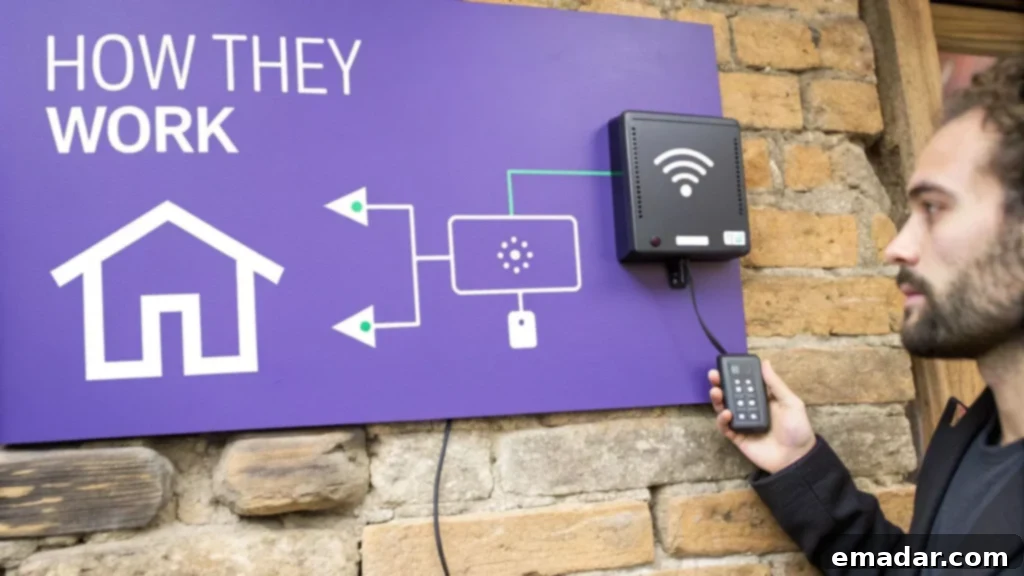
So, how does this sophisticated process unfold behind the scenes? Understanding the mechanics is crucial for appreciating the seamless and secure nature of residential proxies.
Think of it as employing a highly secure mail forwarding service for your online requests. Instead of sending your internet requests directly from your computer to the target website, you first dispatch them to the extensive residential proxy network. This network acts as the intelligent intermediary, orchestrating the entire connection.
Upon receiving your request, the proxy network efficiently identifies an available internet connection belonging to a real household within its vast pool of resources, matching your specified geographic criteria. Your request is then securely routed through that household’s unique IP address. To the target website, your interaction appears no different from any other ordinary person browsing from their living room, using their legitimate home internet connection.
This is where the true magic happens. The website perceives a genuine, everyday user, not a suspicious data center IP or an automated script. This fundamental difference ensures that your entire access process looks completely natural and legitimate, effectively bypassing most anti-bot measures and ensuring uninterrupted data flow.
The Data Request Journey: A Detailed Look
Let’s walk through the process step-by-step to fully understand how this mechanism creates a layer of unparalleled authenticity for your online activities, all happening in the blink of an eye:
- Initiation of Request: You decide to scrape product data from a specific e-commerce website. Instead of your configured scraping tool sending this request directly to the target website, it first dispatches it to the gateway of your residential proxy provider. This is the crucial first diversion.
- Proxy Network Intervention: The sophisticated proxy network receives your request. Based on your precise configurations – for example, “use an IP from Berlin, Germany” – the network intelligently selects an available, genuine residential IP address from a device within Berlin that is part of its expansive pool.
- Secure Rerouting via Real Device: Your request is then securely routed through the chosen Berlin user’s device. Leveraging their legitimate internet connection, this device then forwards your request to the e-commerce website. At this point, your original IP is completely masked, and your request carries the identity of the Berlin resident.
- Website Response: The target website receives the request originating from a German IP address. It naturally assumes this is a local shopper browsing their site. Consequently, it sends back the requested product page, complete with localized prices, availability, and content tailored for a German audience.
- Information Return to You: The residential device, still acting as the intermediary, sends this data back through the proxy network directly to your scraping tool. You receive the accurate, localized information without ever revealing your actual IP address, maintaining complete anonymity and data integrity throughout the process.
This ingenious rerouting capability is what makes residential proxies exceptionally effective. They offer a stark contrast to other proxy types that rely on commercially sourced IPs, which are far more prone to detection and blocking. To truly grasp the difference, we invite you to explore our comprehensive Data Center Proxies guide and understand their operational nuances firsthand.
IP Rotation and Session Management: Dynamic Control for Diverse Tasks
One of the most powerful and essential features of a high-quality residential proxy network is IP rotation. Instead of repeatedly using the same IP address to access a website, the network can automatically swap out your IP with a new one. This dynamic switching is critically important for evading detection, as continuous activity from a single IP address – especially at high volumes – is a dead giveaway for any anti-bot or anti-scraping system.
For instance, if you were to attempt to scrape 10,000 product pages from a single IP address, you would almost certainly be detected and blocked within minutes. A rotating residential proxy, however, can assign a fresh, distinct IP for each request, or after a set interval. This makes your activity appear as if thousands of different individuals are legitimately browsing the website, thereby preventing detection and ensuring uninterrupted data collection.
But what if your task requires you to maintain a consistent online identity for an extended period? This is where robust session management capabilities come into play.
Actionable Insight: Leading residential proxy providers offer “sticky sessions,” which allow you to maintain the same residential IP address for a specified duration, typically ranging from a few minutes up to half an hour or even longer. This feature is absolutely indispensable for tasks that require a consistent online presence, such as managing multiple social media accounts, navigating multi-step checkout processes on e-commerce sites, or logging into sensitive platforms. Without sticky sessions, an abrupt IP change during such an operation would likely lead to immediate log-outs, session invalidations, or security alerts, disrupting your workflow and compromising your mission.
Ethical Sourcing of Residential IPs: Understanding the Foundation of Trust
This is a perfectly valid and crucial question: how do service providers acquire millions of genuine home IP addresses? The most reputable and ethical providers obtain their IPs through completely transparent and consent-based methods. They partner with real users who voluntarily agree to share their device’s IP address and a portion of their bandwidth, understanding the implications of joining such a network.
Typically, this exchange of resources occurs in return for mutual benefits. Users might receive free access to premium applications, an ad-free browsing experience, or other valuable services. For example, a user could download a free VPN application and, in doing so, explicitly agree to become a peer within the proxy network in exchange for the premium features of that VPN. This creates a mutually beneficial ecosystem built on trust and informed consent.
This consent-based model is absolutely paramount. It ensures that the residential proxy network is built upon principles of transparency, legality, and user trust. Users are fully aware of what is happening with their internet connection and retain the ability to opt-out at any time. This ethical sourcing is the defining characteristic that separates legitimate, high-quality proxy services from illicit “botnets” or shady operations that covertly hijack devices without explicit permission. When you choose a provider committed to ethical practices, you are not only ensuring the effectiveness of your operations but also guaranteeing that your activities are conducted responsibly and legally.
Why Modern Businesses Absolutely Rely on Residential Proxies for Strategic Operations

Understanding the technical mechanics of how residential proxy servers operate is one thing; comprehending their profound importance and strategic value for modern businesses is entirely another. The true worth of these advanced proxies extends far beyond mere IP concealment. It lies in their unparalleled ability to unlock accurate, real-time data, gain a decisive edge over competitors, and ultimately empower organizations to make superior, data-driven business decisions.
At its core, the problem is straightforward: businesses executing automated requests often appear as bots. When you dispatch thousands of requests from a single data center IP, you invariably trigger every alarm system on a target website, leading to blocks and distorted data. Residential proxy servers provide the ultimate solution to this pervasive challenge by meticulously ensuring that every single operation appears to originate from the home of an ordinary, legitimate user.
This isn’t a minor tweak; it’s a revolutionary game-changer. It enables critical business functions to succeed where they would otherwise inevitably encounter insurmountable barriers, transforming potential roadblocks into open pathways for valuable information and strategic advantage.
Overcoming Data Collection Barriers for Enhanced Insights
One of the most immediate and significant victories achieved with residential proxies is the ability to gather crucial public data without facing immediate shutdowns or blocks. Modern websites have developed incredibly sophisticated capabilities for detecting and preventing automated traffic, which can quickly render essential data collection projects – such as competitive price monitoring or in-depth market research – utterly ineffective. Residential proxies serve as the indispensable key to unlocking these digital barriers, providing seamless access to the information you need.
Consider a practical scenario: an e-commerce company striving to meticulously track its competitors’ pricing strategies across various platforms. If they were to send thousands of requests from their corporate office IP address, they would almost certainly be blocked almost instantly. This constitutes a digital dead-end, halting vital intelligence gathering in its tracks.
However, by routing these same requests through a network of rotating residential proxies, each request originates from a different, legitimate home IP address. Suddenly, it appears as though thousands of individual shoppers are organically browsing the websites. This ingenious approach empowers businesses to acquire all the necessary data without triggering any alarms, maintaining complete stealth and ensuring the integrity and comprehensiveness of their data sets.
The capacity for businesses to collect accurate, real-time data is directly proportional to their ability to operate undetected. Residential proxies provide this essential camouflage, transforming what would otherwise be insurmountable blockades into open, flowing channels of critical information, vital for strategic decision-making.
Understanding Localized Content: The True Picture Across Geographies
For any enterprise operating across diverse geographical regions, gaining an accurate understanding of how local customers perceive their brand, products, and services is absolutely essential. This involves verifying localized advertisements, checking regional pricing structures, and ensuring that your website content appears correctly and optimally for users in different countries or cities. Residential proxies make this highly targeted, geo-specific testing not only possible but also exceptionally accurate and reliable.
Consider a global footwear brand launching a highly targeted advertising campaign specifically for Paris. This brand absolutely needs to confirm that their ads are genuinely appearing to Parisians, in the correct language, with local promotions, and on the right platforms.
By deploying a residential proxy with a Parisian IP address, their marketing team can experience the advertisements and landing pages exactly as a local user would. This capability is paramount for identifying ad fraud, ensuring that precious marketing budgets are not being wasted on misplaced or non-existent ad placements, and verifying the effectiveness of their localization strategies – all aspects that would be impossible to accurately verify from their headquarters located halfway across the globe.
This level of precision is critical for a multitude of diverse tasks, providing actionable intelligence:
- Ad Verification: Confidently confirm that your paid advertisements are running in the correct geographical locations and displaying in the intended format, effectively preventing costly ad fraud and ensuring ROI.
- Price Verification: Accurately ensure that your regional pricing strategies are genuinely being implemented and reflected on your e-commerce websites, allowing for dynamic pricing adjustments and competitive advantage.
- SEO Monitoring: Precisely check your search engine rankings across various locations, gaining invaluable insights into your local performance and enabling targeted SEO adjustments to improve visibility.
Stealthy Competitive Intelligence Gathering for Market Dominance
Monitoring your competitors is an indispensable component of sound business strategy, but it must be executed with utmost discretion and precision. Repeatedly visiting a competitor’s website from your company’s IP address is tantamount to sending them a polite email announcing your intentions – a surefire way to trigger their defenses. Residential proxies provide the essential layer of stealth and anonymity required to conduct comprehensive and effective competitive analysis without revealing your identity.
Actionable Insight: Market research firms and internal strategy teams can leverage these advanced proxies to meticulously unearth critical information about competitors’ product offerings, analyze customer reviews and sentiment, and understand their website structure and pricing models – all without ever exposing their true identity or intent. Each visit through a residential proxy appears to originate from a random, organic user, allowing them to quietly and systematically gather invaluable insights. This continuous stream of reliable data empowers businesses to formulate robust, data-backed strategies that ensure market dominance and a significant competitive advantage.
The increasing reliance on these powerful tools is clearly evident in industry data. The global residential proxy services market, valued at approximately $670 million, is projected to surge to an impressive $913 million by 2031. Furthermore, it’s highly telling that over 78% of Fortune 500 companies now utilize proxy networks for secure browsing and extensive data collection. This widespread adoption underscores the critical role residential proxies play in modern business intelligence. For a deeper dive into the full scope and trajectory, you can refer to a comprehensive residential proxy market analysis.
Practical Applications: Real-World Use Cases for Residential Proxies

While understanding the technical intricacies of how residential proxies work is foundational, truly appreciating their value comes from seeing how they address and solve tangible, complex business problems. These are not merely abstract tools for tech enthusiasts; they are pragmatic, powerful solutions that confer immense strategic advantages to companies across critical sectors like marketing, e-commerce, cybersecurity, and more.
Let’s explore several specific, real-world examples to illustrate precisely how businesses leverage these indispensable proxy servers on a daily basis to achieve their objectives and gain a competitive edge.
Ad Verification to Combat Fraud and Ensure Campaign Effectiveness
Picture yourself as a marketing analyst for a prestigious global fashion brand. You’ve just invested a substantial budget into a digital advertising campaign, meticulously targeting specific urban centers like Tokyo, London, and New York. The critical question arises: how can you definitively know if your advertisements are genuinely being displayed correctly and effectively to the intended audiences in those diverse cities?
Without the right tools, you would be operating completely blind, leaving your costly campaigns vulnerable to inefficiency and fraud. This is precisely where residential proxies transform from a technical tool into a marketing professional’s most invaluable ally.
Analysts can strategically leverage a residential proxy network to route their connections through authentic IP addresses located in each target city. This empowers them to browse the web precisely as a local user would, achieving several vital objectives:
- Confirm Ad Display and Placement: Visually inspect and verify that advertisements are appearing on the correct websites, in the appropriate format, and at the designated times, matching campaign specifications.
- Detect Geofencing Errors: Identify if ads are inadvertently being displayed outside their intended geographical zones. Such errors can lead to massive budget wastage and diluted campaign impact.
- Uncover Ad Fraud and Malpractices: Expose unscrupulous publishers who claim to deliver ad impressions in a specific region but fail to do so, redirecting valuable budget without genuine reach.
The direct outcome of this meticulous verification is significantly more transparent, highly efficient, and ultimately more profitable advertising campaigns, ensuring every marketing dollar is spent effectively.
Gathering Market Sentiment from Social Media for Product Insights
Imagine a data science team tasked with understanding the true public perception of a new product before its official launch. Their objective is to analyze tens of thousands of public social media posts and comments originating from various geographical regions to accurately gauge the market’s pulse and identify emerging trends or concerns.
What’s the inherent challenge? Social media platforms are notoriously vigilant and have highly advanced systems designed to detect and deter automated data collection. If you attempt to harvest such a massive volume of information from a single server IP address, you will almost certainly be blocked instantaneously, rendering your efforts futile.
By strategically employing a network of rotating residential proxies, the data team can effectively distribute their requests across a vast pool of genuine residential IP addresses. This makes their activity appear as if it’s coming from thousands of different individual users, engaging in natural, organic browsing behavior. Consequently, they can collect immense volumes of public data without triggering any security alarms, thereby creating rich, comprehensive datasets ripe for in-depth analysis.
This method provides invaluable, unbiased, and authentic insights, enabling companies to fine-tune their marketing messages, adapt product features, or even pivot their strategy before launch. This proactive approach significantly amplifies the chances of a successful product introduction and market acceptance.
The demand for these sophisticated tools is witnessing explosive growth. The residential proxy IP network market is valued at approximately $1.2 billion and is projected to skyrocket to an impressive $4.5 billion by 2033. This phenomenal growth is primarily fueled by businesses across diverse sectors – from web scraping and search engine optimization to advertising verification – all relying on dependable, anonymous data access. For a more granular breakdown and deeper insights, you can delve into comprehensive research on residential proxy market growth.
Brand Protection: Combating Counterfeits and IP Infringement Effectively
Here’s another incredibly powerful application that highlights the versatility of residential proxies: brand protection. Imagine a brand manager for a luxury handbag company constantly battling the proliferation of counterfeit products appearing on various online marketplaces. These illicit imitations not only siphon away potential revenue but also severely tarnish the brand’s reputation and dilute its perceived value.
Manually searching for these fraudulent listings is a losing battle, especially since counterfeiters are adept at blocking IP addresses they suspect belong to brand protection teams or corporate entities. This common tactic presents a formidable obstacle for companies attempting large-scale data scraping operations to monitor online stores effectively.
By utilizing residential proxies, brand managers can automate the process of scanning these marketplaces from a multitude of different geographic locations. Each search appears to originate from an ordinary, independent shopper, enabling them to bypass detection systems and uncover counterfeit listings that would otherwise remain hidden. This provides a systematic, efficient, and rapid method for discovering and reporting fraudulent sellers, safeguarding intellectual property, and preserving brand integrity.
Additional Practical Use Cases for Versatile Business Operations
The applications of residential proxies extend far beyond the examples detailed above. Their versatility makes them indispensable across a wide spectrum of industries and business functions. Here are several other common and crucial scenarios where residential proxies prove to be absolutely invaluable:
- SEO Auditing and Rank Tracking: Search Engine Optimization (SEO) professionals heavily rely on residential proxies to meticulously check search engine rankings from various cities and countries. For instance, they can ascertain if a client ranks #1 for “best pizza” in Chicago but only #5 in New York. This provides actionable, localized SEO insights, enabling precise strategy adjustments to improve local visibility and organic traffic.
- Travel Fare Aggregation: Leading travel websites constantly scrape airline and hotel websites to discover the best real-time prices for flights, accommodations, and car rentals. To collect this massive volume of dynamic data without being blocked or fed inaccurate, cached information, residential proxies are paramount. They ensure access to the freshest prices, allowing aggregators to offer competitive deals.
- E-commerce Price Monitoring and Dynamic Pricing: Online retailers must continuously monitor competitors’ pricing strategies to remain competitive and adapt quickly to market fluctuations. Residential proxies allow them to automate this process accurately and discreetly, enabling the implementation of smart, dynamic pricing strategies that maximize profitability and market share.
- Accessing Geo-Restricted Content: For media companies, researchers, or even individuals, residential proxies provide the means to access content, services, or websites that are geographically restricted. This ensures full access to global information and resources, regardless of physical location.
In each of these scenarios, the core advantage remains consistent: the unparalleled ability to access public web data as a genuine local user. This transformative capability unlocks the critical information needed for smarter, faster, and ultimately more profitable business decisions, driving efficiency and innovation across the board.
Choosing the Right Residential Proxy Provider: A Critical Business Decision
Selecting the appropriate residential proxy service provider is far more than a minor technical consideration; it’s a pivotal business decision that can critically determine the success or failure of your entire project. In a crowded market flooded with numerous services, it’s remarkably easy to become swayed by flashy marketing claims and enticing promises. The key is to cut through the noise and meticulously focus on providers offering genuinely high-quality, reliable, and trustworthy services.
Approach this selection process as you would choosing a critical business partner. You require a partner that is dependable, transparent, ethically sound, and exceptionally well-equipped to meet your specific operational needs. An ill-informed choice can lead to persistent IP blocks, agonizingly slow performance, compromised data integrity, and even potential legal repercussions. Conversely, partnering with the right provider ensures your tasks proceed smoothly, ethically, and without unforeseen complications, delivering consistent and valuable results.
Evaluating IP Pool Size and Geographical Coverage: The Foundation of Success
First and foremost, the provider’s IP pool is everything. The sheer size, inherent quality, and comprehensive diversity of their network are direct indicators of its power and reliability. A larger, more geographically diverse IP pool exponentially increases your chances of finding the exact IP addresses required for your specific tasks, while simultaneously minimizing the risk of encountering IPs that have already been flagged, throttled, or banned by target websites.
When assessing a potential provider, resist the temptation to merely glance at the headline number of their IP count. You need to conduct a thorough investigation, posing pointed and crucial questions:
- How many unique IP addresses are truly active within your network? A genuinely vast number signifies a healthy, robust, and dynamic network capable of sustaining demanding operations.
- What is the granularity of your geo-targeting capabilities? Can you precisely target specific countries, states, cities, or even down to individual Internet Service Providers (ISPs)? This level of detailed control is absolutely critical for tasks like localized ad verification, regional SEO analysis, and accessing highly specific content.
- What are the precise sourcing methods for your IPs? Any reputable and trustworthy provider will be completely transparent about their IP acquisition process. They should be able to unequivocally confirm that explicit, informed consent has been obtained from every single IP owner, ensuring ethical and legal compliance.
Actionable Insight: Before making any commitment, rigorously test the provider’s geo-targeting functionalities. If your project demands an IP from a very specific city, such as Omaha, Nebraska, insist on a trial to confirm they genuinely possess a reliable pool of IPs within that exact city, rather than merely offering a generic “USA” pool. This precision is invaluable.
A massive and diverse IP pool guarantees an unparalleled level of resilience. If one IP is detected or blocked, millions more are instantly ready to step in, ensuring uninterrupted operations. This is the exact kind of elasticity and reliability required for successful large-scale operations and sustained data access.
Assessing Session Control and Flexibility for Optimized Performance
Secondly, it’s crucial to consider the practical application of your proxies. Different online tasks inherently demand different types of session management. A truly reliable and versatile provider will offer both rotating and sticky sessions, granting you the essential flexibility to adapt to virtually any operational scenario and ensure optimal performance.
Rotating Proxies are engineered to provide a fresh, unique IP address for each individual request or after a very short interval. This functionality is perfectly suited for large-scale web scraping and data collection efforts, where your primary goal is to distribute your activity across countless IPs, making it appear as though thousands of different individuals are browsing. This strategy renders your operations virtually undetectable. For example, an e-commerce analyst tasked with scraping 10,000 product pages across numerous online stores would require rotating IPs to effectively mask their aggregated activity.
On the other hand, Sticky Sessions allow you to maintain the same residential IP address for a longer, continuous duration – typically ranging from a few minutes to half an hour or even longer, depending on the provider’s offerings. This capability is absolutely indispensable for any operation that necessitates maintaining a consistent online identity or state, such as managing social media accounts, navigating multi-step checkout processes on e-commerce platforms, or logging into secure portals. If your IP address were to change abruptly mid-session, you would almost certainly trigger security alerts, invalidate your session, or be forced to log out, severely disrupting your workflow.
Evaluating Performance and Reliability: Speed and Uptime are Non-Negotiable
When it comes to proxy services, speed and uptime are absolutely non-negotiable. A slow or unstable proxy network will inevitably create bottlenecks, bring your projects to a grinding halt, and render your meticulously designed scripts ineffective. You must prioritize finding a provider that not only promises but consistently delivers high performance and unwavering reliability.
Here are the crucial metrics and indicators you need to scrutinize:
- Success Rate: What percentage of your requests successfully pass through the proxy network without errors or blocks? You should actively seek a provider that can demonstrate a success rate of 99% or even higher. This directly reflects the quality of their IP pool and their infrastructure’s efficiency.
- Uptime Guarantee: Does the provider offer a Service Level Agreement (SLA) that explicitly guarantees their network’s online availability? The industry benchmark for high-quality proxy services is a guaranteed uptime of 99.9% or better. Anything less could lead to significant operational disruptions and costly downtime for your projects.
- Connection Speed: While it’s a general truth that residential proxies will always be marginally slower than data center proxies (due to routing through real user devices), a superior service provider will have meticulously optimized their network to deliver the best possible speeds for your operations, minimizing latency and maximizing throughput.
The demand for this level of quality and performance is immense and continuously growing. Residential proxies account for approximately 44% of all proxy traffic, with over 5.5 million unique residential IPs actively in use at any given time. This demonstrates their widespread adoption and essential role in the digital ecosystem. For a more profound understanding of these statistics and market dynamics, you can explore additional insights on proxy server market share.
Prioritizing Ethical Sourcing and Responsive Customer Support: Building Trust
Finally, and perhaps most critically, never underestimate the paramount importance of ethical IP sourcing and robust customer support. An ethical provider acquires its IP addresses from genuine, real-world users who have provided explicit, informed consent to share their internet connection. This fundamental commitment protects your operations from severe legal and reputational risks associated with utilizing botnets or other illicit IP sources. It is absolutely imperative that you demand clear and detailed explanations from any potential provider regarding their precise methods of IP acquisition.
Strong, responsive customer support serves as your essential safety net. In any complex technical operation, issues are bound to arise. When they do, you need a prompt, knowledgeable, and readily available team – ideally 24/7 – to assist you with troubleshooting and resolving problems efficiently. A service provider’s investment in exceptional support is a clear and reliable indicator of its overall quality and commitment to client success. Naturally, you’ll need to factor this crucial aspect into your budget. To better understand the value and advantages across various plans, we invite you to review our comprehensive residential proxy pricing models.
Common Mistakes to Avoid When Using Residential Proxies for Optimal Results
To truly harness the full power and potential of residential proxy servers, it’s not enough simply to set them up. It’s equally crucial to consciously avoid common pitfalls and mistakes that can derail your entire project, leading to wasted resources and failed objectives. Even a few simple oversights can result in significant financial waste, project failures, or even the blacklisting of your entire IP pool. By being proactive and aware of these common errors, you can ensure your operations remain smooth, efficient, and successful from the outset.
One of the most pervasive and fundamental mistakes is the misconception that all proxies are created equal. Businesses, often in an attempt to save a few dollars, might try to use data center proxies for tasks that demand high levels of authenticity – such as scraping heavily protected e-commerce websites or verifying localized ad campaigns. This approach almost invariably ends in failure, as easily detectable data center IPs are swiftly identified and blocked upon first interaction, ultimately costing far more in lost time, effort, and uncollected data than any initial savings.
Ignoring Rate Limits and Being Overly Aggressive with Requests
It’s incredibly tempting to run your data collection scripts at full throttle, aiming for maximum speed and volume. However, doing so is an almost guaranteed way to get flagged and blocked. Websites are constantly monitoring the frequency and volume of requests originating from a single IP address within a given timeframe. Sending hundreds of requests from one residential IP in a very short period looks entirely unnatural and is a massive red flag for any sophisticated anti-bot system, regardless of the IP’s authenticity.
This aggressive approach is a direct shortcut to IP bans and CAPTCHA challenges, bringing your entire project to an abrupt halt. The fundamental solution lies in mimicking human-like browsing behavior, which is inherently slower and more sporadic.
Actionable Insight: Implement realistic and variable delays between your requests. Randomizing these delays, for example, between 2 to 5 seconds, will make your traffic appear far more organic and dynamic than requests sent at fixed intervals. This seemingly simple adjustment can dramatically increase your success rate, prevent IP exhaustion, and maintain the overall health and longevity of your proxy pool.
Choosing Providers with Unethical IP Sourcing Practices
Another critically important mistake to avoid is partnering with a provider without thoroughly investigating their IP sourcing methods. Some unscrupulous services build their networks by deceiving users into installing malicious software or employing other deceptive tactics, essentially creating a “botnet” of compromised devices. Utilizing such services not only exposes your own operations to significant security risks but also embroils your business in severe legal and ethical dilemmas, potentially leading to heavy fines or reputational damage.
To unequivocally avoid this treacherous path, prioritizing transparency is paramount. You must directly and explicitly ask potential providers about the origin of their IP addresses and their user consent processes:
- How is end-user consent obtained? Legitimate providers will have a clear, documented, and transparent process where users knowingly and voluntarily agree to share their IP addresses, often in exchange for ad-free applications, premium features, or other reciprocal benefits.
- Can users easily opt out of the network? An ethical service will always provide individuals with a straightforward and accessible way to revoke their consent and remove their device from the proxy network at any time.
Omitting this vital due diligence is an enormous risk. Providers with dubious practices are inherently unreliable; they might disappear overnight, leaving you and your projects in a precarious position. By selecting a partner that adheres to stringent ethical standards, you are making a crucial investment in long-term stability, responsible operations, and the overall integrity of your business, ensuring peace of mind and sustainable success.
Frequently Asked Questions About Residential Proxies
To conclude our comprehensive guide, let’s address some of the most common questions that individuals and businesses frequently encounter when first exploring the world of residential proxies. Gaining a solid understanding of these fundamental aspects will empower you with the confidence and knowledge to utilize these powerful tools effectively and ethically, ensuring optimal outcomes for your projects.
Is Using Residential Proxies Legal? Understanding the Ethical Framework
Yes, in the vast majority of jurisdictions worldwide, using residential proxies is entirely legal. However, this legality comes with a crucial caveat: you must exclusively employ them for legitimate, ethical, and lawful activities. The onus is on the user to ensure compliance with all applicable laws and regulations.
The legality of proxy usage fundamentally hinges on two pivotal aspects: firstly, how the provider acquires its IP addresses, and secondly, how you, as the user, ultimately utilize those IPs. Reputable and ethical providers invariably obtain explicit, informed consent from the device owners, allowing traffic to be routed through their connections. This ensures that the entire network operates on a foundation of transparency, trust, and ethical principles, safeguarding both the provider and the user.
Conversely, using proxy servers for illicit activities such as hacking, stealing private data, engaging in fraudulent transactions, or downloading copyrighted content in violation of service terms is unequivocally illegal and can lead to severe penalties. As long as you adhere to conducting morally sound and compliant business tasks – such as collecting public web data for market research, verifying ad placements, monitoring SEO rankings, or ensuring brand protection – you will operate well within the bounds of legality and ethical conduct.
Key Takeaway: A proxy itself is a neutral tool. Its legality in practice boils down to responsible usage for ethical purposes. This responsibility begins with selecting a provider that is fully transparent about user consent and committed to upholding the highest ethical standards in IP acquisition.
Static Residential Proxies vs. Rotating Residential Proxies: What’s the Difference?
The primary distinction between static and rotating residential proxies lies in their session control and how frequently your IP address changes. The optimal choice between maintaining a single identity or constantly switching identities largely depends on the specific requirements and nature of your task at hand.
- Rotating Residential Proxies: These are the masters of disguise and anonymity. They automatically exchange your IP address with a new one either with every new request you make or after a very short, predetermined interval. This dynamic IP switching is exceptionally well-suited for large-scale web scraping, data harvesting, and any task where you need to distribute your activities across a vast number of apparent users. It makes your actions look like they originate from thousands of different individuals, making it exceedingly difficult to track or block you. Example: Systematically scraping 50,000 product reviews from Amazon or collecting public pricing data from numerous e-commerce sites.
- Static Residential Proxies (Sticky Proxies): Often referred to as “sticky” proxies, these allow you to maintain the same residential IP address for an extended duration – typically ranging from a few minutes to up to 30 minutes, or even several hours, depending on the provider. This consistency is absolutely essential for operations that demand a stable, persistent session, such as managing multiple social media accounts, filling out multi-page forms, completing an online checkout process without being logged out, or maintaining login sessions on specific platforms. An abrupt IP change during such tasks would almost certainly trigger security alerts or invalidate your session. Example: Managing several Instagram accounts from a single virtual device, or completing a complex registration form on a sensitive website.
Can Websites Detect That I’m Using a Residential Proxy?
Detecting high-quality residential proxies is exceptionally challenging for websites and sophisticated anti-bot systems. This inherent difficulty stems from the fundamental nature of residential IPs: they are genuine IP addresses allocated by Internet Service Providers (ISPs) to actual households. As a result, traffic routed through residential proxies seamlessly blends in with ordinary, legitimate internet traffic, making it incredibly difficult to distinguish from a regular user’s activity.
From the perspective of the server on the receiving end, a request originating from a residential proxy appears identical to a request coming from any other legitimate home user. This critical advantage is precisely what sets residential proxies apart from data center proxies, whose IP addresses originate from commercial servers and are, therefore, much more easily identified, flagged, and blocked by vigilant websites.
While no method of online anonymity can ever be 100% foolproof, a well-managed residential proxy network from a trusted provider offers the closest possible approximation to complete stealth and undetectability. They provide the highest level of trust and legitimacy your online operations can achieve.
Ready to experience the transformative power of a truly authentic and high-performance proxy network? IPFLY provides you with access to a global network comprising over 90 million ethically sourced residential IPs. This extensive network empowers you to collect the precise, accurate data you need for your projects without triggering suspicion or encountering frustrating blocks. Discover our cutting-edge residential proxy solutions and launch your projects with confidence today!