
In the intricate and ever-evolving landscape of online operations, where anonymity, data integrity, and security are paramount, not all IP addresses are created equal. Businesses, marketers, and developers navigating the complexities of web scraping, brand protection, and secure online interactions often find themselves choosing between various proxy types. While datacenter and residential proxies serve broad purposes, there exists a superior tier that delivers an unparalleled level of trust and legitimacy: the mobile proxy. For the most sensitive, high-stakes, and critical online endeavors, understanding precisely what mobile proxies are, how they function, and when their unique advantages are indispensable is crucial for achieving success and circumventing common online barriers. This comprehensive guide aims to demystify this powerful tool, illuminating its critical role and unmatched value within the modern proxy ecosystem.
What Exactly Is a Mobile Proxy? A Detailed Definition
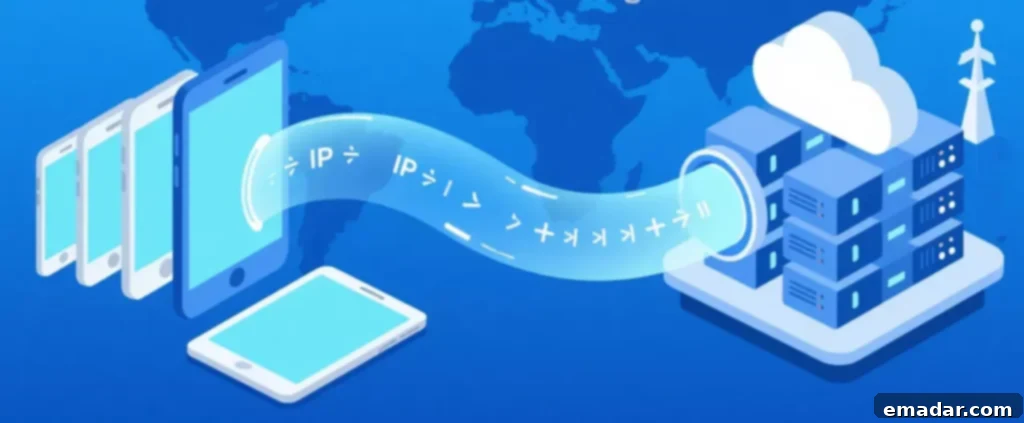
At its core, a mobile proxy acts as an intermediary server that intelligently routes your internet traffic through a legitimate mobile device or a specialized modem equipped with a SIM card. This device is actively connected to a real cellular network, such as 4G/LTE or the increasingly prevalent 5G. What makes this distinction so critical is the origin of the IP address assigned to your connection: it comes directly from a major mobile carrier, like Verizon, AT&T, T-Mobile, or any other global telecommunications provider.
The profound implication of this setup is that to any website, online service, or digital platform you interact with, your traffic is virtually indistinguishable from that of a genuine person browsing the internet on their smartphone. This level of authenticity is unmatched by other proxy types, as your connection carries the inherent trust and characteristics of a typical mobile user, making it exceedingly difficult for detection systems to flag your activity as automated or suspicious. Mobile IPs are also frequently dynamic, meaning they can change, adding another layer of natural user behavior and enhancing their resilience against blocking.
The Unrivaled Advantage: Why Mobile Proxies Command the Highest Trust
The extraordinary power and efficacy of mobile proxies boil down to one fundamental concept: IP trust. Websites, social media platforms, e-commerce sites, and virtually all online services inherently place a higher degree of trust in mobile IP addresses compared to any other type. This elevated trust isn’t arbitrary; it’s rooted in a critical technical reality.
The primary technological reason behind this unparalleled trust is known as Carrier-Grade NAT (CGNAT). Mobile carriers, facing a finite supply of IPv4 addresses and an exponential growth in mobile users, employ CGNAT as a necessity. This technology allows thousands of distinct mobile users to share the very same public IP address at any given moment. Consequently, when a website or online platform observes traffic originating from a specific mobile IP, it understands that this IP is highly likely to be shared by a vast number of legitimate, unrelated users.
This reality has a profound and strategic consequence for anyone employing mobile proxies: online platforms are extremely reluctant to flag, throttle, or outright ban a mobile IP address. To do so would carry an immense risk of inadvertently blocking thousands of genuine, legitimate customers and users who happen to be sharing that same IP at that time. Such an action would lead to significant user frustration, customer service nightmares, and potential brand damage. This concept of “shared reputation” makes mobile IPs incredibly resilient against detection and blocking algorithms, effectively granting them a privileged status in the digital realm. It’s the ultimate deterrent against unwanted restrictions, making mobile proxies the least likely to be scrutinized or disabled.
The Proxy Trust Hierarchy: Mobile vs. Residential vs. Datacenter Explained
To fully appreciate the supremacy of mobile proxies, it’s beneficial to understand where they stand in the broader spectrum of proxy types. This hierarchy illustrates the varying levels of trust and utility each offers:
Datacenter Proxies (Good):
- Characteristics: These proxies originate from servers housed in large data centers. They are often virtualized and share subnet ranges that are easily identifiable by sophisticated online platforms.
- Pros: Known for their exceptional speed, very low cost, and ability to provide large pools of IP addresses. They are ideal for tasks where anonymity is less critical and high-volume, fast connections are needed.
- Cons: Their primary drawback is their detectability. Websites can quickly identify them as non-human traffic due to their known IP ranges and server characteristics. This makes them highly susceptible to being flagged, blocked, or CAPTCHA-challenged on platforms with strong anti-bot measures.
- Best For: General web scraping of non-sensitive data, basic geo-unblocking, SEO monitoring, or tasks where the target website has minimal security protocols.
Residential Proxies (Better):
- Characteristics: Residential proxies route traffic through real IP addresses assigned by Internet Service Providers (ISPs) to genuine home internet users. They appear as traffic from a standard residential broadband connection.
- Pros: Offer a significantly higher level of trust than datacenter proxies. They are much harder to detect as proxy traffic because they mimic the behavior and origin of a real home user. This makes them effective for tasks requiring a moderate to high degree of legitimacy.
- Cons: Generally slower than datacenter proxies, more expensive, and their performance can vary depending on the quality of the peer network. While trusted, they can still be flagged if the user’s behavior is overtly automated or unnatural.
- Best For: More demanding web scraping operations, ad verification, brand protection, market research, or managing a limited number of social media accounts where mobile IP isn’t strictly necessary but high trust is important.
Mobile Proxies (Best):
- Characteristics: As discussed, these proxies leverage real IP addresses from mobile carriers, appearing as traffic from a genuine smartphone or mobile device on a cellular network.
- Pros: They represent the absolute pinnacle of IP trust and legitimacy. Due to CGNAT and the inherent nature of mobile networks, they are virtually indistinguishable from real mobile users and are extremely resistant to detection, flagging, and blocking. They bypass even the most stringent security measures.
- Cons: They are the most expensive proxy type due to the infrastructure required (real SIM cards, mobile devices/modems). They can sometimes be slightly slower than datacenter proxies, though modern 4G/5G connections are often very fast. Their pools of IPs can also be smaller than residential networks.
- Best For: The most sensitive, high-stakes, and mobile-centric operations where failure is not an option and maximum trust is paramount.

When to Use Mobile Proxies: Essential High-Stakes Applications
Given their premium nature and unparalleled trust, mobile proxies are not typically deployed for routine tasks. Instead, they are reserved for the most critical, sensitive, and high-stakes online operations where the cost of failure — be it an account ban, data blockage, or missed opportunity — is significantly high. Here are the paramount use cases:
1. Managing High-Value Social Media Accounts and Automation:
Social media platforms like Instagram, TikTok, and Twitter are inherently mobile-first and employ incredibly sophisticated AI-driven systems to detect and ban accounts that exhibit any behavior inconsistent with genuine human interaction, especially when originating from non-mobile IPs. For social media managers, digital marketing agencies, or individuals managing multiple valuable brand or client accounts, maintaining account health and avoiding suspensions is paramount. Using IPFLY’s 4G/5G mobile proxies is widely considered the professional standard. It ensures that all activity associated with an account—be it posting, liking, following, or automation—appears to be coming from a legitimate mobile user on a cellular network. This dramatically reduces the risk of the account being flagged, experiencing engagement drops, or being outright disabled, safeguarding your digital assets and reputation.
2. Precise Mobile Ad Verification and Geo-Targeting:
Marketers invest billions annually in advertising campaigns specifically targeted at mobile users. To verify that these ads are being displayed correctly, to the intended audience, and within specific geographic locations or cities, they must view the web environment exactly as a local mobile user would. A mobile proxy from IPFLY allows an ad verifier or marketing professional in one country to accurately perceive the mobile web and ad placements as a user on a specific cellular carrier network in another country, or even a particular city within that country. This capability is vital for ensuring 100% accurate campaign validation, compliance checks, competitor ad intelligence, and preventing ad fraud, offering an authentic “on-the-ground” perspective.
3. High-Security E-commerce Tasks and Account Creation:
For specialized e-commerce operations, mobile proxies offer an insurmountable advantage. This includes tasks such as creating multiple seller accounts on mobile-centric marketplaces (which often have stringent IP checks), or the notoriously challenging process of “copping” limited-edition items (like sneakers, collectibles, or event tickets) from mobile apps with the strictest bot detection systems. These platforms are designed to thwart automated attempts. Mobile proxies provide the highest chance of success by seamlessly bypassing security layers that would instantly block datacenter or even residential proxy types, making your activity appear as genuine consumer engagement.
4. Advanced App Store Optimization (ASO) and Mobile App Testing:
In the competitive world of mobile applications, visibility in app stores is critical. Mobile proxies are invaluable for Advanced App Store Optimization (ASO) strategies. They enable developers and marketers to simulate app downloads, installations, ratings, and reviews from various geographic locations and diverse mobile network conditions without triggering fraud detection. This allows for legitimate influence on app rankings and visibility. Furthermore, mobile proxies facilitate comprehensive mobile app testing, ensuring that applications function correctly and efficiently across different carriers, network speeds, and regions, providing a true user experience perspective.
5. Comprehensive Market Research and Data Collection on Mobile-First Platforms:
Many websites and platforms present different content, pricing, or product availability based on whether a user is accessing from a mobile device or a desktop, and also based on their geographic location. For accurate market research, competitor analysis, or trend monitoring, it is essential to collect data exactly as it would appear to a local mobile user. Mobile proxies provide this crucial capability, allowing researchers to gather precise, untainted data from mobile-first platforms, ensuring the insights derived are genuinely representative of the target audience’s experience.
A Note on IPFLY’s Residential Proxies
While mobile proxies are the gold standard for the most demanding tasks, it’s important to recognize that for many other demanding web scraping and automation tasks that require high trust but are not specifically mobile-focused, IPFLY’s residential proxies offer a fantastic balance of high legitimacy and cost-effectiveness. They provide a robust solution for a wide range of applications where appearing as a genuine home internet user is sufficient. The key to successful proxy usage lies in matching the right tool to the specific needs and security demands of your project.
Are you craving exclusive proxy strategies, professional service recommendations, and the cutting edge of digital anonymity? First, make sure to visit IPFLY.net to explore our industry-leading proxy solutions. Then, elevate your expertise by joining the vibrant IPFLY Telegram community. Here, you’ll discover the latest industry updates, connect with fellow professionals, and gain practical tips that will empower you to easily master the core secrets of proxy usage and leverage them for your success. Don’t miss out – join us now and unlock your full potential!

In conclusion, while residential proxies serve as the reliable workhorse for a broad spectrum of serious web scraping and automation tasks, mobile proxies unequivocally represent the absolute pinnacle of IP trust and online legitimacy. They are not a general-purpose tool but rather a highly specialized asset engineered for a specific, demanding set of operations. For the most sensitive, highest-stakes online endeavors, particularly those targeting mobile-first platforms where security, anti-bot detection, and authenticity are paramount, investing in a high-quality mobile proxy from a trusted provider like IPFLY is not merely an option—it is the professional’s strategic choice for ensuring maximum security, unwavering reliability, and guaranteed success in the challenging digital landscape. Choose wisely, choose securely, and empower your operations with the unmatched advantage of mobile proxies.