
In the vast landscape of global commerce, the terms “cross-border trade” and “international logistics” are frequently encountered. Yet, for many new to the world of import/export, e-commerce, or overseas shipping, one crucial player often remains somewhat nebulous: the freight forwarder.
What exactly does a freight forwarder do, in simple terms? This guide aims to demystify their core functions, operational processes, and invaluable contribution to the global supply chain, providing a comprehensive and accessible overview.
Navigating the complexities of international shipping, customs regulations, and various transport modes can be a daunting task for any business, regardless of size. This is where the expertise of a freight forwarder becomes not just beneficial, but often indispensable, serving as the linchpin that connects sellers with buyers across continents.
Understanding the Role of a Freight Forwarder in Global Trade
A freight forwarder, also known as an International Freight Forwarder, is a service provider that acts on behalf of shippers (exporters or importers) to arrange the safe, efficient, and cost-effective transportation of goods from one country to another. Essentially, they are the architects of logistics solutions, orchestrating the entire journey of cargo from its origin to its final destination.
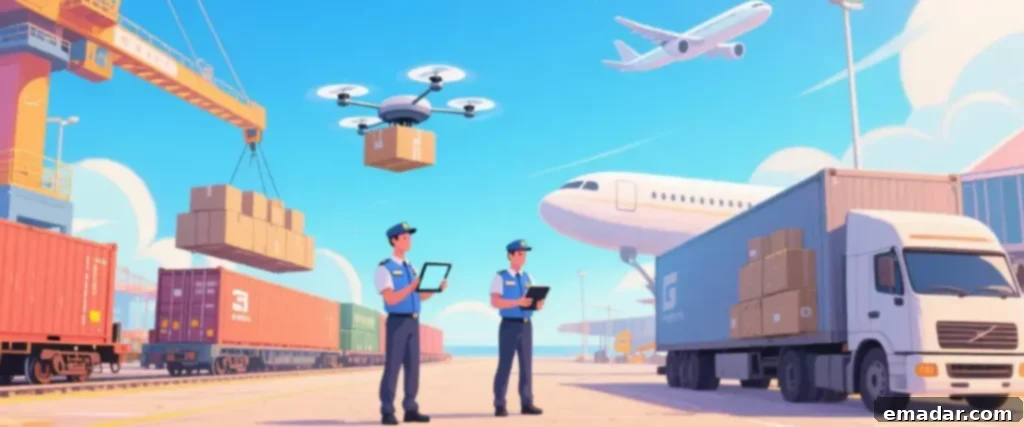
Far from merely being a “middleman,” a freight forwarder is a strategic partner and an operational orchestrator. They don’t typically own the ships, planes, or trucks that carry your cargo. Instead, they leverage their extensive network of carriers, deep industry knowledge, and operational expertise to consolidate shipments, negotiate competitive rates, and manage all the intricate details associated with international transportation. Their role is to provide a seamless, end-to-end logistics solution, integrating various transport modes such as sea freight, air freight, road transport, and rail freight into a cohesive plan.
Their value lies in transforming the complex web of global logistics into a streamlined process, allowing businesses to focus on their core competencies while leaving the shipping headaches to the experts. They are adept at navigating diverse regulatory environments, optimizing routes, and ensuring compliance, thereby mitigating risks and saving valuable time and resources for their clients.
Key Services Provided by Freight Forwarders
The scope of a freight forwarder’s work extends far beyond simply booking space on a vessel or aircraft. Their comprehensive suite of services covers virtually every aspect of the international shipping process:
1. Strategic Route and Mode Selection: Based on the nature of the goods, client budget, delivery timeline, and specific origin/destination, a freight forwarder determines the most suitable transportation method. This involves evaluating options such as Full Container Load (FCL) or Less than Container Load (LCL) sea freight, standard or express air cargo, or multimodal combinations, balancing cost, speed, and reliability.
2. Carrier and Space Booking: They maintain strong relationships with various shipping lines, airlines, and trucking companies, enabling them to secure optimal booking space and negotiate favorable rates. This ensures that cargo is dispatched on time and according to schedule, avoiding unnecessary delays.
3. Comprehensive Customs Management: This is one of the most critical and complex aspects of international trade. Freight forwarders provide expert assistance with:
- Export Customs Declaration: Preparing and submitting all necessary export documentation, ensuring compliance with origin country regulations, and handling any required licenses or permits. This includes commercial invoices, packing lists, bills of lading, and certificates of origin.
- Import Customs Clearance: Facilitating the entry of goods into the destination country, handling duties, taxes, and tariffs, and ensuring all import regulations are met for smooth release. They navigate complex customs procedures to prevent costly delays and penalties.
4. Specialized Cargo Handling, Packaging, and Warehousing: They offer professional advice and services for cargo preparation, including robust packaging, crating, palletization, and labeling to withstand the rigors of transit. This can include specialized requirements for fragile goods, hazardous materials, or temperature-controlled items. Additionally, they often provide temporary storage solutions, consolidation services, and distribution logistics.
5. Cargo Insurance and Risk Management: International shipping inherently carries risks of loss or damage. Freight forwarders assist clients in securing appropriate cargo insurance coverage, protecting against unforeseen incidents during transit. They also proactively identify and mitigate potential risks, such as regulatory changes, geopolitical events, or port congestions, offering alternative solutions.
6. Real-time Tracking and Transparent Information Flow: Modern freight forwarders leverage technology to provide clients with continuous updates on their shipment’s status. From pick-up to delivery, clients receive real-time tracking information, ensuring full visibility and peace of mind throughout the entire logistics chain.
The Strategic Value Freight Forwarders Deliver to Businesses
For any enterprise engaged in cross-border trade, the benefits of partnering with a professional freight forwarder are multi-faceted and significant:
- Significant Time Savings: Freight forwarders possess extensive knowledge of international regulations, optimal shipping routes, and critical logistics nodes. This expertise enables them to quickly identify the most efficient and compliant solutions, drastically reducing the time businesses would otherwise spend on research, coordination, and problem-solving. They streamline complex processes, allowing companies to focus on core business activities.
- Substantial Cost Reduction: Through long-standing relationships with carriers and the ability to consolidate multiple shipments, forwarders can secure highly competitive freight rates that individual businesses might not access. They also help avoid costly mistakes such as demurrage fees, detention charges, and customs penalties, ultimately lowering overall transportation expenses.
- Effective Risk Mitigation: International shipping is fraught with potential pitfalls, from unforeseen delays and cargo damage to complex regulatory changes and customs issues. Forwarders are adept at navigating these challenges, ensuring compliance, securing proper insurance, and providing contingency plans, thereby minimizing financial and reputational risks for their clients.
- Unparalleled Convenience and Simplified Operations: Acting as a single point of contact, a freight forwarder manages the entire logistics process—from documentation and transportation to customs clearance and delivery. This comprehensive, one-stop solution eliminates the need for businesses to coordinate with multiple vendors and agencies, greatly simplifying their supply chain management and reducing administrative burden.
- Expertise in Global Regulations and Compliance: The landscape of international trade regulations is constantly evolving. Freight forwarders stay abreast of the latest customs laws, trade agreements, and compliance requirements in various countries, ensuring that shipments adhere to all necessary legal frameworks and avoid costly violations.
Freight Forwarders in the Digital Age: Powering Cross-Border E-commerce
The exponential growth of cross-border e-commerce, driven by platforms like Amazon, Shopee, Lazada, and TikTok Shop, has elevated the freight forwarder to a mission-critical role. For online sellers venturing into global markets, the freight forwarder effectively serves as their outsourced “logistics department.” Whether a seller needs to move products from a manufacturing hub in Asia to an Amazon FBA warehouse in the US or directly to customers’ doorsteps in Europe, the forwarder manages the entire fulfillment journey.
Their specialized services for e-commerce often include:
* First-mile logistics: Picking up goods from suppliers.
* Warehousing and consolidation: Storing goods, combining multiple orders into single shipments.
* Preparation for e-commerce platforms: Labeling, packaging, and sorting according to platform-specific requirements (e.g., Amazon FBA prep).
* Last-mile delivery coordination: Arranging delivery to the final customer or fulfillment center.
* Duty Paid (DDP) services: Handling all duties and taxes upfront, ensuring a smooth delivery experience for the end-customer.
Furthermore, in the highly competitive and regulated world of e-commerce, businesses often manage multiple seller accounts across various platforms. Maintaining account security and ensuring seamless operations on platforms like TikTok Seller Center or Amazon Seller Central requires a stable and secure network environment. IP discrepancies or frequent IP changes can trigger platform security protocols, leading to account flags, suspensions, or restrictions. This is where services like those offered by IPFLY become invaluable.
By utilizing static residential proxies or dynamic residential proxies from IPFLY, e-commerce sellers can establish a consistent and reliable online presence. These proxies provide real, legitimate IP addresses associated with residential users in specific geographic locations, mimicking natural user behavior. This helps in:
* Maintaining Account Integrity: Preventing platforms from detecting unusual login patterns or multiple accounts from a single IP, thus reducing the risk of account suspension.
* Geo-targeting and Market Research: Accessing region-specific content, competitor analysis, and local market data without geo-restrictions.
* Ad Verification: Ensuring that advertising campaigns are being displayed correctly in target regions.
* Secure Data Management: Protecting sensitive business data and maintaining privacy during online operations.
Choosing a Reliable Freight Forwarder: Essential Considerations
Selecting the right freight forwarder is a critical decision that can significantly impact a business’s operational efficiency and bottom line. Key criteria to evaluate include:
- Accreditation, Licenses, and Industry Reputation: Verify that the forwarder possesses all necessary legal operating licenses and certifications (e.g., IATA, FIATA). Research their industry reputation, client testimonials, and track record for reliability and service excellence.
- Specialized Expertise and Global Reach: Assess their knowledge of your target markets’ specific customs regulations, trade lanes, and logistical challenges. Do they specialize in your cargo type or industry? Do they have a robust global network of agents and partners to ensure seamless service worldwide?
- Transparent Pricing and Clear Terms: Request detailed quotes that clearly outline all costs, including freight charges, customs duties, handling fees, and any potential surcharges. Avoid forwarders with vague pricing structures or a history of hidden fees. Transparency builds trust.
- Responsiveness and Communication Quality: Evaluate their communication channels and response times. A reliable forwarder should offer proactive updates, be easily reachable, and demonstrate efficiency in resolving issues, understanding that timely information is crucial in logistics.
- Technological Capabilities: Consider their use of technology for tracking, online portals, and seamless data exchange. Modern forwarders leverage advanced systems to enhance efficiency, transparency, and reporting.
Exploring Diverse Freight Forwarding Models
Freight forwarders offer a variety of service models tailored to different shipping needs, each with distinct advantages and disadvantages:
1. International Sea Freight Forwarding:
- Characteristics: Ideal for large volume, heavy, or bulky shipments where transit time is less critical. It’s the most cost-effective mode for long-distance international shipping.
- Advantages: Significantly lower shipping costs, ability to transport very large quantities of goods (both FCL and LCL options available), extensive global port coverage, and a relatively smaller carbon footprint compared to air freight.
- Disadvantages: Slower transit times (weeks to months), susceptible to delays due to weather, port congestion, and customs inspections.
2. International Air Freight Forwarding:
- Characteristics: Best suited for high-value, time-sensitive, perishable, or lightweight cargo where speed is paramount.
- Advantages: Rapid transit times (days), high levels of security, excellent tracking capabilities, and often more predictable schedules compared to sea freight. Expedited customs clearance is also a common benefit.
- Disadvantages: Significantly higher cost per unit, strict limitations on cargo size, weight, and types of goods (e.g., hazardous materials).
3. International Express Freight Forwarding:
- Characteristics: Leverages integrated express carriers like DHL, UPS, and FedEx. Perfect for small parcels, samples, urgent documents, or high-value, low-volume goods requiring door-to-door delivery.
- Advantages: Unmatched speed and reliability, seamless door-to-door service, advanced tracking systems, simplified customs procedures, and excellent customer service.
- Disadvantages: Highest shipping costs, very strict limitations on package dimensions and weight, and less flexibility for highly customized logistics solutions.
4. Multimodal Transport Forwarding:
- Characteristics: Combines two or more transport modes (e.g., sea-rail, air-road, sea-air) under a single contract, offering a balanced approach to cost and speed.
- Advantages: High flexibility to meet diverse shipping requirements, often more cost-effective than pure air freight while being faster than pure sea freight, and streamlined management with a single point of accountability. It optimizes different legs of the journey for efficiency.
- Disadvantages: Requires sophisticated coordination and strong resource integration capabilities from the forwarder; potential for more complex documentation.
5. Dedicated Line Logistics Forwarding (Special Line Services):
- Characteristics: Specialized routes and services established for specific trade lanes or regions (e.g., China-US Line, Europe Line, Southeast Asia Line). These often combine various transport modes but are optimized for a particular corridor.
- Advantages: Offers a balance of stable transit times, competitive pricing, and efficient customs clearance due to consolidated volumes and streamlined processes specific to that route. Often includes DDP (Delivered Duty Paid) options.
- Disadvantages: Less flexible for off-route destinations, service might be limited to specific cargo types or volumes optimized for the line.
Conclusion: The Indispensable Partner in Global Commerce
In essence, a freight forwarder is far more than just someone who “helps move goods from one place to another.” They are strategic partners, orchestrating a complex symphony of logistics, customs regulations, insurance, and information management. In the intricate tapestry of global trade, they serve as an essential bridge, connecting buyers and sellers across continents and ensuring the smooth flow of goods that powers economies worldwide.
For any business, particularly those in the dynamic cross-border e-commerce space, partnering with a professional freight forwarder is a strategic imperative. When combined with a stable and secure network environment—such as the global proxy IP solutions offered by IPFLY—businesses can ensure that their international operations are not only efficient and cost-effective but also secure, compliant, and fully optimized for the digital age, enabling seamless global reach and sustained growth.