
In today’s interconnected digital world, especially for individuals and businesses operating across borders, establishing a reliable communication backbone is paramount. Among the plethora of tools available, Google Voice (GV) has emerged as an indispensable asset. It’s often hailed as the “Swiss Army knife” for global digital citizens, facilitating everything from registering overseas e-commerce platforms and social media accounts to receiving crucial verification codes and making low-cost international calls. Its versatility makes it a cornerstone for anyone navigating the complexities of international communication and digital presence.
However, the reality for many is a frustrating one. The path to acquiring a Google Voice number is frequently fraught with obstacles. Users often encounter messages like “This number is not available,” or they simply fail to receive verification codes. Even after successful registration, accounts can be suspended shortly thereafter. Why do these issues persist? This comprehensive guide aims to demystify these common pitfalls, offering actionable insights and strategies to help you navigate the Google Voice registration process successfully and maintain a stable account.
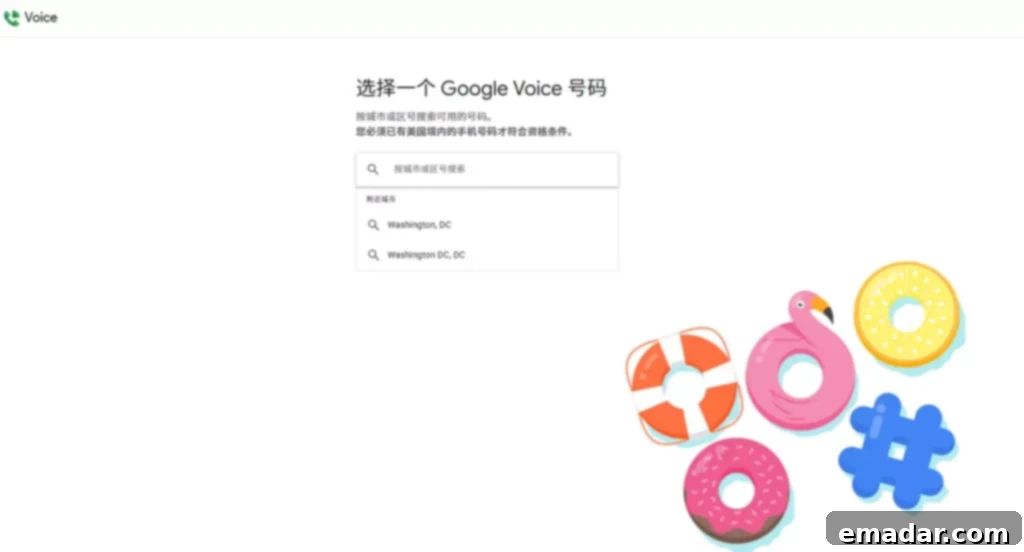
Before diving into the common challenges, it’s worth reiterating why Google Voice is such a valuable tool. For anyone involved in international business, online marketing, or simply maintaining a global digital presence, GV offers:
- Cost-Effective Communication: Make and receive calls and texts to and from the US and Canada for free, and make international calls at highly competitive rates.
- SMS Verification: Crucial for registering and verifying accounts on various international platforms, including social media, messaging apps (WhatsApp, Telegram), and online services that require a US phone number.
- Professional Image: Maintain a local US phone number, which can lend credibility to your business operations and make it easier for US-based clients or partners to reach you.
- Privacy and Security: Keep your personal number private by using your GV number for online registrations and communications, reducing spam and unwanted solicitations.
- Number Portability: Use your GV number across multiple devices, including smartphones, tablets, and computers, providing seamless communication flexibility.
Given these immense benefits, understanding and overcoming the registration hurdles becomes even more critical. Let’s delve into the specific pitfalls that often trip up aspiring Google Voice users.
❌ Pitfall One: The Phone Number Predicament – Not All US Numbers Are Created Equal
Many users, in their eagerness to acquire a Google Voice number, opt for readily available virtual numbers, only to be met with an immediate “This number is not available” message. The reason behind this is straightforward: Google has significantly tightened its detection mechanisms for virtual phone numbers. Most low-cost, easily accessible virtual number segments have long been flagged and blacklisted by Google’s sophisticated fraud detection algorithms.
Google’s primary goal is to prevent abuse, spam, and the creation of multiple fraudulent accounts. Virtual numbers, due to their nature, are often used for these purposes. When Google detects a number from a known virtual number provider, it automatically denies registration, regardless of the user’s legitimate intent. This stringent policy is a direct response to the widespread misuse of VoIP numbers for account verification on various platforms.
👉 Strategies to Sidestep This Pitfall:
- Prioritize Real Carrier Numbers: Whenever possible, aim to use a genuine US mobile number from a reputable carrier such as T-Mobile or AT&T. These numbers are intrinsically linked to real individuals and physical SIM cards, which significantly increases the success rate for Google Voice verification.
- High-Quality VoIP with Clean IP: If access to a physical US SIM card is not feasible, consider using a premium VoIP service that provides numbers from less-abused ranges. Crucially, pair this with a high-quality, dedicated proxy IP. Many successful cross-border operators leverage services like IPFLY’s US static residential IPs. This combination ensures that your registration environment appears clean and legitimate, minimizing the chances of triggering Google’s stringent risk control systems. A residential IP mimics a real home internet connection, making your digital footprint appear more authentic.
❌ Pitfall Two: The IP Environment Trap – Multi-User IPs and Triggering Risk Control
Your IP address is like your digital home address. When registering for Google Voice, an “unclean” IP environment is a major red flag for Google. This can manifest in several ways:
- Shared IP Addresses: If your IP address has been used by numerous other individuals, especially for suspicious activities or mass account registrations, it’s likely already on Google’s blacklist.
- Frequent IP Switching: Constantly changing your IP address during the registration process or shortly after can signal automated bot-like behavior, triggering immediate suspicion.
- Mismatched Account and Geographical Location: If your IP suggests one location (e.g., outside the US) while you’re attempting to register a US-specific service like Google Voice without proper masking, Google’s algorithms will detect this anomaly.
Google’s sophisticated algorithms are designed to detect unusual patterns. An IP address associated with suspicious activity or excessive usage will instantly flag your attempt, potentially leading to registration failure or an immediate account suspension. This is Google’s way of combating fraudulent activities and ensuring the integrity of its services.
👉 Strategies to Sidestep This Pitfall:
- Steer Clear of Free Proxies and VPNs: Free proxies and public VPNs are often overcrowded, suffer from poor performance, and are frequently abused. Their IP addresses are almost always blacklisted by major online services, including Google. Investing in a reliable solution is essential.
- Embrace Static Residential IPs: The most secure and reliable approach is to use a static residential IP. Unlike dynamic IPs or data center proxies, static residential IPs are assigned to real households and maintain a consistent, stable online identity. Services like IPFLY offer native US residential IPs that convincingly simulate a genuine user’s network connection. This significantly reduces the risk of triggering Google’s fraud detection, offering a dedicated and clean environment for your registration and subsequent use of Google Voice. A clean, dedicated IP ensures that your digital actions are not tainted by the activities of previous users.
❌ Pitfall Three: The Device and Cookie Conundrum – New Environment Equals High-Risk Operation
Counterintuitively, many users believe that registering Google Voice on a brand-new device or in incognito mode provides a “clean slate” and enhances success. However, this often backfires, making you more susceptible to Google’s scrutiny. From Google’s algorithmic perspective, an environment completely devoid of historical data, cookies, and browsing activity appears highly suspicious—akin to a “ghost account” or a bot. Google relies heavily on behavioral data and historical context to establish trust. A lack of this data immediately raises a red flag.
Google’s advanced machine learning models analyze various factors, including browser fingerprints, cookie history, and interaction patterns, to determine the legitimacy of a user. A completely fresh browser or incognito session lacks these trust signals, making it an easy target for automated fraud detection systems. This doesn’t mean you should use an old, cluttered browser, but rather one that exhibits normal user behavior.
👉 Strategies to Sidestep This Pitfall:
- “Warm Up” Your Browser Environment: Before attempting Google Voice registration, spend some time establishing a credible browsing history within your chosen browser. Engage in typical “human” activities: perform searches related to your interests, watch videos on YouTube, check emails on Gmail, or browse other Google services. This process builds a legitimate user profile, accumulating necessary cookies and demonstrating natural online behavior that Google expects from a real user.
- Maintain a Stable Operating Environment: Avoid frequently clearing your browser cookies or constantly switching between devices and browsers for Google Voice-related activities. Consistency is key. A stable operating environment, with a consistent user agent and device fingerprint, contributes to building a trustworthy profile in Google’s eyes.
❌ Pitfall Four: The Account Binding Blunder – Incorrect Information Leads to Instant Suspension
Many new users, once successfully registered with Google Voice, mistakenly believe their journey is over. They proceed to fill out arbitrary information or link their GV number haphazardly to various applications. This seemingly innocent action can quickly lead to Google flagging the account as suspicious, often resulting in suspension within days of activation. Google’s vigilance extends beyond registration; it continuously monitors account usage for patterns that might indicate fraudulent activity or policy violations.
Any inconsistencies in personal information or rapid, unusual binding to multiple, diverse platforms can trigger Google’s post-registration risk control. This is especially true if the provided information does not align with the perceived digital identity established during registration or if the usage patterns mimic those of spammers or fraudsters.
👉 Strategies to Sidestep This Pitfall:
- Provide Authentic and Consistent Information: During registration and any subsequent profile updates, ensure all basic information provided is truthful, consistent, and logically linked to your actual identity or the persona you are establishing. Avoid fabricating details or mixing disparate pieces of information.
- Gradual and Purposeful Usage: If you intend to use Google Voice for the long term, initiate its use on a small scale. Start by binding it to one or two primary applications that genuinely require a phone number. Allow some time to pass, establishing a pattern of normal, moderate usage, before gradually expanding its use to more applications. This gradual approach signals legitimate usage to Google’s monitoring systems.
V. Frequently Asked Questions (Q&A) About Google Voice Registration
Addressing common queries can further clarify the complexities of Google Voice acquisition and usage:
Q1: Can I successfully register for Google Voice using my domestic (non-US) network?
A: While theoretically possible, the success rate is remarkably low. Google’s geo-location detection will likely identify your origin as an “abnormal region” for a US-centric service, immediately raising a red flag. To significantly improve your chances, it is strongly recommended to use a high-quality overseas IP environment, ideally a US-based static residential proxy, to mask your true geographical location and appear as a legitimate US user.
Q2: I can receive verification codes, but why does Google Voice fail when I try to link it to banking apps or PayPal?
A: Many financial service platforms (banks, payment processors like PayPal) employ even stricter fraud detection measures than Google. They often specifically identify and flag Google Voice number segments as high-risk, primarily due to their association with virtual numbers and potential for abuse in financial transactions. While GV is excellent for general account registrations and communication, it is generally unsuitable and unreliable for core financial verifications or two-factor authentication on banking platforms. Always use a dedicated, personal mobile number for sensitive financial services.
Q3: Once successfully registered, can Google Voice be used stably for the long term?
A: Absolutely, yes. However, its long-term stability hinges entirely on your usage patterns. To ensure longevity, avoid abnormal behaviors such as frequent switching of login environments (IPs, devices), sudden mass registration of dozens of accounts, or engaging in spamming activities. Consistent, moderate, and “human-like” usage, coupled with a stable IP environment, is key to maintaining a healthy and active Google Voice number for years.
VI. Practical Insights and Proven Strategies from Experienced Users
Many cross-border sellers and digital entrepreneurs initially attempted Google Voice registration based purely on “luck,” encountering extremely high failure rates. Through trial and error, a consensus has emerged regarding a “stable strategy” that significantly boosts success and account longevity:
- Establish a Pristine Environment First: The foundation of successful registration is a stable, dedicated, and clean residential proxy IP, preferably a US fixed IP. This ensures that your digital footprint appears legitimate from the outset.
- Secure Reliable Phone Numbers: Always avoid generic virtual numbers from questionable providers. Opt for numbers that are as close to real physical carrier numbers as possible, or use high-quality VoIP numbers vetted for Google Voice compatibility.
- Adopt Natural Operating Practices: After registration, don’t immediately dive into heavy usage. Engage in normal internet activities to “warm up” the account and browser. Only then should you gradually proceed with binding it to various applications. This mimics the organic growth of a genuine user’s online presence.
Teams running extensive digital operations, such as managing TikTok matrices or independent e-commerce stores, often invest in premium IP resources specifically for Google Voice registration. Numerous reports indicate that using IPFLY’s US residential IPs in conjunction with GV registration leads to significantly higher success rates and account survival rates compared to relying on generic VPNs or free proxy services. The dedicated nature of these IPs provides an unparalleled level of authenticity and reduces the likelihood of detection by Google’s sophisticated fraud systems.
VII. Conclusion: Stop Stumbling, Master the Art of GV Registration
Acquiring a Google Voice number is not an enigmatic process; most failures stem from identifiable missteps related to the operating environment, the chosen phone number, and user behavior. By proactively understanding and avoiding these common pitfalls, successful registration becomes a much more attainable goal.
If you’re still grappling with registration failures, take a moment to re-evaluate your approach:
- Is your chosen phone number potentially from a “blacklisted segment”?
- Is your IP address a “public disguise” shared by countless others?
- Are your registration and subsequent actions overly “robotic” and unnatural?
Remember, the synergy of a clean environment, a reliable phone number, and meticulous operational details forms the bedrock of a stable Google Voice registration. On your cross-border journey, avoiding these common detours and securing a reliable GV number acts as an essential protective layer for your digital accounts. A clean digital environment naturally leads to stable and enduring accounts.
IPFLY – Your Dedicated Professional Proxy Service Provider for Cross-Border Operations:
- ✔ Global Coverage spanning over 190+ countries.
- ✔ Support for Static/Dynamic Residential Proxies + Native IPs + Data Center Proxies.
- ✔ Offers exclusive, pure IPs, ensuring dedicated use for each account.
- ✔ No logs, high anonymity, and seamless integration with fingerprint browsers.
- ✔ API support for effortless batch configuration and management.
👉 Claim Your Discount and Get Premium IPs Today!