
In today’s interconnected digital landscape, the need for advanced online tools has never been greater. For businesses and individuals navigating the complexities of the internet, residential proxies have emerged as an indispensable asset. Whether your goal is to conduct extensive market research, manage multiple e-commerce accounts, or access geo-restricted content, a deep understanding of residential proxies can fundamentally enhance your online operations and secure your digital footprint.
Decoding Residential Proxies: The Core Fundamentals
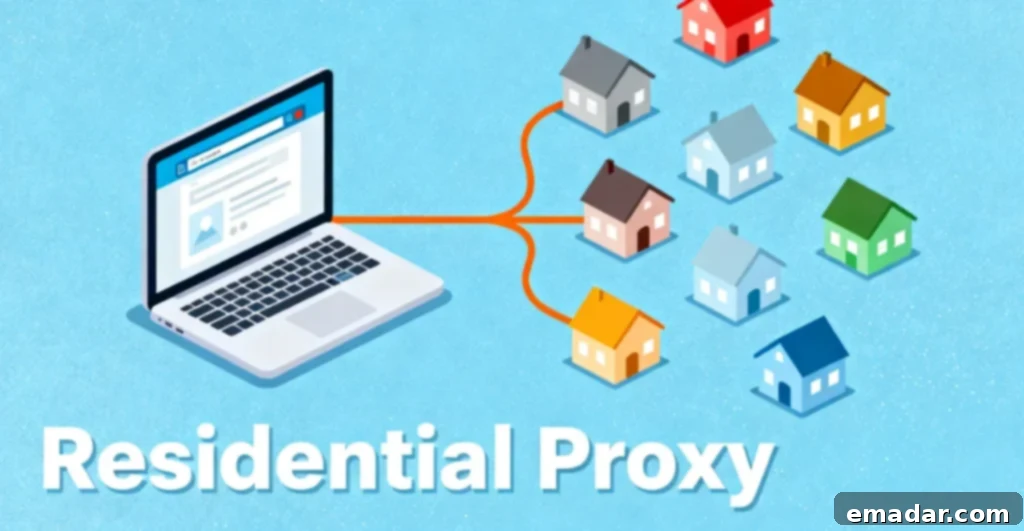
At its essence, a residential proxy acts as an intermediary server that skillfully routes your internet traffic through authentic IP addresses. These aren’t just any IP addresses; they are specifically assigned by Internet Service Providers (ISPs) to real, physical residential locations. This crucial distinction sets residential proxies apart from other proxy types, as they leverage genuine IP addresses associated with actual homes and apartments, effectively making your online presence indistinguishable from that of a regular household internet user.
When your connection is routed through a residential proxy, the websites you visit perceive the proxy’s residential IP address rather than your own. This mechanism creates a robust layer of separation, shielding your actual identity and location. Critically, it presents your connection as originating from a legitimate residential user, fostering trust and circumventing detection systems that flag traffic from data centers or commercial sources.
The fundamental differentiator of residential IPs lies in their origin. They are sourced directly from ISPs such as Comcast, Verizon, AT&T, or various local telecommunications companies that supply internet services to homes and businesses. These addresses are meticulously registered in global databases as belonging to residential areas, which is precisely why websites and online platforms accord them a different level of trust and scrutiny compared to other types of IP addresses.
Residential Proxies: A Clear Distinction from Other Proxy Solutions
To fully appreciate the power of residential proxies, it’s essential to understand how they stack up against other prevalent proxy types. The digital proxy landscape is diverse, each with its unique advantages and limitations.
- Data Center Proxies: These proxies originate from cloud hosting providers and large-scale server farms. While they boast impressive speeds and are often more cost-effective, their primary drawback is their easily identifiable nature. Websites can readily detect these IPs as non-residential traffic, frequently leading to restrictions or outright blocks on platforms with stringent security protocols and anti-bot measures. They are ideal for less sensitive tasks where IP origin isn’t critical, like general browsing or accessing public data.
- Mobile Proxies: Offering a high degree of legitimacy, mobile proxies route traffic through cellular networks, utilizing IP addresses assigned by mobile carriers to real mobile devices. Because they come from genuine mobile phones and tablets, they are incredibly trusted. However, their cost is typically higher, and connection speeds may be slower due to the inherent limitations and variable coverage of cellular networks. They are often favored for very sensitive social media management and mobile app testing.
- VPNs (Virtual Private Networks): A VPN encrypts your entire internet connection, channeling it through a remote server. While VPNs are primarily designed to enhance online privacy and security, most consumer VPN services rely on data center IPs. This means websites can still detect and potentially block VPN traffic. Furthermore, VPNs typically affect all internet traffic on your device, whereas proxies offer more granular control, allowing configuration on a per-application or per-browser basis.
Residential proxies expertly strike a crucial balance. They provide the unparalleled legitimacy of real user IP addresses combined with the flexible configuration options typical of proxy solutions. This unique combination makes them significantly harder for sophisticated website security systems to detect as proxies compared to their data center counterparts, resulting in substantially higher success rates for accessing protected or geo-restricted content and maintaining a stealthy online presence.
The Underlying Reasons Websites Favor Residential IPs
Websites and online platforms employ sophisticated security policies that are heavily influenced by the origin of an IP address. When a residential IP accesses a site, security systems are more likely to recognize it as potentially legitimate user traffic. This intrinsic trust is built upon the typical browsing patterns observed from residential addresses, which generally exhibit diverse, human-like behavior across various websites and over extended periods. This organic behavior is the hallmark of genuine users.
Conversely, data center IPs often display patterns characteristic of automated bots, web scrapers, and other non-human traffic. Such patterns might include generating thousands of rapid-fire requests within brief timeframes or accessing unusual combinations of pages in quick succession. This atypical behavior immediately triggers advanced security systems specifically designed to safeguard against malicious activities like data harvesting, account fraud, credential stuffing, and Distributed Denial of Service (DDoS) attacks.
Many major online platforms, including popular social media networks, expansive e-commerce marketplaces, and premium streaming services, actively maintain extensive databases of known data center IP ranges. Traffic originating from these blacklisted ranges faces heightened scrutiny, aggressive rate limiting, or even outright blocking. A significant advantage of residential IPs is their infrequent appearance on these blacklists, which ensures smoother, uninterrupted access.
This trust differential becomes acutely critical for activities that involve account access, sensitive data submission, or transaction processing. Attempts to create new accounts, log in from previously unseen locations, or make purchases using data center IPs frequently trigger additional verification steps, CAPTCHAs, or even result in temporary account suspensions. Residential IPs, by virtue of their perceived legitimacy, generate far fewer security alerts, streamlining operations and improving user experience.
Diverse Applications: Common Use Cases for Residential Proxies
The versatility and inherent trustworthiness of residential proxies make them invaluable tools across a multitude of online activities. Their ability to mimic genuine user behavior opens doors that would otherwise be closed to non-residential IP addresses.
- Cross-Border E-Commerce Operations: Online sellers, agencies managing multiple marketplace accounts, or businesses aiming to access region-specific e-commerce platforms derive substantial benefits from residential proxies. Leading platforms such as Amazon, eBay, Shopify, and various regional marketplaces enforce strict policies against managing multiple accounts from a single IP address. By utilizing residential proxies sourced from different geographic locations, legitimate multi-account management becomes feasible, allowing businesses to appear as distinct individual users, thereby avoiding account linking, verification challenges, and potential bans. For instance, an e-commerce brand targeting both the US and European markets can use residential IPs from each region to test localized pricing, product availability, and customer experience without raising flags.
- Market Research and Price Monitoring: Companies dedicated to monitoring competitor pricing, tracking product trends, or conducting comprehensive market research often encounter significant obstacles when websites detect automated data collection. E-commerce sites, in particular, frequently display varying prices and product availability based on a visitor’s geographic location and perceived browsing patterns. Residential proxies empower businesses to conduct accurate price monitoring and market analysis by accessing websites as regular consumers would. This reveals true market pricing, regional promotions, and localized inventory, providing invaluable insights that are untainted by anti-bot detection systems. Furthermore, they facilitate the monitoring of localized advertising campaigns and consumer sentiment analysis.
- Social Media Management: For social media marketers, agencies, or individuals managing multiple social media accounts for clients or brands, meticulous IP management is paramount. Platforms like Instagram, Facebook, Twitter, and LinkedIn vigilantly monitor for suspicious multi-account activity originating from a single IP address, which can lead to shadow-banning or permanent account bans. Social media managers leverage residential proxies to assign a unique, trusted IP to each client account or profile, significantly reducing the risk of platform flags, improving engagement consistency, and ensuring the long-term viability of their social media strategies.
- Content Access and Verification: Streaming services, news portals, online gaming platforms, and various content providers frequently implement geo-restrictions, limiting access based on a user’s geographic location. Residential proxies from specific regions enable legitimate access to geo-locked content, allowing users to watch region-exclusive shows, read local news, or verify how content appears to audiences in different countries. This capability is invaluable for content creators, digital marketers, media professionals, and researchers needing to understand global content distribution and user experience. They also play a critical role in ad verification, ensuring advertisements are displayed correctly to target audiences in specific locations.
- Sneaker and Limited Release Purchases: The fiercely competitive world of limited-edition product releases, particularly in the sneaker and fashion industries, demands lightning-fast, highly reliable connections that can evade sophisticated bot detection systems. Retailers deploy advanced anti-bot measures designed to block data center IPs and automated traffic. Residential proxies provide the necessary legitimacy, allowing buyers to successfully purchase limited releases without triggering security systems, thus leveling the playing field against professional bots and ensuring a fair chance at securing highly sought-after items.
- Ad Verification and Brand Protection: Beyond content access, residential proxies are crucial for advertisers to verify that their ads are displayed correctly to the intended audience in various geographical locations. This helps prevent ad fraud and ensures campaign effectiveness. For brand protection, companies use residential proxies to monitor for counterfeit products, trademark infringements, and unauthorized sellers on global marketplaces, appearing as local customers to gather accurate intelligence.
- SEO Monitoring (SERP Tracking): SEO professionals rely on residential proxies to accurately track Search Engine Results Page (SERP) rankings from different geographical locations and for various user types. Search engines personalize results based on location, browsing history, and other factors. Residential proxies allow SEOs to bypass this personalization and gather objective data on how their websites rank for target keywords in different markets, providing a true picture of their global SEO performance.
Pricing Structures and Investment Considerations
Residential proxy pricing typically follows several distinct models, each suited to different usage patterns and budget requirements. Understanding these models is key to optimizing your investment:
- Pay-per-IP: This model charges you for each unique IP address accessed or for concurrent connections. It can be cost-effective for tasks requiring a specific number of persistent IPs.
- Pay-per-GB (Bandwidth-based): Billing is based on the volume of data (bandwidth) consumed. This model is highly suitable for users with variable or high traffic volumes, especially for extensive web scraping or data collection tasks where the amount of data transferred is the primary cost driver.
- Subscription Plans: These plans offer fixed monthly access to a designated pool of proxies, often coming with unlimited bandwidth or generous usage limits. They are ideal for consistent, ongoing operations like account management or long-term monitoring.
While often more expensive than data center proxies, entry-level residential proxies can start around $3 for basic dynamic options, $4-7 for data center alternatives, and $7+ for static residential connections, depending on the provider and features. The enhanced success rates, significantly reduced blocking, and the ability to perform sensitive tasks justify the increased investment for serious applications. Reputable providers like IPFLY offer competitive pricing, with dynamic residential proxies starting from $1, static residential options from $5, and data center proxies from $4, making quality IP resources accessible for various budgets and operational scales.
The cost-effectiveness of a residential proxy service is deeply intertwined with your specific operational needs. High-volume data collection might find bandwidth-based pricing most economical, whereas account management operations demanding consistent identity could benefit more from fixed IP subscriptions or long-session dynamic proxies. Carefully evaluating your projected usage and the criticality of proxy legitimacy will help you identify the most economical and effective approach.
Setting Up and Optimizing Residential Proxies for Performance
The configuration process for residential proxies can vary based on your chosen application, browser, or proxy provider. However, most services offer flexible connection methods to accommodate diverse user needs, including standard HTTP/HTTPS proxies, the more secure SOCKS5 protocol, or advanced API access for programmatic integration. The basic setup generally involves inputting the proxy server address, a specific port number, and, if required, authentication credentials (username and password) into your application’s or browser’s network settings.
For browser-centric activities, numerous proxy extensions are available that streamline the setup process, or you can manually configure proxy settings directly within your browser (e.g., Chrome, Firefox, Edge). Applications commonly used for web scraping, automation, or specialized data collection typically feature built-in proxy configuration options. For mobile applications, setup might involve system-level proxy settings on your device or the use of specialized third-party proxy management apps.
Crucially, testing your configuration is a vital step to ensure everything is functioning correctly. Simple yet effective tests include visiting “what is my IP” websites to verify your visible IP address, confirming that its geographic location aligns with your expectations, and, most importantly, ensuring that your target websites or applications behave as intended when accessed through the proxy.
Proxy rotation strategies are integral to maintaining anonymity and avoiding detection. The optimal strategy depends heavily on your use case. Frequent rotation (e.g., per request or every few minutes) is ideal for high-volume data collection activities, as it distributes requests across a vast number of IPs, significantly reducing the risk of detection and IP bans. Conversely, longer session durations or the use of static residential IPs are more suitable for account-based activities that require a consistent identity over time, such as social media account management or maintaining login sessions on e-commerce platforms. Implementing intelligent rotation, combined with realistic user-agent strings and browser fingerprinting, further enhances stealth.
Choosing the Right Residential Proxy Provider: A Critical Decision
The selection of a residential proxy provider is a pivotal decision that directly impacts the success and efficiency of your online operations. A thorough evaluation should encompass several key criteria:
- Reputation and User Reviews: Always prioritize providers with a strong industry reputation and positive reviews from actual users. This provides invaluable insight into their reliability, uptime, and overall customer satisfaction.
- Transparent Pricing: Look for providers with clear, transparent pricing models devoid of hidden fees. Understanding the cost structure upfront prevents unexpected expenses.
- Responsive Customer Support: Reliable and responsive customer support is crucial. They should be readily available to assist with configuration issues, technical problems, or any service-related inquiries quickly and efficiently.
- Quality and Size of IP Pool: The quality and diversity of the IP pool are often more important than sheer quantity. Providers offering millions of well-maintained residential IPs across a broad spectrum of diverse geographic locations (countries, cities, ISPs) typically deliver superior results. Services like IPFLY, for instance, maintain over 90 million residential IPs covering 190+ countries, offering the scale, diversity, and granular geo-targeting capabilities required for the most demanding applications.
- Uptime and Speed: A high uptime guarantee ensures consistent service availability. Similarly, evaluate the average connection speeds and latency offered, as these directly impact the efficiency of your tasks.
- Types of Proxies Offered: Ensure the provider offers the specific types of residential proxies you need (e.g., dynamic rotating, static/sticky, dedicated).
- Ethical Sourcing: Investigate how the provider acquires its residential IPs. Ethical sourcing practices contribute to the long-term stability and integrity of the IP network.
Effective Troubleshooting for Common Proxy Challenges
Even with the most reliable residential proxies, occasional issues can arise. Knowing how to troubleshoot them efficiently can save valuable time and prevent operational disruptions.
- Connection Failures: These often stem from incorrect configuration, expired authentication credentials, or temporary service interruptions from the provider. Begin by meticulously verifying your proxy settings, checking your account status with the provider, and attempting to test the proxy with a different application or browser to isolate the problem. If specific websites are blocking your proxies, rotating to fresh IP addresses from your pool often resolves the issue.
- Slow Speeds: Sub-optimal speeds might indicate network congestion, excessively long routing paths (the distance between your location, the proxy, and the target website), or limitations in the provider’s infrastructure. To mitigate this, select proxy locations that are geographically closer to your target websites. Additionally, switching between different IPs within your pool can help identify whether specific addresses are experiencing performance bottlenecks.
- IP Bans or Blocks: Despite the inherent legitimacy of residential proxies, sustained overuse of particular IP addresses or highly suspicious activity patterns can still lead to temporary bans or blocks. To counter this, implement more aggressive IP rotation strategies, introduce more natural-looking delays between requests, vary your access patterns to mimic human behavior more closely, and ensure your user-agent strings are rotating. If an IP gets banned, immediately switch to a new one from your pool.
Conclusion: The Enduring Value of Residential Proxies in the Digital Age
In conclusion, a comprehensive understanding of the distinct advantages of residential proxies over other proxy types, combined with a clear grasp of their myriad use cases, is paramount for anyone operating in the contemporary digital arena. The judicious selection of a high-quality residential proxy provider is equally critical to ensuring the seamless execution of your online strategies.
Whether your objectives involve expertly managing cross-border e-commerce operations, conducting in-depth market research, safeguarding your brand, or accessing vital region-specific content, residential proxies offer the unparalleled reliability, legitimacy, and anonymity required for sustained success. The investment in premium residential proxy services consistently yields significant dividends through higher success rates, a drastic reduction in IP blocking, and markedly more efficient and secure operations compared to alternative, less robust approaches. As online platforms continue to fortify their security measures and anti-bot defenses, residential proxies will undeniably remain an essential and indispensable tool for legitimate users and businesses requiring reliable, geographically diverse, and highly trusted internet access.