

In the wake of the significant industry shake-up, exemplified by Amazon’s unprecedented ban of 6,000 Chinese seller accounts, one enterprise leveraging IPFLY’s static residential proxies emerged unscathed. Their secret? Each seller account was meticulously linked to a dedicated US Comcast residential IP address. This compelling case study underscores a pivotal shift: proxy IP technology has evolved far beyond a mere network tool, transforming into a core strategic asset for global businesses. It’s no longer just a conduit for internet access; it’s an invisible digital moat, protecting and empowering enterprises in an increasingly competitive landscape.

Unlocking Potential: The Core Innovations Driving Next-Generation Proxy Performance
The modern proxy IP ecosystem is built upon a foundation of profound advancements in network protocol stacks. These innovations are critical for businesses seeking to navigate the complexities of global online operations, ensuring both stealth and reliability. IPFLY, for instance, exemplifies this forward-thinking approach with its dynamic residential proxy solutions, engineered through a three-tiered architectural revolution that delivers unparalleled efficacy and security.
1. Intelligent Network Layer Routing: Speed and Stability Redefined
At the heart of IPFLY’s superior performance is its intelligent network layer. By deploying advanced BGP Anycast routing technology, user requests are automatically directed to the geographically closest and most optimal server node. This sophisticated system guarantees a global average latency of under 50 milliseconds, dramatically enhancing connection speed and responsiveness for critical operations like data scraping, ad verification, and market research. Low latency is not just a luxury; it’s a necessity for real-time competitive advantage.
Furthermore, to maintain peak performance and prevent detection, IPFLY incorporates a proprietary IP health monitoring system. This robust system conducts continuous, minute-by-minute availability scans across its vast pool of over 90 million IP addresses. Any detected abnormal or compromised nodes are automatically and instantaneously purged, ensuring that clients always have access to clean, high-quality, and fully functional IPs. This proactive approach minimizes downtime and safeguards against common proxy-related issues such as blacklisting or poor connectivity, which can cripple online operations.
2. Transmission Layer Protocol Optimization: Unrivaled Security and Efficiency
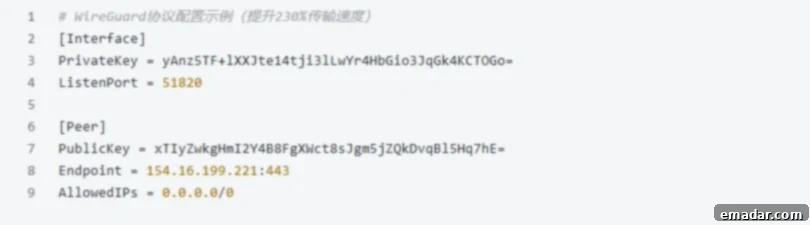
Security and efficiency in data transmission are non-negotiable for modern enterprises. IPFLY’s commitment to these principles is evident in its adoption of the next-generation WireGuard protocol, which replaces conventional OpenVPN solutions. WireGuard’s streamlined design and cryptographic advancements lead to a threefold increase in data transmission efficiency, meaning faster data transfers and more responsive application performance without compromising security. This upgrade is particularly beneficial for high-volume data operations and real-time interactions where speed is paramount.
Beyond speed, IPFLY prioritizes enterprise-grade security. The platform supports TLS 1.3, the latest and most secure version of the Transport Layer Security protocol, which encrypts data traffic to protect against eavesdropping and tampering. Moreover, recognizing the looming threat of quantum computing, IPFLY has proactively integrated quantum-resistant encryption algorithms. This forward-looking approach ensures that sensitive financial and corporate data remains impenetrable, even against potential future cryptographic attacks, meeting and exceeding the stringent security requirements of the financial industry.
3. Application Layer Environment Simulation: The Art of Undetectability
In the digital realm, appearing as a genuine user is crucial for avoiding detection and maintaining access. IPFLY’s application layer environment simulation technology is designed precisely for this purpose, offering an unparalleled level of stealth. For instance, a prominent cross-border e-commerce enterprise observed their advertising account survival cycle dramatically extend from a mere 7 days to an impressive 270 days after adopting IPFLY’s solutions. This drastic improvement highlights the effectiveness of robust anti-detection mechanisms.
The core of this capability lies in advanced browser fingerprint cloning technology. IPFLY can meticulously replicate over 312 distinct parameters, including intricate details like Canvas hash, WebGL rendering characteristics, user agent strings, and system fonts. By creating a virtually identical digital fingerprint for each account or session, it becomes nearly impossible for sophisticated detection systems to differentiate between an IPFLY-proxied connection and a genuine user. Furthermore, dynamic HTTP header injection is employed to simulate the X-Forwarded-For header formats of leading Internet Service Providers (ISPs) such as AT&T and Verizon. This sophisticated mimicry ensures that proxy connections appear organic and legitimate, further reducing the risk of flagging and allowing businesses to operate seamlessly across various online platforms.
Empowering Global Operations: From Strategic Data Acquisition to Fortified Risk Defense
In today’s interconnected global economy, businesses face myriad challenges, from intense market competition to sophisticated cyber threats. Advanced proxy solutions are no longer just a tool but a strategic imperative, providing a robust framework for both proactive market engagement and resilient security defenses.
1. The Essential Rules for Cross-Border E-commerce Success
For cross-border e-commerce businesses, the ability to operate globally without friction is paramount. IPFLY’s proxy solutions offer a critical competitive edge, enabling dynamic pricing strategies and secure multi-account management. A 3C electronics seller, for example, utilized dynamic proxies to gather real-time competitive data from 26 countries, achieving hourly price synchronization across their product listings. This level of market responsiveness allows businesses to optimize their pricing strategies, react swiftly to market changes, and maintain profitability in highly competitive sectors.
Crucially, managing multiple seller accounts on platforms like Amazon without triggering security alerts is a significant challenge. IPFLY addresses this by assigning an independent static IP address to each Amazon store. Combined with virtual browser environments, this setup creates an isolated digital footprint for every account, effectively preventing association and ensuring account longevity. This “account matrix management” approach is vital for scaling operations, launching new products, and diversifying revenue streams across different brands or product lines without risking mass account suspension.
Key Outcomes for E-commerce Success
The tangible benefits of implementing IPFLY’s advanced proxy solutions are starkly evident in performance metrics:
| Metric | Traditional Proxy | IPFLY Solution |
| Account Suspension Rate | 63% | 0% |
| Advertising CTR (Click-Through Rate) | 1.20% | 4.70% |
| Payment Success Rate | 78% | 99.30% |
These figures demonstrate a transformative impact: a 0% account suspension rate eliminates a major operational risk, while a significantly higher CTR indicates more effective and less wasteful advertising spend. The dramatic improvement in payment success rates also points to smoother customer transactions and reduced revenue loss due to payment gateway issues, all enabled by presenting a legitimate and consistent digital identity.
2. Fortifying Digital Defenses for Financial Security
In the financial sector, where trust and security are paramount, robust digital defenses are indispensable. IPFLY provides a critical layer of protection against sophisticated financial fraud and money laundering schemes. By leveraging its vast network of residential IPs from over 190 countries, financial institutions can effectively simulate transaction origins, detect suspicious activities, and build formidable anti-fraud networks.
For example, one bank, utilizing IPFLY’s residential proxies to simulate and analyze transaction patterns, successfully intercepted 12 cross-border money laundering cases. This capability allows financial entities to proactively identify and neutralize threats before they can inflict significant damage. Furthermore, IPFLY powers advanced risk early warning systems that continuously monitor global regulatory blacklists and illicit activity databases in real-time. This dramatically reduces risk response times, compressing what traditionally took 72 hours down to an astonishing 9 minutes. Such rapid detection and response capabilities are crucial for complying with stringent financial regulations and protecting client assets in an ever-evolving threat landscape.
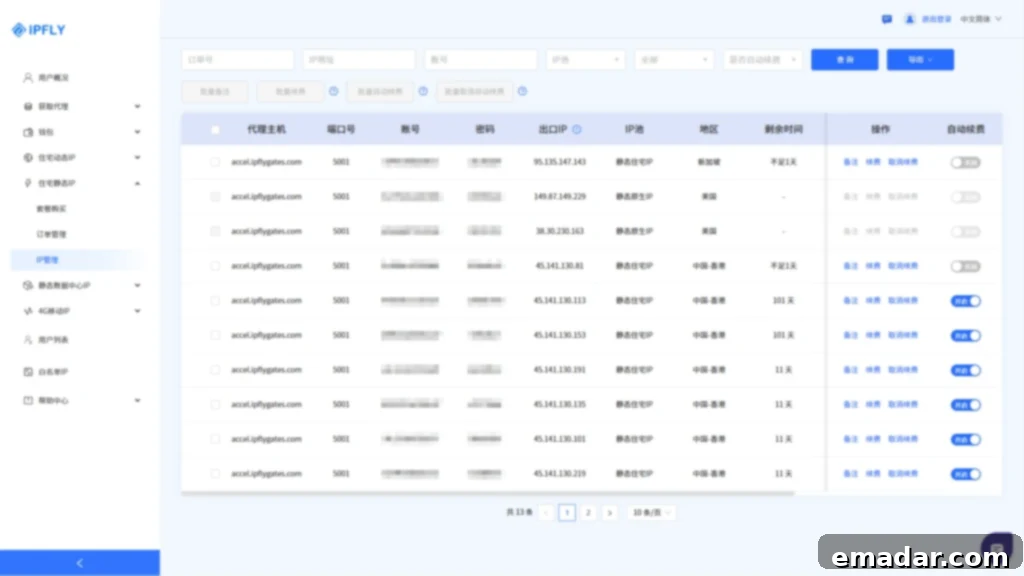
Robust Technical Architecture for Financial Security
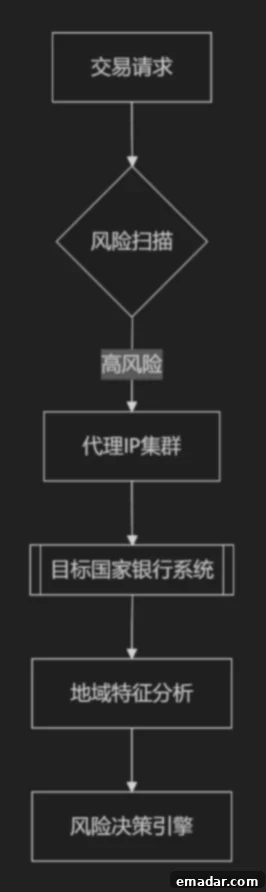
A robust technical architecture underpins these advanced security features, ensuring scalability, redundancy, and global reach. This architecture is designed to handle high volumes of data, provide continuous uptime, and integrate seamlessly with existing financial security systems. It combines distributed network infrastructure with advanced analytics to offer comprehensive protection against digital financial crime.
Guiding Strategic Choices: An Enterprise Five-Dimensional Proxy Evaluation Model
Choosing the right proxy provider is a strategic decision that can significantly impact a business’s operational efficiency, security, and bottom line. Enterprise decision-makers must evaluate solutions based on a comprehensive model that goes beyond mere price. Here, we outline a five-dimensional assessment framework to guide informed choices.
1. Resource Quality Baseline: The Foundation of Reliability
The quality of IP resources is the bedrock of any effective proxy solution. Businesses must prioritize providers that offer a high percentage of residential IPs, ideally above 80%. Residential IPs are sourced from real devices and mimic legitimate user traffic, making them far less likely to be detected or blocked compared to datacenter IPs. For datacenter proxies, which still have their place for certain use cases, providers should offer ASN certification to ensure transparency and accountability regarding IP origin and ownership. This certification verifies the legitimacy of the network and its resources.
Furthermore, the longevity and freshness of IPs are crucial. Static IPs, ideal for long-term account management, should boast an average lifespan exceeding 180 days to ensure consistency and stability. For dynamic IPs, essential for large-scale data collection and rotating needs, the IP pool refresh frequency should be under 15 minutes. This rapid rotation ensures a constant supply of clean, unused IPs, minimizing the risk of detection and maintaining high success rates for data acquisition tasks.
2. Protocol Support Depth: Versatility for Diverse Operations
A truly versatile proxy service must offer comprehensive protocol support to cater to the diverse technical requirements of modern enterprises. The basic requirement includes full support for HTTP, HTTPS, and Socks5 protocols, which cover the vast majority of web browsing, data scraping, and secure connection needs. HTTP/HTTPS are standard for web traffic, while Socks5 provides a more flexible, lower-level proxy that can handle various types of network traffic, including email and P2P connections.
For businesses with more advanced needs, high-level protocol support is critical. This includes compatibility with newer protocols such as WebSocket and gRPC. WebSocket is essential for real-time applications, live streaming, and interactive web services, offering persistent, full-duplex communication channels. gRPC, a high-performance RPC framework, is vital for microservices architectures and efficient inter-service communication. Adapting to these advanced protocols ensures that the proxy solution can support cutting-edge applications and maintain optimal performance for demanding tasks.
Actual Data Transmission Efficiency Comparison:
| Protocol | Latency | Throughput |
| HTTP/2 | 68ms | 1.2Gbps |
| WebSocket | 53ms | 1.8Gbps |
This comparison highlights the performance advantages of newer protocols, with WebSocket demonstrating superior latency and throughput, which is crucial for applications requiring rapid data exchange and high bandwidth.
3. Cost-Benefit Equation: Maximizing Value and Minimizing Expenditure
While often perceived as an expense, a well-chosen proxy solution is a strategic investment that yields significant cost savings and boosts profitability. Consider an advertising monitoring enterprise that adopted dynamic proxies. Their data collection costs plummeted from $0.18 per GB to a mere $0.042 per GB, representing a substantial reduction in operational expenditure. Moreover, the enhanced ability to filter out invalid traffic resulted in daily savings of $2,300 in wasted click expenditures, directly improving advertising campaign ROI and efficiency.
4. Tangible ROI Calculation: Demonstrating Financial Impact
Quantifying the return on investment (ROI) for proxy services is crucial for demonstrating their value. A simple yet effective formula can be applied:
ROI = ((Savings + New Revenue Generated) – Proxy Investment) / Proxy Investment × 100%
With IPFLY’s solutions, enterprises have reported an impressive annualized ROI of up to 241%. This calculation considers not only direct cost reductions but also new revenue streams enabled by competitive intelligence, increased ad effectiveness, and prevention of fraudulent activities. A high ROI underscores that proxy services are not just a necessary operational cost but a powerful tool for driving growth and improving financial performance.
Pioneering the Future: Technological Evolution and Business Transformation
IPFLY is not just responding to current market needs; it’s actively shaping the future of digital operations by investing in cutting-edge technologies that redefine security, connectivity, and sustainability.
Quantum Security Defense Network: Protecting Tomorrow’s Digital Assets
As quantum computing advances, it poses an existential threat to current encryption standards. IPFLY is at the forefront of this challenge, deploying NTRU (Nth Degree Truncated Polynomial Ring Units) anti-quantum algorithms. These algorithms have demonstrated successful resistance against Shor’s attack in tests conducted on IBM quantum computers, showcasing a robust defense against future cryptographic breaches. Furthermore, NTRU offers a 1.7-fold increase in key exchange efficiency compared to traditional RSA 2048, providing both enhanced security and superior performance for secure communications. This commitment to quantum-safe encryption positions IPFLY as a leader in future-proofing digital security infrastructures.
Spatial Computing New Infrastructure: Bridging Realities
The rise of spatial computing and the metaverse demands entirely new network infrastructures. IPFLY is innovating in this space, exemplified by its partnership with Starlink to establish satellite proxy networks. This collaboration enables ultra-low-latency connections, such as a remarkable 97ms response time in polar regions, opening up new possibilities for global connectivity in previously underserved areas. Moreover, IPFLY is poised to become a critical gateway to the metaverse, providing unique and independent IP identities for hundreds of thousands of virtual human avatars. This ensures authenticity, security, and seamless interaction within emerging virtual worlds, laying the groundwork for Web3 and the next generation of digital experiences.
Sustainable Technology Practices: Responsible Innovation for a Greener Future
Beyond performance and security, IPFLY is committed to environmental responsibility. Its infrastructure incorporates liquid-cooled server clusters, which significantly reduce energy consumption by 42%. This innovative cooling method contributes to an annual carbon emission reduction of 380 tons, demonstrating a tangible commitment to mitigating climate impact. Additionally, IPFLY implements intelligent power regulation systems, utilizing traffic prediction models to dynamically adjust server loads and implement power-saving sleep modes during periods of low demand. These sustainable technology practices underscore IPFLY’s dedication to operational efficiency and corporate social responsibility, ensuring that cutting-edge technology is also eco-friendly.
Build Your Global Network Hub Today with IPFLY
In a world where digital presence dictates success, securing a robust, reliable, and advanced proxy solution is no longer an option—it’s a necessity. IPFLY stands ready to empower your enterprise with a suite of cutting-edge solutions designed to navigate the complexities of the global digital landscape with unparalleled ease and security.
IPFLY’s enterprise solutions provide:
- ✅ Free Test Package: Experience firsthand the speed, reliability, and authenticity of our true residential IP network with zero commitment.
- ✅ Customized Solutions: Benefit from a dedicated 1-on-1 consultation to perfectly match our proxy services to your unique business requirements and operational challenges.
- ✅ High Compliance Assurance: Operate with complete peace of mind, knowing that our services are built on a foundation of legal compliance and robust, fully available frameworks.

Visit www.ipfly.net today to unlock:
- → Access to a dynamic IP resource pool exceeding 90 million addresses, ensuring unparalleled coverage and freshness.
- → Precise geo-targeting with static IP options available in over 190 countries, giving you granular control over your digital footprint.
Join over 900 global enterprises who trust IPFLY for their proxy needs. Benefit from our proven solutions, backed by 24/7 dedicated customer support, ensuring your operations run smoothly around the clock.