
For individuals and businesses navigating the complex waters of cross-border operations and global expansion, proxies have become an indispensable tool. They empower us to transcend geographical barriers, facilitate rapid information exchange, and ensure seamless business integration across diverse markets. However, the world of proxy servers is not monolithic. Different types of proxies are designed for specific tasks and excel in particular operational scenarios. Understanding when to deploy a static proxy versus a dynamic proxy is not merely a technical choice but a strategic decision crucial for success, especially for newcomers entering the international arena.
Understanding Static and Dynamic Proxies
To effectively leverage proxy technology, it’s essential to first grasp the fundamental differences between static and dynamic proxies and how their inherent characteristics influence their utility in various business contexts.
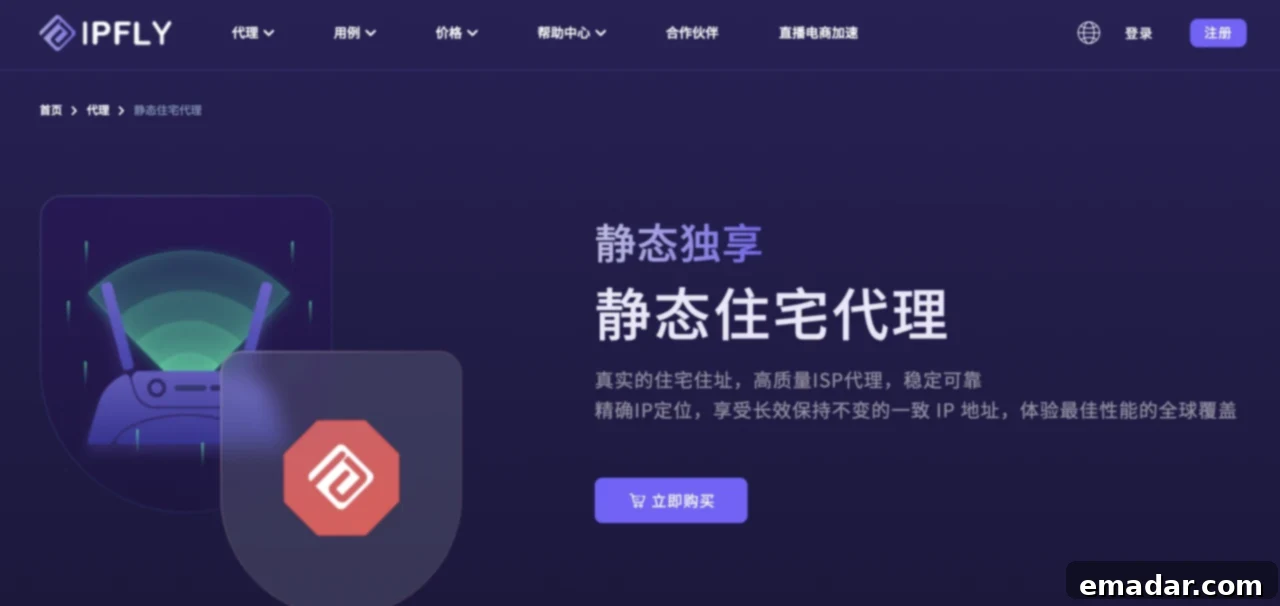
- 1. Static Proxies (Fixed IP Proxies): A static proxy, often referred to as a dedicated or fixed IP proxy, provides users with a stable and unchanging IP address over a specific, extended period. This means your online identity, as perceived by websites and online services, remains consistent. These proxies offer enhanced security and anonymity by masking your real IP while presenting a persistent digital footprint. They are typically sourced from data centers, providing high-speed connections and reliability, or from residential IPs that are assigned to a single user for an extended duration. The primary advantage lies in their stability, making them ideal for tasks requiring a consistent online presence and authentication.
- 2. Dynamic Proxies (Rotating IP Proxies): In contrast, a dynamic proxy, also known as a rotating or changing IP proxy, automatically rotates its IP address at predetermined intervals or under specific conditions. This rotation can occur every few minutes, after each request, or upon encountering certain obstacles. These IP addresses are often dynamically allocated by Internet Service Providers (ISPs) or managed by sophisticated proxy networks, offering a fresh IP address with each connection or after a short period. This continuous change in IP identity is a powerful feature, allowing users to mimic a large number of unique visitors from diverse geographical locations, thereby avoiding detection and bypass rate limits or blocks.
Strategic Applications of Static Proxies
Static proxies are invaluable when consistent identity and stability are paramount. Their fixed IP address provides a predictable and reliable online presence, which is crucial for sensitive operations.
- 1. Social Media Management: For businesses managing multiple social media accounts or engaging in brand building across platforms like Facebook, Instagram, Twitter, or LinkedIn, a static proxy is indispensable. By assigning a consistent, unique IP address to each social media account or group of accounts, operators can effectively monitor and manage them without triggering security flags or suspicious activity alerts. This stability significantly reduces the risk of account suspension, enhances account authenticity, and supports crucial activities such as account warming and gradual growth, ultimately boosting account weight and stability within the platform’s algorithms. Maintaining a consistent IP address for an extended period signals legitimate user behavior, fostering trust with social media networks.
- 2. Website Administration and Management: Website administrators and webmasters benefit immensely from static proxies. When performing administrative tasks such as accessing content management systems (CMS), monitoring website uptime, debugging, or managing server configurations, a consistent IP address ensures uninterrupted access and a stable operational identity. This consistency minimizes the risk of being locked out or encountering security challenges that could arise from frequently changing IP addresses, which some systems might interpret as unauthorized access attempts. Furthermore, for websites with region-specific content or services, a static proxy from a particular geographic location allows administrators to consistently view and manage the site as a local user would, ensuring accuracy and performance.
- 3. Targeted Advertising Campaigns: In the realm of digital advertising, precise geographical targeting is key to maximizing return on investment. Static proxies enable advertisers to establish a stable and identifiable presence in specific target markets. By using a static IP address localized to a particular country or region, businesses can more accurately deploy and test advertising campaigns, ensuring that marketing content is delivered precisely to the intended local audience. This precision enhances the relevance of ads, improves click-through rates, and optimizes overall advertising effectiveness and efficiency, allowing for granular control over audience segmentation and localized messaging. This also aids in competitive analysis, allowing businesses to monitor competitor ads as they appear in specific regions.
- 4. Cross-Border E-commerce Operations: E-commerce businesses operating multiple online stores or managing different product lines across various marketplaces often face challenges related to IP association and account linking. A static proxy provides each e-commerce store or seller account with a unique and fixed IP address, significantly reducing the risk of store association, account bans, or other punitive measures imposed by platforms that scrutinize IP consistency. Furthermore, static proxies facilitate long-term, stable targeting to specific consumer markets, enabling more effective localization strategies, differentiated pricing, and tailored product offerings. This allows businesses to monitor local pricing, manage inventory specific to a region, and ensure a seamless customer experience, all while maintaining a secure and independent digital presence for each entity.
Versatile Applications of Dynamic Proxies
Dynamic proxies are the preferred choice when the goal is to appear as multiple different users from various locations, bypassing restrictions and gathering extensive data without detection.
- 1. Large-Scale Data Collection and Web Scraping: For businesses that rely on gathering vast amounts of public data from websites, such as market trends, competitor pricing, product information, or news aggregation, dynamic proxies are indispensable. Continuously accessing websites from the same IP address quickly leads to rate limits, CAPTCHAs, or outright IP bans. Dynamic proxies, by constantly rotating IP addresses, allow data collection tools to simulate numerous individual users, effectively bypassing these restrictions. This capability is crucial for efficient and comprehensive web scraping, enabling businesses to collect extensive datasets without interruption, ensuring the objectivity and freshness of their market intelligence. The diversity of IPs prevents the target website from identifying and blocking the scraping activity.
- 2. SEO Monitoring and Auditing: Search Engine Optimization (SEO) professionals require an unbiased view of search engine results pages (SERPs) across different geographic locations and user contexts. Using a dynamic proxy allows SEO tools to perform keyword ranking checks, analyze competitor strategies, and audit website performance from various regional perspectives without being influenced by past search history or personal IP location. Each request can be made from a different IP, ensuring that the collected SEO data accurately reflects what a typical user in that specific region would see. This enhances the objectivity of SEO results and significantly improves the efficiency and accuracy of SEO auditing efforts, allowing for precise adjustments to global and local SEO strategies.
- 3. Comprehensive Market Research: Whether a corporate entity is gathering extensive market data or an individual user is comparing product prices across different vendors or regions, relying on a single IP address can yield incomplete or biased results. Websites often present varied content, prices, or promotions based on a user’s geographical location or perceived browsing history. Dynamic proxies address this challenge by allowing researchers to access information from a multitude of IP addresses, simulating diverse user profiles and geographical origins. This rotation helps in acquiring accurate and unbiased information under different conditions or regions, significantly reducing misleading data and providing a more holistic view of market dynamics, consumer behavior, and pricing strategies.
- 4. Advanced Ad Verification and Fraud Prevention: Ensuring the effectiveness of advertising campaigns, collecting authentic ad performance data, and rigorously combating ad fraud are critical for advertisers. Dynamic proxies play a vital role by enabling ad verification platforms to simulate a wide array of typical users interacting with ads from different locations and device types. By constantly rotating IP addresses, these systems can prevent websites from identifying and marking the verification process as automated, thus ensuring that the data collected is genuine. This capability allows advertisers to verify ad placement, monitor for ad fraud (such as impression fraud or click fraud), check brand safety, and accurately assess how ads appear to users in various regions. For example, advanced proxy services allow for easy configuration of rotation cycles and batch generation of diverse IPs, enabling thorough ad verification from numerous distinct user perspectives, providing crucial insights into ad delivery and combating malicious activities.
Making the Right Proxy Choice
For individuals and businesses embarking on global ventures, the decision between a static and a dynamic proxy hinges entirely on a clear understanding of specific business requirements and operational objectives. There is no one-size-fits-all solution; rather, the optimal choice is a strategic alignment between proxy capabilities and business needs.
If your business operations demand a stable, consistent, and identifiable online presence, such as managing social media accounts, securing administrative access to websites, or implementing highly localized and targeted advertising campaigns, then a static proxy is likely the superior choice. Its reliability and fixed identity are crucial for maintaining trust and avoiding detection as a suspicious entity.
Conversely, if your operations involve large-scale, anonymous data collection, comprehensive market research across diverse demographics, unbiased SEO monitoring, or robust ad verification to combat fraud and ensure brand safety, then dynamic proxies are unequivocally more suitable. Their ability to simulate a vast network of individual users from varied locations offers the agility and anonymity required for such demanding tasks.
In conclusion, choosing the correct proxy type is not merely a technical detail; it is a fundamental strategic decision that can significantly impact the efficiency, security, and scalability of your cross-border operations. By aligning your proxy strategy with your business goals, you can navigate the competitive international market with greater confidence and ensure a more robust and sustainable path to global success.