
In the vast, interconnected world of the internet, privacy and security have become paramount concerns for individuals and businesses alike. Navigating this digital landscape often feels like traversing a bustling city street, where every turn can expose your identity and actions. This is where a proxy server steps in, acting as your indispensable digital intermediary. Think of it as a sophisticated digital go-between, handling all your web requests. Instead of your device directly communicating with a website, the proxy intercepts these requests and uses its *own* IP address, effectively cloaking your online identity and physical location. This seemingly simple swap is a foundational element of modern online privacy, offering a critical layer of anonymity and control over your digital footprint.
Your Digital Bodyguard on the Internet
To truly grasp the power of a proxy server, consider this everyday analogy: Imagine you need to send a highly sensitive letter, but you absolutely do not want the recipient to know your personal home address. Your solution? You entrust it to a trusted friend. Your friend then places your letter into a new envelope, inscribes *their* return address, and mails it. Any replies are sent directly back to your friend, who then forwards them to you. The recipient on the other end would never, ever know the letter originated from your personal address.
This scenario perfectly illustrates what a proxy server is in the digital realm. It serves as your internet stand-in, creating a valuable and robust buffer between your personal device and the vast, often unpredictable, expanse of the web. This buffer doesn’t just hide your IP; it can also filter content, improve security, and even enhance browsing speed by caching frequently accessed data.
How This Essential Process Works for You
When you choose to browse the internet through a proxy server, your online activity embarks on a slightly different, yet significantly more secure, route. It’s a deliberate detour designed to shield your personal information from prying eyes and potential threats. Understanding this streamlined process reveals its intrinsic value:
- You Initiate a Request: The process begins simply when you type a website address, such as
www.google.com, into your web browser. Crucially, this request doesn’t travel directly to Google’s servers; instead, it is first routed to the proxy server you are connected to. - The Proxy Takes Command: Upon receiving your request, the proxy server immediately takes over. It repackages your request, removing your personal IP address – which uniquely identifies your device and location – and replaces it with its own IP address. At this pivotal moment, your personal digital identity is completely obscured.
- The Website Responds: The destination website, for example, Google’s servers, receives the request. From its perspective, the request originated directly from the proxy server’s IP address. It processes the request and sends the search results page or website content back to the proxy server.
- You Receive the Information: Finally, the proxy server, having received the website’s response, relays that information back to your device. The entire exchange is completed privately, without ever exposing your true digital “home address” to the target website.
This intermediary role of proxy servers is more vital now than ever before, underscored by rapid market growth. The global proxy server market was valued at an impressive USD 3.4 billion in 2023 and is projected to skyrocket to approximately USD 7.2 billion by 2031. This substantial growth is a direct reflection of the escalating demand for enhanced cybersecurity measures, online privacy, and unrestricted access to information. For those keen to delve deeper into these trends, comprehensive research on the proxy server market offers further invaluable insights.
To simplify, here’s a concise breakdown illustrating the core functionalities and significance of a proxy server:
| Proxy Server at a Glance | |
|---|---|
| Core Function | Primary Benefit |
| Acts as an intermediary between your device and the internet. | Hides your real IP address, safeguarding your identity. |
| Forwards web requests using its own IP address. | Enhances your online privacy and security against tracking. |
| Receives website data and sends it back to you. | Allows you to bypass geo-restrictions and censorship, accessing global content. |
In essence, a proxy server empowers you with a robust layer of control, granting you command over your digital footprint and the freedom to navigate the internet with greater confidence and anonymity.
A proxy server is your first line of defense in managing your digital footprint. It ensures that your personal IP address—your unique identifier online—remains private, giving you control over who sees your location and activity, and significantly boosting your online security posture.
How a Proxy Server Actually Works Beneath the Surface
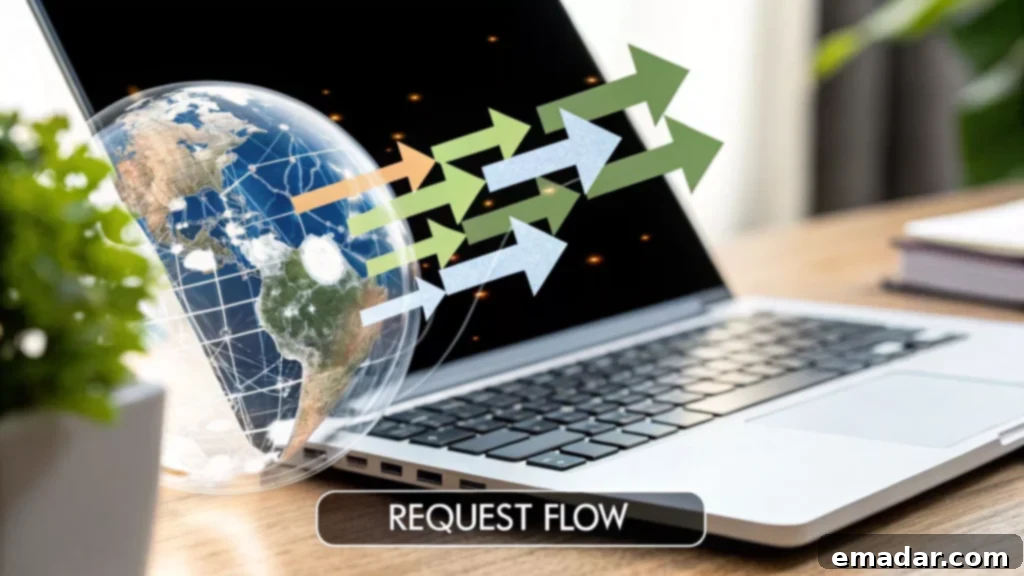
Understanding the fundamental concept of a proxy is one thing, but truly appreciating its utility requires a deeper dive into its operational mechanics. How exactly does this digital magic unfold behind the scenes? Let’s meticulously trace the journey of your internet request as it navigates through a proxy server, revealing the intricate dance of data that keeps your identity concealed.
Consider another helpful analogy: You need to run an errand, say, pick up a specific item from a store, but you’d prefer not to go yourself. Instead, you hire a personal assistant. You provide them with a detailed list of what you need. Your assistant then travels to the store, makes the purchase on your behalf, and brings the item back to you. The store’s staff only ever interact with your assistant; they have no direct knowledge of your identity or involvement. This ensures your privacy while still achieving your objective.
A proxy server functions in a remarkably similar fashion. When you input a website address into your browser, that request doesn’t directly fly off to its intended destination. Instead, it is first intelligently rerouted to the specific proxy server you are configured to use. This is precisely where the critical process of anonymization and request forwarding begins, transforming a direct connection into a shielded, indirect interaction.
The Request Forwarding and IP Masking Process
The moment your request reaches the proxy server, the server swiftly assumes its role as your digital stand-in. It meticulously processes your request, immediately stripping away your personal, identifiable IP address. In its place, it affixes its *own* IP address. This crucial function, universally known as IP masking, is the core mechanism that imbues a proxy with its formidable power for privacy and anonymity. By altering the source IP, the proxy ensures that any target website receives a request appearing to originate from the proxy’s location and identity, not your actual one.
Actionable Insight: To illustrate, imagine you are physically located in New York, and your device’s IP address is 71.200.50.100. If you connect to a proxy server situated in London, which possesses an IP address of 85.10.200.5, any website you subsequently visit will register your request as originating from London. Your actual location in New York remains entirely concealed, demonstrating the immediate and tangible impact of IP masking.
Following this crucial IP masking, the proxy server then forwards this newly repackaged request to the website you intended to visit. From the perspective of that target website, the incoming traffic is unequivocally originating directly from the proxy server, not from your home, office, or mobile device. Consequently, the website has absolutely zero visibility into who originally initiated the request, thereby preserving your real location and identity securely under wraps. This fundamental operation is vital for tasks requiring anonymity, such as competitive analysis, market research, or simply maintaining personal privacy online.
It’s a simple but profoundly effective hand-off: the proxy intercepts your request, completely re-labels the return address to its own, and then dispatches it on its journey. The destination server never, under any circumstances, gets a glimpse of your real IP address or personal identifying information.
Completing the Connection Securely and Efficiently
Once the website’s server has successfully processed the forwarded request, it generates the appropriate response—which is typically the webpage content you were seeking. However, it does not send this response back to your original device. Instead, it directs the information back to the only address it knows: the IP address of the proxy server.
In the final stage, the proxy server receives this response from the website. It then efficiently relays that content directly to your device, seamlessly completing the entire communication loop. The whole round-trip, from your initial request to receiving the desired content, typically transpires within milliseconds, often imperceptible to the user. Crucially, throughout this entire exchange, the website never establishes direct contact with your computer or mobile device. This means you successfully acquire the content you desired, while your precious digital footprint remains securely hidden, protected by the proxy’s intermediary role.
We can succinctly break down this complete sequence into four distinct, yet interconnected, stages:
- Your Request Initiated: Your device sends a request (e.g., to open
ipfly.net) not to the target website, but directly to the configured proxy server. - IP Masking and Forwarding: The proxy server instantly replaces your unique IP address with its own and subsequently forwards this anonymized request to the
ipfly.netserver. - Website Response Directed: The
ipfly.netserver processes the request and sends the desired webpage content back to the proxy server’s IP, unaware of your original identity. - Final Private Delivery: The proxy server then swiftly relays that content back to your device, fulfilling your request while maintaining your privacy and ensuring a secure, untraceable connection.
Choosing the Right Proxy Tool for Your Specific Job
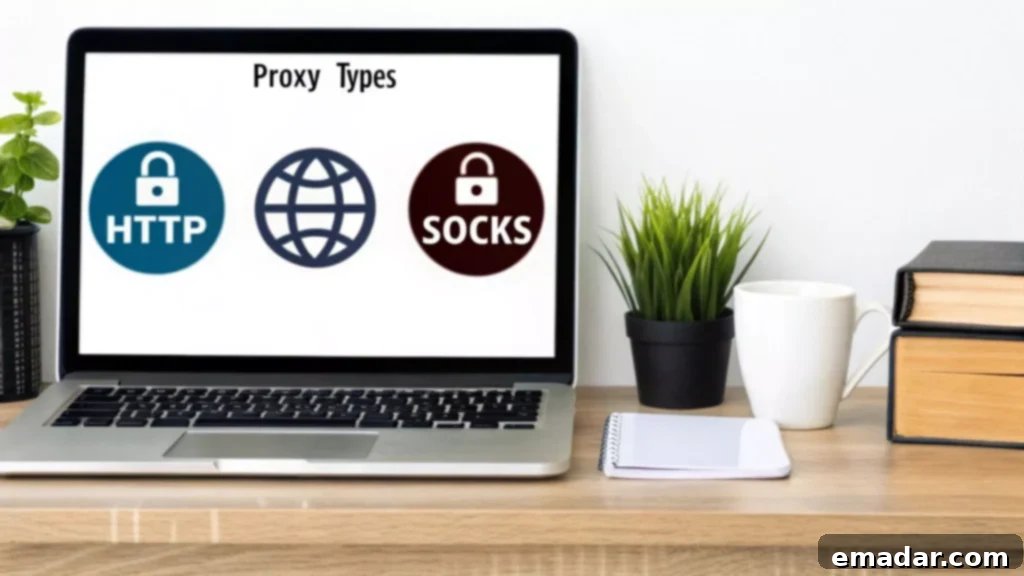
Navigating the world of proxy servers can feel like exploring a vast workshop filled with specialized tools. Just as you wouldn’t use a heavy-duty sledgehammer for delicate precision work, selecting the appropriate proxy requires careful consideration. Not all proxies are created equal; each type is engineered with specific strengths and limitations. The “best” choice is entirely contingent upon your particular objectives—whether you prioritize blazing speed, unparalleled anonymity, or the ability to seamlessly blend in as a genuine, organic user.
To make an informed and effective decision, it’s crucial to first understand the fundamental categories that define proxy servers. The two most prevalent classifications are based on their origin and infrastructure: Datacenter proxies and Residential proxies. Each category serves a distinct purpose and brings a unique set of advantages to the table, dictating their suitability for various online tasks.
Datacenter vs. Residential Proxies: A Core Distinction
Datacenter proxies are often regarded as the workhorses of the proxy world. These IP addresses are not associated with typical home internet connections; instead, they originate from large blocks of IP addresses hosted in massive, dedicated data centers. Their primary advantages lie in their sheer speed and remarkable affordability. This makes them exceptionally well-suited for tasks that demand rapid, high-volume requests and where the highest level of anonymity or blending in is not the absolute top priority.
Practical Example: A large marketing agency might deploy a pool of 10,000 datacenter proxies to quickly scan hundreds of e-commerce websites to monitor brand mentions or collect publicly available data. The superior speed allows them to complete extensive data acquisition tasks in mere minutes, a stark contrast to the hours it would take with slower alternatives, significantly enhancing operational efficiency.
Residential proxies, conversely, represent the pinnacle of authenticity in the proxy ecosystem. These are genuine IP addresses that have been assigned by Internet Service Providers (ISPs) to real, physical homes and mobile devices. Because their traffic inherently appears to originate from a legitimate residential device—a real person browsing from home—they are substantially less likely to be detected, blocked, or flagged by sophisticated anti-bot systems or website security measures. This makes them the undisputed go-to choice for highly sensitive operations where blending in seamlessly with regular user traffic is absolutely paramount to success.
Practical Example: A specialized shoe reseller relies on residential proxies to accurately check real-time stock levels and pricing on a major retailer’s website. Each request, appearing to come from a normal customer browsing from home, effectively circumvents anti-bot systems that would instantly block datacenter IPs. This allows the reseller to gather critical market intelligence without detection. To gain a deeper understanding of this powerful option and its applications, explore our comprehensive guide on how residential proxies from IPFLY work.
The fundamental distinction between these proxy types lies in trust. Datacenter IPs offer incredible speed but are easily identifiable as originating from non-human infrastructure. Residential IPs, however, are inherently highly trusted because they emulate traffic that looks precisely like that of a real person browsing from a legitimate home connection.
To further assist in your decision-making process, here’s a succinct breakdown comparing the most common proxy server types, highlighting their ideal use cases and inherent anonymity levels.
Comparison of Common Proxy Server Types
This table provides a clear overview of the key features, typical use cases, speed characteristics, and anonymity levels offered by various proxy types. This comparison is designed to empower you in selecting the most appropriate proxy for your specific requirements, balancing performance with privacy needs.
| Proxy Type | Primary Use Case | Speed | Anonymity Level |
|---|---|---|---|
| Transparent Proxy | Content filtering (schools/offices), basic logging | Very High | None (reveals real IP) |
| Anonymous Proxy | Basic privacy, bypassing simple geo-blocks, avoiding targeted ads | Moderate | Medium (hides IP, but identifies as proxy) |
| High Anonymity (Elite) Proxy | Secure browsing, sensitive data collection, undetected scraping | Moderate to High | High (hides IP, does NOT identify as proxy) |
| Datacenter Proxy | High-volume data collection, server testing, fast SEO scanning | Very High | Medium to High (fast, but can be easily detected) |
| Residential Proxy | Web scraping, ad verification, market research, account management | Moderate | Very High (emulates real user, highly trusted) |
| Rotating Proxy | Large-scale data collection, avoiding IP bans, continuous scraping | Varies (depends on underlying proxy type) | High (IP changes with each request or set interval) |
Ultimately, identifying the right proxy server is about perfectly aligning its capabilities with your project’s demands for speed, trustworthiness, and the crucial degree of privacy required.
Understanding Anonymity Levels: Beyond Just Hiding Your IP
Beyond their origin, proxies are also meticulously classified by the level of anonymity and privacy they afford their users. This classification allows you to precisely fine-tune your chosen tool to match your exact security and privacy requirements, ranging from simple traffic redirection to complete and undetectable concealment. There are three primary tiers of anonymity to consider:
- Transparent Proxies: These proxies, as their name suggests, offer virtually no anonymity. They do not conceal your IP address whatsoever; in fact, they pass your real IP along to the destination server and often add an HTTP header indicating that a proxy is in use. This transparency is why they are typically deployed by organizations like schools or corporations for content filtering, network management, or logging purposes, rather than for user privacy. For instance, a school might use a transparent proxy to block access to specific social media sites or adult content, while still tracking user activity.
- Anonymous Proxies: This tier of proxy effectively hides your actual IP address from the destination website, providing a basic level of privacy. However, an anonymous proxy still identifies itself as a proxy server through certain HTTP headers. While this prevents websites from knowing your geographical location and personal IP, they are aware that you are utilizing an intermediary. This type is generally useful for casual browsing where you wish to avoid location-based targeted advertisements or bypass simple geographical content restrictions without needing to appear as a completely organic user.
- High Anonymity (Elite) Proxies: Representing the pinnacle of proxy-based privacy, an elite proxy not only conceals your real IP address but also deliberately avoids identifying itself as a proxy server in any HTTP headers. To any website you visit, your traffic appears to originate directly from the proxy’s IP address, as if it were the genuine source. This sophisticated level of concealment makes elite proxies the superior choice for highly sensitive tasks such as extensive competitor analysis, stealth web scraping, or any operation where the absolute paramount concern is to avoid detection and maintain complete untraceability.
Putting Proxies to Work in the Real World: Practical Applications

While understanding the intricate mechanics of a proxy server is foundational, witnessing how it translates into tangible solutions for real-world challenges truly brings its value to light. Proxies are far from being exclusive tools for seasoned tech professionals; they are utilized daily by a diverse spectrum of individuals and businesses to deftly navigate common online obstacles, effectively transforming theoretical knowledge into highly practical, impactful solutions.
Consider the realm of personal use. Picture yourself traveling abroad, eager to catch up on your favorite TV series from your home country. You eagerly launch your preferred streaming application, only to be met with the disheartening “not available in your region” error message. This geo-restriction can be incredibly frustrating.
By simply connecting through a proxy server located within your home country, you instantly and effectively swap your visible IP address. To the streaming service’s servers, it appears as though you are physically located right back on your couch at home, granting you seamless and unrestricted access to your content library. The process is remarkably straightforward. This same principle extends to enhancing your data security when you’re compelled to use potentially insecure public Wi-Fi networks at places like coffee shops, airports, or hotels, safeguarding your information from potential eavesdropping.
How Businesses Unlock Growth and Competitive Edge With Proxies
For businesses, the utility of proxies transcends mere convenience; it becomes a strategic imperative for acquiring a significant competitive advantage. Proxies are absolutely indispensable for gathering accurate, unbiased, and comprehensive data without the risk of being blocked, throttled, or fed misleading information by competitors or anti-bot systems. They are the silent enablers of advanced market intelligence and operational efficiency.
Here’s an in-depth look at how discerning companies leverage proxy servers daily to fuel their growth and maintain their edge:
- Competitor Price Monitoring: An e-commerce brand operating in a highly competitive market needs to keep its pricing strategy meticulously sharp and agile. By deploying pools of rotating residential proxies, they can systematically scrape competitor websites to extract real-time pricing data, product availability, and promotional offers. Each data request appears to originate from a different, genuine shopper, thereby circumventing anti-bot systems and allowing the brand to collect crucial market intelligence without triggering alarms or facing IP bans. This enables dynamic pricing adjustments and ensures market competitiveness.
- Ad Verification and Compliance: A global marketing agency is tasked with ensuring that a client’s advertising campaigns are displayed correctly, ethically, and in the intended geographical regions. Using geo-targeted residential or datacenter proxies, the agency can simulate a local user’s experience in various locations—be it London, Tokyo, Sydney, or New York. This allows them to visually verify that ads are appearing as expected, correctly positioned, and adhere to local regulatory requirements, preventing ad fraud and ensuring campaign integrity.
- In-depth Market Research and Trend Analysis: A startup preparing for a major product launch requires granular insights into consumer sentiment, emerging trends, and competitor strategies across different regions. They utilize proxies to anonymously analyze social media discussions, forum chatter, and review sites without their corporate IP address being flagged for excessive activity. This allows them to gather vast amounts of genuine public feedback and market insights, forming the bedrock of informed product development and marketing strategies.
These sophisticated data-gathering operations form the very bedrock of modern business strategy, enabling companies to make data-driven decisions that translate into sustainable growth and market leadership. If you’re intrigued by the technical implementation of such strategies, you can delve deeper into how to implement effective data scraping with proxies from IPFLY.
A proxy server functions as a universal key for modern businesses. It unlocks access to invaluable global market data, facilitates the verification of critical digital assets, and robustly protects automated systems from detection, thereby transforming raw, fragmented information into profound, actionable insights.
Understanding the Benefits and Inherent Risks of Proxy Usage
Embracing the use of a proxy server undoubtedly unlocks a plethora of advantages, significantly enhancing your online experience. However, it’s imperative to acknowledge that this powerful tool, like any other, is not without its potential pitfalls. On the one hand, a well-chosen proxy offers a formidable boost to your online privacy by effectively masking your IP address, bolsters your security against potentially malicious websites, and grants you the unprecedented freedom to navigate a more open and uncensored internet. These compelling benefits are precisely what fuel the remarkable growth and sustained demand within the proxy market.
Yet, a critical caveat must be issued: not all proxies are created equally, and a significant portion of them can be downright dangerous. This applies particularly to services that tempt users with the allure of being “free.” That tempting free price tag often comes attached to a hidden, and potentially exorbitant, cost that no prudent user would willingly choose to pay.
A trustworthy proxy server acts as an impenetrable digital shield, meticulously guarding your online presence. Conversely, a poorly chosen or malicious proxy can dangerously punch a gaping hole directly through your security infrastructure. The most significant and pervasive risks almost invariably stem from free proxy services, which possess zero inherent incentive to safeguard your sensitive data and, alarmingly, every reason to exploit and sell it for their own gain.
The Grave Dangers of Unreliable and Free Proxies
When you opt to connect through a low-quality or, even worse, a free proxy server, you are essentially entrusting your invaluable digital identity and data to a complete stranger. This act of blind trust can lead to severe and multifaceted negative repercussions that fundamentally undermine the very purpose of using a proxy:
- Pervasive Data Logging and Commercial Selling: The business model of free proxies is often opaque, but the revenue stream is typically clear: monetization of user data. Many free proxy providers aggressively log your entire browsing history—every website you visit, every search query you make, every form you fill out, and even sensitive login credentials. This deeply personal data is then systematically sold to third-party advertisers, data brokers, or any entity willing to purchase it, leading to unprecedented privacy erosion and targeted exploitation.
- Abysmal Performance and Chronic Downtime: Free proxy services are notoriously characterized by painfully slow speeds, exacerbated by severely overloaded servers. This leads to persistent buffering, frustratingly long loading times, and frequent, unpredictable disconnects. Such instability renders them utterly useless for any serious or time-sensitive online task, transforming what should be a seamless experience into a constant battle with connectivity.
- Insidious Malware and Adware Injection: This is arguably the most alarming and immediate danger. Some highly malicious proxy providers actively exploit their position as intermediaries to inject unwanted advertisements (adware) or even dangerous malware directly into your web traffic. This insidious practice can lead to browser hijacking, data theft, system compromise, and an immediate threat to the integrity and security of your device and personal information.
Making a Safe and Informed Choice for Your Online Security
The cardinal rule for circumventing these pervasive traps is to exclusively partner with a reputable, professional proxy provider. Such providers distinguish themselves by possessing a transparent and clearly articulated privacy policy, backed by a robust and stable network infrastructure. You should seek a service that is unequivocally upfront about its data handling practices and consistently delivers reliable, high-performance connections. Examples of such dependable solutions can be found with IPFLY’s datacenter proxies, engineered for speed and security. A truly quality provider always prioritizes your security and privacy above all else.
Actionable Insight: Before committing to any proxy service, make it an absolute priority to diligently check recent reviews on trusted, independent third-party platforms such as Trustpilot or G2. Scrutinize feedback for consistency regarding speed, overall reliability, and the responsiveness of customer support. A provider with a history of consistently positive, detailed reviews across multiple platforms is a far safer and more reliable bet than one with sparse or questionable feedback.
The global demand for secure and reliable proxies is on a steep upward trajectory, reflecting a widespread awakening to the critical importance of digital privacy and robust cybersecurity. Currently, North America stands as the undisputed leader in the global proxy server market, a position largely attributable to its early adoption of advanced security technologies and substantial investments in cutting-edge digital infrastructure. For a deeper understanding of these market dynamics, you can discover more insights about the proxy market on DataIntelo.
By making a conscious investment in a trustworthy and high-quality proxy service, you effectively gain access to all the profound benefits of proxy usage without ever having to gamble with the integrity or confidentiality of your invaluable data.
How to Choose a Proxy Service You Can Trust: A Comprehensive Guide
With an ever-expanding multitude of proxy providers populating the market, the task of discerning and selecting the right one can often feel akin to taking a shot in the dark. However, it doesn’t have to be an arbitrary decision. To pinpoint a service that genuinely warrants your trust, it’s imperative to look beyond slick marketing rhetoric and instead focus intensely on the quantifiable technical specifications and operational assurances that profoundly impact both performance and, more critically, your security.
First and foremost, a pivotal factor to investigate is the provider’s IP pool size and inherent quality. A massive, extensively diverse pool of IP addresses serves as your most formidable defense against encountering IP flagging, blocking, or CAPTCHA challenges. For instance, a service boasting millions of dynamically rotating residential IPs will invariably prove far more effective and resilient for large-scale data scraping operations than a smaller, static block of easily identifiable datacenter IPs that are widely known and potentially overused by numerous other clients.
Secondly, a non-negotiable consideration is performance. You must actively seek out providers that unequivocally guarantee high uptime—ideally a robust 99.9% or superior—and consistently deliver lightning-fast connection speeds. A sluggish proxy isn’t merely a minor annoyance; it possesses the critical potential to entirely derail time-sensitive tasks, such as the real-time scraping of e-commerce sites for live pricing data, resulting in missed opportunities and compromised data accuracy.
Key Factors for Your Trustworthy Proxy Service Checklist
Beyond the raw metrics of speed and the sheer variety of IP addresses, your vetting checklist absolutely must encompass robust security protocols and responsive customer support. These two pillars are non-negotiable and frequently serve as the crucial differentiators between a reputable, professional service and a precarious, fly-by-night operation.
A genuinely trustworthy provider will always uphold a transparent, easily digestible, and unequivocally clear privacy policy. You are entitled to, and should demand, a precise understanding of how your data is collected, stored, and processed.
Never, under any circumstances, even contemplate a service that fails to explicitly proclaim its adherence to a stringent “no-log” policy. Your online activity is fundamentally your private business, and any provider worthy of your trust will enshrine this as a core, inviolable promise and operational principle.
Finally, it’s prudent to consider the inevitability of technical issues. Because, eventually, even with the most robust systems, challenges will arise. When an issue inevitably surfaces, you require prompt, efficient, and highly competent assistance. Prioritize providers that offer comprehensive 24/7 technical support, accessible through multiple convenient channels such as live chat, email, or even phone. The presence of solid, round-the-clock customer support is a profoundly reassuring indicator that a company is genuinely invested in the long-term success and satisfaction of its clientele, rather than merely making a quick sale.
Utilize these established benchmarks to effectively filter through the market noise and critically evaluate your prospective options, ensuring a choice that truly serves your needs:
- Large and Diverse IP Pool: This is paramount for achieving high success rates, maintaining anonymity, and effectively circumventing IP bans or blocks.
- High Uptime Guarantee: Do not settle for anything less than a guaranteed 99.9% uptime, ensuring consistent and reliable service availability.
- Transparent and Strict Privacy Policy: A crystal-clear “no-log” policy is an absolute prerequisite for safeguarding your personal data and online privacy.
- Responsive 24/7 Technical Support: This represents your critical lifeline for efficiently troubleshooting issues and swiftly resolving any operational challenges that may arise.
Got Questions About Proxies? We’ve Got Comprehensive Answers
When you’re embarking on your initial exploration into the dynamic world of proxy servers, it’s entirely natural and expected to encounter a myriad of questions. Obtaining clear, concise, and straightforward answers is undeniably the most effective pathway to cultivating a robust and enduring understanding. Therefore, let’s thoroughly address some of the most frequently asked questions, providing clarity and confidence.
Are Proxy Servers Actually Legal to Use for General Purposes?
Yes, unequivocally. The legitimate use of proxy servers for a wide array of purposes is 100% legal in virtually all jurisdictions. Businesses, organizations, and individuals worldwide routinely deploy them every single day for perfectly legitimate activities. These include, but are not limited to, bolstering online privacy, securely accessing geographically restricted content, conducting competitive market research, and managing corporate networks with enhanced security. The underlying technology of a proxy server is inherently neutral; its legality hinges entirely on the user’s intent and the activities performed while connected through it.
However, it’s crucial to understand where the nuances lie. If a proxy is utilized to facilitate activities that are inherently illegal—such as hacking, engaging in cybercrime, or distributing copyrighted material without authorization—then those specific actions remain illegal. The proxy merely serves as a tool and does not absolve the user of responsibility for their illicit conduct. For instance, using a proxy for anonymous market research is perfectly legal; using that same proxy to attempt unauthorized access to a competitor’s server is unequivocally illegal.
What’s the Real, Fundamental Difference Between a Proxy and a VPN?
This is a particularly significant distinction that often causes confusion. While both proxy servers and Virtual Private Networks (VPNs) are designed to enhance your online privacy and anonymity, they operate on fundamentally different principles and offer varying levels of security. A proxy server typically functions at the application layer, meaning it usually handles traffic for a specific application, such as your web browser or a particular software. Its primary role is to act as a middleman, masking your IP address from the destination server and allowing you to appear from a different geographical location.
A VPN (Virtual Private Network), by contrast, is a far more comprehensive and heavy-duty security solution. It operates at the network layer, establishing an encrypted “tunnel” that encapsulates and secures all of your internet traffic from your entire device—be it a computer, smartphone, or tablet. This means every piece of data leaving your device, from web browsing to email, streaming, and gaming, is encrypted and routed through the VPN server. This comprehensive encryption and device-wide protection make a VPN the superior choice if your priority is holistic security, data integrity, and privacy across all your online activities, rather than just IP masking for specific applications.
To put it succinctly: think of a proxy as an excellent tool for basic IP masking and geo-unblocking within a single application. A VPN, on the other hand, is the indispensable choice when you require robust, end-to-end encryption and comprehensive privacy protection for every byte of data traversing your entire phone or computer.
Should I Consider Using a Free Proxy Server?
Honestly and unequivocally? It’s a gravely ill-advised idea. We strongly, and without reservation, recommend maintaining a safe distance from free proxy servers. While they might initially appear tempting due to their non-existent price tag, they almost invariably come burdened with severe, inherent risks that completely undermine and defeat the very purpose of utilizing a proxy in the first place, which is typically to enhance privacy and security.
The experience with free proxies is consistently marred by excruciatingly slow speeds, frustratingly frequent disconnects, and, most critically, grave privacy threats. A substantial number of free providers engage in the unethical practice of logging your entire browsing data—including sensitive personal information—and subsequently selling it to the highest bidder. Others might actively inject their own intrusive advertisements, or even malicious software, directly into your web pages, compromising your device’s security and your online experience. For any serious, sensitive, or mission-critical online task, investing in a reputable, paid proxy provider is not merely a better option—it is, in truth, the only genuinely safe, reliable, and responsible choice for protecting your digital assets and privacy.