
In today’s hyper-connected digital landscape, where information flows freely but access can be tightly controlled, the concepts of **online privacy** and **unrestricted accessibility** have become paramount. For individuals and businesses alike, navigating the internet often involves challenges like collecting vital data, managing multiple digital identities, or gaining entry to content that is geographically limited. In this intricate environment, you’ve undoubtedly encountered the term “residential proxy.” But what precisely does this powerful tool entail, how does it operate, and why has it become an indispensable asset for so many internet users?
This comprehensive guide is designed to demystify residential proxies, offering an in-depth exploration of their definition, their distinct advantages over other proxy types, and the specific scenarios where they prove to be not just useful, but absolutely essential. By the end of this article, you’ll have a clear understanding of how residential proxies can empower your online activities, offering a blend of anonymity, flexibility, and reliability that is unmatched by conventional browsing methods.
Understanding the Core Concept: What Exactly is a Residential Proxy?
At its heart, a residential proxy functions as an intermediary server that channels your internet traffic through an IP address genuinely assigned to a real, physical device by an Internet Service Provider (ISP). Unlike other proxy types that might use IPs from data centers, these proxies leverage legitimate IP addresses that are inextricably linked to actual residential homes or mobile devices. This crucial distinction makes your online requests appear as if they are originating from an everyday internet user, seamlessly blending in with regular web traffic, rather than flagging them as coming from a suspicious server farm or automated bot network.
The inherent legitimacy of these IP addresses provides an unparalleled level of anonymity and trustworthiness. This is precisely why residential proxies are the preferred choice for a multitude of sensitive and mission-critical tasks that demand stealth, authenticity, and a low risk of detection. Whether you’re engaged in sophisticated web scraping operations, meticulously verifying digital advertisements, or effortlessly bypassing geographical content restrictions, the authenticity of a residential IP address ensures that your activities remain largely undetected and uninterrupted, offering a superior level of operational security and success compared to less robust alternatives.
How Does a Residential Proxy Function in Practice?
To grasp the operational mechanism of a residential proxy, let’s consider a common scenario: imagine you’re attempting to access a specific website known for its stringent access policies, often limiting the number of requests or visits permitted from a single IP address within a given timeframe. If you were to connect using your original IP address, the website’s security systems would quickly identify and potentially block or severely throttle your access, effectively halting your operations.
However, by deploying a residential proxy, your internet request takes a different, more discreet route. Instead of directly reaching the target website, your request is intelligently rerouted through a residential IP address. To the website’s sophisticated detection algorithms, this request appears to emanate from a genuine, regular user browsing the internet from their home or mobile device. This clever masking allows you to circumvent detection, maintain consistent and smooth access, and complete your tasks without encountering the frustrating barriers of IP bans or rate limits. The entire process is designed to mimic organic user behavior, making it incredibly difficult for target sites to distinguish between your proxied requests and those of a typical visitor.
Here’s a simplified, step-by-step breakdown of how this powerful system works:
- You Initiate a Request: Your journey begins when you make an online request, such as visiting a specific web page, performing a search query, or collecting data using specialized software.
- Request Sent to Proxy Server: Rather than going directly to the target website, your request is first intercepted and sent to the residential proxy server. This server acts as your secure gateway.
- Residential IP Assignment: The proxy server then intelligently assigns a fresh, legitimate residential IP address sourced from a real device located somewhere in the world, matching your desired geographic location if specified.
- Forwarding to Target Website: Your original request is then forwarded to the target website, but now it carries the assigned residential IP address. The website perceives this request as coming from a genuine, everyday internet user.
- Website Responds Normally: Because the website believes the request is legitimate, it responds as it would to any regular visitor, delivering the requested content or data.
- Secure Data Transmission Back to You: Finally, the residential proxy server receives the website’s response and securely transmits this data back to your device, ensuring your original IP remains concealed and your activity remains anonymous.
The Unrivaled Benefits of Utilizing Residential Proxies
Investing in residential proxy solutions brings a host of strategic advantages for anyone looking to optimize their online presence and activities. These benefits extend far beyond simple anonymity, touching upon critical aspects of accessibility, data integrity, and operational efficiency.
1. Superior Anonymity and Reduced Detection Risk
Residential proxies offer an unparalleled level of anonymity because their IP addresses are virtually indistinguishable from those of actual, organic internet users. This makes them profoundly difficult for websites to detect and block. For tasks that are sensitive or require high stealth, such as competitive analysis, market research, or managing numerous social media accounts, residential proxies prevent your operations from being jeopardized by IP bans or flagging mechanisms. They allow your online footprint to appear distributed and natural, significantly lowering the risk of being identified as a bot or automated system.
2. Seamless Geo-Restriction Bypass
Many online services, content platforms, and e-commerce sites implement geographical restrictions, limiting access based on a user’s physical location. With access to an expansive network of residential IPs spanning numerous countries and regions, users can effortlessly bypass these geo-blocks. This capability is invaluable for accessing region-specific streaming content, testing localized versions of websites, verifying the correct display of advertisements in different markets, or conducting truly global market research without geographical limitations.
3. Enhanced Data Scraping Success Rates
Web scraping, the automated extraction of data from websites, is notoriously challenging due to sophisticated anti-bot measures. Using your own IP address or a data center IP for extensive scraping quickly triggers detection, leading to immediate blocks, CAPTCHAs, or rate limits. Residential proxies, by making scraping activities appear like legitimate, human-driven browsing, dramatically increase success rates. They enable you to collect vast amounts of public data efficiently and consistently, without interruption, making them indispensable for businesses relying on big data for insights.
4. Access to High-Security Platforms
Certain online platforms, particularly those with high demand and strict security filters—like limited-edition sneaker release sites, high-profile ticketing platforms, or online gaming portals—are designed to detect and deter automated traffic. Residential proxies provide a critical advantage by allowing users to navigate these highly protected environments smoothly and successfully. Their genuine IP addresses help bypass advanced anti-bot technologies, giving users a fair chance to access sought-after items or services.
5. Maintaining Multiple Accounts with Ease
For professionals managing numerous social media profiles, e-commerce stores, or other online accounts, IP-based restrictions can pose a significant hurdle. Attempting to log into multiple accounts from a single IP can quickly lead to account flagging, temporary suspensions, or even permanent bans. Residential proxies offer a robust solution, allowing each account to operate from a distinct, legitimate IP address, thereby reducing the risk of association and ensuring safer, more efficient management of diverse online profiles.
Diverse Applications: Key Use Cases for Residential Proxies
The versatility of residential proxies makes them invaluable across a wide spectrum of industries and individual needs. Their ability to simulate genuine user activity from any location opens up countless possibilities for enhanced online operations.
E-commerce and Market Research
In the competitive world of e-commerce, staying ahead requires constant vigilance. Businesses leverage residential proxies to meticulously monitor competitor pricing strategies, scrutinize product listings and stock levels, and track emerging market trends across various geographical regions—all without revealing their true identity or intentions. This allows for unbiased data collection and strategic decision-making, providing a critical edge in a dynamic marketplace.
Ad Verification and Brand Protection
Advertisers and publishers rely on residential proxies to conduct crucial ad verification. This involves viewing how their advertisements appear in different locations, ensuring proper placement, detecting potential ad fraud, and confirming that campaigns are running precisely as expected. This guarantees brand safety, optimizes ad spend, and protects against malicious ad injection or misplacement.
Social Media Management and Automation
For marketing agencies, influencers, or brands managing a multitude of social media accounts across various regions, residential proxies are a game-changer. They facilitate safe and scalable social media management, preventing accounts from being flagged or banned due to suspicious login patterns. Each account can operate from a unique residential IP, simulating independent users and ensuring smooth, uninterrupted engagement.
SEO Monitoring and Local Search Optimization
Search Engine Optimization (SEO) professionals use residential proxies to accurately track keyword rankings and search engine results page (SERP) positions from diverse geographic locations. By simulating local search behavior, they can gain precise insights into localized SEO performance, allowing for highly targeted optimization strategies and competitive analysis specific to regional markets.
Data Aggregation and Web Scraping for Business Intelligence
Whether for academic research, business intelligence, or competitive analysis, gathering large volumes of public data is essential. Residential proxies enable efficient and reliable data aggregation from online directories, marketplaces, forums, and news sites without encountering IP blocks or throttling. This ensures that businesses and researchers can collect comprehensive datasets for analysis, market forecasting, and strategic planning.
Residential Proxies vs. Data Center Proxies: A Crucial Distinction
When selecting a proxy solution, understanding the fundamental differences between residential and data center proxies is key to making the right choice for your specific needs. While both offer a degree of anonymity, their source and operational effectiveness vary significantly.
| Feature | Residential Proxies | Data Center Proxies |
| IP Source | Real devices via ISP (homes, mobile phones) | Cloud servers / data centers |
| Detection Risk | Extremely Low (appears as a real user) | High (easily detectable as non-human traffic) |
| Speed | Moderate (depends on peer network quality) | High (direct server connections) |
| Cost | Higher (due to legitimacy and complexity) | Lower (mass-produced IPs) |
| Best Use Case | E-commerce, web scraping, ad verification, geo-bypassing, social media management, high-security platforms | General browsing, basic SEO tasks, torrenting, accessing non-sensitive content, speed-critical but legitimacy-agnostic tasks |
Residential proxies are generally more expensive due to their legitimate origins and superior effectiveness in mimicking real users. However, this higher cost is a worthwhile investment for tasks where stealth, reliability, and avoiding detection are paramount. Data center proxies, while faster and cheaper, carry a much higher risk of being detected and blocked, making them unsuitable for sensitive operations or platforms with robust anti-bot systems.
Navigating Residential Proxy Types: Static vs. Rotating
Within the realm of residential proxies, you’ll primarily encounter two distinct types, each designed for specific operational requirements:
- Static Residential Proxies (also known as ISP Proxies): These proxies assign you a single, consistent residential IP address that remains unchanged for the duration of your session or even indefinitely. They are perfect for tasks requiring long-term continuity and stability, such as managing social media accounts, maintaining persistent login sessions on specific websites, or operating e-commerce stores where a stable IP is crucial for trust and security. They offer the best of both worlds: the legitimacy of a residential IP with the stability often associated with data center proxies.
- Rotating Residential Proxies: This type automatically changes your IP address at regular, predefined intervals (e.g., every few minutes) or upon each new request. Rotating proxies are exceptionally well-suited for large-scale data collection, extensive web scraping operations, or conducting market research where you need to send numerous requests from different IP addresses to avoid detection and IP bans. The constant rotation ensures that your requests always appear fresh and originate from various “real users.”
Each type possesses its own distinct advantages, and the optimal choice ultimately hinges on the specific nature and demands of the task you intend to accomplish.
Are Residential Proxies Legal and Ethical?
A common concern surrounding proxy usage pertains to its legality. The straightforward answer is: Yes, using residential proxies is legal in most countries, provided they are employed ethically and responsibly. The technology itself is neutral; its legality hinges entirely on how it is utilized.
Issues and legal ramifications only arise when proxies are used for illicit or malicious activities, such as engaging in fraudulent transactions, attempting unauthorized access to private data, distributing malware, or systematically violating a platform’s terms of service. For instance, while scraping public data is generally legal, scraping copyrighted content or accessing data that requires login without authorization is not. Therefore, it is absolutely critical to always ensure that your chosen proxy provider sources its IP addresses ethically, meaning they are obtained with the explicit consent of the IP owners. Furthermore, always operate within the bounds of local and international regulations, respecting privacy laws and website terms of service to maintain a legal and ethical digital footprint.
Choosing the Best Residential Proxy Provider: Key Considerations
The effectiveness of your residential proxy strategy largely depends on the quality and reliability of your chosen provider. When making this critical decision, look for the following essential attributes:
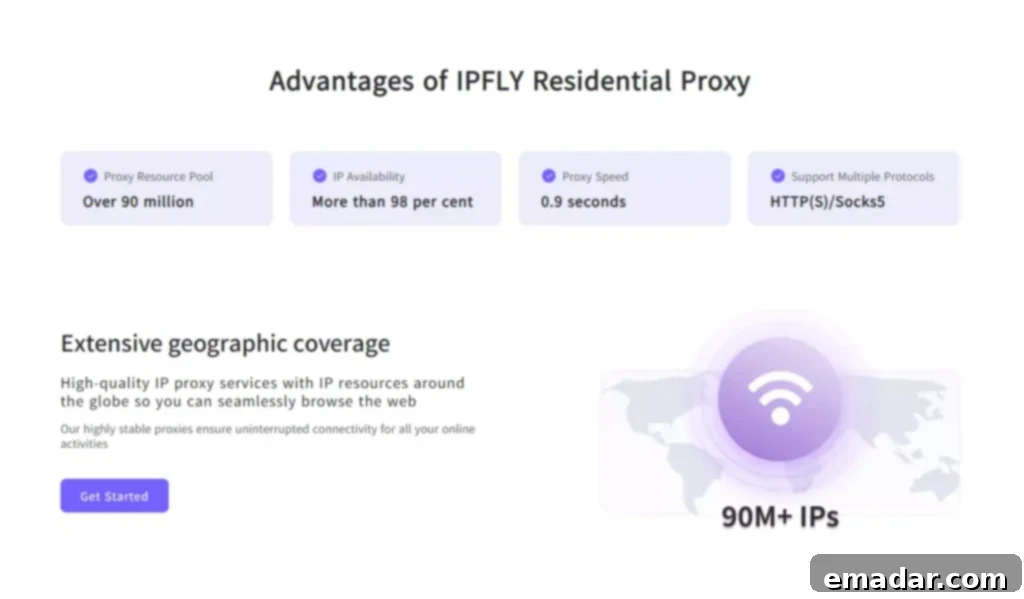
- Size and Diversity of the IP Pool: A truly vast IP pool (e.g., 90 million+ unique IP addresses) is crucial. A larger and more diverse pool means you have access to a greater variety of legitimate IP addresses, significantly reducing the chances of reusing IPs and lowering the risk of detection or bans. It also provides more options for geo-targeting and greater operational resilience.
- Extensive Global Coverage: The more countries and regions your provider covers, the greater your flexibility to target different markets, bypass specific geo-restrictions, and conduct truly global research or operations. Look for a provider with a robust presence across continents to maximize your reach.
- Robust Security & Privacy Protocols: Your data’s security is paramount. Opt for providers with transparent privacy policies, strong encryption standards (like SSL/TLS), and clear commitments to non-logging practices. This ensures that your online activities remain private and protected from potential vulnerabilities.
- High Connection Success Rate and Reliability: For tasks like web scraping or ad verification, consistent connectivity and a high success rate are non-negotiable. Choose providers known for their stable networks, high uptime, minimal downtime, and rapid response times. Testimonials and independent reviews can often shed light on a provider’s true reliability.
- Customer Support and Technical Assistance: Even the best services can encounter issues. Excellent customer support, available 24/7 through various channels (live chat, email, phone), is vital for troubleshooting and ensuring your operations run smoothly without prolonged interruptions.
- Flexible Pricing Models: Look for providers that offer a range of pricing plans, including pay-as-you-go, monthly subscriptions, or custom enterprise solutions, to match your specific usage volume and budget.
A Note on IPFLY Residential Proxies
As a leading provider in the residential proxy space, IPFLY distinguishes itself by offering an expansive pool of over 90 million ethically-sourced IP addresses, meticulously distributed across 190+ countries worldwide. Its **dynamic residential proxies** are specifically engineered to excel in demanding applications such as comprehensive market research, precise SEO monitoring, and critical content verification. Built upon self-developed server infrastructure and fortified with advanced anonymity protocols, IPFLY ensures unwavering performance and consistent success rates, even in the most challenging and security-conscious online environments. Whether your objective is to efficiently manage numerous online accounts or to automate large-scale data collection, platforms like IPFLY are meticulously crafted to deliver the flexible, high-performance residential IP solutions you need to thrive in the digital age.
Final Thoughts: Empowering Your Online Journey with Residential Proxies

So, to reiterate, **what exactly is a residential proxy?** In essence, it serves as your ultimate gateway to the internet, providing a sophisticated disguise that is incredibly difficult for websites to detect. For businesses striving for competitive advantage, marketers aiming for targeted campaigns, or individuals seeking a secure and unrestricted way to access online content, residential proxies represent an indispensable and intelligent investment. They are more than just a tool; they are a strategic asset in navigating the complexities of the modern web.
By effectively maintaining your online privacy, diligently preventing IP blocks, and enabling you to traverse the internet with unparalleled freedom and efficiency, residential proxies empower you to achieve your digital objectives without the usual impediments. However, the key to harnessing their full potential lies in using them responsibly and judiciously, always adhering to ethical guidelines and legal frameworks. Crucially, selecting a trustworthy provider that aligns perfectly with your specific requirements is paramount to ensuring a reliable, secure, and successful proxy experience.
Are you ready to elevate your web access to a safer, smarter, and more efficient level? We invite you to explore the cutting-edge residential proxy solutions offered by IPFLY. Begin your journey with reliable, high-performance IP addresses today and experience the internet without barriers.