
In the rapidly evolving digital landscape of 2025, Japan continues to solidify its position as a global leader in e-commerce, digital entertainment, and innovative marketing strategies. This dynamic environment has propelled an unprecedented demand for robust and reliable JP proxy servers. For international businesses, digital marketers, astute market researchers, or anyone seeking seamless access to region-locked content, a dependable Japanese IP address isn’t just a convenience – it’s a critical tool for success. Leveraging a JP proxy allows users to navigate the Japanese internet as if they were physically located there, unlocking a myriad of opportunities.
However, the market for JP proxies is vast and varied, meaning not all providers or proxy types are created equal. An ill-informed choice can lead to frustratingly slow connections, frequent IP blocks, or critically, inaccurate data that can skew crucial business decisions. This comprehensive guide aims to arm you with all the essential knowledge needed to select the absolute best JP proxy server in 2025, ensuring your digital operations in Japan are efficient, secure, and highly effective.

Understanding Japanese Proxy Types: Residential vs. Datacenter vs. Static Residential
The first crucial step in choosing a JP proxy is understanding the fundamental differences between the available types. Each offers distinct advantages and disadvantages, making them suitable for different use cases.
Residential JP Proxies: Authenticity and High Anonymity
Residential proxies utilize real IP addresses assigned by Internet Service Providers (ISPs) to genuine residential users. When you use a residential JP proxy, your online requests appear to originate from a legitimate Japanese home or mobile device. This authenticity makes them incredibly difficult to detect and block by websites, as they mimic organic user behavior.
- Unmatched Authenticity: Websites and online services see these IPs as legitimate residential users, significantly reducing the risk of detection and blocking.
- High Anonymity: Provides a superior level of anonymity, protecting your true identity and location.
- Ideal for Sensitive Tasks: Perfect for high-stakes activities such as managing multiple social media accounts, accessing geo-restricted streaming content, purchasing limited-edition items (e.g., sneakers), or conducting in-depth market research that requires bypassing sophisticated anti-bot measures.
- Wider IP Pools: Often come with large pools of diverse IPs, allowing for extensive rotation and reducing the likelihood of encountering flagged IPs.
- Dynamic Nature: Most residential proxies are dynamic, meaning your IP address changes periodically, further enhancing anonymity and making large-scale scraping endeavors safer.
- Cost Consideration: Generally more expensive than datacenter proxies due to their superior legitimacy and the infrastructure required to maintain them.
Datacenter JP Proxies: Speed and Cost-Effectiveness
Datacenter proxies are IP addresses provided by secondary corporations, typically hosted in large data centers. They are not associated with an ISP or a physical residence, making them easier to identify by sophisticated detection systems but offering distinct advantages in other areas.
- Blazing Fast Speeds: Offer significantly faster connection speeds due to their high-bandwidth data center infrastructure.
- Lower Costs: More budget-friendly compared to residential proxies, making them attractive for tasks where performance outweighs the need for high anonymity.
- Ideal for Bulk Scraping: Excellent for tasks that prioritize speed and volume over IP reputation, such as scraping large amounts of publicly available data from less protected websites or for general SEO auditing.
- Potential for Detection: May be flagged more easily on platforms with strict anti-proxy measures, requiring careful usage and frequent IP rotation to avoid blocks.
- Dedicated vs. Shared: Can be dedicated (used by one user) or shared (used by multiple users), with dedicated offering better performance and less risk of shared-user flagging.
Static Residential (ISP) JP Proxies: The Best of Both Worlds
Static Residential proxies, also known as ISP proxies, bridge the gap between residential and datacenter types. These are IP addresses hosted in data centers but are registered under an ISP, making them appear as legitimate residential IPs while offering the speed and stability of a datacenter proxy.
- Residential Legitimacy with Datacenter Speed: Offers the authentic IP reputation of residential proxies combined with the consistent high speeds of datacenter proxies.
- Stability: These are usually static (non-rotating) IPs, making them perfect for tasks that require a consistent IP address over an extended period, such as managing long-term accounts or dedicated streaming sessions.
- Reduced Detection: Less likely to be detected than pure datacenter proxies, offering a good balance for many business applications.
- Use Cases: Excellent for e-commerce, local SEO tracking, social media management, and applications requiring persistent, legitimate-looking connections.
Pricing Considerations for JP Proxies
JP proxies are available under various pricing models, designed to cater to different usage patterns and budget requirements. Understanding these models is key to optimizing your investment.
- Per IP Model: You pay for each dedicated Japanese IP address you acquire. This model is often favored for long-term sessions, specific account management, or when a stable, unchanging IP is critical. It offers predictability in cost for fixed needs.
- Bandwidth-based Model: Pricing is determined by the amount of data (traffic) you use. This model is highly suitable for intensive data scraping, large-scale content streaming, or any activity where data consumption varies. It offers flexibility, allowing you to scale up or down based on your operational needs.
- Subscription Plans: These plans involve fixed monthly or annual fees, granting access to a pool of rotating IPs or a set number of static IPs. Subscriptions often come with different tiers, offering varying amounts of bandwidth, IP access, or features, making them a good option for consistent, ongoing usage.
- Pay-as-You-Go: Some providers offer a “pay-as-you-go” option, which is similar to bandwidth-based but without a fixed subscription. You top up your account and consume resources as needed, ideal for sporadic or unpredictable usage.
A word of caution: always avoid free proxies. While tempting, they are notoriously unstable, often insecure, and can compromise sensitive data by logging your activity or injecting malware. The risks far outweigh any perceived savings.
Comparing Leading JP Proxy Providers
The market features numerous proxy providers offering Japanese IPs. To make an informed decision, it’s essential to compare them based on several critical factors:
- Coverage and IP Pool Size: Look at the sheer number of Japanese IPs available and their geographic distribution within Japan (e.g., Tokyo, Osaka, Kyoto, Fukuoka). A larger, more diverse IP pool minimizes the risk of detection and allows for broader regional targeting.
- Reliability and Uptime: A high success rate of connections without frequent blocks or downtime is paramount. Look for providers that offer uptime guarantees and have a proven track record of stable performance.
- Speed and Performance: Evaluate the average connection speeds. Slow proxies can cripple your operations, especially for data-intensive tasks like streaming or large-scale scraping.
- Security and Anonymity Features: Assess the level of anonymity provided, support for various protocols (HTTP(S), SOCKS5), and any additional security measures offered by the provider.
- Customer Support: The availability of responsive, knowledgeable customer service and technical assistance is vital for troubleshooting and ensuring smooth operations. Look for 24/7 support via multiple channels.
- Pricing Structure and Flexibility: Compare cost-effectiveness for your anticipated scale of usage, considering the different pricing models discussed above. Look for transparent pricing with no hidden fees.
- Ease of Use and Integration: A user-friendly dashboard, clear documentation, and easy integration with your existing tools or scripts (e.g., via API) can save significant time and effort.
- Trial Periods or Refund Policies: The ability to test the service before committing to a long-term plan is invaluable.
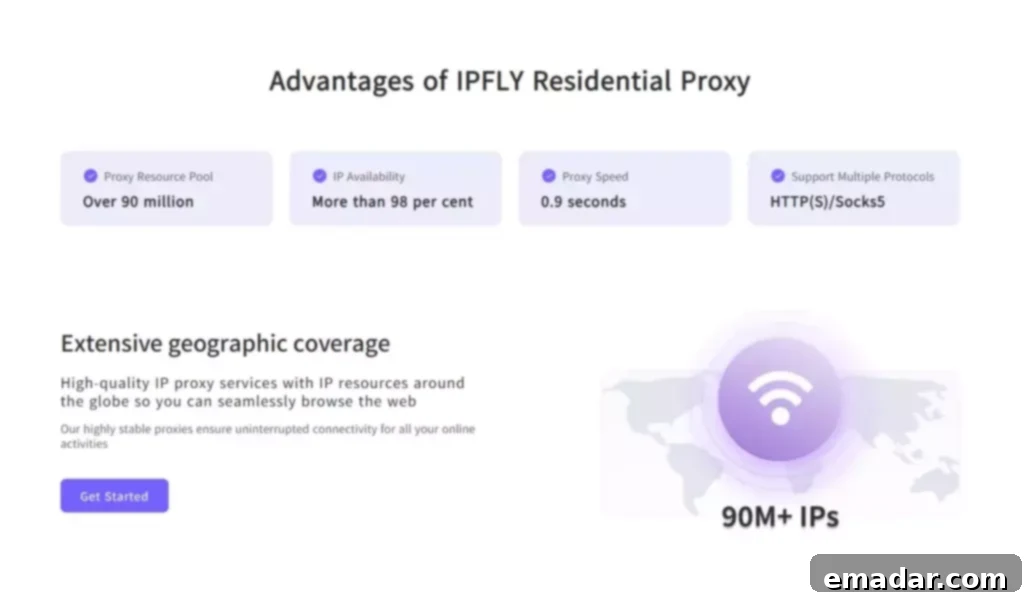
Among the top contenders, providers like IPFLY consistently stand out. IPFLY distinguishes itself with a truly massive IP pool exceeding 90 million IPs, offering unparalleled diversity and scalability. Their strong Japanese coverage includes a mix of dynamic and static residential proxies, catering to a wide array of needs. IPFLY’s proxies are meticulously optimized for both demanding business applications and general e-commerce use, ensuring consistent access, superior anonymity, and minimal risk of IP bans.
Strategic Use Cases for JP Proxies in 2025
The applications for reliable JP proxy servers are extensive and continue to grow as Japan’s digital economy expands. Here are some key areas where JP proxies provide a distinct advantage:
- E-commerce and Online Retail: Access localized pricing, monitor competitor strategies, scrape product data, verify ads, and manage multiple seller accounts on platforms like Amazon Japan or Rakuten without geographical restrictions or IP flagging.
- Market Research and Business Intelligence: Gather critical data on consumer trends, local market demands, competitor pricing, and emerging niches. Conduct sentiment analysis on Japanese social media platforms and forums.
- SEO and Digital Marketing: Perform accurate keyword research from a Japanese perspective, track SERP rankings for local search results, verify geo-targeted ad campaigns, and conduct local link building.
- Content Access and Geo-Unblocking: Access region-locked Japanese streaming services (e.g., Netflix Japan, AbemaTV), online games, news sites, and exclusive content that would otherwise be unavailable internationally.
- Social Media Management: Safely manage multiple social media accounts for Japanese audiences on platforms like Twitter, Instagram, or LINE, avoiding bans that often occur from foreign IP usage.
- Web Scraping and Data Collection: Efficiently and anonymously extract large volumes of data from Japanese websites for various analytical purposes, ensuring data integrity and preventing IP blocks.
- Cybersecurity and Anonymity: Enhance online privacy and security by masking your true IP address, protecting your identity while browsing or conducting sensitive operations.
How to Ensure You Get the Right JP Proxy
Making the best choice requires a structured approach to align your needs with the right proxy solution:
- Define Your Use Case Clearly: Before anything else, precisely identify what you intend to achieve with the proxy. Are you primarily focused on high-volume data scraping, managing multiple e-commerce accounts, accessing geo-blocked streaming content, performing localized SEO audits, or something else entirely? Your specific goal will dictate the ideal proxy type and features.
- Select the Appropriate Proxy Type: Based on your defined use case, choose between residential, datacenter, or static residential proxies. Opt for residential proxies for sensitive tasks requiring high anonymity and authenticity (e.g., account management, high-value data scraping). Choose datacenter proxies for raw speed and cost-effectiveness on less sensitive, bulk tasks. Consider static residential (ISP) proxies for scenarios needing both legitimacy and persistent speed.
- Thoroughly Check Provider Reputation and Features: Do your due diligence. Look for providers with strong industry reputations, verified positive user feedback on independent review sites, and clear uptime guarantees. Investigate their network infrastructure, IP pool size for Japan, geographic distribution, security protocols (e.g., HTTPS, SOCKS5 support), and available bandwidth.
- Test Before Committing to a Large Package: Many reputable providers offer trial periods, money-back guarantees, or small starter packages. Always take advantage of these opportunities to test the proxy’s performance, reliability, and compatibility with your specific applications and targets. Pay attention to connection speeds, success rates, and any unexpected blocks during this phase.
- Implement Smart IP Rotation Strategies: Especially when running automation or bulk tasks, intelligent IP rotation is crucial to avoid detection and bans. Utilize dynamic residential proxies, which automatically rotate IPs, or configure your scraping tools to rotate IPs on a timed basis or upon encountering a block. Some providers also offer “sticky sessions,” allowing you to maintain the same IP for a defined period if continuity is required.
Conclusion: Your Strategic Advantage in the Japanese Digital Sphere

Choosing the best JP proxy server in 2025 is more than just a technical decision; it’s a strategic move that significantly impacts your ability to navigate and succeed in Japan’s dynamic digital ecosystem. The optimal choice requires a careful balance of key factors including connection speed, operational reliability, the level of anonymity required, and overall cost-effectiveness.
While residential proxies offer unparalleled security and authenticity for sensitive operations, datacenter proxies excel in providing raw performance at a lower cost for high-volume tasks. Static residential proxies offer an appealing hybrid solution, blending the best attributes of both. A trusted and feature-rich provider like IPFLY simplifies this complex choice, offering robust Japanese coverage, a diverse range of proxy types (including dynamic and static residential), and massive IP pools to meet virtually any need.
For businesses, savvy marketers, and global e-commerce sellers targeting the Japanese market, selecting the right JP proxy is not merely about gaining access—it’s about establishing a formidable competitive edge, ensuring uninterrupted operations, and unlocking the full potential of Japan’s vibrant online world.