
IP addresses are the digital identity in the vast world of the internet. Far more than just a simple “address,” they are intrinsically linked to online security, user privacy, the smooth operation of cross-border accounts, and the efficiency of automated deployments. Today, we invite you to embark on a journey to comprehensively understand the full spectrum of IP addresses in a straightforward and engaging manner.
Understanding the Fundamentals: What Exactly is an IP Address?
An IP, or Internet Protocol, address serves as the unique numerical identifier for every device connected to a network that uses the Internet Protocol for communication. Think of it as a digital house number, allowing data packets to be routed to the correct destination across the global network.
There are two primary versions of IP addresses that you’ll commonly encounter:
- IPv4 (Internet Protocol version 4): This is the most widely used version, represented by four sets of numbers separated by dots (e.g., 192.168.1.1). IPv4 addresses are 32-bit numbers, meaning there are approximately 4.3 billion unique addresses available. While this seemed like an enormous number initially, the explosive growth of the internet and connected devices has led to a significant scarcity of available IPv4 addresses.
- IPv6 (Internet Protocol version 6): Developed to address the limitations of IPv4, IPv6 uses 128-bit addresses, represented by eight groups of four hexadecimal digits separated by colons (e.g., 2001:0db8:85a3:0000:0000:8a2e:0370:7334). This provides an astronomical number of unique addresses (approximately 3.4 x 10^38), ensuring virtually limitless capacity for future internet expansion. Beyond sheer quantity, IPv6 also offers improved efficiency, enhanced security features like built-in encryption, and better auto-configuration capabilities.
IP addresses are also categorized based on their accessibility:
- Public IP Address: This is your device’s unique identifier on the public internet. It is globally routable, meaning it can be accessed and seen from anywhere on the internet. Your home router, for example, typically has a public IP address assigned by your Internet Service Provider (ISP), which serves as your “external identity” to the rest of the online world. Websites, online services, and remote servers use your public IP to communicate with your device.
- Private IP Address: Used within a local area network (LAN), such as your home network or a corporate intranet. Private IPs are not directly accessible from the public internet. Common private IP ranges include 10.0.0.0/8, 172.16.0.0/12, and 192.168.0.0/16. Multiple devices within your home (smartphones, laptops, smart TVs) might share the same public IP address assigned by your ISP, but each will have a unique private IP address within your local network. This is made possible through Network Address Translation (NAT), a process where your router translates private IP addresses to the single public IP address when communicating with the internet. Private IPs enhance security by creating a barrier between your internal network and the public internet.
Static IP vs. Dynamic IP: Your Digital House Number – Fixed or Fluctuating?
The distinction between static and dynamic IP addresses is fundamental, especially when considering stability, cost, and specific operational needs for businesses and individuals alike.
🔹 Static IP (Static IP Address)
- Definition: A static IP address is a fixed, unchanging internet address assigned by your Internet Service Provider (ISP) to a device or network. Once assigned, this IP address remains constant unless there’s a specific request to change it or a service contract expires. It’s like having a permanent, unchangeable phone number for your digital presence.
- Advantages: Static IPs offer several significant benefits. They provide highly stable and reliable access, making them ideal for hosting services like websites, FTP servers, or email servers, where a consistent address is crucial for users to find them. Remote access solutions, such as Virtual Private Networks (VPNs) for employees or accessing surveillance systems, rely heavily on static IPs for predictable connectivity. For businesses managing multiple online accounts across various platforms, binding these accounts to a static IP can significantly enhance security and reduce the risk of account flags or bans, as the platform sees consistent access from the same trusted location. Cross-border e-commerce and multi-account operations particularly benefit from the consistent digital identity provided by static IPs, minimizing geo-blocking issues and account association risks.
- Disadvantages: The primary drawbacks include higher costs compared to dynamic IPs, as ISPs typically charge a premium for this dedicated service. From a security standpoint, a static IP can be a more visible and consistent target for cyber threats, as its unchanging nature makes it easier for malicious actors to track and target. There’s also a higher risk of being traced, which can be a concern for privacy-conscious users.
🔹 Dynamic IP (Dynamic IP Address)
- Definition: A dynamic IP address is one that is automatically and temporarily assigned to a device by a DHCP (Dynamic Host Configuration Protocol) server, usually by your ISP, each time it connects to the internet or at regular intervals. This means your IP address can change frequently – sometimes daily, sometimes even every few hours or with each new connection. It’s akin to receiving a new rental car with a different license plate each time you need transportation.
- Advantages: Dynamic IPs are generally more cost-effective as they are the default for most consumer internet connections, reducing the administrative burden on ISPs. They offer better scalability, as ISPs can reuse IP addresses efficiently among a large pool of users. For general internet browsing and basic online activities, dynamic IPs provide an enhanced level of privacy, as the constantly changing address makes it harder for external entities to continuously track your online movements over extended periods.
- Disadvantages: The instability of dynamic IPs makes them unsuitable for applications requiring a consistent online presence, such as hosting public servers or maintaining reliable remote access. For business operations like managing multiple social media accounts, e-commerce stores, or any scenario involving account binding, dynamic IPs pose a significant challenge. Platforms often flag frequent IP changes as suspicious activity, leading to account verification requests, temporary locks, or even permanent bans. This lack of stability also hinders long-term deployment strategies for services that need to maintain a fixed online identity.
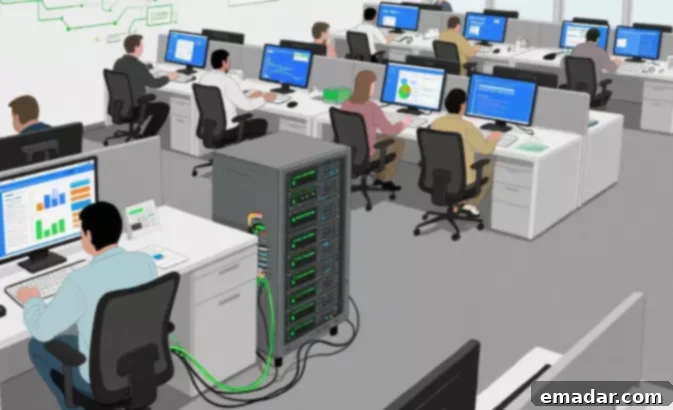
Delving Deeper into Proxy IPs: Residential Proxies vs. Datacenter Proxies
While static and dynamic IPs refer to your direct internet connection, proxy IPs act as intermediaries between your device and the internet. They allow you to route your internet traffic through another server, effectively masking your real IP address and often appearing to originate from a different location. This capability is invaluable for businesses operating across borders, performing market research, or managing multiple online profiles. The two main categories of proxy IPs, residential and datacenter, offer distinct advantages and are suited for different purposes.
🔸 Residential Proxy IP (Residential Proxy)
- Origin and Authenticity: Residential proxies are IP addresses provided by Internet Service Providers (ISPs) to real, legitimate home users. This means the IP address originates from a genuine residential internet connection, making them appear indistinguishable from regular internet users. They are often sourced through ethical means, such as peer-to-peer networks where users opt-in to share their bandwidth, or through SDKs integrated into free applications with proper user consent.
- Reliability and Low Detection: Due to their authentic origin, residential proxies boast extremely high reliability and a significantly lower detection rate compared to other proxy types. Websites and sophisticated anti-bot systems struggle to differentiate traffic coming from a residential IP from that of a genuine visitor. This makes them highly trusted and effective for sensitive online operations, offering virtually the same trust level as a real user.
- Sub-types of Residential Proxies:
- Static Residential IP: Also known as dedicated residential proxies or ISP proxies, these are residential IP addresses that remain constant for an extended period, similar to a traditional static IP but with the added benefit of being classified as a residential IP. They offer unparalleled reliability and high trustworthiness, making them the preferred choice for tasks requiring a persistent online identity, such as long-term account binding, managing high-value e-commerce accounts, or operating social media profiles where consistent access is paramount to avoid flags and bans.
- Dynamic Residential IP: These proxies rotate frequently, assigning a new residential IP address with each connection request or at specified intervals. They provide high anonymity by constantly changing your digital footprint. Dynamic residential IPs are ideally suited for tasks that involve high-volume, short-term interactions or require frequent IP switching, such as web scraping, large-scale data collection, price monitoring, or bypassing geo-restrictions for market research, where a fresh IP for each request helps to avoid IP blocks.
🔸 Datacenter Proxy IP (Datacenter Proxy)
- Origin and Characteristics: Datacenter proxies are IP addresses that originate from commercial data centers or cloud servers, not from residential ISPs. They are typically faster and more cost-effective than residential proxies because they are easier to acquire and manage in large quantities. However, their primary drawback is that they are more easily identifiable by sophisticated websites and anti-bot systems as originating from a data center, often being flagged as “non-human” or suspicious.
- Use Cases: Despite their higher detection risk, datacenter proxies are still valuable for specific scenarios. They are well-suited for large-scale data collection on less sensitive websites that have minimal anti-bot measures, or for tasks where raw speed and low cost are the most critical factors. Examples include general web scraping, accessing public data, or handling traffic for applications where the “human-like” quality of the IP is not a primary concern. However, for sensitive tasks like account management, social media automation, or e-commerce operations, their use carries a much higher risk of immediate detection and blocking.
Static vs. Dynamic Residential IP: A Comparative Analysis📊
Choosing between static and dynamic residential IPs is a critical decision that impacts the efficiency, security, and success of your online operations. Understanding their core differences helps in aligning the right proxy type with your specific business needs.
| Feature | Static Residential IP | Dynamic Residential IP |
| IP Fluctuation | ❌ No Change | ✅ Can Change |
| Trust Level | ⭐⭐⭐⭐⭐ (Highest) | ⭐⭐ (Moderate for some tasks) |
| Recommended Scenarios | Account binding, platform registration, long-term operations, e-commerce, social media management | Web scraping, short-term bulk operations, market research, price comparison |
| Cost | Higher | Relatively lower (per IP, often usage-based) |
To elaborate, Static Residential IPs are the undisputed champions for tasks demanding unwavering stability and a consistent digital footprint. This includes sensitive applications in cross-border e-commerce, managing multiple vendor accounts (like on Amazon or eBay), running targeted advertising campaigns, or maintaining long-term social media profiles where the integrity and history of an account are paramount. Their fixed nature ensures that platforms perceive continuous, legitimate access, significantly reducing the likelihood of account suspensions or flags. Conversely, Dynamic Residential IPs are the go-to solution for operations that benefit from high-frequency IP switching, such as rapid data collection, advanced web scraping for market intelligence, or sophisticated SEO monitoring. The ability to rotate IPs frequently helps bypass rate limits, avoid detection, and access vast amounts of data efficiently without raising suspicion on the target websites.
Making the Right Choice: Tailored IP Configuration for Optimal Performance
Selecting the appropriate IP type is not a one-size-fits-all solution; it depends entirely on your specific objectives and the demands of your online activities. Here’s a guide to help you configure your IP strategy for maximum efficiency and success:
| Scenario Requirement | Recommended Type | Recommendation Reason |
| Cross-border E-commerce Account Binding (e.g., Amazon, eBay) | IPFLY Static Residential IP (Exclusive) | Ensures a fixed, trusted environment, crucial for avoiding platform risk control mechanisms and account association issues. Each store gets its unique, dedicated IP. |
| TikTok / Instagram / Facebook Social Media Management | Static Residential IP | Provides consistent account identity, essential for secure operation, avoiding bans, and building authentic social presence. Mimics real user behavior. |
| Large-scale Data Collection / SEO Web Scraping | Dynamic Residential IP | Allows for high-frequency IP rotation, enabling efficient data extraction, bypassing rate limits, and maintaining anonymity for extensive market research. |
| Short-term Account Registration / Ad Verification / A/B Testing | Dynamic Residential IP | Offers cost-effectiveness and rapid deployment for tasks requiring many temporary, fresh IPs, ensuring effective and quick validation or setup. |
| Live Streaming Acceleration / Stable Connection for Webinars | Specialized Streaming/Redundant Multi-Node IPs | Leverages multiple redundant nodes to ensure uninterrupted, high-speed, and stable connectivity, preventing buffering and dropped connections for critical broadcasts. |
For businesses seeking a competitive edge in the global digital arena, the strategic deployment of the right IP addresses is non-negotiable. Leading providers like IPFLY offer a diverse range of global residential IPs, meticulously designed to meet various operational demands. By leveraging their advanced solutions, you can achieve seamless multi-scenario coverage, ensuring your digital operations are always robust, secure, and highly efficient. Experience the unparalleled power of tailored IP solutions to empower your cross-border ventures.
Conclusion: IPs are Not a Minor Detail – Use Them Wisely for Seamless Operations!
In the complex tapestry of the internet, your choice of IP address is far from trivial; it is a strategic decision that profoundly impacts your online presence, security, and operational efficiency. The type of IP you employ directly dictates the security of your digital environment, the stability of residential IPs critically determines your account survival rates on various platforms, and the judicious selection between static and dynamic IPs is a key determinant of your long-term operational effectiveness.
To master the world of IP addresses, from foundational concepts to advanced applications, remember these crucial distinctions:
- **Dynamic IP:** This refers to the constantly changing IP address automatically assigned by a DHCP server within your local network or by your ISP for general internet use. It offers flexibility and cost savings but lacks stability for persistent online identities.
- **Static IP:** This is a consistent, unchanging IP address manually configured by your ISP, providing a fixed digital location. It’s essential for hosting services, dedicated remote access, and maintaining stable account identities.
- **Residential Proxy IP (especially via IPFLY):** For scenarios demanding low risk and high trust – particularly in cross-border operations, e-commerce, and social media management – a real residential network IP is the absolute premier choice. It mimics genuine user behavior, making it nearly impossible for sophisticated detection systems to flag your activities.
The mantra for successful cross-border e-commerce is clear: “One store, one IP – if it gets associated, I lose!” This principle underscores the critical need for independent digital identities for each of your online ventures. Equipping each e-commerce store with its unique, dedicated “anti-association armor” is a strategy widely adopted by leading cross-border entrepreneurs to prevent account linking and protect their business continuity. This proactive approach safeguards against platform restrictions and enhances the longevity of your online assets.
Ready to empower your global operations and secure your digital assets? Click here to👉 Unlock Your Multi-Store IP Matrix, claim exclusive offers, and effortlessly take control of your overseas business ventures with IPFLY’s superior proxy solutions!